Ritu

130 posts

Ritu banner
Ritu

Ritu

@ReeJoshi

#product-person believes in ‘build measure and learn’.

Katılım Eylül 2014
319 Takip Edilen50 Takipçiler
Ritu
Ritu@ReeJoshi·
@keyur19198 @levie Agreed. Another analogy - printing press didn’t shrink writing it exploded it. Pamphleteers, novelists, journalists, scientists. Cheaper production expanded who could participate. AI is doing the same to knowledge work. Excited to see what new roles open up when the floor drops?
English
1
1
0
18
Ritu retweetledi
Keyur Shah
Keyur Shah@keyur19198·
@levie being a thought leader in this space, laid out the perspective very well for leaders and investors. My POV based on customer research calls- Previously a lot of non-technical people were constrained by technical resourcing or skills to use certain tools. That barrier is slowly fading. For example at @Opendoor, as a PM there were problems that Ops team faced which required engineering to build something. However, now those operators can build their own tooling without being constrained on another team having to unblock them. This kind of an unlock creates a flywheel effect where the net unit of value delivered by individual increases which leads to more hiring in software and certain non software roles. We are still in early phases and the demand for everything that will lead to AI enablement may it be humans or software will continue to increase aka Jeavon’s paradox!
Aaron Levie@levie

“If AI can make employees more productive, which is widely accepted as fact, then companies are going to want as many productive units of labor as possible. This is a key reason why I am changing my mind.” This is why jevons paradox is really important to understand with AI right now. And counterintuitively, this trend is going to increase as AI gets better. The better AI gets at performing tasks, the more companies can take on those tasks, which leads to hiring more people to do the surrounding work of those tasks. Think about the small business that can’t afford to build complex software. When AI is only a little good nothing changes for them. When it’s really good they can finally hire engineers that have the impact of 5-10X, so they can finally invest in engineering. The sales team that can automate customer intelligence and outbound demand gen will hire more sales people because they have more leads to go after. The marketing team that can now do higher-end video production than before will hire a video editor. And so on. This is going to happen in more and more surprisingly ways.

English
1
1
2
58
Ritu retweetledi
Keyur Shah
Keyur Shah@keyur19198·
If this resonates, we're at krama-ai.com. Helping the first 40 people turn their workflows into skill files this week. DMs open.
English
0
1
1
71
Ritu retweetledi
Keyur Shah
Keyur Shah@keyur19198·
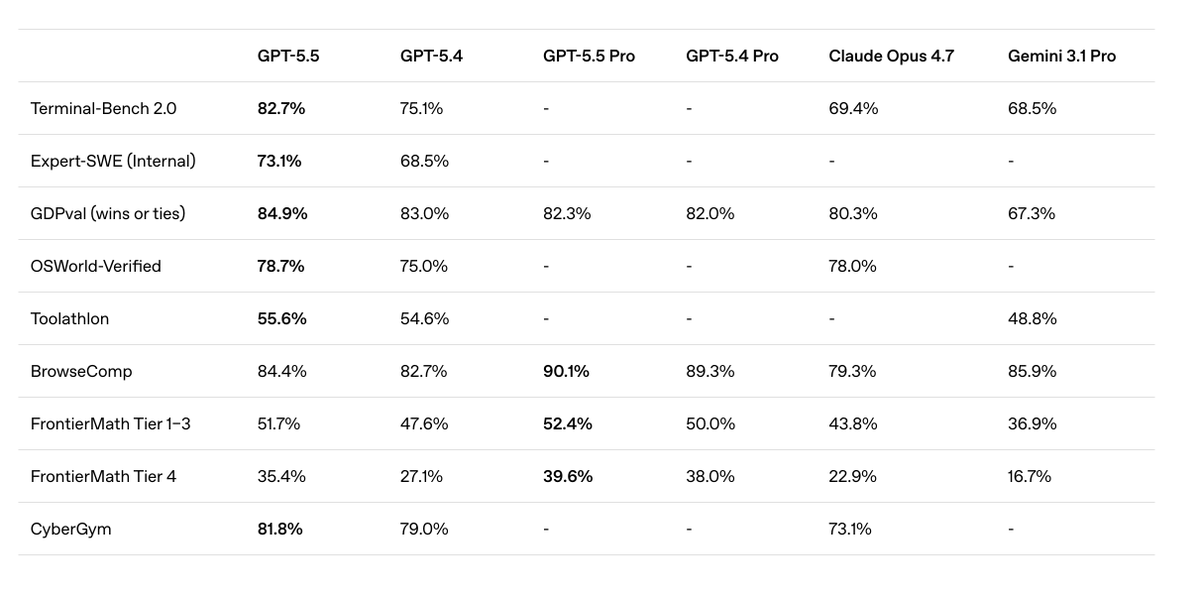
This is very much true for the quality of skill files people created to instruct agents. Through user research at KramaAI, I have seen the struggle of getting agents to execute in skill files that do not execute the way you would want to. Why does it matter? With @OpenAI 's GPT 5.5 launch today, this year feels like the year where computer use will continue to gain adoption, whereby the modal capabilities for GPT 5.5 to use tools and integration jumped to 55.6%(massive jump from ~38%, 6 months ago). Super impressive!
Keyur Shah tweet media
Teddy Riker@teddy_riker

x.com/i/article/2047…

English
0
1
1
50
Ritu retweetledi
Ritu retweetledi
Keyur Shah
Keyur Shah@keyur19198·
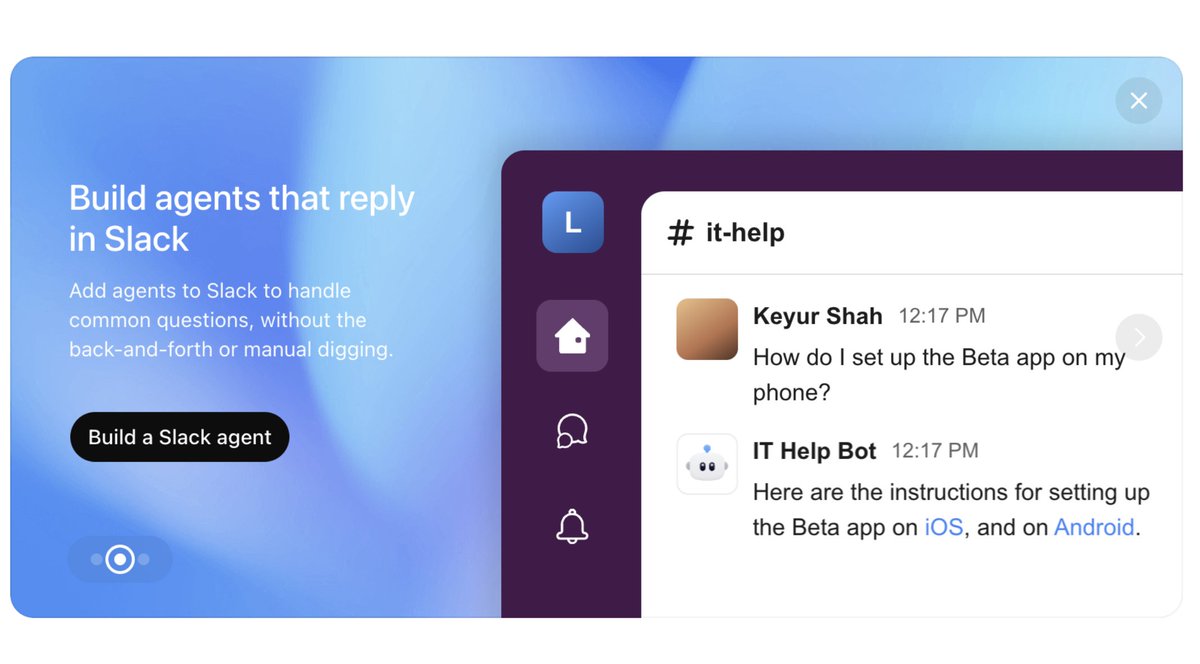
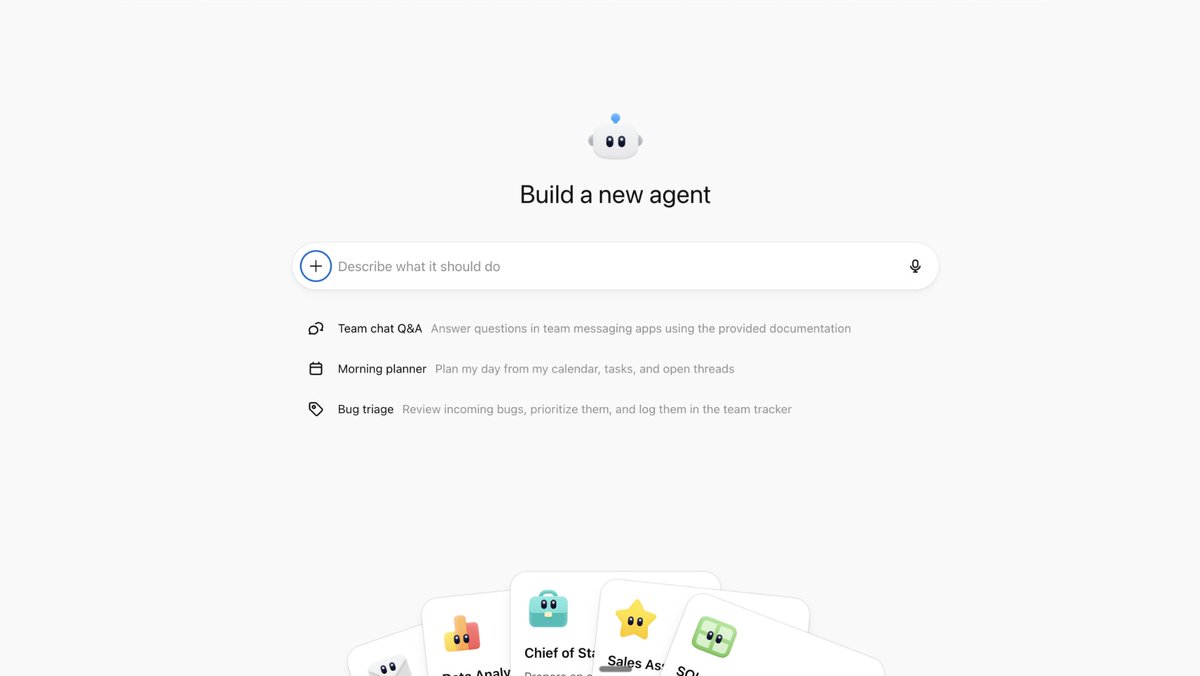
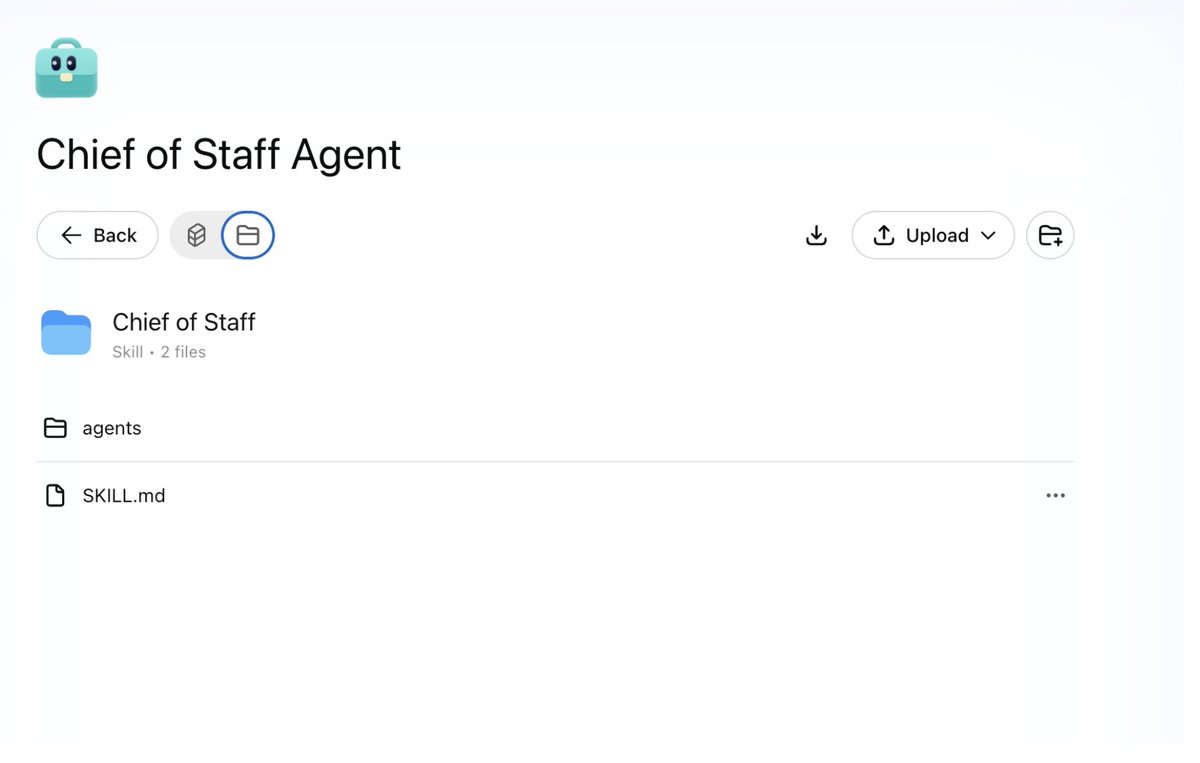
@OpenAI just launched workspace agents in ChatGPT. The hard part isn't shipping the agent. It's describing what it should actually do. Krama AI captures how you already work and turns it into a skill file your agent can use. You don't describe the agent. We already have.
Keyur Shah tweet mediaKeyur Shah tweet mediaKeyur Shah tweet media
English
1
1
1
1.9K
Ritu
Ritu@ReeJoshi·
@keyur19198 @Reuters While Meta installs keystroke trackers to train AI that does your job for you. Krama is building the opposite. AI that meets me in my flow and makes me sharper. My data. My terms. My win.
English
0
0
0
119
Keyur Shah
Keyur Shah@keyur19198·
@Meta is installing tracking software on U.S. employees' computers to capture mouse movements, clicks, and keystrokes to train its AI agents. It's called the Model Capability Initiative (MCI). The future is already here. It's just not evenly distributed. 🧵
English
1
0
1
2.7K
Keyur Shah
Keyur Shah@keyur19198·
Transferability of skills is one of the key issue whereby how do we enable what the top 10% has figured out to the following 10% and so on. Currently there are power users in every company doing their own thing in a silo. Some mechanism of capturing skills at the ground source and democratizing the same will likely be the solve. Some exciting work happening in this space with Gstack becoming a leading prospect of what the future can look like.
Keyur Shah@keyur19198

The problem is that the top 10% that has figured out how to use AI effectively in an organization cannot easily elevate the next top 10%. It’s a knowledge lock in problem

English
1
0
4
2.1K
Garry Tan
Garry Tan@garrytan·
Sometimes when people critique AI it really is a skill issue
LegalAI@thereallegalai

@garrytan This dude's critique is so, "Tesla's are crap cars, I couldn't get mine to make toast."

English
21
4
107
19.6K
Ritu retweetledi
Keyur Shah
Keyur Shah@keyur19198·
I know this topic is top of mind for Fortune 500 and in general companies with large workforce. Any leader planning AI Transformation, this is a very well-written article and framing. Also recommend reading part 1 if you haven't.
Jaya Gupta@JayaGup10

Context graph part 2 >

English
0
2
2
1.3K
Ritu retweetledi
Keyur Shah
Keyur Shah@keyur19198·
@garrytan Belated happy birthday @garrytan! Gstack feels like working in a company with all these cadences but all managed by agents. Continuing to stay on top of it for my startup KramaAI.
Keyur Shah tweet media
English
2
1
4
14.5K
Ritu retweetledi
Garry Tan
Garry Tan@garrytan·
GStack is your personal AI coding toolkit, I'm dropping multiple new features per day right now
Keyur Shah@keyur19198

@garrytan Belated happy birthday @garrytan! Gstack feels like working in a company with all these cadences but all managed by agents. Continuing to stay on top of it for my startup KramaAI.

English
15
8
83
20.7K
Ritu retweetledi
Tansu Yegen
Tansu Yegen@TansuYegen·
A female sea lion leaping onto a fishing boat while carrying her pup to escape a pursuing orca, showcasing instinctive maternal defense🤍 📍 Seattle in November 2025,
English
1.4K
3K
26.4K
5.3M
Ritu retweetledi
claire vo 🖤
claire vo 🖤@clairevo·
This reminds me of the best advice I got about having babies: No big decisions or statements of certainty until the *youngest* is well over two. No divorce, no quitting work forever, no deciding you hate motherhood and going on public record to say so (yikes!) When you have toddlers around, no one is sleeping, everyone is drowning, and it will *feel* terrible many days. Mostly for moms, which, like it or not, have to carry much of the physical and emotional burden those early years. But once they’re all out of diapers, you’re not nap trapped, they can make themselves a snack, and you consistently sleep through the night? The light comes back. I wish more moms were supported and gently guided in those hard early years vs exploited for clicks and quotes. It gets so much better!
Stephanie H. Murray@stephmurrayyyy

Ngl I think there is something kind of sinister about showcasing moms who are actively struggling through the early and notoriously-often-very-difficult-especially-if-you-are-undersupported stages of motherhood in a piece supposedly about "parental regret."

English
37
92
2.1K
305K
Ritu retweetledi
Keyur Shah
Keyur Shah@keyur19198·
"The intelligence part suddenly feels quite a bit ahead of all the rest of it - integrations (tools, knowledge), the necessity for new organizational workflows, processes, diffusion more generally" Having spoken with several Fortune 500 company leaders, 2026 will be the year where organizations accelerate adoption of AI by having dedicated roles within organization or mandates requiring teams to review existing workflows to figure out ways to embed or evolve workflows to benefit out of the intelligence gains
Andrej Karpathy@karpathy

A few random notes from claude coding quite a bit last few weeks. Coding workflow. Given the latest lift in LLM coding capability, like many others I rapidly went from about 80% manual+autocomplete coding and 20% agents in November to 80% agent coding and 20% edits+touchups in December. i.e. I really am mostly programming in English now, a bit sheepishly telling the LLM what code to write... in words. It hurts the ego a bit but the power to operate over software in large "code actions" is just too net useful, especially once you adapt to it, configure it, learn to use it, and wrap your head around what it can and cannot do. This is easily the biggest change to my basic coding workflow in ~2 decades of programming and it happened over the course of a few weeks. I'd expect something similar to be happening to well into double digit percent of engineers out there, while the awareness of it in the general population feels well into low single digit percent. IDEs/agent swarms/fallability. Both the "no need for IDE anymore" hype and the "agent swarm" hype is imo too much for right now. The models definitely still make mistakes and if you have any code you actually care about I would watch them like a hawk, in a nice large IDE on the side. The mistakes have changed a lot - they are not simple syntax errors anymore, they are subtle conceptual errors that a slightly sloppy, hasty junior dev might do. The most common category is that the models make wrong assumptions on your behalf and just run along with them without checking. They also don't manage their confusion, they don't seek clarifications, they don't surface inconsistencies, they don't present tradeoffs, they don't push back when they should, and they are still a little too sycophantic. Things get better in plan mode, but there is some need for a lightweight inline plan mode. They also really like to overcomplicate code and APIs, they bloat abstractions, they don't clean up dead code after themselves, etc. They will implement an inefficient, bloated, brittle construction over 1000 lines of code and it's up to you to be like "umm couldn't you just do this instead?" and they will be like "of course!" and immediately cut it down to 100 lines. They still sometimes change/remove comments and code they don't like or don't sufficiently understand as side effects, even if it is orthogonal to the task at hand. All of this happens despite a few simple attempts to fix it via instructions in CLAUDE . md. Despite all these issues, it is still a net huge improvement and it's very difficult to imagine going back to manual coding. TLDR everyone has their developing flow, my current is a small few CC sessions on the left in ghostty windows/tabs and an IDE on the right for viewing the code + manual edits. Tenacity. It's so interesting to watch an agent relentlessly work at something. They never get tired, they never get demoralized, they just keep going and trying things where a person would have given up long ago to fight another day. It's a "feel the AGI" moment to watch it struggle with something for a long time just to come out victorious 30 minutes later. You realize that stamina is a core bottleneck to work and that with LLMs in hand it has been dramatically increased. Speedups. It's not clear how to measure the "speedup" of LLM assistance. Certainly I feel net way faster at what I was going to do, but the main effect is that I do a lot more than I was going to do because 1) I can code up all kinds of things that just wouldn't have been worth coding before and 2) I can approach code that I couldn't work on before because of knowledge/skill issue. So certainly it's speedup, but it's possibly a lot more an expansion. Leverage. LLMs are exceptionally good at looping until they meet specific goals and this is where most of the "feel the AGI" magic is to be found. Don't tell it what to do, give it success criteria and watch it go. Get it to write tests first and then pass them. Put it in the loop with a browser MCP. Write the naive algorithm that is very likely correct first, then ask it to optimize it while preserving correctness. Change your approach from imperative to declarative to get the agents looping longer and gain leverage. Fun. I didn't anticipate that with agents programming feels *more* fun because a lot of the fill in the blanks drudgery is removed and what remains is the creative part. I also feel less blocked/stuck (which is not fun) and I experience a lot more courage because there's almost always a way to work hand in hand with it to make some positive progress. I have seen the opposite sentiment from other people too; LLM coding will split up engineers based on those who primarily liked coding and those who primarily liked building. Atrophy. I've already noticed that I am slowly starting to atrophy my ability to write code manually. Generation (writing code) and discrimination (reading code) are different capabilities in the brain. Largely due to all the little mostly syntactic details involved in programming, you can review code just fine even if you struggle to write it. Slopacolypse. I am bracing for 2026 as the year of the slopacolypse across all of github, substack, arxiv, X/instagram, and generally all digital media. We're also going to see a lot more AI hype productivity theater (is that even possible?), on the side of actual, real improvements. Questions. A few of the questions on my mind: - What happens to the "10X engineer" - the ratio of productivity between the mean and the max engineer? It's quite possible that this grows *a lot*. - Armed with LLMs, do generalists increasingly outperform specialists? LLMs are a lot better at fill in the blanks (the micro) than grand strategy (the macro). - What does LLM coding feel like in the future? Is it like playing StarCraft? Playing Factorio? Playing music? - How much of society is bottlenecked by digital knowledge work? TLDR Where does this leave us? LLM agent capabilities (Claude & Codex especially) have crossed some kind of threshold of coherence around December 2025 and caused a phase shift in software engineering and closely related. The intelligence part suddenly feels quite a bit ahead of all the rest of it - integrations (tools, knowledge), the necessity for new organizational workflows, processes, diffusion more generally. 2026 is going to be a high energy year as the industry metabolizes the new capability.


English
0
1
1
65