Keyur Shah

315 posts

Keyur Shah

Keyur Shah

@keyur19198

Founder KramaAI | Workflow intelligence | Prev Product @Opendoor @Eventbrite | https://t.co/4WelLSyOfX | https://t.co/d3eVdBZx4e

San Francisco, CA Katılım Kasım 2014
419 Takip Edilen118 Takipçiler
Sabitlenmiş Tweet
Keyur Shah
Keyur Shah@keyur19198·
@Meta is installing tracking software on U.S. employees' computers to capture mouse movements, clicks, and keystrokes to train its AI agents. It's called the Model Capability Initiative (MCI). The future is already here. It's just not evenly distributed. 🧵
English
1
0
1
2.7K
Aaron Levie
Aaron Levie@levie·
Starting to hire and retrain for new agent engineering roles for *internal* functions to help get more powerful agents working well on critical business processes. I expect this type of role to be a very big deal over time at Box and other companies. It looks something like an internal FDE, whose job it is to wire up internal systems and get agents working with them effectively. The person will be extremely technical and capable of building secure, governed agents for internal workflows that connect to business systems (like Box, Salesforce, Workday, etc.), and codify workflows in skills. In some cases this person may understand the business process well enough to do it fully, but in most cases I expect them to work with the business directly in an embedded fashion. Ironically, that may introduce another new role on the business side that is more akin to agent product management for internal processes. The key is that you need technical + process people that can span multiple teams or functions in an organization. It’s not about brining automation to a job, but bringing automation to a process. This is going to be a very big trend in most companies going forward. Fun to watch the early innings of what this will look like.
English
97
70
838
152.5K
Keyur Shah retweetledi
Brivael Le Pogam
Brivael Le Pogam@brivael·
Elon Musk avait dit un truc qui m'avait marqué sur l'allocation de ressources. En substance : passé un certain niveau de richesse, l'argent n'est plus de la consommation, c'est de l'allocation de capital. Cette phrase change tout. L'économie, dans le fond, c'est juste un problème d'allocation. Tu as des ressources finies et des usages infinis. Qui décide où va quoi ? Imagine une cour de récré. 100 enfants, des paquets de cartes Pokémon distribués au hasard. Tu laisses faire. Très vite, un ordre émerge. Les bons joueurs accumulent les cartes rares, les collectionneurs trient, les négociateurs trouvent des deals. Personne n'a planifié. Et pourtant chaque carte finit dans les mains de celui qui en tire le plus de valeur. Le système maximise le bonheur total de la cour. C'est ça, la main invisible. Maintenant fais entrer la maîtresse. Elle trouve ça injuste. Léo a 50 cartes, Tom en a 3. Elle confisque, redistribue, impose l'égalité. Trois effets immédiats. Les bons joueurs arrêtent de jouer, à quoi bon. Les mauvais n'ont plus de raison de progresser, ils auront leur part. Les échanges s'effondrent. La cour est égale, et morte. Elle a maximisé l'égalité, elle a détruit le bonheur. Le problème de la maîtresse, c'est qu'elle ne peut pas avoir l'information que la cour avait collectivement. C'est le problème du calcul économique de Mises, formulé en 1920. L'URSS a essayé de le résoudre pendant 70 ans avec le Gosplan. Résultat : pénuries, queues, effondrement. Pas parce que les Soviétiques étaient bêtes, parce que le problème est mathématiquement insoluble en mode centralisé. Quand Musk a 200 milliards, il ne les consomme pas, il les alloue. SpaceX, Starlink, Neuralink, xAI. Chaque dollar est un pari sur le futur. Et lui a un track record. PayPal, Tesla, SpaceX. Il a démontré qu'il sait identifier des problèmes immenses et y allouer des ressources avec un rendement spectaculaire. L'État aussi a un track record. Hôpitaux qui s'effondrent, éducation qui décline, dette qui explose, services publics qui se dégradent malgré des budgets en hausse constante. Le marché identifie les bons allocateurs, la politique identifie les bons communicants. Le profit n'est pas une finalité, c'est un signal. Il dit : tu as alloué des ressources rares vers un usage que les gens valorisent suffisamment pour payer. Plus le profit est gros, plus la création de valeur est grande. Quand Starlink est rentable, ça veut dire que des millions de gens dans des zones rurales ont enfin internet. Quand un ministère est en déficit, ça veut dire qu'il consomme plus qu'il ne produit. L'un crée, l'autre détruit, et on appelle ça redistribution. Dans nos sociétés il y a deux catégories d'acteurs. Les entrepreneurs et les bureaucrates. L'entrepreneur prend un risque personnel pour identifier un problème, mobiliser des ressources, créer une solution. S'il se trompe il perd. S'il a raison, ses clients gagnent, ses employés gagnent, ses fournisseurs gagnent, l'État collecte des impôts. Il est la cellule de base du progrès humain. Le bureaucrate ne prend aucun risque personnel. Son salaire est garanti. Au mieux il maintient une rente existante. Au pire il la détruit par excès de réglementation, mauvaise allocation forcée, incitations perverses qui découragent ceux qui produisent. Mais dans aucun cas il ne crée. Regarde les 50 dernières années. iPhone, internet civil, SpaceX, Tesla, Google, Amazon, Stripe, mRNA, ChatGPT. Toutes des inventions privées, portées par des entrepreneurs, financées par du capital risque. Pas un seul ministère n'a inventé quoi que ce soit qui ait changé ta vie au quotidien. La France est devenue le laboratoire mondial de la dérive bureaucratique. 57% du PIB en dépenses publiques, record absolu. Une administration tentaculaire, une fiscalité qui pénalise la création de richesse. Résultat : décrochage face aux États-Unis, à l'Allemagne, à la Suisse. Fuite des cerveaux. Désindustrialisation. Dette qui explose. Et le pire c'est que la mauvaise allocation s'auto-renforce. Plus l'État prélève, moins les entrepreneurs créent. Moins ils créent, moins il y a de base fiscale. Plus l'État s'endette et taxe. Boucle de rétroaction négative parfaite. La maîtresse pense qu'elle aide, et chaque année la cour produit moins. Dans nos sociétés, ce sont les entrepreneurs, toujours, qui font avancer la civilisation. Les bureaucrates au mieux maintiennent une rente, au pire la détruisent. Aucune société n'a jamais progressé en taxant ses créateurs pour subventionner ses gestionnaires. La question n'est jamais qui a combien. C'est qui alloue le mieux la prochaine unité de ressource pour maximiser le futur de l'humanité. La réponse depuis 200 ans n'a jamais changé. Ce ne sont pas les fonctionnaires.
Français
3.3K
16.4K
61.4K
80.9M
Keyur Shah retweetledi
Keyur Shah
Keyur Shah@keyur19198·
This is exactly what we are building to enable with KramaAI. I have worked as a PM for internal teams at companies like Opendoor, Eventbrite, The Home Depot and the product is an outcome of those learnings. DM me to learn more, we can probably do this for 1/10th of the cost and get you results in 1 month vs 6 months with hiring someone
English
1
1
0
147
Keyur Shah retweetledi
Tim Cook
Tim Cook@tim_cook·
Welcome back coach! Ted Lasso returns August 5 on @AppleTV!
English
761
3.9K
37.3K
8.6M
signüll
signüll@signulll·
the future interface is probably three layers: 1. ambient intent capture voice, location, calendar, screen context, messages, habits, biometrics, etc. the system understands what you’re trying to do before you explicitly “open” anything or augments your intent deeply. 2. agentic execution the actual work happens through agents operating software, apis, browsers, documents, email, calendars, workflows, payments, support systems, whatever. most “computer use” becomes machine to machine clerical labor. 3. ephemeral verification ux humans still need to inspect, compare, approve, edit, reject, or enjoy things. that’s where gui survives but as disposable, task specific surfaces generated for the moment.
English
131
197
2K
130.6K
Keyur Shah
Keyur Shah@keyur19198·
Agreed for classic software where one can rinse and repeat a lot of pre-existing designs and have it standardized via design system. Although, on the other hand there is a whole new spectrum of interfaces that needs to be figured out to continue improving how humans and AI can continue to work together. This is where the design challenges are largely unsolved. A recent example on this line-
Zain Shah@zan2434

Imagine every pixel on your screen, streamed live directly from a model. No HTML, no layout engine, no code. Just exactly what you want to see. @eddiejiao_obj, @drewocarr and I built a prototype to see how this could actually work, and set out to make it real. We're calling it Flipbook. (1/5)

English
0
1
4
998
Gokul Rajaram
Gokul Rajaram@gokulr·
DESIGN: THE FIRST AI CASUALTY I'm increasingly sure that 2026 signals the end of product design as a full-fledged stand-alone function within companies. If so, it will be the first role / function to be eliminated by AI on a go-forward basis. Instead of hiring FT designers, startups are hiring / will hire design consultants to create a design system that the founder likes (this takes a few weeks max). Once the design system is finalized, PM/Eng feed it into their AI tool of choice to generate prototypes. The design system is refreshed annually by the same consultant. Larger companies will likely not backfill design roles and will do some targeted attrition to reduce the design department to 20% the size it is today. If you're a designer, I think you have two choices: 1. Become an entrepreneur: Start a design agency and become the go-to resource for design systems for startups and even larger companies. This can be a good recurring revenue business. 2. Become a builder: Add PM/Eng responsibilities to become a product builder. Would suggest you embrace this proactively vs waiting for the other shoe to drop. I'm really sorry about this - some of my best friends and the people I admire most and have learnt the most from are designers - but it seems inevitable.
English
280
80
1.1K
705.3K
Keyur Shah
Keyur Shah@keyur19198·
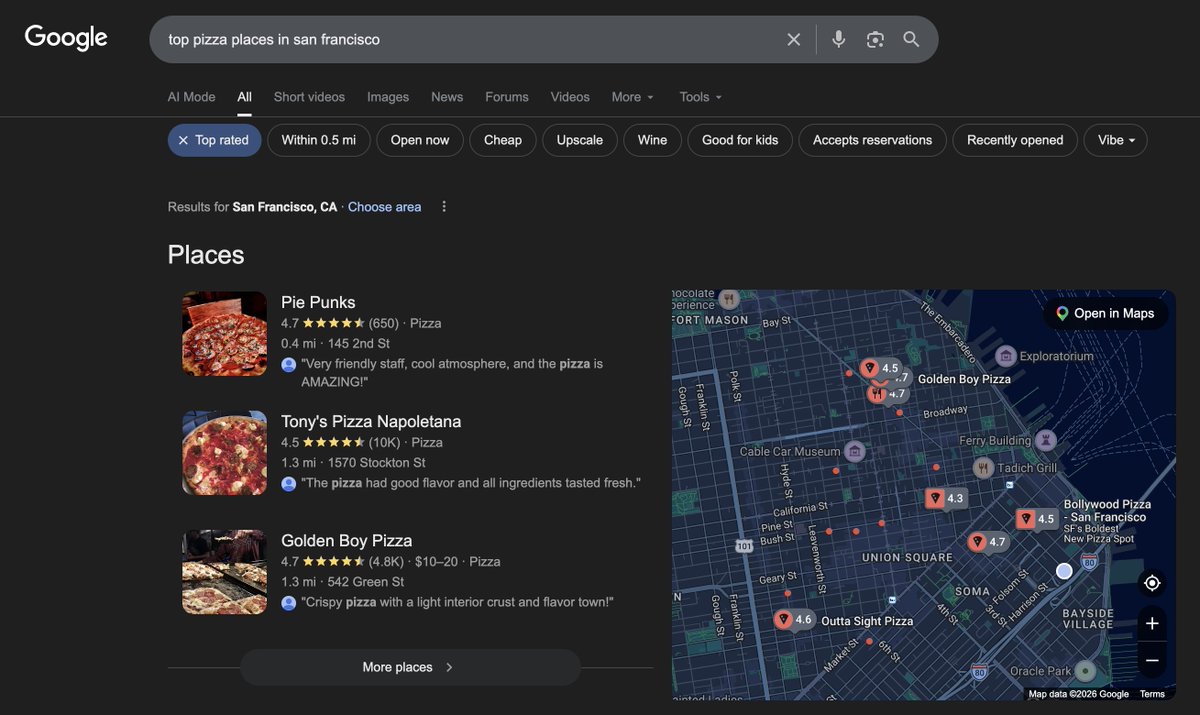
For Founders, the 10000 hour rule matters more than anything else. Watched the Founder movie recently and reminded me of the fact that persistence whereby you are working on a problem space for more than 10000 hours will likely get you fine tuned in lot of different aspects needed to build a successful company through pivots and what not. Good reminder: Just be at it and do things where learning can compound whereby compounding is yet another great multiplier.
Keyur Shah tweet media
English
0
0
0
19
Ritu
Ritu@ReeJoshi·
@keyur19198 @levie Agreed. Another analogy - printing press didn’t shrink writing it exploded it. Pamphleteers, novelists, journalists, scientists. Cheaper production expanded who could participate. AI is doing the same to knowledge work. Excited to see what new roles open up when the floor drops?
English
1
1
0
18
Keyur Shah
Keyur Shah@keyur19198·
@levie being a thought leader in this space, laid out the perspective very well for leaders and investors. My POV based on customer research calls- Previously a lot of non-technical people were constrained by technical resourcing or skills to use certain tools. That barrier is slowly fading. For example at @Opendoor, as a PM there were problems that Ops team faced which required engineering to build something. However, now those operators can build their own tooling without being constrained on another team having to unblock them. This kind of an unlock creates a flywheel effect where the net unit of value delivered by individual increases which leads to more hiring in software and certain non software roles. We are still in early phases and the demand for everything that will lead to AI enablement may it be humans or software will continue to increase aka Jeavon’s paradox!
Aaron Levie@levie

“If AI can make employees more productive, which is widely accepted as fact, then companies are going to want as many productive units of labor as possible. This is a key reason why I am changing my mind.” This is why jevons paradox is really important to understand with AI right now. And counterintuitively, this trend is going to increase as AI gets better. The better AI gets at performing tasks, the more companies can take on those tasks, which leads to hiring more people to do the surrounding work of those tasks. Think about the small business that can’t afford to build complex software. When AI is only a little good nothing changes for them. When it’s really good they can finally hire engineers that have the impact of 5-10X, so they can finally invest in engineering. The sales team that can automate customer intelligence and outbound demand gen will hire more sales people because they have more leads to go after. The marketing team that can now do higher-end video production than before will hire a video editor. And so on. This is going to happen in more and more surprisingly ways.

English
1
1
2
58
Keyur Shah
Keyur Shah@keyur19198·
@gaganbiyani Absolutely, they are AI-piled plus most have a natural tendency to build in public. That’s a lethal combination. Very bullish and looking forward to hiring more in that segment
English
0
0
1
60
Tarlon
Tarlon@TarlonKhoubyari·
short list of the best places to host a dinner in sf: - arcana - lazy bear - the progress - foreign cinema - la mar - penny roma - flour + water (mission) - piccino (presidio) - dalida - park tavern
English
50
5
667
129.9K
Keyur Shah
Keyur Shah@keyur19198·
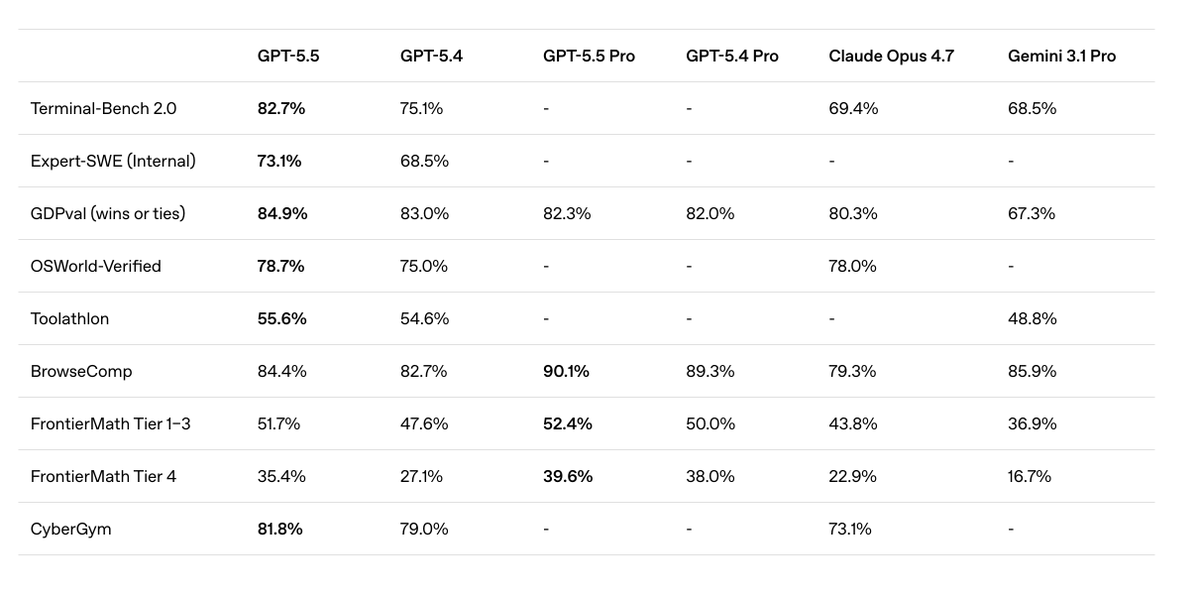
This is very much true for the quality of skill files people created to instruct agents. Through user research at KramaAI, I have seen the struggle of getting agents to execute in skill files that do not execute the way you would want to. Why does it matter? With @OpenAI 's GPT 5.5 launch today, this year feels like the year where computer use will continue to gain adoption, whereby the modal capabilities for GPT 5.5 to use tools and integration jumped to 55.6%(massive jump from ~38%, 6 months ago). Super impressive!
Keyur Shah tweet media
Teddy Riker@teddy_riker

x.com/i/article/2047…

English
0
1
1
50