
Brian Carwana

7.2K posts

Brian Carwana banner
Brian Carwana

Brian Carwana

@ReligionsGeek

Religions Geek. Speaks on religious literacy & inclusion. Director Encounter World Religions Centre. PhD from UToronto.

Guelph, Ontario Katılım Ağustos 2013
1.2K Takip Edilen685 Takipçiler
Brian Carwana
Brian Carwana@ReligionsGeek·
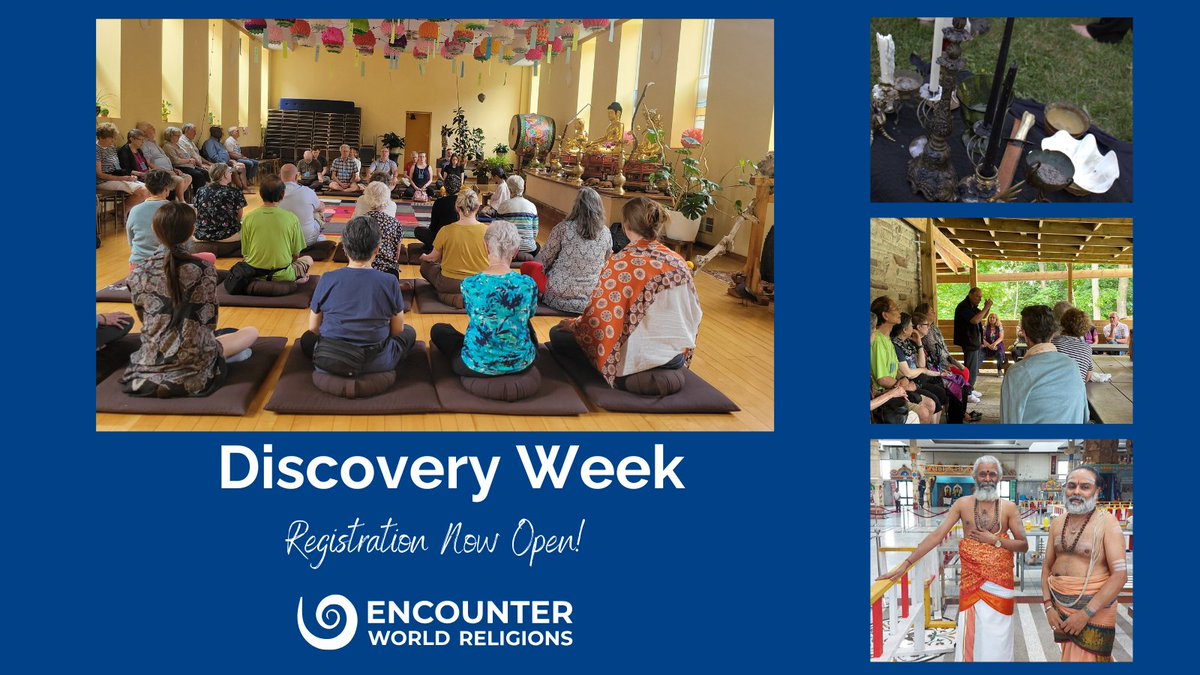
March 26-27 2026 is the Hindu celebration: Rama Navami. A festival celebrating the birth of Lord Rama, a major Hindu deity. #Hindu #RamaNavami
Brian Carwana tweet media
English
0
0
0
33
Brian Carwana
Brian Carwana@ReligionsGeek·
This is good. Protests against Israel should be at the consulate which is in the same city. Protests in residential neighbourhoods of Jews is threatening to people's safety. Protests in Muslim neighbourhoods would be equally inappropriate. cbc.ca/news/canada/to…
English
0
0
0
34
Brian Carwana
Brian Carwana@ReligionsGeek·
A Muslim imam in Texas wrote an open letter thanking Sikhs for exactly this - not throwing Muslims “under the bus.” In Canada, NDP former leader @theJagmeetSingh famously did this when accosted on stage for his “sharia law.” He defused the anger without saying “I’m not Muslim.”
Pranesh Prakash@pranesh

Sikhs in the USA have found themselves the victims of hate crimes and discrimination because they were thought to be Muslim by bigots. Even then, many of them refused to say "I'm NOT a Muslim.": "It's just not an option for us to throw another community under the bus."

English
0
0
0
146
Brian Carwana
Brian Carwana@ReligionsGeek·
Agree. Academia’s lack of ideological diversity creates echo chambers that: 1) lead to more extreme, untested views, stifle creativity & encourage censoring; 2) while also discrediting the field to the public as extreme & unrepresentative (a problem for a public institution).
Alice Evans@_alice_evans

We often discuss diversity in academia - recognising that people's backgrounds may shape the kinds of questions they ask, topics they study. But if academics are overwhelmingly progressive atheists, this creates blind spots. They may be highly functionalist, stressing 'club goods', and ignoring genuine belief in paradise.

English
0
0
1
31
Brian Carwana retweetledi
Alice Evans
Alice Evans@_alice_evans·
We often discuss diversity in academia - recognising that people's backgrounds may shape the kinds of questions they ask, topics they study. But if academics are overwhelmingly progressive atheists, this creates blind spots. They may be highly functionalist, stressing 'club goods', and ignoring genuine belief in paradise.
Alice Evans@_alice_evans

When religious families migrate to the west, they may be extremely concerned about liberal temptations. They then face a choice: do they prioritise their kids’ upward mobility or paradise? If the latter, parents may send their kids to religious schools to instil piety. That’s precisely what I find in my research in Britain

English
5
13
155
20.2K
Brian Carwana retweetledi
Matt Burgess
Matt Burgess@matthewgburgess·
Great post here by @akoustov. His experiences finding that non-academic audiences sometimes ask the most useful questions, and provide the most stimulating insight for research, 100% resonates with my own experience. Similarly, he is spot on in saying that the public—not our peers—are our stakeholders whose interests we ultimately should serve. His point that public engagement =/= arguing on social media is also important. In my experience, here are four better, and relatively easy places to start: 1) Talk to your local Rotary club. They are always keen for speakers, and tend to be a cross section of smart (& typically older) community leaders. 2) Find a conference that combines multiple sectors (academia, government, non-profits, and/or industry). There are more of these out there than you think. @RenWkd is often the highlight of my year. There are lots of others that are more accessible and local—often issue focused. E.g., I've been to ones on business, energy, climate change and climate adaptation, water resources, democracy. 3) Talk to your university’s trustees/regents. They always are usually keen to talk to faculty and often have very different perspectives than you find on campus, especially if you’re at a public school where the trustees are elected. (HT @heidiganahl @LesleyForCU, whom I got to know when I was at CU). 4) Go and visit an academic institution that is very different from yours (e.g., a regional school in a rural part of your state, if you are in a large urban school, or vice versa). I have found all four of these strategies to be highly rewarding and enriching.
Matt Burgess tweet media
English
2
44
184
28K
Brian Carwana
Brian Carwana@ReligionsGeek·
Great piece sums up the stakes for possibly the most important Canadian court in a decade. The case involves Québec’s Bill 21 that forbids govt staff (eg. Teachers, police, etc) from wearing visible religious garments. Minority rights vs provincial rights theglobeandmail.com/opinion/articl…
English
1
0
0
35
Brian Carwana
Brian Carwana@ReligionsGeek·
March 20 marks Nowruz. Occurring on the vernal equinox, this day celebrates the Persian and the Bahá’í New Year. Bahá’ís also end their 19-day fast, which is a period of reflection and profound spiritual reinvigoration. It is the first day of the Bahá’í calendar year. #Norwuz
Brian Carwana tweet media
English
0
0
0
20
Brian Carwana
Brian Carwana@ReligionsGeek·
March 20th marked Eid al-Fitr. One of the most important Islamic holy days which includes feasting to mark the end of Ramadan. Celebrations last from 1-3 days depending on the country. #eid #eidmubarak
Brian Carwana tweet media
English
0
0
0
16
Brian Carwana retweetledi
ANI
ANI@ANI·
#WATCH | Rajasthan: Members of the Hindu community, under the aegis of Hindu-Muslim Ekta Samiti, shower flower petals on members of the Muslim community who offered namaz at Eidgah in Jaipur, on Eid ul-Fitr.
English
1.6K
5.8K
32.4K
2.6M
Brian Carwana retweetledi
𝕏 Ghana 🇬🇭
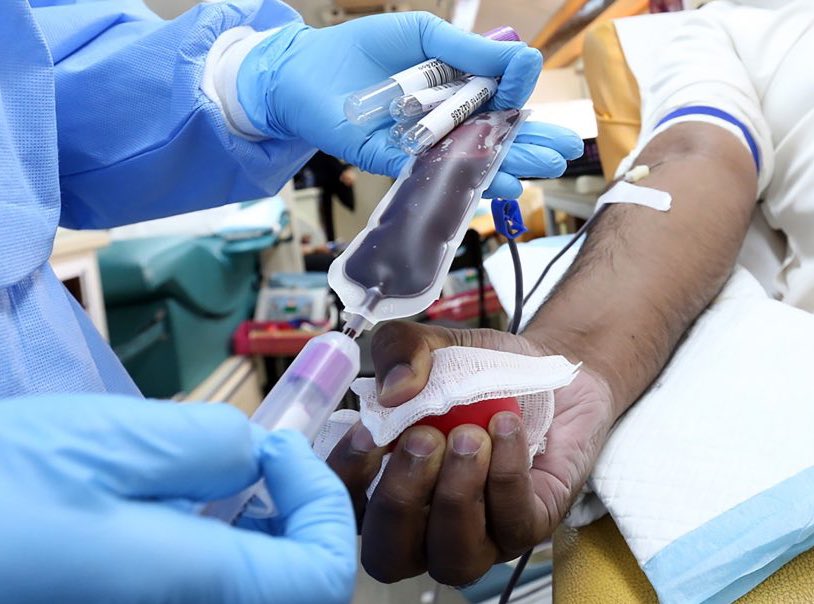
🚨BREAKING: The Jehovah's Witnesses organization has updated its policy on blood transfusions, allowing members to have their own blood removed, stored, and "given back" in medical procedures, marking the first significant shift in the religion's stance after a 75-year prohibition on its members.
𝕏 Ghana 🇬🇭 tweet media𝕏 Ghana 🇬🇭 tweet media
English
521
1K
3.3K
2.2M
Brian Carwana retweetledi
Tim Hall, Ph.D.
Tim Hall, Ph.D.@ReligionMatter5·
Religious literacy is no longer a “nice to have”—it’s essential for civic understanding. My new article explores a key tension: strong support for teaching about religion, but limited clarity on how to do it well in practice. We have to move from frameworks to practice. #sschat #religiousliteracy #civiced
Tim Hall, Ph.D.@ReligionMatter5

📢 New publication! My new article examines how K–12 social studies teachers are actually using the @NCSSNetwork Religious Studies Companion Document (RSCD) for the C3 Framework. The takeaway: Religious literacy has growing support, but teachers need clearer tools and training to bring it into practice. tandfonline.com/doi/full/10.10…

English
0
2
7
109
Brian Carwana retweetledi
David DeSteno
David DeSteno@daviddesteno·
Pinker is wrong here. If you look at data on flourishing (not GDP), religious engagement is one of many predictors that are a plus on average for nations. You can find outliers. But on average, faith predicts flourishing. See data here: nytimes.com/2025/04/30/opi… @DouthatNYT 1/2
Steven Pinker@sapinker

From THE GOD DEBATE: Me: The more religious the society, the worse the problems are. And if you don't believe it, consider some of the world's most irreligious societies, like Norway, Netherlands, and New Zealand. They're pretty nice places to live. Now consider some of the world's most religious countries, like Afghanistan and Congo. Those are places that people want to get out of. This is also true in a comparison across American states. The more religious, the more dysfunctional. Ross Douthat (@DouthatNYT): What we should wish as Americans is to be neither Afghanistan nor Scandinavia, but to be the United States of America, which as a culture has always done an incredible job of balancing some of the absolute, definite benefits of modernity, including religious toleration, a respect for pluralism, a refusal to simply sort of impose the totality of one religion's theological doctrines on society with an abundant faith in a cosmic purpose for the human race. And obviously there are downsides to religious intensity. Those downsides are often manifested in zealous intolerance. There are also serious downsides to religious indifference, which are often manifested in anomie, drift, and despair. And it is simply the case that if you look across the developed world today, there is a strong correlation between secularization and a kind of loss of faith in human purpose and the human future, manifested most starkly in the declining birth rates that make it extremely unlikely that Dr. Pinker's predictions about the inevitable triumph of secularism and humanism over religion will come to pass, because the secularists and humanists don't seem to be making the basic choices that would enable the continuation of the human race.

English
1
3
7
513