Antonio Cao

307 posts

Antonio Cao

Antonio Cao

@RemitNotPaucity

Building @flairAI_ | AI Grant '22 | @Yale '22

Katılım Haziran 2015
1.7K Takip Edilen3.9K Takipçiler
Antonio Cao retweetledi
Prof. Lee Cronin
Prof. Lee Cronin@leecronin·
I’ve started the equivalent of the human genome project for chemistry mapping all reactions, molecules & materials using Chemputation. This asset will be as important for chemistry & materials science as the protein structural database is for biology.
English
26
32
332
22.5K
Antonio Cao retweetledi
Grigory Sapunov
Grigory Sapunov@che_shr_cat·
1/ Backprop is the engine of deep learning, but neuroscientists have insisted for decades that the brain can't do it. There are no dedicated "error" neurons or backward wiring. What if the brain doesn't compute error in space, but in time? 🧵
Grigory Sapunov tweet media
English
8
57
436
25.3K
Antonio Cao retweetledi
Ido Aizenbud
Ido Aizenbud@IdoAizenbud·
What can a neuron compute? Real biological neurons are complex, but how capable are they? Using a new method, we found that a single cortical neuron can classify cats vs dogs, recognize spoken words, and solve 10-bit parity, all tasks thought to require entire networks. (1/15)
Ido Aizenbud tweet media
English
55
374
1.9K
309.7K
Antonio Cao retweetledi
Alex Rives
Alex Rives@alexrives·
Together with UC Berkeley we are announcing the laser phase plate - a breakthrough in atomic resolution imaging. This is the brightest continuous wave laser in the world, 100 million times the intensity of the surface of the sun. Phase contrast plays an important role in microscopy, but it was thought close to impossible for electron microscopy, where it would require interfering with an electron beam. Holger Mueller and Robert Glaeser proposed exactly this using a standing wave laser. It has taken over 15 years to make this a reality. Biohub partnered with UC Berkeley and Mueller to support this work and to engineer and build the technology. Contrast has been the critical barrier to achieving atomic resolution imaging of the cell. In cryo-electron tomography, a cellular imaging technology that uses electron microscopy, the low contrast makes it impossible to resolve anything but the largest proteins within their cellular context. The laser phase plate removes that barrier. With advances in AI this breakthrough in contrast will start to open up a new frontier in structural biology, that will allow us to see the molecular machines of the cell, and how they assemble into far more complex and dynamic systems, and understand how they work.
English
91
573
4K
655.1K
Antonio Cao retweetledi
István Csanády
István Csanády@istvan_csanady·
New CAD thread: AI+CAD (but the other way around) I have written extensively about the difficulties of using Large Language Models (LLMs) and boundary representation (B-rep) geometry to generate text-based 3D models. While I strongly believe LLMs will fundamentally transform the world of CAD, we haven't seen anything so far that is meaningful beyond producing basic cubes with holes. Frankly, we won't see true breakthroughs in this space as long as we rely on B-rep combined with LLMs. However, we are seeing another very exciting direction for AI among our customers: training models on geometry and synthetic data (such as physics simulations) derived from that geometry. The neural network is then used to identify optimal solutions for engineering problems or to generate new geometry entirely. This direction has the potential to fulfill the long-standing promise of generative design, parametric part optimization, and automated part generation based on engineering constraints. Making this work at scale is the holy grail of manufacturing. But again, doing this on the current technology stack - namely, B-rep geometry engines - is extremely difficult to automate and scale. The fragility and the shortcomings of B-rep engines is the current bottleneck to build truly groundbreaking AI workflows for manufacturing geometry. 1 . Building Infinitely Robust Parametric Models is Impossible with B-reps B-reps are inherently fragile. Local operations like fillets, face offsets, and shelling are especially prone to errors. This makes it virtually impossible to build a complex parametric model with 20 inputs that successfully updates across every single parameter combination. Unfortunately, that flawless automation is exactly what you need to generate vast datasets for training neural networks. Another issue is how current CAD systems handle selection intent. Selection intent is typically expressed through topology tracking, meaning a selection set is identified by its lineage in the feature tree. This causes immediate rebuild errors whenever the topology changes. While you can make these behaviors somewhat more robust by using feature-based selections, they are still incredibly limited. Example: Imagine you are designing a complex parametric mold, and you want to fillet "every edge that separates a drafted face from a non-drafted face." Expressing this kind of behavior in today’s CAD systems in a robust, parametric way is extremely difficult, if not impossible. 2. The Differentiability Problem B-rep-based parametric models tend to jump around during parametric updates like Rachael Gunn (Raygun), the Australian Olympic breakdancer, did in her performance. They produce completely unpredictable, non-continuous changes. Neural networks hate datasets where changes are non-continuous and non-differentiable. Achieving differentiability - or even getting close to it - is impossible using B-reps. Even if you somehow manage to make your B-rep behave nicely, the sketch constraint solvers will inevitably mess up your training data. 3. The Need for Robust, High-Performance Loss Functions Evaluating B-reps is slow and fragile. Training models on large datasets requires extremely robust, lightning-fast loss functions; otherwise, your computational training costs will skyrocket. 4. Code-Friendliness (or Lack Thereof) LLMs are great at generating code, but they are terrible at working around B-rep quirks. Code-based geometry generation is arguably a powerful way to create large training sets, and LLMs could theoretically help with that. However, an LLM will always struggle with the unpredictability of B-reps. Even if the LLM's generated code is logically correct, the B-rep kernel might still fail to compute the geometry. This failure pushes the LLM down completely unpredictable execution paths, ultimately triggering hallucinations.
English
22
11
194
13.3K
Antonio Cao retweetledi
Timothy Gowers @wtgowers
Timothy Gowers @wtgowers@wtgowers·
If you are a mathematician, then you may want to make sure you are sitting down before reading further.
English
164
881
9.2K
3.2M
Antonio Cao retweetledi
Steven Brunton
Steven Brunton@eigensteve·
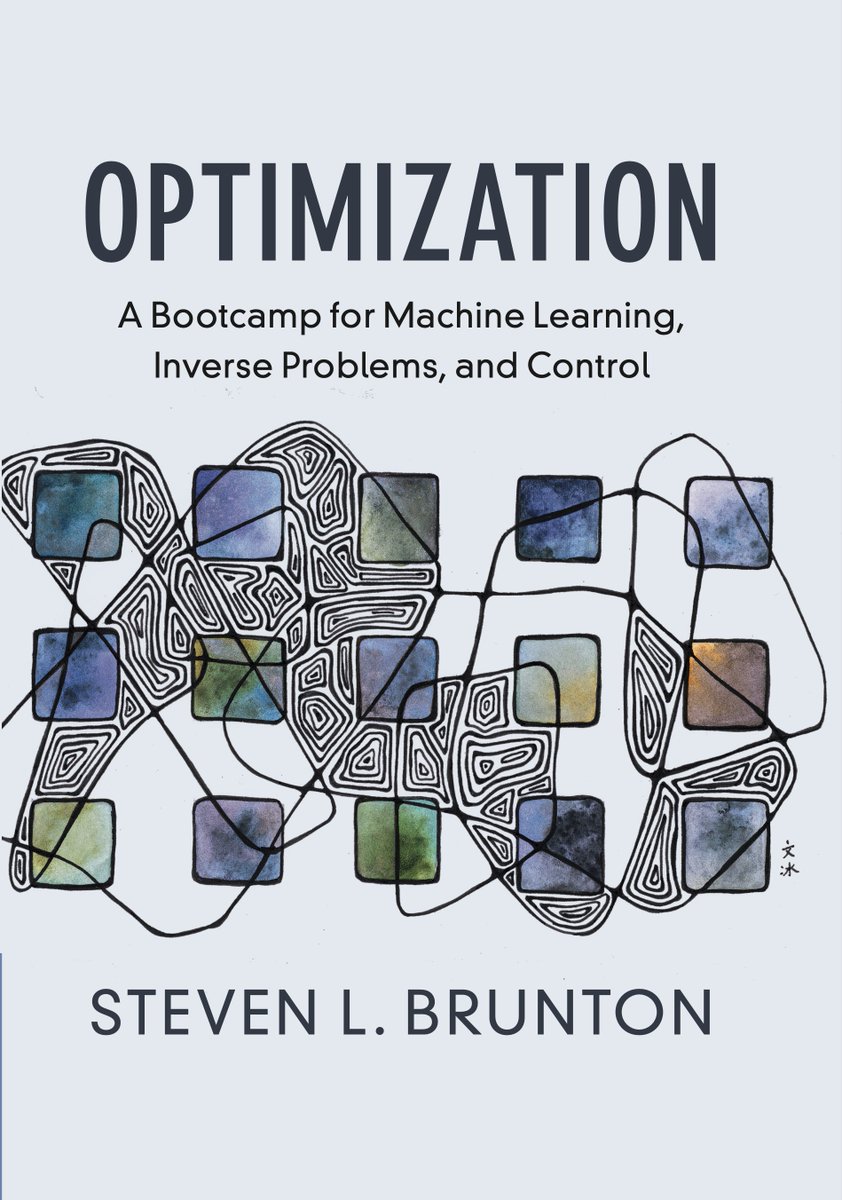
I Wrote a New Book!!! Optimization: A Bootcamp for Machine Learning, Inverse Problems, and Control Pre-Order Now (July 31) amazon.com/Optimization-B… Coming Soon: * Free PDF on website * YouTube Videos for entire book * Python code on GitHub
Steven Brunton tweet mediaSteven Brunton tweet media
English
62
379
2.8K
188.3K
Antonio Cao retweetledi
Steven Strogatz
Steven Strogatz@stevenstrogatz·
I finally got around to reading this Substack post by @davidbessis. davidbessis.substack.com/p/the-fall-of-… It's a penetrating and original take on the "AI in math" developments that a lot of us are thinking about now. Best of all, David is a great writer. Provocative and funny and smart.
English
10
49
268
32.9K
Antonio Cao retweetledi
The Abel Prize
The Abel Prize@abel_prize·
Gerd Faltings' colleges and “partners in crime” tricked him into a “meeting”. Watch the reaction when mathematician Gerd Faltings realizes that he will be awarded the #AbelPrize in Oslo in May.
English
4
39
145
13.1K
Antonio Cao
Antonio Cao@RemitNotPaucity·
luv the hints at creative solutions — fun to build a meta-optimizer that test-time learns the eval
Antonio Cao tweet media
English
0
1
1
117
alz
alz@alz_zyd_·
Random q (don't know much about AI model internals) Could a big smart model efficiently have long context models by asking a dumb, but small and fast, model to read the longer context and summarize for the smart model?
English
15
1
17
6.4K
Antonio Cao retweetledi
steve hsu
steve hsu@hsu_steve·
C.N. Yang has passed, age 103. Yang was awarded the Nobel prize at 35, for parity violation (shared with T.D. Lee). But his greatest contribution was probably Yang-Mills theory, now referred to as gauge theory. When I was a student the former designation was as common as the latter. Freeman Dyson called Yang "the pre-eminent stylist of 20th-century physics". "Dr. Yang's sense of mathematical beauty turns his least important calculations into miniature works of art, and turns his deeper speculations into masterpieces." Dyson believed only Albert Einstein and Paul Dirac exceeded Yang as stylists in physics.
steve hsu tweet media
English
56
500
3.1K
312K
Antonio Cao retweetledi
Andrej Karpathy
Andrej Karpathy@karpathy·
Finally had a chance to listen through this pod with Sutton, which was interesting and amusing. As background, Sutton's "The Bitter Lesson" has become a bit of biblical text in frontier LLM circles. Researchers routinely talk about and ask whether this or that approach or idea is sufficiently "bitter lesson pilled" (meaning arranged so that it benefits from added computation for free) as a proxy for whether it's going to work or worth even pursuing. The underlying assumption being that LLMs are of course highly "bitter lesson pilled" indeed, just look at LLM scaling laws where if you put compute on the x-axis, number go up and to the right. So it's amusing to see that Sutton, the author of the post, is not so sure that LLMs are "bitter lesson pilled" at all. They are trained on giant datasets of fundamentally human data, which is both 1) human generated and 2) finite. What do you do when you run out? How do you prevent a human bias? So there you have it, bitter lesson pilled LLM researchers taken down by the author of the bitter lesson - rough! In some sense, Dwarkesh (who represents the LLM researchers viewpoint in the pod) and Sutton are slightly speaking past each other because Sutton has a very different architecture in mind and LLMs break a lot of its principles. He calls himself a "classicist" and evokes the original concept of Alan Turing of building a "child machine" - a system capable of learning through experience by dynamically interacting with the world. There's no giant pretraining stage of imitating internet webpages. There's also no supervised finetuning, which he points out is absent in the animal kingdom (it's a subtle point but Sutton is right in the strong sense: animals may of course observe demonstrations, but their actions are not directly forced/"teleoperated" by other animals). Another important note he makes is that even if you just treat pretraining as an initialization of a prior before you finetune with reinforcement learning, Sutton sees the approach as tainted with human bias and fundamentally off course, a bit like when AlphaZero (which has never seen human games of Go) beats AlphaGo (which initializes from them). In Sutton's world view, all there is is an interaction with a world via reinforcement learning, where the reward functions are partially environment specific, but also intrinsically motivated, e.g. "fun", "curiosity", and related to the quality of the prediction in your world model. And the agent is always learning at test time by default, it's not trained once and then deployed thereafter. Overall, Sutton is a lot more interested in what we have common with the animal kingdom instead of what differentiates us. "If we understood a squirrel, we'd be almost done". As for my take... First, I should say that I think Sutton was a great guest for the pod and I like that the AI field maintains entropy of thought and that not everyone is exploiting the next local iteration LLMs. AI has gone through too many discrete transitions of the dominant approach to lose that. And I also think that his criticism of LLMs as not bitter lesson pilled is not inadequate. Frontier LLMs are now highly complex artifacts with a lot of humanness involved at all the stages - the foundation (the pretraining data) is all human text, the finetuning data is human and curated, the reinforcement learning environment mixture is tuned by human engineers. We do not in fact have an actual, single, clean, actually bitter lesson pilled, "turn the crank" algorithm that you could unleash upon the world and see it learn automatically from experience alone. Does such an algorithm even exist? Finding it would of course be a huge AI breakthrough. Two "example proofs" are commonly offered to argue that such a thing is possible. The first example is the success of AlphaZero learning to play Go completely from scratch with no human supervision whatsoever. But the game of Go is clearly such a simple, closed, environment that it's difficult to see the analogous formulation in the messiness of reality. I love Go, but algorithmically and categorically, it is essentially a harder version of tic tac toe. The second example is that of animals, like squirrels. And here, personally, I am also quite hesitant whether it's appropriate because animals arise by a very different computational process and via different constraints than what we have practically available to us in the industry. Animal brains are nowhere near the blank slate they appear to be at birth. First, a lot of what is commonly attributed to "learning" is imo a lot more "maturation". And second, even that which clearly is "learning" and not maturation is a lot more "finetuning" on top of something clearly powerful and preexisting. Example. A baby zebra is born and within a few dozen minutes it can run around the savannah and follow its mother. This is a highly complex sensory-motor task and there is no way in my mind that this is achieved from scratch, tabula rasa. The brains of animals and the billions of parameters within have a powerful initialization encoded in the ATCGs of their DNA, trained via the "outer loop" optimization in the course of evolution. If the baby zebra spasmed its muscles around at random as a reinforcement learning policy would have you do at initialization, it wouldn't get very far at all. Similarly, our AIs now also have neural networks with billions of parameters. These parameters need their own rich, high information density supervision signal. We are not going to re-run evolution. But we do have mountains of internet documents. Yes it is basically supervised learning that is ~absent in the animal kingdom. But it is a way to practically gather enough soft constraints over billions of parameters, to try to get to a point where you're not starting from scratch. TLDR: Pretraining is our crappy evolution. It is one candidate solution to the cold start problem, to be followed later by finetuning on tasks that look more correct, e.g. within the reinforcement learning framework, as state of the art frontier LLM labs now do pervasively. I still think it is worth to be inspired by animals. I think there are multiple powerful ideas that LLM agents are algorithmically missing that can still be adapted from animal intelligence. And I still think the bitter lesson is correct, but I see it more as something platonic to pursue, not necessarily to reach, in our real world and practically speaking. And I say both of these with double digit percent uncertainty and cheer the work of those who disagree, especially those a lot more ambitious bitter lesson wise. So that brings us to where we are. Stated plainly, today's frontier LLM research is not about building animals. It is about summoning ghosts. You can think of ghosts as a fundamentally different kind of point in the space of possible intelligences. They are muddled by humanity. Thoroughly engineered by it. They are these imperfect replicas, a kind of statistical distillation of humanity's documents with some sprinkle on top. They are not platonically bitter lesson pilled, but they are perhaps "practically" bitter lesson pilled, at least compared to a lot of what came before. It seems possibly to me that over time, we can further finetune our ghosts more and more in the direction of animals; That it's not so much a fundamental incompatibility but a matter of initialization in the intelligence space. But it's also quite possible that they diverge even further and end up permanently different, un-animal-like, but still incredibly helpful and properly world-altering. It's possible that ghosts:animals :: planes:birds. Anyway, in summary, overall and actionably, I think this pod is solid "real talk" from Sutton to the frontier LLM researchers, who might be gear shifted a little too much in the exploit mode. Probably we are still not sufficiently bitter lesson pilled and there is a very good chance of more powerful ideas and paradigms, other than exhaustive benchbuilding and benchmaxxing. And animals might be a good source of inspiration. Intrinsic motivation, fun, curiosity, empowerment, multi-agent self-play, culture. Use your imagination.
Dwarkesh Patel@dwarkesh_sp

.@RichardSSutton, father of reinforcement learning, doesn’t think LLMs are bitter-lesson-pilled. My steel man of Richard’s position: we need some new architecture to enable continual (on-the-job) learning. And if we have continual learning, we don't need a special training phase - the agent just learns on-the-fly - like all humans, and indeed, like all animals. This new paradigm will render our current approach with LLMs obsolete. I did my best to represent the view that LLMs will function as the foundation on which this experiential learning can happen. Some sparks flew. 0:00:00 – Are LLMs a dead-end? 0:13:51 – Do humans do imitation learning? 0:23:57 – The Era of Experience 0:34:25 – Current architectures generalize poorly out of distribution 0:42:17 – Surprises in the AI field 0:47:28 – Will The Bitter Lesson still apply after AGI? 0:54:35 – Succession to AI

English
414
1.2K
9.5K
2M
Antonio Cao retweetledi
Thinking Machines
Thinking Machines@thinkymachines·
Efficient training of neural networks is difficult. Our second Connectionism post introduces Modular Manifolds, a theoretical step toward more stable and performant training by co-designing neural net optimizers with manifold constraints on weight matrices. thinkingmachines.ai/blog/modular-m… We explore a fundamental understanding of the geometry of neural network optimization.
Thinking Machines tweet media
English
110
429
2.9K
1.5M
Antonio Cao retweetledi
abeto
abeto@abeto_co·
Ever dreamt of having a job where you deliver mail to the residents of a tiny planet? Us too. messenger.abeto.co #webgl #threejs
English
459
2.8K
21.9K
3.4M
Daniel Litt
Daniel Litt@littmath·
time for a new Italian school of algebraic geometry?
English
14
13
452
24.6K
Daniel Litt
Daniel Litt@littmath·
first math pope?
Daniel Litt tweet media
English
49
270
2.6K
1.3M
Dwarkesh Patel
Dwarkesh Patel@dwarkesh_sp·
Who is the best blogger in China? Who is China's Scott Alexander or Gwern or Tyler?
English
95
47
1.4K
217.6K
Kyle Sargent
Kyle Sargent@KyleSargentAI·
Modern generative models of images and videos rely on tokenizers. Can we build a state-of-the-art discrete image tokenizer with a diffusion autoencoder? Yes! I’m excited to share FlowMo, with @kylehkhsu, @jcjohnss, @drfeifei, @jiajunwu_cs. A thread 🧵:
GIF
English
13
133
589
135.8K