RepoWise

115 posts

RepoWise banner
RepoWise

RepoWise

@RepoWise

The shared context layer for AI coding tools. One codebase understanding, every tool. Join the waitlist👇

Katılım Mart 2026
45 Takip Edilen22 Takipçiler
Sabitlenmiş Tweet
RepoWise
RepoWise@RepoWise·
Your AI tools don't understand your codebase. Not really. They guess. They hallucinate. They re-discover your architecture every session. RepoWise fixes that. One command → structured context for your entire repo. Architecture, patterns, domain rules, API contracts. Works with Cursor, Claude Code, Copilot, Windsurf. Any AI tool. Your codebase changes → context auto-syncs. Your team switches tools → context stays. AI tools come and go. Your context doesn't. Join the waitlist → repowise.ai
English
1
0
0
292
RepoWise retweetledi
Shay Boloor
Shay Boloor@StockSavvyShay·
$INTC chips will reportedly power $GOOGL new AI-powered laptop segment called Googlebook.
Shay Boloor tweet media
English
53
122
1.1K
107.2K
RepoWise retweetledi
RepoWise
RepoWise@RepoWise·
This is a perfect example of why RepoWise exists. Not just to fix your token usage, but to make your entire team smarter, more productive, and focused on what actually matters: building the product, not fighting the tools.
Mnimiy@Mnilax

x.com/i/article/2050…

English
0
0
0
11
RepoWise
RepoWise@RepoWise·
@Mnilax This is a perfect example of why RepoWise exists. Not just to fix your token usage, but to make your entire team smarter, more productive, and focused on what actually matters: building the product, not fighting the tools.
English
0
0
0
0
RepoWise
RepoWise@RepoWise·
New website just dropped. repowise.ai Product. Pricing. Integrations. Security. Blog. Compare. Everything you need to understand what RepoWise does before early access opens next week. The shared context layer for AI coding tools.
RepoWise tweet media
English
0
0
0
18
RepoWise
RepoWise@RepoWise·
@saen_dev @aiwithjainam Exactly. Most tools still read a repo like a folder dump, not a system. The jump isn't a bigger context window, it's giving the model feature boundaries, call paths, and risk zones before it writes or reviews. That's when repo understanding becomes useful.
English
0
0
0
3
Saeed Anwar
Saeed Anwar@saen_dev·
@aiwithjainam Semantic feature graph with AST parsing is exactly what AI coding tools are missing. Reading files linearly is how humans think about code but not how codebases actually connect. This is the missing piece for large repo understanding.
English
1
0
0
21
Jainam Parmar
Jainam Parmar@aiwithjainam·
I just discovered an MCP server that makes AI coding agents actually understand large codebases. It's called Context+. Instead of reading files, it builds a full semantic feature graph AST parsing across 43 extensions, spectral clustering, Obsidian wikilinks, Ollama embeddings and exposes it through 10 tools your agent can call. Search by meaning. Trace blast radius before any refactor. Roll back AI changes without touching git. Works with Claude Code, Cursor, VS Code, Windsurf. No install. One line in your MCP config. 100% Open Source. github.com/ForLoopCodes/c…
English
6
11
63
4.4K
RepoWise
RepoWise@RepoWise·
Exactly. Most failures are context failures before they are model failures. The agent is guessing architecture, conventions, edge cases, and tradeoffs it was never actually given. That is why shared repo context matters so much. Better inputs and tighter feedback loops usually beat just swapping to a bigger model.
English
0
0
0
4
Abhishek Agarwal
Abhishek Agarwal@abhi_agarwal4·
short answer: if that were possible, a vibecoder could prompt an LLM to ship flawless production ready code. long answer: the problem is complex, has a messy codebase, and requires a lot of ambiguity handling. super hard to give another LLM all the context and then mimic a staff engineer.
English
1
0
0
47
Abhishek Agarwal
Abhishek Agarwal@abhi_agarwal4·
Introducing OpenRound - the new way to assess engineers in an AI-native world. Real codebase. In-built AI coding agent. Candidates ship a new feature using AI. LeetCode was built for a world that no longer exists. @openroundai is how you assess talent when AI writes all the code.
English
18
8
36
4.5K
BridgeMind
BridgeMind@bridgemindai·
Claude Code is unusable. So I built my own. Introducing BridgeCode. Launching next Wednesday. Everything you love about Claude Code. No rate limits. No 529 errors. No 500 errors. No nerfing. Connect to any provider. Claude Opus 4.6. GPT 5.4. Gemini 3.1 Pro. GLM 5.1. All of them. Switch models in seconds. And one more thing. Swarm mode. One prompt. Ten agents. Working together to ship your code. Claude Code rate limited me into building a competitor. Thank you, Anthropic. Launching next Wednesday. bridgemind.ai
English
116
49
644
46.9K
RepoWise
RepoWise@RepoWise·
@CodeByNZ @claudeai @OpenAI That's exactly what we built. RepoWise generates a persistent codebase context that works across every AI tool. Switch models anytime your context stays. Check it out at repowise.ai
English

0
0
0
13
NZ ☄️
NZ ☄️@CodeByNZ·
Unfortunately @claudeai Opus 4.6 Max performance feels much dumber and more token hungry since the start of this month vs. February... time to give @openai 's Codex a chance on my system.
NZ ☄️ tweet media
English
18
0
66
4.2K
RepoWise
RepoWise@RepoWise·
Exactly. Benchmarks mostly hide the hard part, which is carrying intent across files, history, and partial changes without drifting. A model can look great in isolation and still fall apart the second the repo stops fitting in one neat prompt. That’s why repo understanding ends up mattering more than model swapping once the codebase gets real.
English
0
0
1
11
Kraggi
Kraggi@Kraggich·
@PromptLLM Tried it for a week hoping to diversify my agent stack. Went back to Claude Code by day 3. Some models look great on benchmarks but fall apart the moment you need them to hold context across a real codebase.
English
1
0
0
389
Prompter
Prompter@PromptLLM·
Gemini 3 really had the biggest fall from grace ever. It is unusable
English
118
17
1K
129.5K
RepoWise
RepoWise@RepoWise·
That gap usually comes from what the review is grounded in. If the model is mostly reading the diff, it’ll miss repo invariants, nearby patterns, and the weird places a change can ripple into. That’s usually why a dedicated review pass still catches things after an in-editor review feels clean. Cheaper review helps, but deeper repo context is what makes the findings actually useful.
English
0
0
0
15
David A. Lindahl 🏔️
David A. Lindahl 🏔️@austriker27·
@soundslikecanoe What do you mean by PR reviews in Claude Code? Like that Claude feature that costs 💰? I'm using Git and following Git Flow (loosely) so I'm creating feature branches and doing PRs in GitHub. I have Claude review all the code before doing PRs but Macrosocope catches more bugs.
English
2
0
1
65
David A. Lindahl 🏔️
David A. Lindahl 🏔️@austriker27·
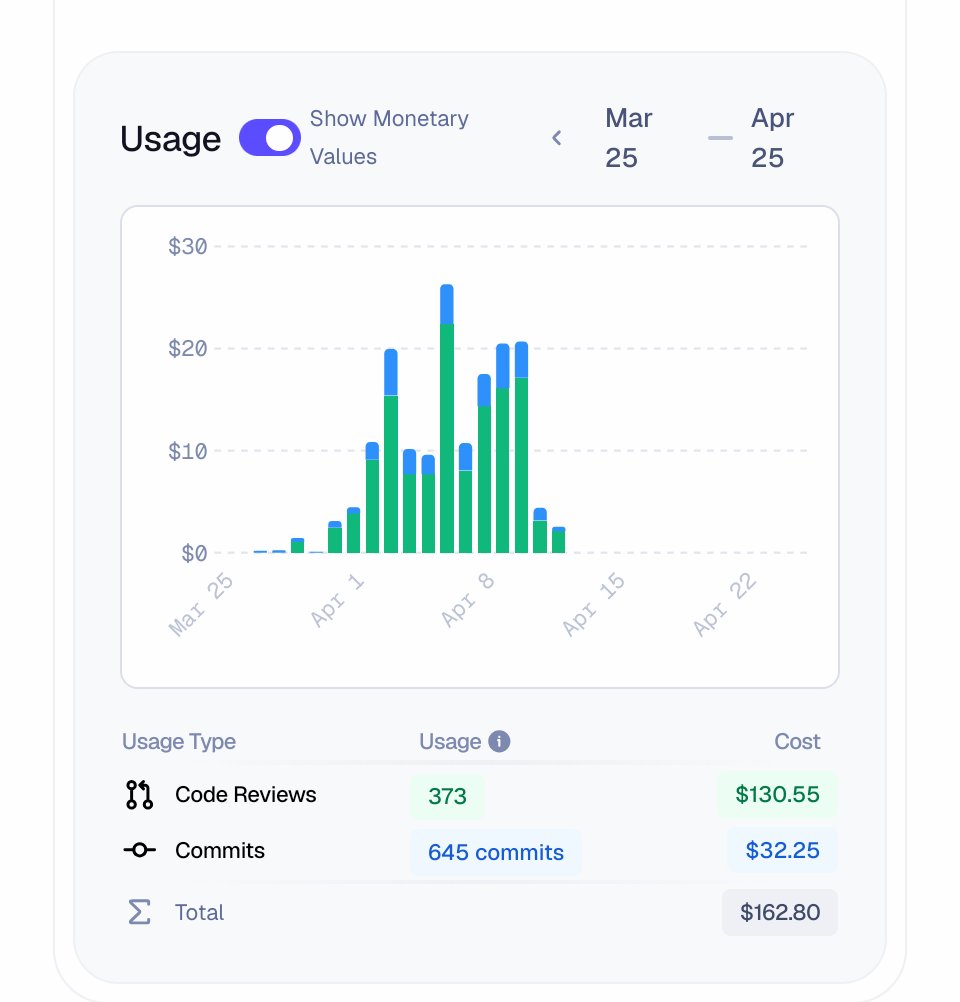
So I've been using Macroscope for PR reviewing my code written by Claude and it usually has 2-3 findings per PR. They are changing to usage based pricing and here's my estimated billing, $160 with 2 weeks left 😳 Has any devs found a rigorous yet cheaper AI way to review PRs?
David A. Lindahl 🏔️ tweet media
English
6
1
7
2.1K
RepoWise
RepoWise@RepoWise·
Yeah, this failure mode is brutal. Once the session collapses, you’re not debugging anymore, you’re doing disaster recovery on context. Large-file reads are annoying, but losing the chain of decisions is what really kills momentum. Feels like the fix is keeping repo state and review state outside the chat, so a blown session doesn't mean starting your understanding from zero.
English
0
0
0
16
Pix.elated
Pix.elated@thepix_elated·
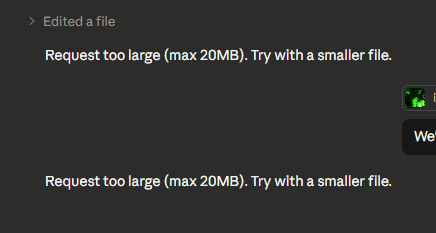
I love how Claude Code just becomes instantly permanently broken when this happens. You lose all context, all memory, can't continue, and have to start all the way over. All because it can't handle large files it tries to read.
Pix.elated tweet media
English
1
0
0
48
RepoWise
RepoWise@RepoWise·
$2 to $5 per PR gets painful fast once review becomes default, not exceptional. The bigger issue is paying full price for the model to rebuild repo context on every review pass. The teams that get costs down usually separate repo understanding from diff review, so the reviewer spends tokens on what changed, not on rediscovering the whole system each time. Feels like cost control in AI review is mostly a context architecture problem.
English
0
0
0
11
David A. Lindahl 🏔️
David A. Lindahl 🏔️@austriker27·
@soundslikecanoe Oh nice, that's awesome! Setup via Claude platform right? Mine is way less autonomous and more dev focused I guess I setup a Claude code review via GitHub workflows yesterday via the API but it cost like $2-5 per PR review. How expensive are your PR reviews?
English
2
0
1
63
RepoWise
RepoWise@RepoWise·
This is the right lesson. A lot of people treat coding agents like smarter autocomplete, but the real analog is a new engineer with high initiative and zero institutional context. If scope, boundaries, and approval points are fuzzy, they’ll optimize for momentum and accidentally widen the blast radius. The teams that make this work best seem to define autonomy at the file and workflow level, not just at the task level.
English
0
0
0
14
Ash Maurya
Ash Maurya@ashmaurya·
Claude Code taught me something uncomfortable about how I delegate. I gave it a task: "Implement this feature." No constraints. No guardrails. Just the goal. It went wild. Refactored files I didn't mention. Added "improvements" that broke other things. Created 6 new files when editing 1 would have worked. Committed without asking. My first reaction: "This tool is too aggressive." My second reaction: "Wait. This is exactly what happens when I hand a task to a new team member without context." The problem was never Claude Code. The problem was me. No boundaries on what to touch. No definition of done. No constraints on scope. No review checkpoint before committing. So I fixed it the same way I'd fix a team: → Explicit scope ("only modify these files") → Approval gates ("never commit without my OK") → Operating principles ("don't add features beyond what was asked") → Definition of done ("run tests, verify output, then report back") Now it works like my best collaborator. Not because the AI got smarter — because I got clearer about what I actually wanted. Autonomy without structure produces chaos. Structure without autonomy produces nothing. The sweet spot is clear constraints + full autonomy within them. Works for teams. Works for AI. Works for startups. What's the hardest delegation lesson you've learned?
English
3
0
4
569
Somno Science
Somno Science@somnoscience_·
@testingcatalog the multi-repo support is what I've been waiting for. currently juggling claude code between a sleep data pipeline and a lit review tool and the context switching is painful. if the cowork layout handles that cleanly that alone makes the update worth it
English
1
0
2
1.2K
🚨 AI News | TestingCatalog
🚨 AI News | TestingCatalog@testingcatalog·
Both Anthropic and OpenAI are gearing up to release updates to their desktop apps already next week. Anthropic is finalizing its new Claude Code "epitaxy" experience with a power-user-friendly UI, Cowork-style layout, and the possibility to work on multiple repositories at once. Users will be able to preview their code right in the app, along with sections to view a "Plan", "Tasks" executed by sub-agents, and "Diff". But that's not all 👀
English
32
68
1.2K
208.5K
RepoWise
RepoWise@RepoWise·
@Bull_lion_aire Task-scoped repo context is way more useful than chat ancestry for this kind of workflow.
English
0
0
0
3
Gaurav Gat
Gaurav Gat@Bull_lion_aire·
Codex sub agents suck. why do they need full parent chat context?
English
1
0
0
33
RepoWise
RepoWise@RepoWise·
@sharanjm16 On-demand context is the better pattern. Keep the repo brain available, not permanently stapled to the prompt.
English
1
0
1
19
Sharan JM
Sharan JM@sharanjm16·
I accidentally made Claude Code dumber by building too much on top of it. 35 skills. 76 memory files. CLAUDE.md rules. MCP plugins. All packed into the system prompt every turn. 46,000 tokens before I even typed hello.
English
3
0
0
52
Vikram Rai
Vikram Rai@raiv11·
@hecubian_devil @xav_moss I tried to do this on a smaller codebase and Claude code just timed out because the memory needed was too large. Had to ask Opus to chunk it into 12 prompts for me.
English
1
0
0
58
Cassie Pritchard
Cassie Pritchard@hecubian_devil·
All those years of ignoring people who said "learn to code" are paying off
Cassie Pritchard tweet media
English
16
16
745
18.4K