Resilient Performance

3.7K posts

Resilient Performance banner
Resilient Performance

Resilient Performance

@ResilientPPT

Resilient Performance & PT » Sports Medicine / Physical Therapy & Performance Training, Education & Consulting » #Resilient

NY | NJ | CT Katılım Haziran 2015
702 Takip Edilen2.9K Takipçiler
Resilient Performance
Resilient Performance@ResilientPPT·
@AdamArchuleta That makes sense too! I trust your opinion on that more than my own haha. Do you not think he tried to stay inside then? Or was being inside just a result of the timing of when he broke down?
English
0
0
0
89
Adam Archuleta
Adam Archuleta@AdamArchuleta·
@ResilientPPT Interesting. I would argue that the angle he too was not an inside/out angle. He was inside because he started inside, but that wasn’t his angle
English
1
0
2
173
Resilient Performance
Resilient Performance@ResilientPPT·
@AdamArchuleta He maintains his inside leverage as he comes to balance to limit Toney’s options. Once Toney sets up his juke and cuts back he ends up outside but because of the leverage/position he broke down in is able to make strong contact vs trying to arm tackle Toney as he cuts back.
English
1
0
1
160
Adam Archuleta
Adam Archuleta@AdamArchuleta·
@ResilientPPT I’ll challenge something. What does “come under control” mean? When should you come under control? Does he keep his leverage? He starts inside then finishes outside? I only ask that because that language can mean many different things to different players unless very specific
English
2
0
1
764
Resilient Performance
Resilient Performance@ResilientPPT·
@AdamArchuleta I love the questions! Coming in under control meaning at the appropriate speed for the situation. Too much speed and he may over run it or not be able to come to balance in time to make a good tackle. Not enough speed and Toney has too much space and can make a move.
English
0
0
0
27
Resilient Performance
Resilient Performance@ResilientPPT·
End stage rehab should look no different than an athlete’s typical training. If it does, then they won’t be prepared for the demands of their sport even if they’re “cleared”.
English
0
1
11
812
Resilient Performance
Resilient Performance@ResilientPPT·
@Tony_Villani_ 100%! All of our testing should help us make some programming decisions. If it doesn’t influence it at all, then we’re wasting our and the athlete’s time.
English
0
0
1
90
Tony Villani
Tony Villani@Tony_Villani_·
I agree on all these metrics...ESPECIALLY if you use them to change your or an atheltes training program built around metrics. If you are not changing programming though....🤔
Resilient Performance@ResilientPPT

@Tony_Villani_ Strategy metrics (relative force at min displacement, time to take off, peak braking velocity) on a CMJ are very helpful to understand what trainable deficits an athlete has. From a pure output standpoint, you’re right that a broad jump is just as useful as a CMJ

English
2
0
6
3.2K
Resilient Performance
Resilient Performance@ResilientPPT·
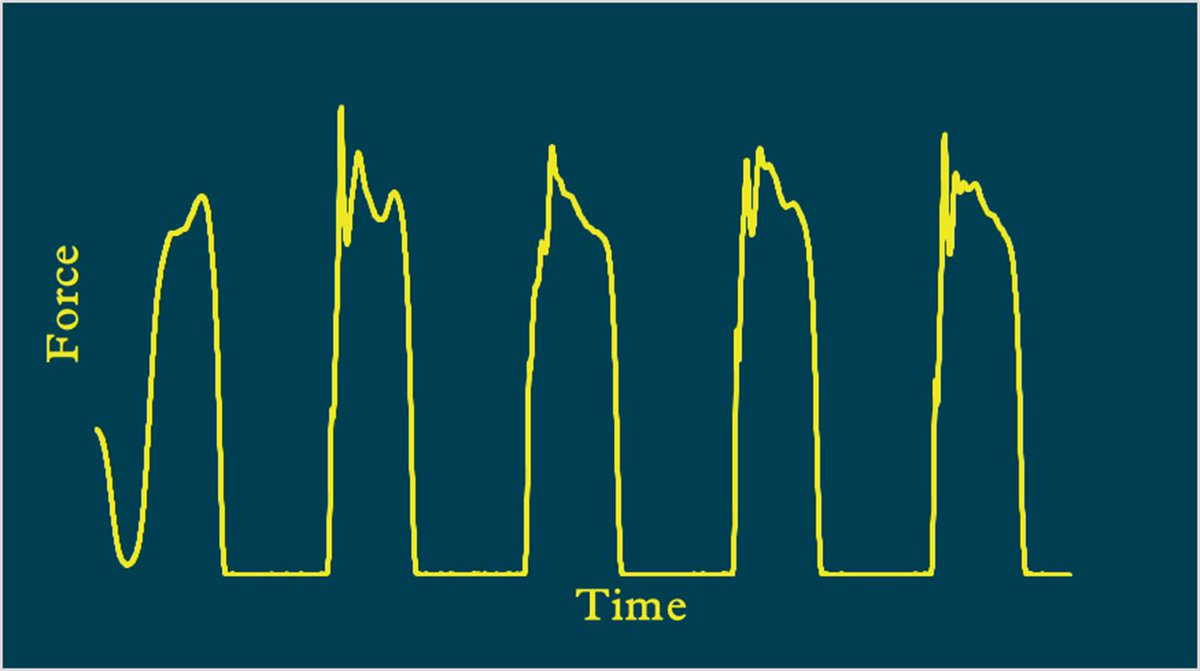
@Tony_Villani_ Strategy metrics (relative force at min displacement, time to take off, peak braking velocity) on a CMJ are very helpful to understand what trainable deficits an athlete has. From a pure output standpoint, you’re right that a broad jump is just as useful as a CMJ
English
0
1
7
4.9K
Tony Villani
Tony Villani@Tony_Villani_·
Serious question. Bc I do both. But if the most explosive CMJs on Force Plates directly correlates with Broad Jump, why not just use Broad Jump? I kind of have an answer but am interested to hear others. (And before you say all the other data, explain how you use it).
English
12
1
28
9.7K
Resilient Performance retweetledi
Andrew Ryland
Andrew Ryland@ADRCoachDev·
What destroys culture if you are not careful.
English
0
3
21
6.1K
Resilient Performance retweetledi
Coach Wayland | Performance Expert | Craftsman
Early days: coaches shared real programmes, detailed technique, periodisation and athlete-specific insights. Discovery was genuine. Progress was the point. Communities formed around actual results.
English
1
2
10
3.8K
Coach Dan Casey
Coach Dan Casey@CoachDanCasey·
John Hannah was a DUDE.
Coach Dan Casey tweet media
English
53
77
1.3K
269.8K
Resilient Performance
Resilient Performance@ResilientPPT·
We’re teaching our Return to Sport: Acceleration and Agility course in Virginia Beach on 5/16! Use code “EARLY516” for a discount! Code expires on Monday 3/16
Resilient Performance tweet media
English
0
1
2
304
Resilient Performance
Resilient Performance@ResilientPPT·
@AdamArchuleta Please keep sharing your experiences! It’s always great to hear what the athlete is going through/experiencing as a way to gauge if what we’re doing is having the effect we want it to.
English
1
0
1
200
Adam Archuleta
Adam Archuleta@AdamArchuleta·
I’m not a researcher or scientist. I don’t live and breathe this every day or work with athletes for a living. My opinions come purely from personal experience, introspection, and intense observation. I’m sure there are some, but I’m one of very few who started from a very average/mediocre place and became one of the best in the world, largely thanks to an ahead-of-its-time training system and an “unconventional” way of thinking. I wasn’t supposed to make it. I did because I had an intense desire to learn, ask questions and not accept the conventional way. I had the guts to double down on my beliefs and vision not someone else’s script. Throughout my journey, I listened to all the “experts” tell me what I was doing was wrong. I watched my peers (who started at a much higher level than I did) get slower and more injury-prone. I’ve seen those same peers switch to training the way we did—and suddenly experience fewer injuries and better performance. Interestingly, I had just one soft-tissue injury (from sprinting three days after our team conditioning session of 16×110s). During my entire playing career—college and pro—I never experienced a single muscle cramp. We (Jay and I) believed in a different method of preparing the body for competition. I share these ideas and experiences. I’ve seen and lived two decades of anecdotal evidence. If there’s one thing I believe more than anything, it’s that more submaximal traditional conditioning is, in fact, the enemy of high performance. I’m not qualified to debate this point for point, but at this stage it would be hard for anyone—despite their qualifications—to convince me my experience wasn’t real. Especially when I’m unaware of anyone who achieved the results I did by doing it the other way. Until just a few weeks ago I did not participate on this platform, I do now but not to start debates and pick fights - I simply want to share my unique experiences that I believe can add value to a lot of people. It’s about perspective. I certainly respect and appreciate the dialogue.
StrengthCoachNetwork@StrCoachNetwork

We can talk about this and other things. Here are my thoughts on your post: "The ability to hold perfect position, technique, and max speed/power longer than your opponent." You can say that there is never perfect position and therefore working with athletes to still make the best out of bad position is key. "Once you lose the capacity to maintain technique and position, your advantage is gone." You can say this is exactly why it needs to be trained at lower levels to make the skill automatic - much like referenced in Supertraining by Mel and Yuri "Sub maximal "conditioning" doesn't build that." Why not? You can work on it in practice and training - and then go let it rip in games. Athletes don't hit full speed every single play/snap in practice - yet they perform on gameday. "In fact, it works against it. It detrains the CNS and makes you slower, less powerful, and more prone to injury when it matters." How so? Where is the data to back that up. Detrains the CNS - again now? The nervous system can recover from the hard training (a game) with lower level work - but can still get work done during the week, and thus perform on gameday, "If being a high performer is king, then by its very nature "conditioning" will always be my sworn enemy!!" Again, why? Conditioning is the ability to recover from play to play, series to series, game to game, week to week, season to season, etc...why would that be your sworn enemy (with 2 exclimation marks none the less)? This ability to recover and keep performing helps make athletes higher performers. "Train to stay fast and dominant under real duress, not just to "not get tired."" 100% train to stay fast and dominant under real duress - which is game duress. Nothing in practice simulates the pressure of fans/TV/etc...nothing I said was advocating to train athletes to only not get tired. Not getting tired and being fast don't have to be something to choose between. It is a false dichotomy. Thanks again for considering!

English
12
4
99
23.8K
Resilient Performance retweetledi
Lee Taft
Lee Taft@leetaft·
One thing I always emphasize at my workshops is this: Coaches need to feel the movement, not just watch it. These strategies are taught inside GameLikeSpeed.com
English
0
1
7
1.4K
Resilient Performance
Resilient Performance@ResilientPPT·
These posts about his training are 💎
Adam Archuleta@AdamArchuleta

A lot of interest and people reaching out about this post. Questions about sets, reps, volume, etc. Training can get pretty technical, but I want to make one thing clear… More than anything, this post is about INTENTION and how powerful it can be. I always knew I needed to get bigger, faster, stronger, etc. But everything changed the day I met Jay, and it started with mindset. He introduced me to the idea that yes, we want to get strong, but it wasn’t the weight itself that mattered. It was HOW we moved the weight. SPEED mattered. From that day on, the ONLY focus in my training wasn’t the “what", it was the “how.” What did I need to FEEL to move faster? Everything we did had one purpose - to feed the brain/body connection. What do we need to do to get the brain to fire the strongest, clearest signal possible to the muscles? When you change the intent and treat every rep as the only rep that matters, you start to pay special attention and notice things that are happening to your body. You start asking yourself different questions. You notice how body position, technique, and focus affect performance. You begin to FEEL what it’s supposed to feel like to perform at a high level. You literally begin programming who you are becoming in your minds eye. The emotional energy you need to invest in every single rep is exhausting, but the rewards compound. This investment in training is what delivers results far more than any rep scheme or program. It all starts with a crystal clear picture in your mind’s eye of what its SUPPOSED to look like. Extreme results come from extreme thinking and extreme actions. I'm really enjoying the engagement and questions, keep them coming! #SpeedKills #Mindset #Intention

English
1
0
5
1.4K
Resilient Performance
Resilient Performance@ResilientPPT·
Redundancy in the RTS process is the ultimate testing battery we can expose our athletes to
English
0
1
3
430
Resilient Performance retweetledi
Adam Archuleta
Adam Archuleta@AdamArchuleta·
I first heard this 30 years ago at age 17, when my trainer Jay Schroeder DRILLED it into my soul. I still remember the day we met. He told me, “I don’t want you to squat 450 pounds in 3 seconds… I want you to squat 350 pounds in ½ second. THAT’S power.” To train with him, he forced me to write a daily training log that timed the concentric portion of EVERY rep, EVERY set, EVERY exercise with a stopwatch. I did this for 6 straight months before he allowed me to train at his gym. It took over an hour daily to write the log, but what I learned about my body and performance was invaluable. Training with this intent changes everything: to move max weights at high speed, EVERYTHING matters. Technique and position must be flawless, no power leaks. You learn to eccentrically LOAD, not just drop with gravity and momentum. My body awareness skyrocketed. Speed is king. Details and intention matter. I stopped caring about increasing my max and started caring about moving my max FASTER. It’s the primary reason I transformed myself from a walk-on who ran 4.8 to a first-round pick who ran 4.3.
Josh Bryant@joshstrength

Division 1 football players training in a compensatory acceleration style (CAT) upper body strength regimen were compared to a traditional regimen in their off-season. The CAT group was instructed to perform the positive rep as explosively as possible. The traditional group performed repetitions at a traditional tempo. At the end of both off-season training programs, both power and strength were assessed. Power was tested with a seated medicine ball throw and a force platform plyometric push-up test. Strength was assessed by a one rep max in the bench press. Both groups increased strength and power. The group that trained in a Compensatory Acceleration Training (CAT) style improved their bench press by nearly double the amount of the traditional group. Average power, as expected, increased significantly more in the group that trained explosively. Jones, K. K., Hunter, G. G., Fleisig, G. G., Escamilla, R. R., & Lemak, L. L. (1999). The effects of compensatory acceleration on upper-body strength and power in collegiate football players. Journal of Strength & Conditioning Research (Allen Press Publishing Services Inc.), 13(2), 99-105. Practical Application Fred Hatfield was ahead of his time advocating Compensatory Acceleration Training. It is simply superior! Training adaptations are not just a result of weight on the bar. Adaptations from training are a byproduct of tension and duration. You respond to how much force produced, how fast the force was produced, how long you produced it, and how many times you produced it. Force=mass x acceleration. More tension is result of greater bar speed. Maximal strength training and power adaptations can result from lifting weights with maximal force; one more reason to compensatorily accelerate weights.

English
47
152
2.1K
480.9K
Resilient Performance retweetledi
Lee Taft
Lee Taft@leetaft·
My Multidirectional Speed Model in a nutshell: 1️⃣ Master the movement patterns 2️⃣ Control mass & momentum 3️⃣ Apply it in game-like situations This is the foundation of real game speed. See the drills and coaching inside GameLikeSpeed.com
English
0
2
19
2.8K
Resilient Performance retweetledi
Eamonn Flanagan
Eamonn Flanagan@EamonnFlanagan·
Repeat jumps are a powerful tool to improve fast dynamic strength. Repeat jumps: - Improve eccentric rate of force development - Increase tolerance to stretch loads - Enhance stretch shortening cycle function - Act as a bridge to higher intensity modalities such as depth jumps
Eamonn Flanagan tweet media
English
3
14
104
7.3K
Resilient Performance
Resilient Performance@ResilientPPT·
What’s an all too common ACL clearance test? A surgeon watching the athlete walk up and down the hallway.
English
0
0
4
491
Resilient Performance retweetledi
Andrew Ryland
Andrew Ryland@ADRCoachDev·
@ScottLeech72 nails this in the simplicity. Add space. Add various athletic movements before entering the contest. Add obstructions. Add more players. Remember, slow speed tracking is not tracking (so stop doing 75% run&gather) Creating and Closing Space simplifaster.com/articles/game-…
English
0
5
31
2.3K