Sabitlenmiş Tweet

I have often heard it said that the reason many Catholics have historically fallen away from the Faith is due to “poor catechesis.” The solution that is posited is simply, “We need to better teach the faithful!” But what does that even mean? Teach them what?
The depths of Divine Truth are endless; such that, without framework, it renders the word “catechesis” functionally empty. Without a clear and concrete starting point, teaching becomes diffuse and ineffective; and those who mindlessly call for “better catechesis” offer no more assistance beyond their helpless, hollow demand.
The real question, then, is not whether we need better catechesis, but rather where it must begin. And the only answer to this can be the Eucharist.
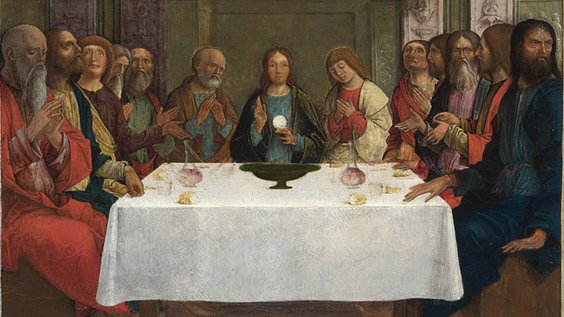
As we know, Jesus said, “unless you eat the flesh of the Son of man […] you have no life in you […] For my flesh is food indeed […] He who eats my flesh […] abides in me, and I in him” (John 6:53-55). This culminates in the Last Supper, where, breaking bread and giving it to His disciples, He says, “This is my body” (Luke 22:19; cf. Matthew 26:26; Mark 14:22). As Augustine writes of this, “Christ was carried in His Own Hands, when commending His Own Body, He said, This is My Body” (Exposition on Psalm 34).
A 2023 US survey found that only 38% of the roughly 1,000 participants correctly knew and believed the Church’s teaching on the Real Presence of Christ in the Eucharist.¹ Furthermore, 51% of respondents believed that Christ’s institution of the Sacrament was merely symbolic.² This is very problematic and dangerous, since Christ’s Real Presence is one of the most important and crucial dogmata of the Church. It is by the Eucharist that we can have eternal life. It is in the Eucharist that Christ abides in us, and we in him.
Those who truly know that the Eucharist is the very Body, Blood, Soul, and Divinity of Jesus Christ are far less likely to abandon Him for cheap slogans or appeals to emotion. On the other hand, those who only see Mass as one banal religious ritual among many, where the Sacraments have merely symbolic value, are much more prone to being led astray.
Therefore, it is up to pastors, parents, and all persons with prudence, to actively involve themselves with the Eucharistic catechesis of the faithful. We must also strengthen our own belief; through prayer, Confession, Adoration, etc. And we ought to daily pray the words of the desperate father recorded in Mark’s Gospel: “I believe; help my unbelief!” (Mark 9:24)
English