
Brandon Ramirez

2.9K posts

Brandon Ramirez banner
Brandon Ramirez

Brandon Ramirez

@RezBrandon

Cofounder @graphprotocol & @edgeandnode. Building the fully decentralized web3 stack, leveraging tech, systems thinking and incentive design.

Oakland, CA Katılım Kasım 2012
3K Takip Edilen4.4K Takipçiler
Sabitlenmiş Tweet
Brandon Ramirez
Brandon Ramirez@RezBrandon·
I'm incredibly excited to welcome @rodventures as the new CEO of Edge & Node, effective immediately. Rodrigo has a deep appreciation for the past decisions that have driven The Graph's success and a strong vision for how the protocol should evolve in the future.
Edge & Node@edgeandnode

Big news at Edge & Node! We’re excited to share that Rodrigo Coelho (@rodventures), one of our earliest team members, has officially stepped into the role of CEO. Rodrigo has been instrumental in The Graph’s journey from day one—leading community efforts, managing operations, and championing decentralization through every market cycle. With an Industrial Engineering background and prior CEO experience co-founding multiple technology startups, Rodrigo brings a deep passion for web3 and a proven track record of innovation. Under his leadership, we’ll continue to push the boundaries of decentralized tech, fuel R&D, and empower the global developer community to build the future of the internet. Get the full story on Rodrigo’s background, vision, and what’s next for Edge & Node in our latest blog post: edgeandnode.com/blog/rodrigo-c…

English
7
4
36
3.5K
Brandon Ramirez retweetledi
Shutterblock.eth 📸💥🦇🔊
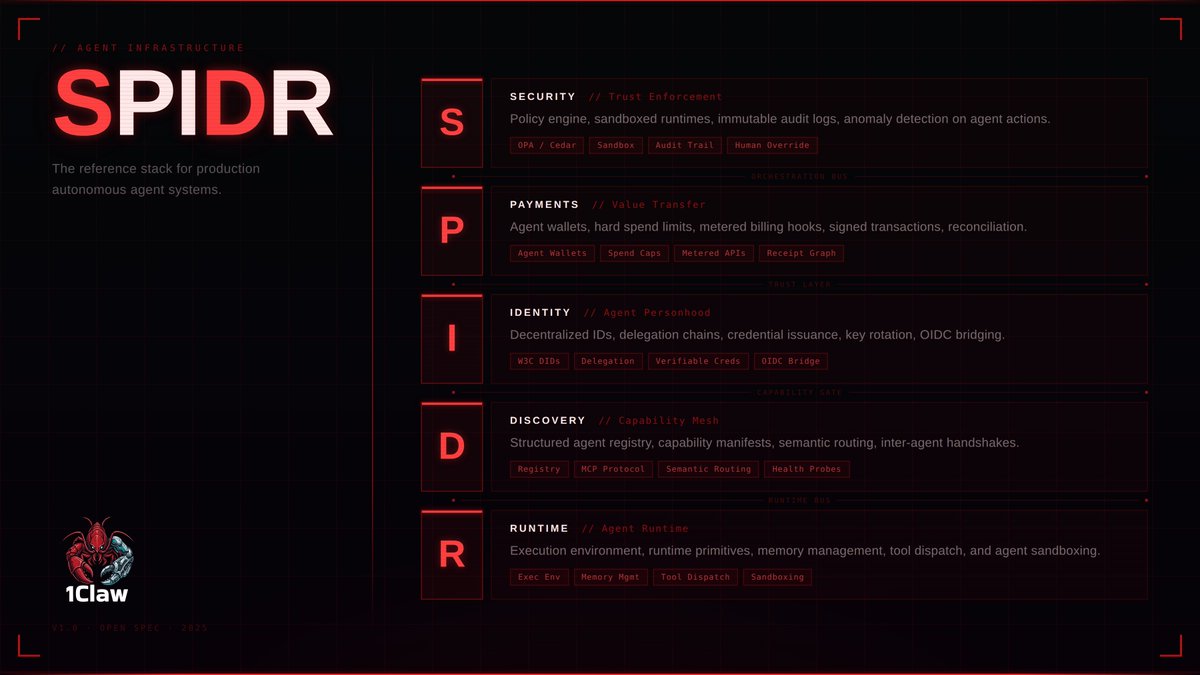
Today's session was so good! Incase you missed it, we built out an AI agent with @ampersend_ai and a bunch of other really cool tech. The framework for AI agents is... 🛡️Secruity 💸Payments 🔰Identity 🔍Discovery 🔷Ethereum ☁️Runtime @1clawAI @ensdomains @edgeandnode @agent0lab @googlecloud
Edge & Node@edgeandnode

The Signal Podcast: Scaffold-Agent and ampersend with OpenClaw x.com/i/broadcasts/1…

English
1
8
24
3.1K
Brandon Ramirez retweetledi
Shutterblock.eth 📸💥🦇🔊
Shutterblock.eth 📸💥🦇🔊@cryptomastery_·
The LAMP stack (Linux, Apache, MySQL, PHP) defined the web for 20 years. (or LEMP if you were really hip... shoutout to @nginxorg) IYKYK But we aren’t just serving static pages anymore. We are spawning autonomous actors. Agents are long-running, they spend money, and they act as economic proxies. Traditional infra isn't built for this. Introducing the SPIDR Stack: The infrastructure blueprint for the Agentic Era. 🕸️🤖 Here is the breakdown of the new standard: S — SecurityBefore an agent touches a cent, it must be sandboxed. This layer handles policy enforcement and immutable audit trails. You don't give an agent a wallet without a restricted environment. 🛠️ @1clawAI and @NEARProtocol IronClaw focus on security "First" approach P — PaymentsAgents must be economic actors. This layer provides programmatic wallets, spend limits, and transaction signing. It’s the "Bank of the Agent." 🛠️ @ampersend_ai and @coinbase x402 I — IdentityWho does the agent represent? Using DIDs (Decentralized Identifiers) and delegation chains, agents provide "Proof of Provenance" to act on a human’s behalf. 🛠️ @ethereum, @ensdomains and standards like ERC-8004 (also native in @ampersend_ai) D — DiscoveryAn agent is only as good as the tools it can find. This is the registry layer where agents match capabilities and route tasks dynamically without central gatekeepers. 🛠️ @x402scan, @coinbase Bazaar and soon R — RuntimeUnlike a web request that lasts milliseconds, agents run for days. The Runtime handles spawning, checkpointing, and state management throughout the agent's entire lifecycle. @Docker and @kubernetesio become stronger story here for agents, especially in combination with rock solid cloud providers lik @googlecloud and orchestration tools to take your agent multi-cloud Why the order matters: ⭐️ Security enforces the rules. ⭐️Payments enable action. ⭐️Identity enables Discovery (you must be "someone" to be trusted). ⭐️Runtime wraps it all together We are moving away from building "apps" and toward building ecosystems of autonomous actors. The infrastructure for the future has a name. It’s SPIDR. #AI #AgenticWorkflows #Web3 #SPIDRstack #AIagents #Developers
Shutterblock.eth 📸💥🦇🔊 tweet media
English
4
3
14
922
Brandon Ramirez retweetledi
Rodrigo Coelho
Rodrigo Coelho@rodventures·
All of finance is going onchain, and they need fast and accurate data. We invented onchain data indexing technology with Subgraphs in 2018, and it became the global standard. We’ve now reinvented the new standard, called Amp. All of tradfi will use it. Mark my words.
Etherealize@Etherealize_io

Robinhood CEO: In the future there will be no distinction between crypto and traditional finance “I think that crypto technology has so many advantages over the traditional way we’re doing things that in the future there will be no distinction. It’s kind of how technology itself was viewed as a sector of the economy for a very long time… I think crypto will go through the same transition where we’re still thinking about it in its own bucket but eventually everything will be on-chain in some form or another and the distinction will disappear.” Robinhood CEO Vlad Tenev explains why this transition is taking so long: “I think the challenge with traditional finance — particularly on the infrastructure layer — is they have a lot of stakeholders, and if you think about where they generate the bulk of their revenue, it’s not from crypto-related initiatives. And a lot of these stakeholders, because they’re quite big, are going to be resistant and slower to adopt technologies. They’re going to be late adopters. They’re going to wait until it’s proven before adopting it, and that’s why we [Robinhood] have had to do greater vertical integration than we would normally want to do in TradFi. We acquired Bitstamp. We have our own exchange. And we have our own chain because I don’t think — to be at the frontier of crypto — you can rely on traditional infrastructure providers. I think they’ll get there eventually but it will take a very long time.” Source: @token2049 (Oct 2025)

English
0
4
21
835
Brandon Ramirez retweetledi
The Graph
The Graph@graphprotocol·
🗓️ The Graph Foundation is hosting a public quarterly call on March 31. The agenda: Strategy, roadmap deep dive across products and protocol, network economics, and Q&A. Open to all. Details in the forum.
English
6
12
102
2.7K
Brandon Ramirez retweetledi
Edge & Node
Edge & Node@edgeandnode·
Amp's benchmarks are mind-blowing. Here are a few to show the innovation this product brings to blockchain data access. ~100 ms latency at chain head. This is the time between a new block appearing on the network and Amp having that data available for streaming SQL queries. For context, Ethereum's block time is 12 seconds, so Amp serves verified data within the first 1% of the next block's window. 4,000,000 events decoded per second. This is the throughput of Amp's evm_decode UDF, processing raw log data into structured, typed output. You can decode every Uniswap swap, ERC-20 transfer, and governance vote across an entire chain's history at this rate. 5 seconds to query all block hashes since genesis. Query: SELECT hash FROM "edgeandnode/ethereum_mainnet".blocks. Every block hash from block 0 to the current head, returned in 5 seconds—thanks to columnar Parquet storage with block-level partitioning. 35 seconds to aggregate all transactions since genesis. Query: SELECT COUNT(*), value > 0 AS has_value FROM "edgeandnode/ethereum_mainnet".transactions GROUP BY 2. Billions of transactions, aggregated with a GROUP BY, in 35 seconds. These numbers come from Amp running on the Apache DataFusion query engine with Apache Arrow as the in-memory format. DataFusion's vectorized execution across columnar data gives Amp the same query optimizations that power the broader analytics ecosystem, not a bespoke blockchain-specific engine. Amp is set to become the new standard for blockchain data access. Check it out: github.com/edgeandnode/amp
English
0
11
35
3.1K
Brandon Ramirez retweetledi
Rodrigo Coelho
Rodrigo Coelho@rodventures·
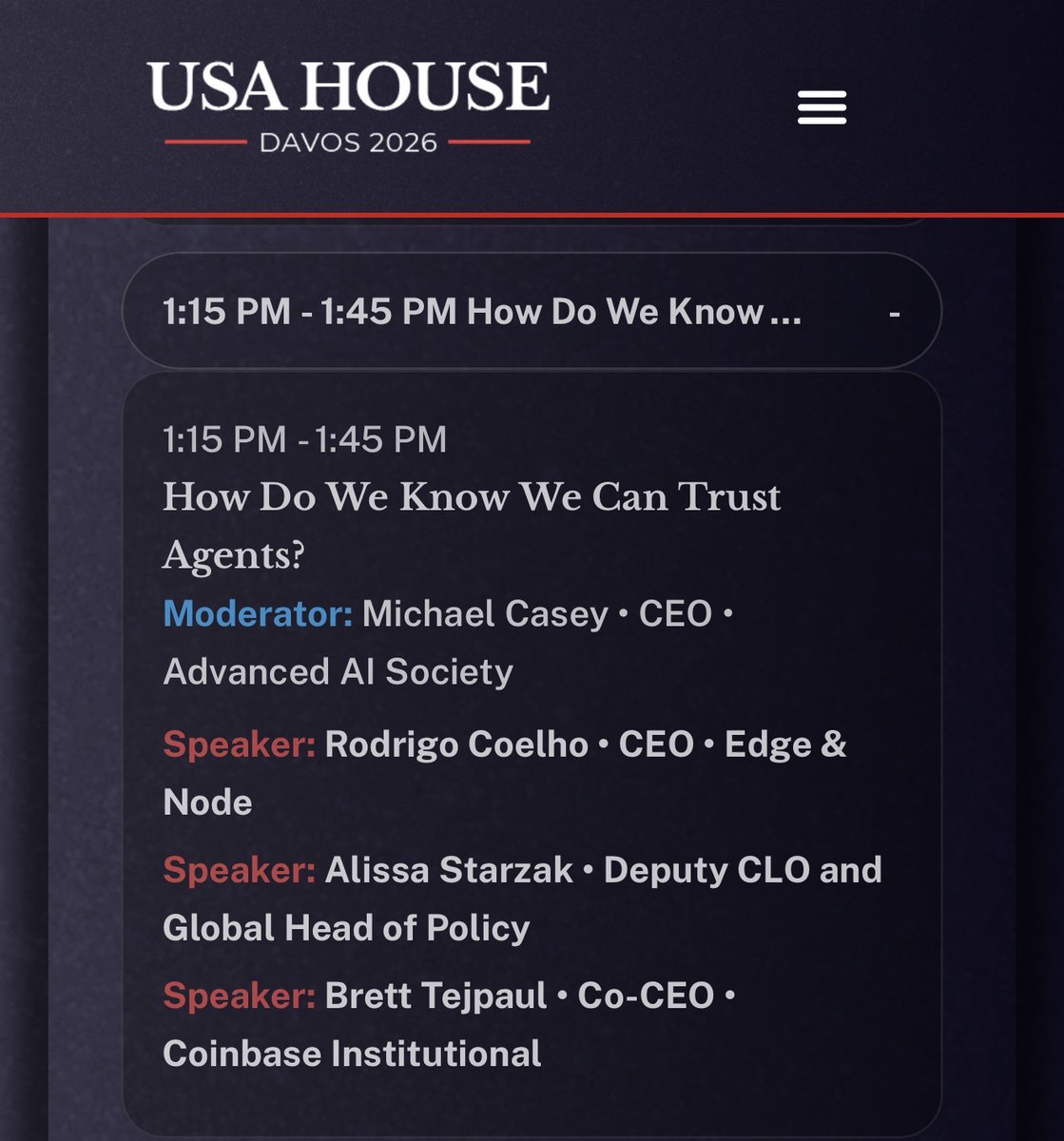
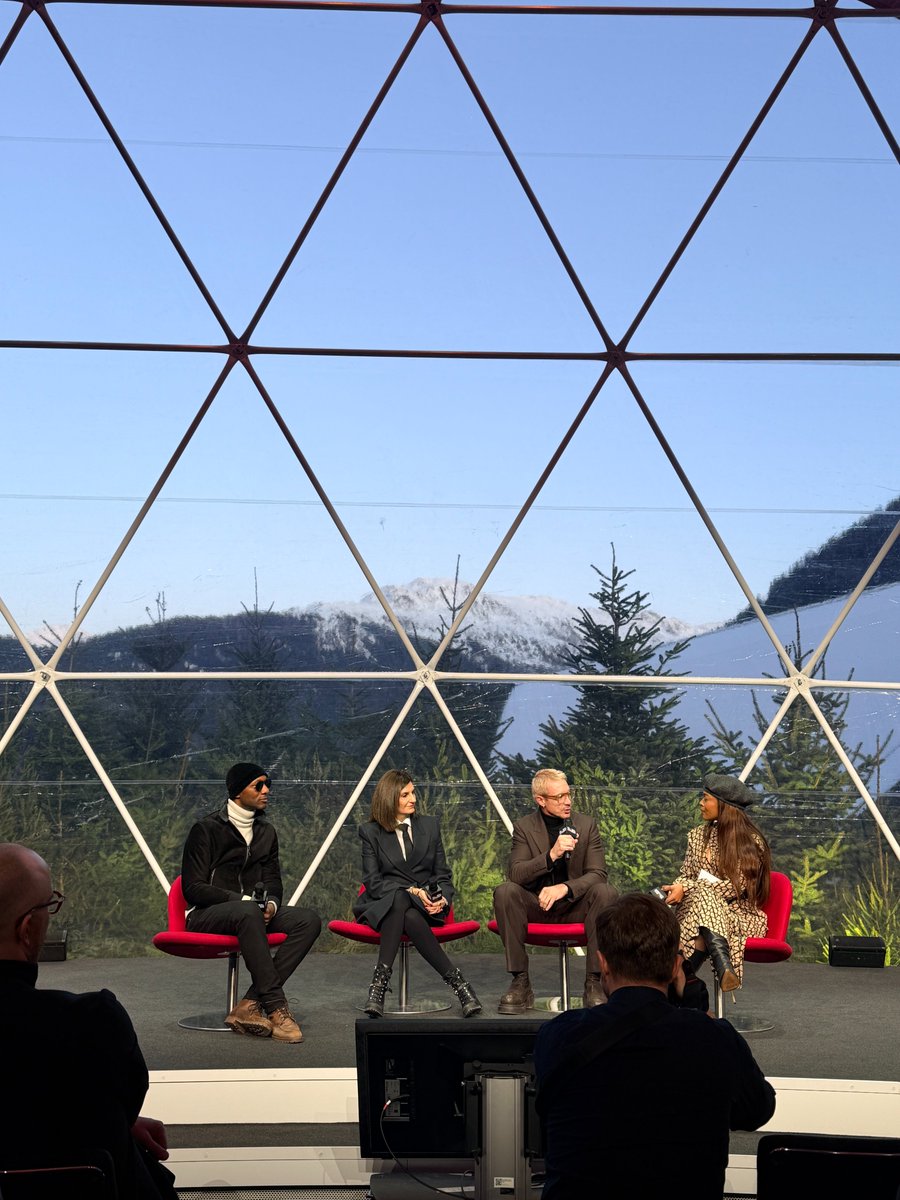
Davos from a first time perspective I just returned from my first Davos experience. It came together very quickly and I had zero expectations or knowledge of what it would be like in advance. Michael Casey @mikejcasey, who's been eight times, showed me the ropes, got me into events, and made the introductions that mattered. Without him and his cofounder Trisha Wang @triciawang from the Advanced AI Society, @aai_society this experience wouldn't have been nearly as valuable. Trump's attendance and the geopolitical topics being discussed, like Greenland, had everyone's attention. Jensen Huang showed up even though he never comes, and @elonmusk just popped in unscheduled. For a few days, it was THE place in the world to be. Here are some of my observations and takeaways. On AI and what we're building: AI came up in every conversation. What we're building at Edge & Node @edgeandnode , and specifically with Amp and @ampersend_ai, hit right at the center of what people were trying to solve. We're building infrastructure that lets enterprises use blockchain data with AI while keeping sensitive information private. Think financial institutions that want the transparency and auditability of blockchain but can't expose proprietary trading data or customer information. And as AI agents start making payments to each other autonomously, you need observability into those transactions, who authorized what, and where the money's actually going. The financial world has embraced digital assets and blockchain technology. Transparency and interoperability are the killer features, but private data solutions are what enterprises need to fully adopt. That's where Ampersend comes in. What surprised me was how urgent this has become. Mandates to implement blockchain are coming from CEOs and the highest executive levels. This is going to be the story of 2026. The big areas of concern with AI are security, trust, and verifiable data you can actually rely on. My panel at the USA House on trust in AI landed well because people are actively trying to solve these problems right now, and we're already working with financial institutions on exactly this. On the vibe and dynamics: The USA's presence and Trump's attendance cast a big shadow. The US made a stance against globalism and what the WEF has come to represent. I heard murmurs that the conference may change in the future. The climate narrative took a back seat, and the bigger topic was meeting energy demand for AI data centers. I was somewhat pleased to see that, as I never agreed with the hypocrisy of the "you’ll eat bugs while we fly private" mentality. There's a hierarchy here. Badge color, who you know, how much you spent to be there. It's very pay to play. The amount of money enterprises and countries spent setting up their houses and events is staggering, probably hundreds of millions in aggregate for the weeklong event. But people were surprisingly accessible. As an example, I was at an after party and @howardlutnick was there and you could just go up and talk to him (after getting past the bodyguards of course). I had a panel at the USA House right after All-In Podcast, and @jason gave me a look when I was chatting with his wife in the green room. We laughed about it after. The Europeans very much dislike Trump, as you would imagine. When his helicopters came in, the military jammed cell service. Everyone knew he'd arrived before they could check their phones. When his speech came on, everywhere I looked TVs were playing it and people paused conversations to listen. For a couple of days, the Promenade (the small Main Street) turns into as busy a street as you'd see in New York City, with people from around the world walking around speaking all sorts of languages. It reminds me in some ways of Burning Man in that it's a weeklong event that arises from a quiet place that people fly in for from around the world, there's very much a community of people that attend this type of event and see each other around the world or come back each year and have a sort of reunion. Houses on the promenade are like camps, but the big difference is everything is very much gated and access and entry is very much controlled. Last Thoughts… Come with a clear pitch and objective. It is the best in the world for business development and networking. Your network is your net worth as the saying goes! A burger is $60 US dollars. The food is not great. Sorry Switzerland! Trains get you anywhere. You'd be riding with people in their full ski outfits next to businesspeople. The train drops you right at the base of the lift if you ski. The landscape and backdrop is stunning. Prepare to be wowed. I was invited on a group ski day with top executives the day before the event started. As a lifelong skier, being able to squeeze in ski days while at the same time doing high level networking is a dream fulfilled. I would definitely come again, and I would recommend businesspeople to attend if you have an offering or pitch that is relevant to this community. With Burning Man, your first time is often the best experience, so we'll see how future years compare to this one.
Rodrigo Coelho tweet mediaRodrigo Coelho tweet mediaRodrigo Coelho tweet mediaRodrigo Coelho tweet media
English
3
5
27
1.4K
Brandon Ramirez retweetledi
Edge & Node
Edge & Node@edgeandnode·
Amp is a blockchain-native database designed for enterprise onchain data. It delivers verifiable, auditable datasets with sub-second freshness across SQL, APIs, and streaming interfaces. Deployments support on-prem, cloud, and hybrid environments. With up to 4,397x faster performance, 98% lower storage requirements, and 400–500x lower retrieval costs compared to archive-node based approaches, Amp converts raw onchain events into production-ready data infrastructure. Amp supports analytics platforms, AI agents, real-time monitoring systems, and regulated enterprise workflows.
Edge & Node tweet media
English
1
9
30
826
Brandon Ramirez retweetledi
Sam Green
Sam Green@0xsamgreen·
Welcome to Year 2 of AgentFi. Here's a recap of what happened in 2025 and how 2026 will be won: * Rule-based agents use if-then type computations. "Bots" qualify here. By my definition, rule-based agents have generated more than 50% of internet traffic since 2024. (Google "2025 Imperva Bad Bot Report".) * Algorithmic agents are like quants and solve some sort of math/optimization problem before taking action. Most of the yield-seeking agents are algorithmic. This agent type found PMF in 2025. MEV bots are algorithmic agents - they need to solve a little math problem before they do their work. * AI Agents use neural networks (like LLMs or more advanced things) for their decisions. These agents currently work well for user-facing research tasks and UX, but there's a long way to go before they're safe to use directly for financial decision-making. You don't want a sloppy LLM losing you money. That's why reliable, deterministic, transparent rule-based and algorithmic agents gained significant TVL and volume last year. Additionally, with the expansion of stablecoins last year, yield-seeking will become an even higher priority, and algorithmic agents will win. What's coming next? AI is doubling in performance every 4 months. This means that in January 2027, AI will be approximately 10 times better than it is today; at some point, it will be reliable for financial applications. Because of this, you'll naturally see rule-based and algorithmic agents (bots) gradually morph into AI agents.
Cambrian Network 🪴@CambrianNetwork

new year, new financial paradigm 2026 is the year of agentic finance

English
3
4
29
1.9K
Brandon Ramirez
Brandon Ramirez@RezBrandon·
It's also notable that this is all happening post the era of the three original Co-Founders of The Graph being involved in day-to-day. I'm super inspired by The Graph's next generation of leaders and can't think of a better testament to the ecosystem being in good hands.
English
0
0
5
251
Brandon Ramirez
Brandon Ramirez@RezBrandon·
And congrats to @lutterkort, @yodataz and too many others to list on the Edge & Node team for all the hard work in getting Amp (as well as Ampersend!) launched in less than a year, in time for Devconnect. Reminds me of our execution velocity in the early days of The Graph.
English
1
0
4
236
Brandon Ramirez
Brandon Ramirez@RezBrandon·
This. I think people are sleeping on the potential of impact of Amp, and how different it is from everything that has come before it. Amp is a database architected from the ground-up with blockchains in mind.
Yaniv Tal@yanivgraph

Went through the code for Amp that @edgeandnode built for @graphprotocol and it’s insane. Custom database w/ DataFusion for verifiable transformations using Arrow, Parquet & SQL. Blazing fast. Parallelized. Modular. It took a while but @graphprotocol did it again.

English
3
8
24
1.5K