Richard Rauser
1.6K posts

Richard Rauser
@RichardRauser
CTO at fan3. Highly technical digital builder and general technologist.


Very interested in what the coming era of highly bespoke software might look like. Example from this morning - I've become a bit loosy goosy with my cardio recently so I decided to do a more srs, regimented experiment to try to lower my Resting Heart Rate from 50 -> 45, over experiment duration of 8 weeks. The primary way to do this is to aspire to a certain sum total minute goals in Zone 2 cardio and 1 HIIT/week. 1 hour later I vibe coded this super custom dashboard for this very specific experiment that shows me how I'm tracking. Claude had to reverse engineer the Woodway treadmill cloud API to pull raw data, process, filter, debug it and create a web UI frontend to track the experiment. It wasn't a fully smooth experience and I had to notice and ask to fix bugs e.g. it screwed up metric vs. imperial system units and it screwed up on the calendar matching up days to dates etc. But I still feel like the overall direction is clear: 1) There will never be (and shouldn't be) a specific app on the app store for this kind of thing. I shouldn't have to look for, download and use some kind of a "Cardio experiment tracker", when this thing is ~300 lines of code that an LLM agent will give you in seconds. The idea of an "app store" of a long tail of discrete set of apps you choose from feels somehow wrong and outdated when LLM agents can improvise the app on the spot and just for you. 2) Second, the industry has to reconfigure into a set of services of sensors and actuators with agent native ergonomics. My Woodway treadmill is a sensor - it turns physical state into digital knowledge. It shouldn't maintain some human-readable frontend and my LLM agent shouldn't have to reverse engineer it, it should be an API/CLI easily usable by my agent. I'm a little bit disappointed (and my timelines are correspondingly slower) with how slowly this progression is happening in the industry overall. 99% of products/services still don't have an AI-native CLI yet. 99% of products/services maintain .html/.css docs like I won't immediately look for how to copy paste the whole thing to my agent to get something done. They give you a list of instructions on a webpage to open this or that url and click here or there to do a thing. In 2026. What am I a computer? You do it. Or have my agent do it. So anyway today I am impressed that this random thing took 1 hour (it would have been ~10 hours 2 years ago). But what excites me more is thinking through how this really should have been 1 minute tops. What has to be in place so that it would be 1 minute? So that I could simply say "Hi can you help me track my cardio over the next 8 weeks", and after a very brief Q&A the app would be up. The AI would already have a lot personal context, it would gather the extra needed data, it would reference and search related skill libraries, and maintain all my little apps/automations. TLDR the "app store" of a set of discrete apps that you choose from is an increasingly outdated concept all by itself. The future are services of AI-native sensors & actuators orchestrated via LLM glue into highly custom, ephemeral apps. It's just not here yet.


🏆 Finalist: RauserHack RauserHack allows you to express your music ideas with only your voice; while learning about digital music creation. @RichardRauser

This weekend, our final hackathon of the year landed in London with Gemini 3, powered by @GoogleDeepMind 🏆 Winners received $150K+ in Gemini API credits and a 1:1 with @AIFuturesFund. Check out the winning projects 👇


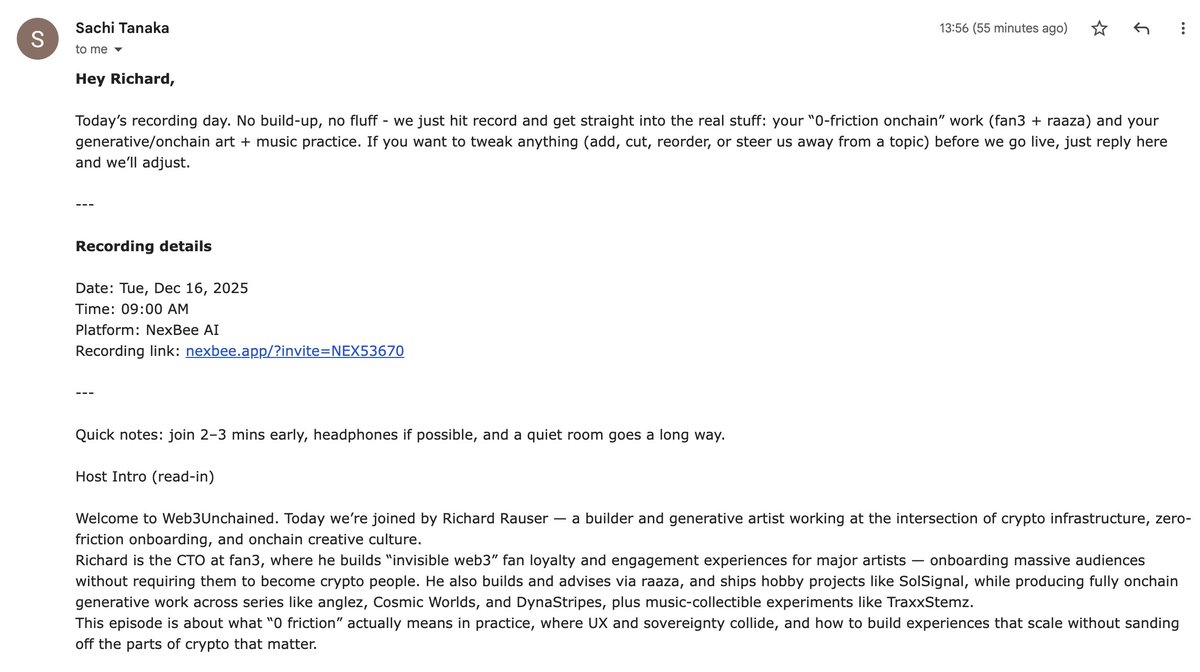
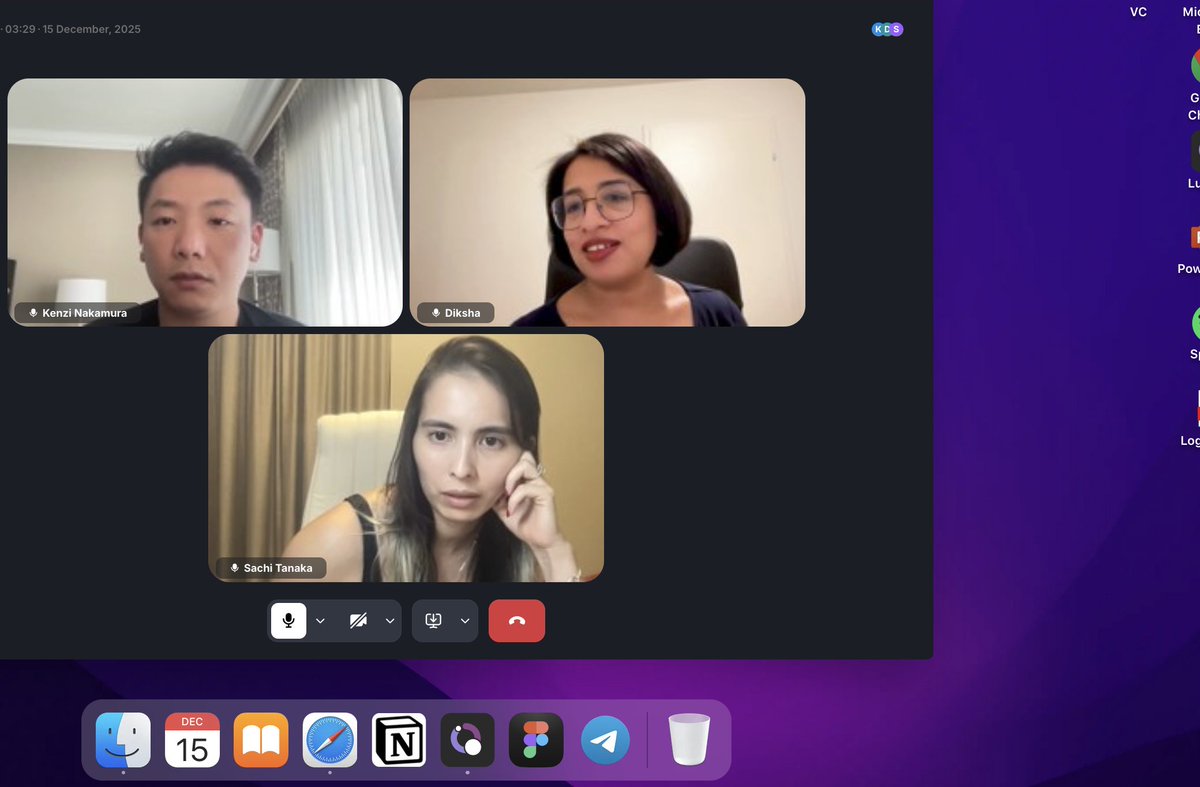
ALERT - HACKING DISGUISED AS AN INTERVIEW Artists friends — please read and share this. I was nearly caught by an sophisticated phishing attempt disguised as an interview request by an account called @glitchsachi for @Web3Unchained. The email looked legitimate, this person had studied my work, and the questions were accurate. Of course, they could also easily have been generated by a good AI deep research agent. I accepted, booked a slot via they Calendly, and everything seemed normal — until one hour before the interview, when I received a link to join through an app called @lumainapp I had never heard of. It looked legit at first (website, Medium posts…), but required downloading a package. A deeper look revealed warnings that the software was suspicious (see screenshot). I asked for a standard link from a legit platform (Meet, Zoom…). The “interviewer” insisted they were already connected, sending a screenshot (see below) — which I noticed was dated October 17th, while we were on December 3rd. I replied that I suspected a scam and would cancel without a proper link. Within minutes, the meeting was quietly cancelled. I was trained in cybersecurity, and even so, this attempt initially looked convincing. AI now allows scammers to tailor extremely credible traps. Please stay vigilant: never download unknown apps, always double-check links, and share this warning with fellow artists. It could prevent serious harm. PS: They even seem to have a fake PSA on their website. PS2: It's sad because the questions were actually good and if there wasn't this troian attack attempt, this could have been a nice interview.


Every beat, every brushstroke one of one. Traxx Stemz by @Graffiti6 , built by @TokenTraxx , was the world’s first generative music + art project where each piece was completely unique. A custom build that changed what was possible. Now, that same technology is open to artists, brands, and curators who want to experiment with digital ownership and creative innovation. This is how we build. Bespoke, soulful and built for the future. 🌐 traxxstemz.xyz📷 | tokentraxx.com📷 #Web3Music #NFTArt #GenerativeMusic #TokenTraxx #TraxxStem