

Rickzac
582 posts

Rickzac
@Rickzac1973
Senior Video Editor, Crypto and NFT follower
Katılım Ekim 2021
162 Takip Edilen33 Takipçiler
Anyone who is celebrating Tatum’s injury, or any athletes for that matter, you are the scum of the earth 🙏🏽
English


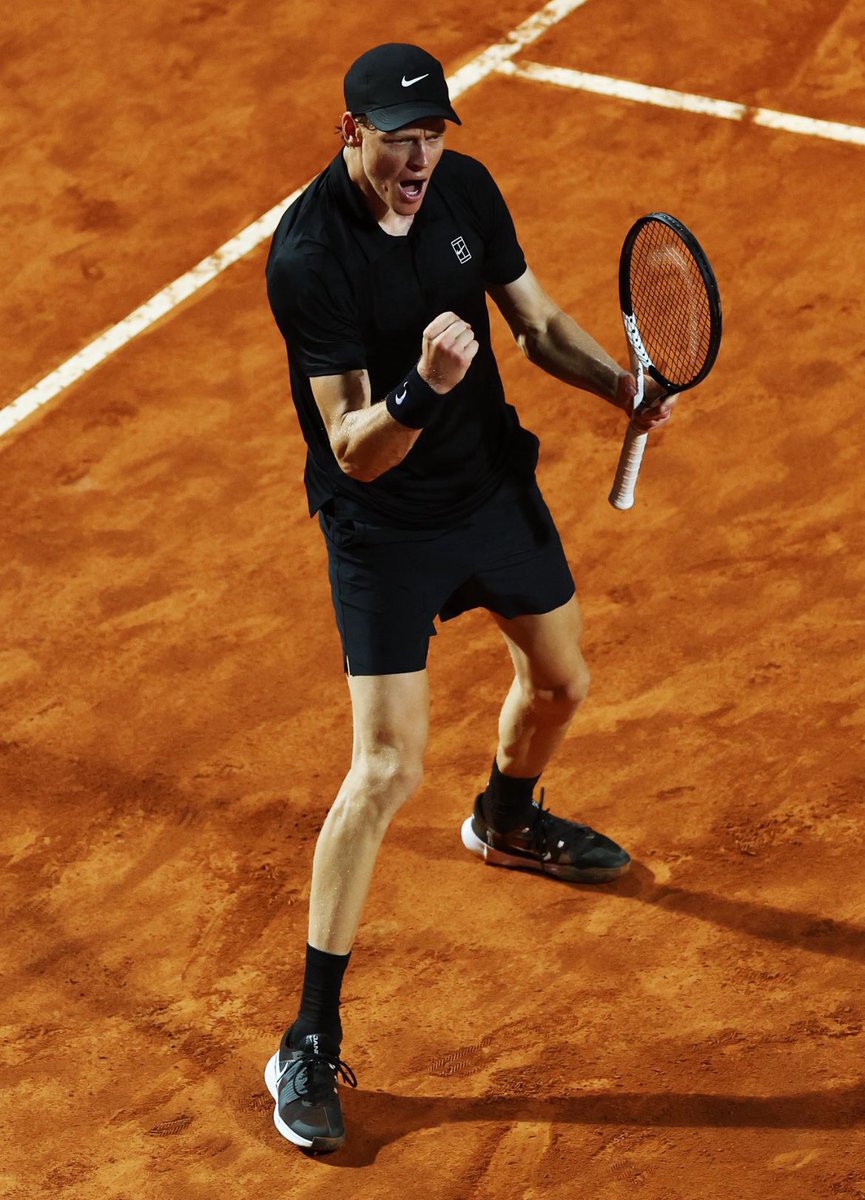
🇮🇹 Jannik Sinner has won 39 out of his last 40 matches.
Insane. 💥
English
@NickKyrgios Sinner say to you hello I'm the number one and you are a clown 🤡
English
So honest feelings about how ridiculous Purcell’s ban is? Vitamins? Can we justify this? Or can we just admit now that the whole system is cooked 😂
English
Apparently, the top of Ukraine’s fascist clique have come to Paris for talks with the UK, Germany and France on how many European coffins they will be ready to accept after the deployment of the troops of the "coalition of the willing" in Ukraine
English
@RoVannacci Ma io non ce la faccio, ma questi ci vogliono fare regredire di 50anni
Italiano

La cittadinanza italiana va meritata, non regalata.
Il referendum del 9 giugno vuole dimezzare i tempi per ottenerla, riducendola a un automatismo.
Essere italiani è una scelta, un impegno, non una formalità.
Difendiamo il valore della cittadinanza.
#Vannacci #IlPiaveMormorò

Italiano
@FrenckCoppola Da un infame come Trump mi stupirei del contrario, questo è una vipera, non scordiamoci la memecoin
Italiano

A pensar male si va all'inferno.. 👹
I Dazi sono stati studiati appositamente per procurare il crollo dei mercati, e permettere ai grandi protagonisti della finanza di comprare ciò che i piccoli investitori hanno venduto in perdita.
Va così da sempre..
Italiano
@NickKyrgios 👏👏👏👏👏👏
Totally agree Nick.
It's not even fishy, it's blatant and embarrassing for the entire sport.
English
🤷🏽♂️
ilyza1002@ilyza1002
A must-read for anyone who is critical of WADA's decision to make a settlement with Sinner. The doping expert Fritz Sörgel (pharmacist and pharmacologist, professor of pharmacology) sharply criticises WADA on the Sinner deal, asks questions about the explanation of an unintentional contamination by Sinner's team and is very surprised by WADA's official claim that Sinner had ‘no performance-enhancing benefit’ from the contact with Clostebol I have translated the interview with Professor Sörgel below. SPORT1: Mr Sörgel, former tennis star Stan Wawrinka commented on the Sinner deal by saying that he no longer believes in a clean sport. Do you share this view? Sörgel: It has to be said so harshly: what WADA has done means the end of the anti-doping system in its current form. SPORT1: Why? Sörgel: It's a form of self-abandonment that WADA is doing. The extent to which it is accommodating Sinner here is, in effect, the complete undermining of the principle of ‘strict liability’, the athlete’s uncompromising personal responsibility for which substances enter their body. This is devastating. This means that the system has lost an anchor; in future, anyone will be able to refer to the Sinner case and a few others and demand a lenient punishment for a positive doping test - as long as they can come up with some flimsy excuse. But it fits in with how China was allowed to get away with the hotel kitchen story in the swimming scandal before the Olympics. SPORT1: In the Sinner case, WADA presents the story of unintentional contamination by a masseur as plausible. Do you see it differently? Sörgel: To come to that conclusion, you have to be very benevolent and brush aside a lot of unanswered questions. Let's start with the fitness trainer Umberto Ferrara who was sacked by Sinner and who, according to his own Instagram page, is a qualified pharmacist. He is at the centre of this doping affair without being questioned at all by WADA. In February 2024, he bought an ointment containing the antibiotic neomycin called Trofodermin. SPORT1: Trofodermin contains the anabolic steroid Clostebol, as we now know. Sörgel: And what's more, none of the ingredients in this spray have been scientifically proven to favour wound healing. In Germany, Clostebol is subject to strict anaesthetic legislation, but in Italy the spray is available without a prescription. SPORT1: According to Sinner's account, his masseur Giacomo Naldi, who was also sacked, cut his little finger and was given the spray to treat the wound from the pharmacist Ferrara. Sörgel: You have to know this: The box is labelled DOPING in black capital letters with a red prohibition sign. Even a layman would not have used such an ointment in the environment of a top athlete, let alone a qualified pharmacist. As such, Ferrara should have known this even without the warning label on the box. No, I correct myself, he knew. SPORT1: And the masseur? Sörgel: Not him, because the information is on the packaging, not on the spray itself. He uses it. He obviously doesn't wash his hands before massaging Sinner, contrary to all the hygiene regulations for masseurs. And thus spreads neomycin and clostebol on Sinner's skin. SPORT1: That leaves questions. Sörgel: Many, actually. Why did Sinner's coaching team have a wound spray with anabolic steroids and the words ‘doping’ on the packaging around the world's best tennis player? Why didn't they use a completely normal product for this purpose? As a trained pharmacist, can Sinner's fitness coach Umberto Ferrara really be so guileless? Is it really credible that Mr Sinner - as his defence claims in his exoneration - specifically asked his masseur whether the remedy on his finger wound was uncontaminated? How did he come up with this idea? And why did the masseur spray so much Clostebol on such a small finger wound that it was enough for two positive doping tests in the amount measured? None of this seems quite real to me. I am also very surprised by WADA's official claim that Sinner ‘did not provide any performance-enhancing benefit’ from his contact with the substance. SPORT1: Why? Sörgel: It is always astonishing how little WADA experts have comprehensive knowledge of how medicines work. The question of a direct increase in performance with low doses of anabolic steroids such as Clostebol does not even arise. SPORT1: What do you mean by that? Sörgel: The spray through which the Clostebol is said to have entered Sinner's body is applied to the skin under which the muscle is located. The muscle plays an important role in an athlete's body, doesn't it? What we are talking about here is the fact that the small amount of Clostebol that penetrates the muscles accelerates regeneration. Muscle regeneration is of crucial importance in a relentless sport like tennis with many tournaments per year, because it makes hard training and high performance in competition possible in the first place. Sinner is known to take time out when faced with these demands, which is more than understandable. The ban therefore also benefits him in this respect. And you also have to bear in mind that the substance was found in a urine test, which cannot provide any precise information about how high the concentration of Clostebol was at the point where it was used before it was transported out of the muscle via the bloodstream and excreted by the kidneys. For this reason alone, it is questionable of WADA to deny an effect based on urine values. SPORT1: In an earlier interview with us, you had called for a strict action by WADA - especially because of Sinner's prominence. There can be no question of that now. Sörgel: It seems quite obvious that WADA has offered Sinner a customised solution to suit his interests: A deal that won't let him miss a Grand Slam tournament and probably won't cost him first place in the rankings. He was able to strike at the right time and saved himself the uncertainty of going to CAS. I am sure that the judgement there would have been just as lenient - the CAS has often softened the anti-doping fight with its athlete-friendly jurisprudence. However, the proceedings would have taken longer. Courts just think a little longer. SPORT1: In an Instagram comment on SPORT1, former Bundesliga professional Ivan Klasnic pointed out the discrepancy with the four-year ban for HSV footballer Mario Vuskovic. Vuskovic is probably more dispensable as a small wheel in the football system than a figurehead like Sinner. Sörgel: You can see it that way, but there is also a difference in the internal logic of CAS and WADA in this case: Vuskovic is involved in EPO doping, and with the best will in the world you can't give a good reason as to how this could have happened by mistake - apart from perhaps a mix-up of syringes at the doctor. That would also be too much for the CAS. SPORT1: Tennis will also be happy about the lenient and exonerating judgement. Sörgel: Just like the leniency in the Iga Swiatek case. As far as the fight against doping is concerned, tennis hasn't played a glorious role in the past, but in this case it has thrown its remaining decency overboard. It's bitter that WADA is going along with this. Incidentally, it also speaks volumes that Sinner's fitness coach Ferrara was not being taken out of business, but was given a new job shortly after his dismissal: With Matteo Berrettini, who then won the Davis Cup shortly after announcing this upcoming hiring - with Jannik Sinner. A nice staircase joke. As a specialist in medicines, drugs and doping substances, Ferrara should have been suspended by WADA with the usual maximum sentence of four years. Source: sport1.de/news/tennis/20…
ART
@NickKyrgios you're too stupid to understand, that he didn't sue him because he's not a bastard.

English
Exactly? Why not take action against the person who was responsible for ‘losing’ money and tainting his image?
Pavvy G@pavyg
So why isn't Sinner suing the team members that caused all this for him? Is he not suing them in case they may change their stories or he just doesn't mind sitting out for a few months?
English
@NickKyrgios Putrid is your brain, stupid man...come to play to Rome we are ready to give you what you deserve...click bait man
English
So you were innocent and we were getting fed that you were innocent but now you are suspended from playing the sport? Make it make sense. I’ve got multiple players in my DM’s on how putrid this is 😂 even Grand slam champions. Cooked 🧢
English

after latest developments,i would do following (assuming i was still playing). Every time i draw Sinner in the tournament,i do not go on court,doesn’t matter if first round or final. But I’m afraid not one will do same😉
English
@piersmorgan In fact he dont deserve any punishments...just a politics sentence
English

A ‘settlement’ ? I didn’t realise drug offence punishments in sport could be negotiated… what a joke.
BBC Sport@BBCSport
World number one Jannik Sinner has accepted an immediate three-month ban from tennis. It comes after he reached a settlement with the World Anti-Doping Agency over his two positive doping tests last year, with his suspension running from 9th February until 4th May. #BBCTennis
English
@stanwawrinka Why you say that? You know something that we dont know? Why you judge Sinner? Why you know the Truth? Come on dont talk like a 🤡🤡🤡🤡
English
I know a lot of players that are feeling the same way at the moment so looking to hold live spaces next week so we can talk about it - stay tuned for exact time.
English
Bad day for tennis.
_@cfcj_j
I’m sure Dan Evans would have liked a 3 month settlement ban I’m sure Simona Halep would have liked a 3 month settlement ban I’m sure Nicholas Jarry would have liked a 3 month settlement ban I’m sure Beatrice Hadad Maia would have liked a 3 month settlement ban Rules are Rules unless you are a robotic establishment puppet @NickKyrgios
English
English

@Olly_Tennis_ Anyone who has a problem with Nick in these comments, he played the game fair and square for his whole career. People comparing on court antics to doping are absolute imbeciles😂
English
🇦🇺 Nick Kyrgios reacts to Jannik Sinner’s 3-month ban agreement with WADA:
“Sad day for me - someone who has played this sport since I was 7 years old.
I pray that kids that play this sport do it the right way.”
📸 Nick’s IG

English

Jannik Sinner first failed a drug test on the 10th March 2024, we will not find out the outcome of his punishment in over a year later.
Simona Halep and Tara Moore were suspended immediately and both had to wait 18 months for their suspension to be lifted AFTER their trials.
The Tennis Letter@TheTennisLetter
BREAKING: Jannik Sinner’s CAS hearing is scheduled from April 16th - April 17th behind closed doors. (via @giovannipelazzo)
English