Robert D. Atkinson

18.2K posts

Robert D. Atkinson banner
Robert D. Atkinson

Robert D. Atkinson

@RobAtkinsonITIF

President, Information Technology & Innovation Foundation (@ITIFdc), world's top-ranked tech policy think tank. Proud Hamiltonian, Schumpeterian, & anti-Luddite

Washington, DC Katılım Mart 2010
4.1K Takip Edilen11.5K Takipçiler
Milk Road AI
Milk Road AI@MilkRoadAI·
Milk Road AI@MilkRoadAI

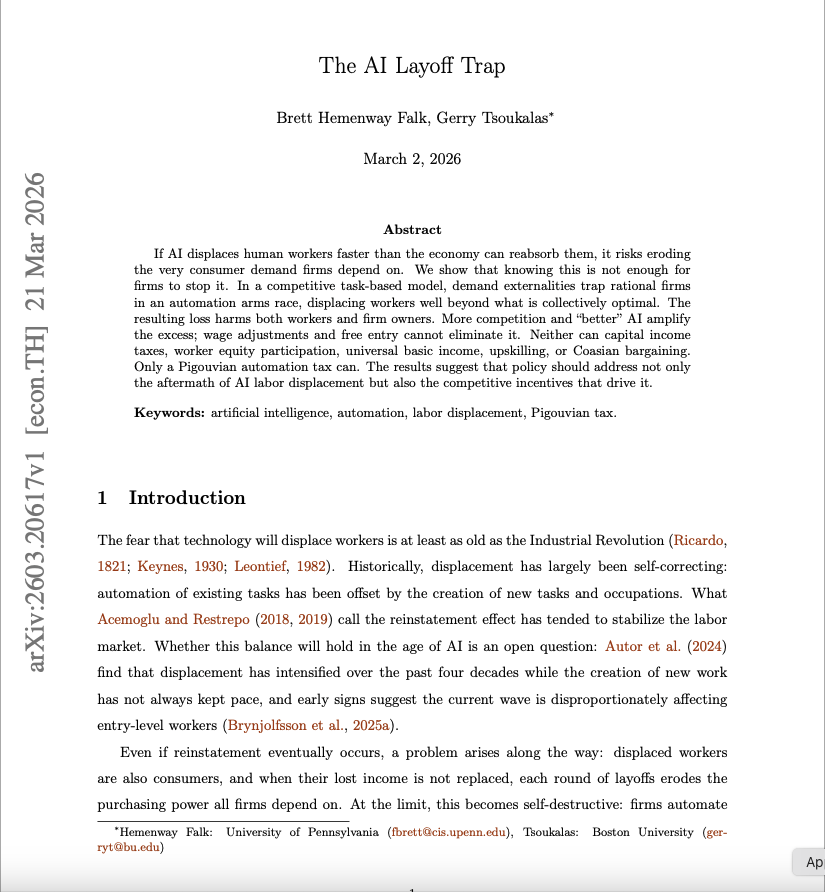
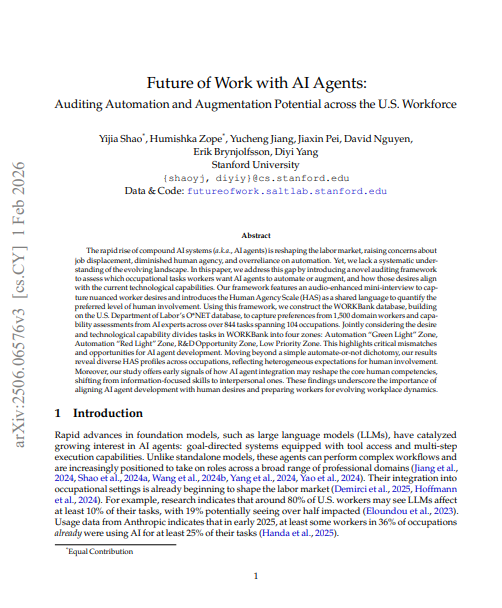
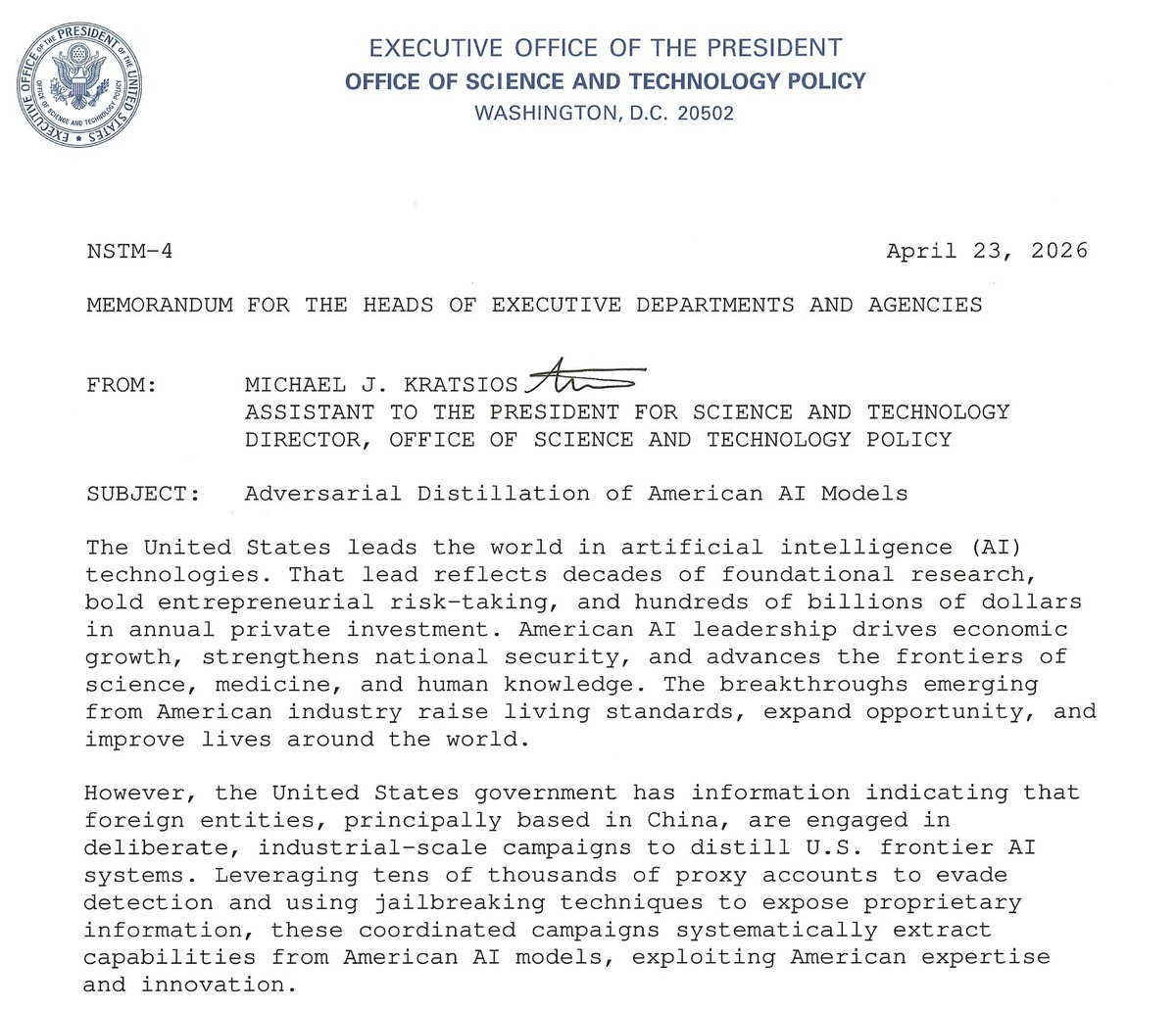
One of the richest men alive just put a target on every factory worker's job in America. This is a $100 billion fund built to acquire physical companies and gut them with AI. Jeff Bezos said it himself, AI is the new electricity, it will be inside everything, underneath everything, powering everything. Project Prometheus already raised $6.2 billion, recruited top engineers away from OpenAI, DeepMind, and Meta, and has been operating in near-total secrecy. The playbook is simple and brutal. Find manufacturers that AI is already disrupting, buy them at a discount, then automate whatever human labor remains Bezos has his sights on aerospace firms, computer manufacturers, and automobile companies. The investors he is courting are not small players either. He has been in talks with JPMorgan's Jamie Dimon and Abu Dhabi's sovereign wealth fund, two of the most powerful pools of capital on Earth. Analysts are already comparing this to J.P. Morgan in the 1890s, when he bought failing railroads and steel mills and consolidated 67% of U.S. steel production under one roof. Bezos already controls the cloud infrastructure that most of the world's businesses run on. And now he wants to own the physical factories that build everything those businesses sell. He turned a bookstore into the backbone of global commerce. He is running the exact same playbook again, just with assembly lines instead of warehouses. He is not betting on one company winning the AI race. He is building the infrastructure layer underneath all of them, physical, automated, and impossible to ignore.

HT
2
1
3
1.2K
Sawyer Merritt
Sawyer Merritt@SawyerMerritt·
NEWS: Jeff Bezos is in talks to raise $100 billion for a new fund that would buy up manufacturing companies and seek to use AI technology to accelerate their path to automation. It's linked to Jeff's Project Prometheus AI startup, which aims to build AI products for engineering and manufacturing in fields like computers, aerospace and automobiles. (via WSJ)
Sawyer Merritt tweet media
English
99
142
1.2K
115.3K
Herbert hovenkamp
Herbert hovenkamp@Sherman1890·
@PGunigantiAT @ezraklein @DKThomp isn't abundance basically a macro- concept? Antitrust is all about micro-, looking only at output in specific markets. e.g, a "relevant market" is just partial equilibrium analysis. There is an underlying faith that higher output favors consumers and workers across the economy.
English
1
0
1
105
Pallavi Guniganti
Pallavi Guniganti@PGunigantiAT·
I 100% agree that *antitrust* isn’t in opposition to abundance. As @Sherman1890 notes, output metrics for competition are well established in antitrust caselaw. But the antimonopoly movement says these are the wrong metrics. Maybe why @ezraklein @DKThomp see *it* as opposed. 1/
English
2
0
5
1.5K
Peter H. Diamandis, MD
Peter H. Diamandis, MD@PeterDiamandis·
The transition from UBI to UHI is a race. Can the deflationary wave arrive before the social fracture becomes irreparable? Can we create Abundance (collapse the cost of basic needs) before the valley of desperation destabilizes the political conditions for the transition to complete? Call for brilliant ideas... Soon.
English
145
51
542
29.9K
Peter H. Diamandis, MD
Peter H. Diamandis, MD@PeterDiamandis·
If You're an Entrepreneur: Stop designing businesses for 2024 scarcity. Design for 2030 abundance. Assume intelligence is free, energy is unlimited, and robotic labor costs pennies per hour. What becomes possible that's impossible today?
English
254
277
2.8K
165.8K
Zichen Wang
Zichen Wang@ZichenWanghere·
My op-ed in Foreign Policy @ForeignPolicy timed for the China-U.S. trade and economic talks in Paris came out last night: ‘Made in America’ Should Accept Chinese Investment Private Chinese capital is being locked out of mutually beneficial opportunities.
Zichen Wang tweet media
English
12
23
118
19.1K
Robert D. Atkinson
Robert D. Atkinson@RobAtkinsonITIF·
ITIF has 2 great positions open: 1) AI policy and 2) industrial strategy. No better place for a pragmatic and independent-thinking analyst to make a policy difference. Go to our web site and click on jobs
English
0
9
10
1.5K
Tony Annett
Tony Annett@tonyannett·
Renewables are now the cheapest form of energy in electricity generation. People who claim otherwise still think it’s 2010…
Tony Annett tweet media
English
349
800
2.7K
141.7K
Rock Chartrand🤑
Rock Chartrand🤑@RockChartrand·
You’re not “forced” to sell your labor to capitalists. You’re free to start a business, work for yourself, form a partnership, join a co-op, or trade your skills however you choose. What they’re really objecting to is something much older than capitalism: the fact that humans must produce in order to live. Food doesn’t grow itself. Homes don’t build themselves. Someone has to create what people consume. Capitalism didn’t create that reality. It simply allows people to cooperate through voluntary trade instead of being ordered around by a ruler or a central planner. Calling that “coercion” confuses the necessity of working to survive with someone forcing you to work for them, which are not the same thing at all.
Rock Chartrand🤑 tweet media
Travis Brewer@brew56200

@RockChartrand x.com/beyond_capital…

English
54
229
1.7K
34.9K
Robert D. Atkinson
Robert D. Atkinson@RobAtkinsonITIF·
@ForeignAffairs What’s the alternative. Continued US competitiveness declined view of each China. So yes muscular intervention is what’s needed. You need to be focused on encouraging that to be effective intervention not simply opposing it.
English
0
0
3
163
Foreign Affairs
Foreign Affairs@ForeignAffairs·
Jami Miscik, Peter Orszag, and Theodore Bunzel discuss the rise of a new form of state capitalism—and warn that “policymakers keen on muscular intervention today must tread carefully.” foreignaffairs.com/united-states/…
English
2
2
4
3.2K
Philip Trammell
Philip Trammell@pawtrammell·
@RobAtkinsonITIF @dwarkesh_sp We don’t make the lump of labor fallacy at all. Everything we say is totally compatible with demand for labor rising and thus wages rising.
English
1
0
0
66
Dwarkesh Patel
Dwarkesh Patel@dwarkesh_sp·
New blog post w @pawtrammell: Capital in the 22nd Century Where we argue that while Piketty was wrong about the past, he’s probably right about the future. Piketty argued that without strong redistribution of wealth, inequality will indefinitely increase. Historically, however, income inequality from capital accumulation has actually been self-correcting. Labor and capital are complements, so if you build up lots of capital, you’ll lower its returns and raise wages (since labor now becomes the bottleneck). But once AI/robotics fully substitute for labor, this correction mechanism breaks. For centuries, the share of GDP that goes to paying wages has been 2/3, and the share of GDP that’s been income from owning stuff has been 1/3. With full automation, capital’s share of GDP goes to 100% (since datacenters and solar panels and the robot factories that build all the above plus more robot factories are all “capital”). And inequality among capital holders will also skyrocket - in favor of larger and more sophisticated investors. A lot of AI wealth is being generated in private markets. You can’t get direct exposure to xAI from your 401k, but the Sultan of Oman can. A cheap house (the main form of wealth for many Americans) is a form of capital almost uniquely ill-suited to taking advantage of a leap in automation: it plays no part in the production, operation, or transportation of computers, robots, data, or energy. Also, international catch-up growth may end. Poor countries historically grew faster by combining their cheap labor with imported capital/know-how. Without labor as a bottleneck, their main value-add disappears. Inequality seems especially hard to justify in this world. So if we don’t want inequality to just keep increasing forever - with the descendants of the most patient and sophisticated of today’s AI investors controlling all the galaxies - what can we do? The obvious place to start is with Piketty’s headline recommendation: highly and progressively tax wealth. This might discourage saving, but it would no longer penalize those who have earned a lot by their hard work and creativity. The wealth - even the investment decisions - will be made by the robots, and they will work just as hard and smart however much we tax their owners. But taxing capital is pointless if people can just shift their future investment to lower tax countries. And since capital stocks could grow really fast (robots building robots and all that), pretty soon tax havens go from marginal outposts to the majority of global GDP. But how do you get global coordination on taxing capital, when the benefits to defecting are so high and so accessible? Full automation will probably lead to ever-increasing inequality. We don’t see an obvious solution to this problem. And we think it’s weird how little thought has gone into what to do about it. Many more thoughts from re-reading Piketty with our AGI hats on at the post in the link below.
English
210
237
2.3K
1.5M
Robert D. Atkinson
Robert D. Atkinson@RobAtkinsonITIF·
@MazzucatoM Where does ILO say it went? They don’t. Most of the decline in US is because of rise in sole proprietors income and imputed rent of homeowners. I thought academics were supposed to be objective, not political advocates
English
1
1
4
221
Mariana Mazzucato
Mariana Mazzucato@MazzucatoM·
If labour's share of global income had stayed at its 2004 level, workers would have received an additional US$2.4 trillion in 2024 alone. This isn't the inevitable result of technological change—it's a political choice about who shares in the risks and rewards of collective value creation. Delivering a keynote today at the @ILO Innovation Day (13:15 CET) on why innovation systems must be built on a new social contract between labour, state and market. Watch live ➡️ live.ilo.org
Mariana Mazzucato tweet media
English
21
148
306
11.6K