Rodrigo Gutiérrez Fernández

52.8K posts

Rodrigo Gutiérrez Fernández banner
Rodrigo Gutiérrez Fernández

Rodrigo Gutiérrez Fernández

@Rogufe

Médico. Vocal del Comité de Bioética de Castilla-La Mancha. Presidente de la SEAUS https://t.co/keyCYb8BcP
Katılım Mayıs 2010
2.2K Takip Edilen4.8K Takipçiler
Rodrigo Gutiérrez Fernández retweetledi
AntonioMaestre
AntonioMaestre@AntonioMaestre·
Camarada Alandete y el fracaso del marxismo español lasexta.com/el-muro/antoni… El corresponsal de 'ABC' en Washington es por encima de todo un operador político, mucho más efectivo en sentido contrario al que pretende porque cada pregunta refuerza el papel de Pedro Sánchez, pero un actor político de primer orden porque tiene el acceso al demente de pelo naranja que está llevando al mundo al desastre. Hacer preguntas no es el trabajo de un periodista, el trabajo es hacer las preguntas adecuadas e incómodas que no te quieren contestar. Ser un buen periodista y hacer tu trabajo sería preguntarle qué tiene que decir sobre la aparición de su nombre en los papeles de Epstein y el hecho de que se hayan censurado documentos por parte del departamento de Justicia sobre su implicación directa en las actividades del pedófilo. Lo que ocurre es que si David Alandete le hace esa pregunta igual le quitan la acreditación.
Español
55
175
680
94.6K
Rodrigo Gutiérrez Fernández retweetledi
Ignasi Guardans
Ignasi Guardans@iguardans·
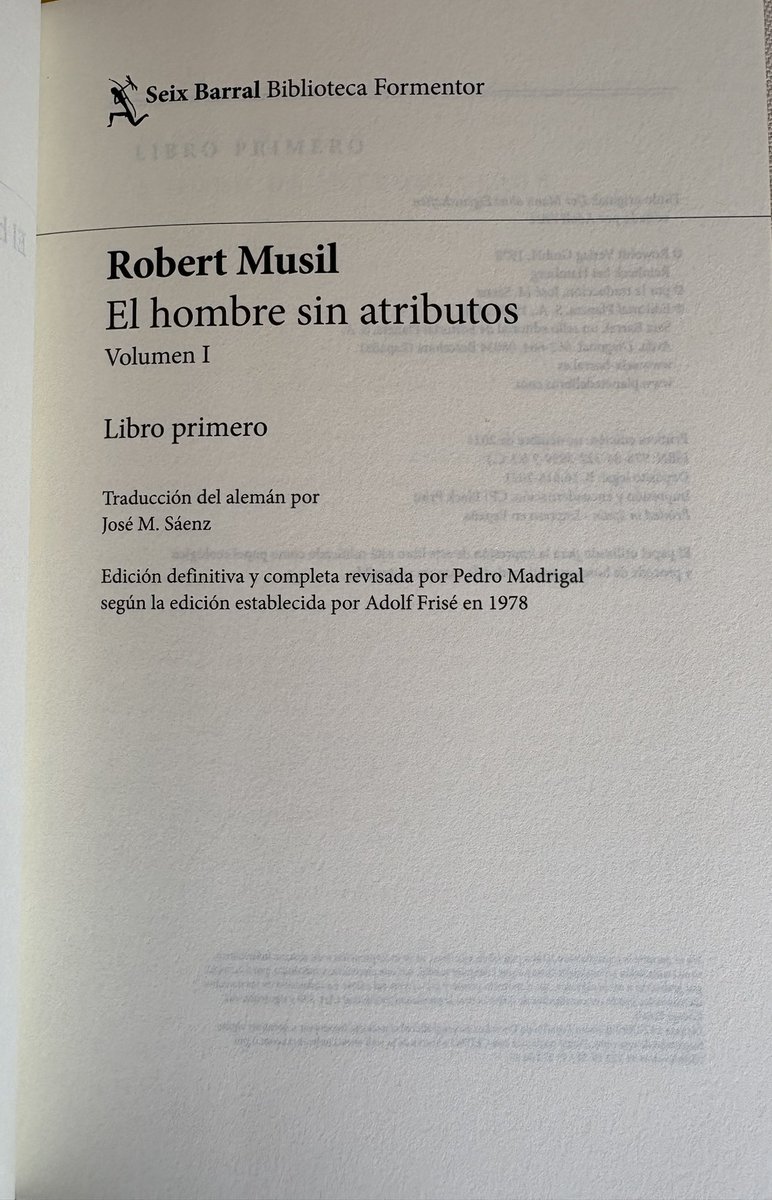
Así explica un editor el precio de un libro. Impreso en la contraportada. Interesante
Ignasi Guardans tweet media
Español
44
352
2.5K
163.4K
Rodrigo Gutiérrez Fernández retweetledi
Sophia Proneikos
Sophia Proneikos@Pergament_F·
Ludwig Wittgenstein abandoned a vast family fortune, worked as a village schoolteacher, a gardener, and an architect, and spent much of his life in intense solitude, torn between philosophy and silence. He published little in his lifetime, believed most philosophical problems were misunderstandings of language, and died in 1951, reportedly at peace. His last words were: "Tell them I’ve had a wonderful life." Good night
Sophia Proneikos tweet media
English
72
232
1.1K
45K
Rodrigo Gutiérrez Fernández retweetledi
ferna.d
ferna.d@ferna1_diez·
"Yo diría que Jaime de los Santos representa lo peor de la política en un doble sentido,en el de la zafiedad, la grosería y el mal gusto [...] y el de los personajes que pululan alrededor de los partidos políticos en busca de una posición" ATENCIÓN Magnífica Esther Palomera ↘️
Español
57
382
910
11K
Rodrigo Gutiérrez Fernández retweetledi
Javier Gomá Lanzón
Javier Gomá Lanzón@JavierGomaL·
Hoy se publica el mismo reportaje en versión digital: elmundo.es/papel/historia… Se refiere varias veces a la conferencia que di sobre Ortega y Gasset, donde expuse el histórico problema del español en el discurso filosófico de la modernidad: youtu.be/aMZZmVSx_vg?is…
YouTube video
YouTube
Javier Gomá Lanzón tweet mediaJavier Gomá Lanzón tweet mediaJavier Gomá Lanzón tweet mediaJavier Gomá Lanzón tweet media
Javier Gomá Lanzón@JavierGomaL

Hoy publican en El Mundo un extenso reportaje, que abre la portada de Papel, sobre el estado del pensamiento español, reportaje inducido (como elegantemente señala) por la “Mayoría selecta” publicada hace unos domingos con el título “Concepto español”. Lo recomiendo

Español
4
11
54
7K
Rodrigo Gutiérrez Fernández retweetledi
Carlos O. Valverde
Carlos O. Valverde@CarlosOlivoV·
Este poema de Emily Brontë del año 1846, que ha traducido Ismael, ayuda a entender cómo pudo concebir "Cumbres Borrascosas", publicada un año más tarde.
Ismael López Gálvez@Ismaellg90

La imaginación, como la literatura, es esperanza contra la desesperanza. La genial Emily Brontë lo sabía bien. La autora de «Cumbres borrascosas», quien también fue una poeta excelsa de gran maestría musical, escribió esta oda a las virtudes de su mundo interior y del nuestro. Con motivo del Día Mundial de la Poesía, @CarlosOlivoV reivindicó, en esta red social, su siempre subestimado manejo del verso, al compartir un fragmento de «To Imagination» (A la imaginación), poema de 1844 que Brontë firmó bajo el seudónimo de Ellis Bell y que yo, hasta entonces, desconocía. Como quedé maravillado, he trabajado mi propia traducción en endecasílabos, tomado el texto completo de la 5.ª Norton Critical Edition, y contando en todo momento con la versión de Carlos como referencia cercana. Subo el poema íntegro con la fe puesta en que os guste. Si es así, compartid para que la buena de Emily se encuentre con sus lectores.

Español
2
8
55
1.7K
Ankor Inclán
Ankor Inclán@ankorinclan·
"Hace años, un estudiante le preguntó a la antropóloga Margaret Mead cuál consideraba ella que era el primer signo de civilización en una cultura. El estudiante esperaba que Mead hablara de anzuelos, ollas de barro o piedras de moler. Pero no. Mead dijo que el primer signo de civilización en una cultura antigua era un fémur que se había roto y luego sanado. Mead explicó que en el reino animal, si te rompes una pierna, mueres. No puedes huir del peligro, ir al río a tomar algo o buscar comida. Eres carne de bestias que merodean. Ningún animal sobrevive a una pierna rota el tiempo suficiente para que el hueso sane. Un fémur roto que se ha curado es evidencia de que alguien se ha tomado el tiempo para quedarse con el que se cayó, ha vendado la herida, le ha llevado a un lugar seguro y le ha ayudado a recuperarse. Mead dijo que ayudar a alguien más en las dificultades es el punto donde comienza la civilización". (Ira Byock)
Ankor Inclán tweet media
Español
138
5.2K
18.5K
508K
Rodrigo Gutiérrez Fernández retweetledi
Deselectrocutador
Deselectrocutador@Deselectrocuta1·
Este juez que dice que Sánchez incumple la Constitución por los PGE, es el mismo juez que, tras 5 años de bloqueo del CGPJ, le pedía a Feijóo que no lo renovase. Por lo visto, cinco años incumpliendo la Constitución le parecían pocos.
Deselectrocutador tweet media
Español
47
1.3K
2.2K
27.9K
Mercedes Fernández
Mercedes Fernández@cherines_pp·
El PP tiene el líder más sólido y creíble .
Mercedes Fernández tweet media
Español
607
76
226
25.1K
Rodrigo Gutiérrez Fernández retweetledi
Nicolas G. Varela
Nicolas G. Varela@niklasgv·
"El epigrama, el aforismo y la máxima son los haikus del pensamiento". (Steiner)
Nicolas G. Varela tweet media
Español
0
24
91
1.8K
Rodrigo Gutiérrez Fernández retweetledi
Mathematica
Mathematica@mathemetica·
“Do not use your energy to worry. Use your energy to believe, to create, to learn, to think and to grow.”
Mathematica tweet media
English
94
2.7K
12.4K
271.4K
Rodrigo Gutiérrez Fernández retweetledi
Tansu Yegen
Tansu Yegen@TansuYegen·
Skill means nothing if you don’t respect people, so always treat everyone kindly and with dignity 😊
English
183
1.3K
16.9K
674K
Rodrigo Gutiérrez Fernández retweetledi
Big Brain Philosophy
Big Brain Philosophy@BigBrainPhiloso·
Hans-Georg Gadamer on Augustine, Time, and the Structure of Hope Gadamer revisits one of Augustine's most radical philosophical moves: the refusal to treat time as a sequence of three equal "beings." What makes Augustine's approach unusual is not just his conclusion, it's his method. He didn't treat the problem of time as an abstract puzzle to be solved from a distance. He brought it before God, interrupting his own argument with prayer, asking for help in the very act of thinking. That intimacy between devotion and reasoning wasn't decoration, it was the point. The insight it produced is deceptively simple. Past and future don't exist as independent realms. They exist only as they press into the present as memory and anticipation held simultaneously in the mind. As Augustine puts it: "We can only think of present signs of the future as being present, and we can only see traces of the past… as being present. Only that can we truly see as 'being.'" This is what he called the distensio animi, a stretching out of the spirit. Gadamer renders it plainly: that is what we call consciousness. The German word for the present, Gegenwart, sharpens this further. Embedded in it is gewärtig sein: to be awaiting, to be open. The present is not a fixed point. It is a posture of readiness that leans forward. Time, then, is not a container you move through. It is the structure of consciousness itself. The tension between what is remembered, what is attended to now, and what is anticipated. You do not have past and future. You are the act of holding them together. From here, Gadamer makes a move that feels almost offhand but lands hard. If consciousness is inherently stretched toward what comes next, then hope isn't a disposition some people choose and others don't. It's built into the architecture of awareness itself. Ernst Bloch was right to foreground it, Gadamer says, because it isn't sentiment, it's structure. "That is why I consider every pessimist a bit insincere; they wouldn't even be here if they didn't have hope." This isn't a rebuke. It's an observation about what it means to persist. To remain conscious is already to be oriented forward whether you name that orientation hope or not. Much of modern anxiety comes from treating time as a problem of storage. Holding onto the past accurately, predicting the future correctly. Augustine and Gadamer suggest a different frame. Time is lived through presence: the traces we carry, the signs we read, the openness we maintain toward what is arriving. Consciousness is the act of stretching across all three without collapsing any of them.
English
10
115
462
32.9K
Martin Varsavsky
Martin Varsavsky@martinvars·
Según la última encuesta de Gesop, Vox empata con el PSOE en Andalucía y lo supera en cuatro provincias. España despierta. La gente está harta de regularización masiva sin contrato, criminalidad desbocada, un ecologismo que dispara el coste de la energía, vivienda impagable por falta de oferta, leyes que protegen a okupas, sanidad colapsada, transporte convertido en un peligro y corrupción sin freno en el entorno de Sánchez. Al que madruga, Pedro Sánchez le cruje a impuestos.
Español
202
1K
3.1K
47K
Rodrigo Gutiérrez Fernández retweetledi
Ignasi Guardans
Ignasi Guardans@iguardans·
Con el apoyo inestimable del muy patriota corresponsal de @abc_es De todos modos, algunos hablan como si las bases se desplazaran como un campamento. Las bases no son solo estructuras: son personal formado, son muchos servicios de calidad. Marruecos no tiene eso. Hoy.
EL ESPAÑOL@elespanolcom

El ala dura del trumpismo apuesta por llevar las bases a Marruecos y aumentar la presión sobre Ceuta y Melilla dozz.es/kide53

Español
12
36
159
19.2K