·rphgrc·(↑)

14.4K posts

·rphgrc·(↑) banner
·rphgrc·(↑)

·rphgrc·(↑)

@RphGrc

Connecting investments, tech, and people across multi‑decade horizons | @olivecap @runwayseries @swissvc_ @frenchtechswiss @thecryptovalley @base

here Katılım Mayıs 2014
771 Takip Edilen1.4K Takipçiler
Sabitlenmiş Tweet
·rphgrc·(↑)
·rphgrc·(↑)@RphGrc·
I know I've said it already, but I don't do "pay it forward" stuff anymore Wanna chat and get some juice? It's €300 for 30min raphael-grieco.com 📆
English
0
3
4
278
·rphgrc·(↑)
·rphgrc·(↑)@RphGrc·
Swiss venture capital is showing signs of both pressure and maturation / continuous attractiveness. The latest Swiss Venture Capital Report 2026 update (by SECA and Startupticker) highlights three important insights: Capital invested fell to CHF 1.25 billion in H1 2026, down 15.5% year on year, while the number of rounds stayed broadly stable at 123. Hardware and Vaud stood out, while biotech and Zurich saw weaker activity, showing how uneven the market remains across sectors and regions. Investor sentiment is improving, even if fundraising remains the biggest challenge. More managers are active in fundraising, and expectations for investment activity and exits are more optimistic than a year ago. For us at @swissvc_, this matters because it reinforces why the investor layer needs to become more robust, more collaborative, and more operational. If the market is becoming more selective, more AI-driven, and more exit-sensitive, then venture investors need better peer intelligence, sharper firm architecture, and stronger shared practices. That is exactly what we are building through SwissVC: a working network for international, active investors deploying exclusively or in part in Switzerland, with guilds designed to turn market signal into better decisions, better operations, and better outcomes. The report is a reminder that the quality of the investor layer will shape the next chapter of Swiss venture capital. #apply" target="_blank" rel="nofollow noopener">swissvc.ch/#apply 👊
·rphgrc·(↑) tweet media·rphgrc·(↑) tweet media·rphgrc·(↑) tweet media
English
0
1
1
43
·rphgrc·(↑)
·rphgrc·(↑)@RphGrc·
The AI edge in venture capital operations has moved from being an "advantage" to being "table stakes". A few years (month?) ago, using AI in venture capital was a competitive edge. Today, according to the latest Data Driven VC reports, the vast majority of venture firms are embedding AI directly into their core operations. In 2026, AI in VC has compressed from an advantage into table stakes. Modern firms are rebuilding their own firm architecture with AI. We are seeing smaller, leaner funds execute with the pipeline cadence, diligence speed, and LP reporting quality that used to require a full analyst team. AI is expanding sourcing coverage, automating initial due diligence research, and streamlining portfolio monitoring. But AI: - does NOT make investment decisions, - does NOT build founder trust, - does NOT negotiate terms, - does NOT sit on a board to navigate a crisis. The VC firms that will win the next cycle are not the ones trying to automate their judgment, they are the ones using AI to eliminate operational drag, protecting GP time for the high-conviction, high-trust work that only humans can do. This shift is exactly why the new @swissvc_ strategy includes a dedicated "Firm Architecture" guild and a "Deal Intelligence" guild. Swiss investors do not need another panel predicting the future of AI. They need to sit in a room with peers under Chatham House rules, create and share functional AI-native tools, and compare notes on which automation workflows actually work in practice. → Join us: #apply" target="_blank" rel="nofollow noopener">swissvc.ch/#apply
·rphgrc·(↑) tweet media
English
0
1
1
56
·rphgrc·(↑)
·rphgrc·(↑)@RphGrc·
Founders walk a fine line: they need to signal an ambitious mission without slipping into language so broad that no one can tell what they actually build! IMHO, @tileboxio gets that balance right with “AWS for space data”, as read in @andreasklinger's recent post: it's crisp, intuitive, and useful as a mental model, yet still aspirational because it places the company in a category-defining role. It avoids the abstract trap of saying something like “Powering the digital backbone of the orbital age,” which sounds grand but leaves the listener guessing The best teases do two things at once: they make the mission feel bigger than the product, and they make the product immediately legible. If either side is missing.. the story gets weaker.
English
0
2
5
804
·rphgrc·(↑)
·rphgrc·(↑)@RphGrc·
Anticipating Bastille Day Waiting to see how many non-French people will wish France a happy July-1 4 (because why do so many non-US people wish the US a happy independence day??) #BastilleDay #14Juillet2026
·rphgrc·(↑) tweet media
English
0
0
0
130
·rphgrc·(↑)
·rphgrc·(↑)@RphGrc·
sundown syndrome (sundowning) I was at last able to put a label on this
English
0
0
0
27
·rphgrc·(↑) retweetledi
SKEMA Business School
SKEMA Business School@SKEMA_BS·
[RANKINGS RECAP 🏆] Another year of global recognition for SKEMA! From breaking into the FT Top 20 worldwide for our Master in Management to retaining our #2 global ranking for the MSc Financial Markets & Investments, SKEMA continues to climb in leading international rankings. ➡️ Details: fcld.ly/ugct2g0 #WeAreSKEMA
English
0
3
2
150
·rphgrc·(↑) retweetledi
Andreas Klinger 🦾
Andreas Klinger 🦾@andreasklinger·
We think Europe needs more pro-European, pro-tech, pro-abundance, pro-optimism propaganda. So we made it. Posters, t-shirts, hoodies. Full-on propaganda. We've been handing them out at robotics meetups and clubs all over Europe for weeks, and people love them. Why we are doing this: Europeans know more about the companies in the States than the ones right here at home. We need to change that. Time for propaganda. Every poster features a real European company: 🦾 Allonic is braiding humanoids. A completely new approach to building robotic parts. If it works, a number one company worldwide, right here in Europe. 🚜 Voltrac, the electric autonomous tractor (we made a whole video about them). 🏗️ Automated Architecture (AUAR), doing micro-factories for wooden houses.  🪨 Gondor Industries, a stone mason company using robotics. And many, many more to come. This is the first of many drops. More launching in the next few weeks, including flags, EU posters and more. 👉 Get yours at prototype-shop.com For Europe 🇪🇺🔥 PS: If you're organizing a robotics event or meetup, have a student club or hacker space, comment or message us and we'll send you a swag box.
English
107
127
1.1K
71.8K
Bryan Johnson
Bryan Johnson@bryan_johnson·
Bad news #1: I have an autoimmune disease. My stomach is eating itself. Bad news #2: 2–5% of people have this, too. Likely more, because it hides. Good news: I'm going to try and solve it. Will share all. As a kid, I ate sugar cereal, drank sugary soda, and gobbled down fast food. I had a few healthy years in my early 20s but then became a young father of three and began building a business. Juggling that stress and grind, I let my health slip and gained 40 lbs. Within a few years I’d fallen into a deep, chronic depression. Somewhere in that timeline, my body began developing an autoimmune process affecting my thyroid and then my stomach lining. It’s called Autoimmune Gastritis (AIG). My hypothyroidism got diagnosed when I was 21 years old with a routine blood draw. That enabled me to begin proactive management, supplementing levothyroxine and Armour Thyroid. They are the hormones my body should be producing on its own but wasn’t. By taking these pills daily, my body was able to operate as though my thyroid was functioning properly. What I didn’t know was that something else was going on inside my body: my stomach had begun attacking itself. But there was no routine test to find out and I didn’t have any symptoms. I just discovered it in May. I'm unsure how long I've had it. AIG causes irreversible damage: nutritional deficiency, anemia, and over a long horizon, elevated cancer risk. When AIG is discovered today, standard medical care concedes defeat, stating that nothing can be done except managing the condition, no matter how awful or lethal the effects. Looking back over the past few years, I can now see the early signals we were picking up in measurement but hadn’t connected the dots. For 11 years, I’ve had low ferritin, without anemia. We continually tried to raise my iron levels with food and supplementation but nothing would work. We chased the obvious solutions first. A plant-based diet means all my iron is the hard-to-absorb, non-heme kind. Hard training, sauna, and hyperbaric oxygen all raise the body's demand for iron. But none of them explained the core failure: despite me taking iron orally, trialing every formulation, and using every timing trick, none of the iron would stick. What I didn’t fully appreciate until recently is how many stones my previous providers had left unturned. The low ferritin kept getting explained away but not fixed. I overhauled my medical team earlier this year. It was the rebuild to lay the groundwork for Immortals Care, our $1M a year protocol. With greater capacity, we revisited everything. On the surface, my low ferritin was easy to dismiss by most standards of care. My hemoglobin and hematocrit were normal. Ferritin measures stored iron, while hemoglobin measures circulating iron, and because the body drains its reserves first to keep hemoglobin normal, you can be fully iron deficient with a perfectly normal hemoglobin and hematocrit. This is why my low ferritin kept getting dismissed: the numbers that define anemia looked fine, so no one asked why my iron reserves wouldn't refill. My team pressed on that question. They first turned to a colonoscopy. I was 48 years old and overdue. It was good health hygiene to have while also serving a specific purpose of searching for a hidden source of blood loss such as a polyp or even cancer in my bowels. Either one of those would be an explanation of why the iron kept disappearing. At the same time, they began connecting the dots. Iron absorption depends on stomach acid, so one theory was that my stomach acid was disrupted. They also knew that thyroid and stomach autoimmunity often travel together, so often that the pairing has a name: thyrogastric syndrome. Put against my 27+ year history of autoimmune thyroid disease, the pieces pointed to a single hypothesis: my own immune system was attacking my stomach. To our surprise, my colonoscopy came back clean. A perfectly healthy colon, better than 95% of colonoscopies of men, according to the gastroenterologist. That ruled out the first concern and worst possible outcome: slow continuous bleeding from colon cancer, or pre-cancerous polyp. My team had exercised great foresight though, anticipating this possible outcome. In addition to a colonoscopy, they’d ordered an upper endoscopy to be performed at the same time. The combined procedure is a bi-directional endoscopy. Probes would look at my entire intestinal tract, up from below and down the throat. Additionally, we had several blood biomarkers measured ahead of the procedure to try and pick up on any signals that would give the gastroenterologist guidance for what to look for while doing visual inspections. Fifteen minutes before the procedure, my blood results returned, finding elevated levels of anti-parietal-cells-antibodies (APCA). They came back at roughly five times the upper limit of normal (103, against a ceiling of 20 Units/mL). It was a positive result confirming the suspicion of AIG being the culprit behind my low ferritin, the other type of gastritis, driven by a bacterial infection, was already ruled out, as we knew I am negative to H. pylori. Even before this finding, my team had ordered five biopsies to be taken from three regions of my stomach. The biopsies were the critical piece. Had they not been ordered, the bi-directional endoscopy would have been completed and AIG remained undiagnosed as there were no visual signatures of the condition in my intestines. Two days later, the results of biopsies came in, showing clear signs of early autoimmune gastritis: early atrophy confined to the acid-producing lining, with the rest of the stomach still spared. My team had anticipated this, methodically tracing every line of evidence. We now had a formal diagnosis. I have autoimmune gastritis AIG. My stomach is eating itself. So this was never one problem. It was three, linked to one another: the iron deficiency, the autoimmune gastritis driving it, and the autoimmune thyroid disease alongside it. Iron and thyroid feed each other both ways, low iron impairs the conversion of thyroid hormone into its active form, and an under active thyroid impairs how the body uses iron. Each made the other harder to fix. Autoimmune gastritis affects an estimated 2–5% of people, and likely more, because it hides and is challenging to diagnose. It's usually silent for years, surfacing only once the stomach has atrophied enough to do real damage: iron deficiency first, then B12 deficiency, then anemia from both, and over a long horizon, raised stomach-cancer risk. In one study of people with precancerous gastric lesions, roughly 18% carried the autoimmune antibodies, and only about 1% had ever been diagnosed. And the earliest clue, low ferritin, is the one standard medicine waves through. Low iron stores get normalized and rarely investigated at all when anemia hasn't shown up yet. That blind spot is what hid mine for a decade. The good news: the iron deficiency is now corrected. I received a 1,000 mg Monoferric iron infusion. This was chosen for two reasons after considering multiple formulations. First, it can safely deliver a full dose of iron in a single infusion (1,000 mg), while older options like Venofer require several separate appointments to reach the same total. Second, certain other IV iron formulations can cause a drop in blood phosphate levels, an important mineral for bones and energy. Monoferric is much less likely to do this, which matters given how closely we track long-term metabolic and bone health parameters. As mentioned earlier, current medical standards treat AIG as something to be managed, not resolved. It's worth noting that many of you give me a hard time, inviting me to "live life" and engage in self-destructive behaviors like a "normal person". I'm cool with the playful ribbing. Also, had I not taken care of my health during the past five years, my situation could potentially be very serious. You too may have a lurking health issue that is undiagnosed and could increase in severity from unhealthy life choices, without your knowing. The absence of symptoms is not the presence of health. A gentle nudge that minding your health, no matter your situation in life, is good decision making. My team and I are going to try and solve my AIG. This is how we’re approaching it: First, routine monitoring keeps the disease in view: ferritin and iron, B12, the pepsinogen I/II ratio, gastrin, and chromogranin A. Gastrin is the dial to watch. If it climbs, the disease is advancing, and the risk of gastric neuroendocrine tumors climbs with it. Second, we’re doing advanced characterization of the disease. We’ll do a repeat biopsy to read the immune infiltrate, deep cytokine profiling, and T-cell subset analysis, to see which pathways are actually firing. That testing drives the intervention plan, including the experimental approaches we intend to develop. + If gastrin and chromogranin rise: damp the gastrin drive (netazepide) and tighten endoscopic surveillance. If the profile is Th1 / interferon-driven: target JAK/STAT. + If it's Th17 / IL-17-driven: target IL-17 and STAT3. + If regulatory T cells are failing: rebuild them (low-dose IL-2, induced Tregs). + If it's antibody- and B-cell-driven and antigen-specific: engineered cell therapy (CAAR-T). Which organizes into four tiers, from available today to frontier: Tier 1, now: protect and support; zinc-L-carnosine, and acid replacement (betaine HCl with pepsin) under physician supervision. This is specific to my case and not something to self-prescribe, especially given the cancer-surveillance considerations above. Tier 2, target the signaling , JAK/STAT, GSK-3, IL-17, and damp the gastrin drive (netazepide). Tier 3, reset the cells, induced regulatory T cells (iTregs). Tier 4, frontier: engineered T-cell therapy (CAR-T / CAAR-T), custom AI-designed antibodies, or synthetic proteins, that can specifically seek out inactivate or destroy the rogue immune cells attacking my stomach lining. To be clear: there's no approved cure for autoimmune gastritis today. Medicine treats it as something to manage, not solve. Tiers 2 through 4 are investigational preclinical evidence at best, and in several cases therapies that still have to be built. If you're working on autoimmune gastritis, antigen-specific tolerance, regulatory T cells, or CAAR-T for organ-specific autoimmunity, please reach out. Modern medicine has normalized too many conditions that erode our health, function, and comfort, shrinking the goal to monitoring and management while a cure is rarely even attempted. Most of these verdicts were handed down decades ago, in an era that predates nearly all of our current tech and science, and they have gone largely unchallenged. We want to change that. In the age of AI, multiomics, and custom-built DNA, proteins, and cells, no condition should be presumed incurable simply because no one has yet tried to cure it with today's stack. I’ll end on a personal note. We fill our days mostly on things that are trivial next to what we ultimately care about. We know, deep down, however, that in the noise of it all, health is easily forgotten until it’s the only thing that matters. We spend a fraction of our lives truly sober to the preciousness of life. We feel it when someone we love dies, when a child is born, when we come close to death ourselves, or when a diagnosis marks our limit. In those moments, we are sobered, and the rarity of it all becomes self evident. Imagine the existence we’d build together if that clarity didn’t fade. I wish all of you the very best. Care for yourself, care for others, care for the planet and care for our animal friends. Care for life as it’s the most precious gift there is.
Bryan Johnson tweet media
English
2.9K
838
17K
9.6M
·rphgrc·(↑) retweetledi
SKEMA Business School
SKEMA Business School@SKEMA_BS·
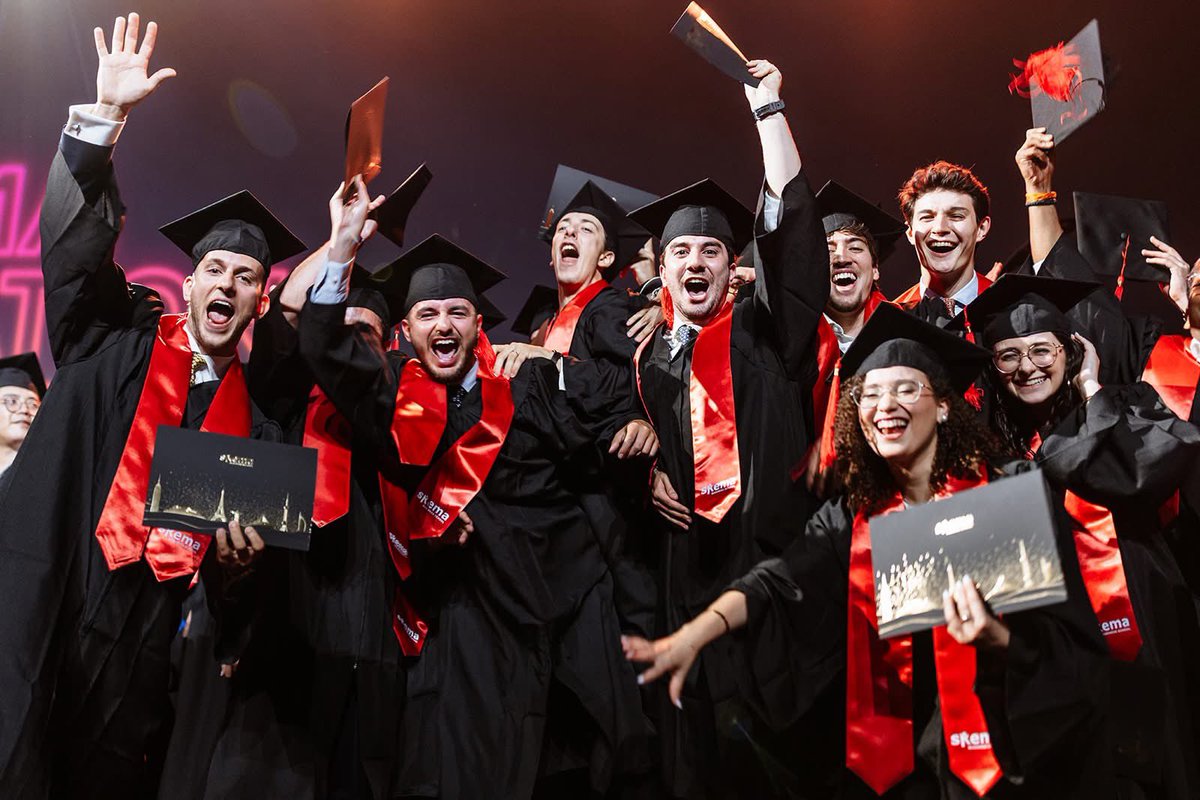
[RETOUR EN IMAGES 📸] Samedi 27 juin, près de 3000 diplômés ont célébré l'aboutissement de leur parcours, rejoints par plus de 8000 accompagnants présents sur place ou connectés à distance. Félicitations! #WeAreSKEMA
SKEMA Business School tweet mediaSKEMA Business School tweet mediaSKEMA Business School tweet mediaSKEMA Business School tweet media
Français
0
1
1
284
JBG 🇫🇷
JBG 🇫🇷@j_bg·
🏀 ALLEZ-HOP — Le Ministère de la Culture, n'ayant sans doute rien de mieux à faire, s'est donné pour mission de renommer 22 termes du basket pour faciliter la "compréhension du jeu pour les spectateurs ou téléspectateurs néophytes"... Smash doit donc être remplacé par "allez-hop", spacing par "espacement", corner par "coin", buzzer beater par "panier à la sirène" ou encore all-star game en "match des étoiles"... Heureusement le terme "bureaucratie" est bien français et ce sont les anglais qui nous l'ont emprunté ! Source en commentaire
Français
82
115
1.5K
534.5K
·rphgrc·(↑)
·rphgrc·(↑)@RphGrc·
In case you missed it: we are pivoting the 11-year-old @swissvc_ community into something sharper, more focused, and more useful for active VC investors deploying in Switzerland. ++ What’s NEW SwissVC is now an operator-grade peer network built around three guilds, Deal Intelligence, Firm Architecture, and Portfolio + DPI, with small, high-trust groups, practical outputs, and peer exchange under Chatham House rules. - - What we DO NOT do anymore broad, event-led, generic ecosystem programming, and passive participation as the core model. SwissVC is no longer trying to be an umbrella or an all-purpose networking platform. + What we KEEP doing building trust among practitioners, strengthening the Swiss venture layer, and creating a room where active investors can share signal, sharpen judgment, and help one another operate at a higher level. If you are actively deploying capital in Switzerland and want to contribute to the next chapter, this is the moment to engage, #apply" target="_blank" rel="nofollow noopener">swissvc.ch/#apply.
English
0
1
3
82
·rphgrc·(↑) retweetledi
·rphgrc·(↑)
·rphgrc·(↑)@RphGrc·
I know I've said it already, but I don't do "pay it forward" stuff anymore Wanna chat and get some juice? It's €300 for 30min raphael-grieco.com 📆
English
0
3
4
278
·rphgrc·(↑)
·rphgrc·(↑)@RphGrc·
what prevents you from playing sushichess ?
·rphgrc·(↑) tweet media
English
0
0
1
28
·rphgrc·(↑)
·rphgrc·(↑)@RphGrc·
🇨🇭 @swissvc_ is repositioning for a simple reason: Switzerland is becoming a major, global tech hub, but the professional venture capital investor layer still needs more structure, more collaboration, and more operating leverage. The 2026 Swiss Deep Tech Report shows why this matters. Switzerland now directs 63% of all VC to deep tech, the highest share of any country in the world, and annual deep tech funding has grown 5x over the last decade to a record $2.6 billion in 2025. At the same time, foreign capital already supplies 88% of funding in Swiss deep tech rounds above $100M, which shows both the global pull of the market and the need for a stronger domestic investor network. Switzerland already has strong actors supporting different parts of the ecosystem: Innosuisse, for founders and research commercialization. Deep Tech Nation Switzerland, for ecosystem intelligence, market visibility, and connection across the Swiss deep tech landscape. Venturelab, for founder education, cohort programs, and competitions. FIT - Fondation pour l'Innovation et la Technologie, for grants and loans in Vaud and Romandie. Swissnex, for international ecosystem connectivity. SICTIC, for angel investors and early-stage deal flow. SECA - Swiss Private Equity & Corporate Finance Association , for the VC and PE industry body, market statistics, and professionalization of the private markets ecosystem. Swiss Startup Association, for startup advocacy, founder resources, legal support, and ecosystem representation. And many more, such as Swisspreneur, swisstech, Venture Kick. Each of these serves a clear lane. But there is still an empty lane: a professional, full-time, independent VC peer group actively deploying in Switzerland, built to improve how active investors operate day to day. Exclusively built for VC. That is the SwissVC lane. Not a loose umbrella, not a generic events platform, but a collaborative, action-driven community for active VCs who want better peer exchange, sharper pattern recognition, better firm operations, and faster learning across the market. If Switzerland is going to become a major tech hub, it needs both stronger lanes and better collaboration within each lane, especially among the people actually deploying capital. SwissVC exists to help build that missing layer.
·rphgrc·(↑) tweet media
English
0
2
2
134
Laura Modiano
Laura Modiano@LauraModiano·
🇸🇪❤️SVERIGE x OPENAI❤️🇸🇪 There are countless business reasons to be excited to announce we are opening an OpenAI office in Stockholm. I can say that the new office will serve as our hub for the Nordics and that we're hiring GTM and FDE, state the obvious that Sweden is home to one of Europe's strongest technology ecosystems and that we saw ➕50% ChatGPT WAUs YoY ➕10x Codex WAU growth YoY ➕5x API growth YoY Instead what I will say is how much I have LOVED working out of Sweden regularly the last two years with builders who have shown passion and joy for development and self driven community. How much we as a team have loved showing up every few weeks, to serve this incredible ecosystem of innovation and keep delivering together in partnership. I celebrated my last birthday in Stockholm with founders and investors who have become friends through deep collaboration, and this city has become a second work home. I am really excited to expand our ability to do it every day in a meaningful way. In our new office, in your offices, in the community, in a sauna or in an archipelago dip.
Laura Modiano tweet media
English
31
15
306
15.3K
Vidya Madhavan 😶‍🌫️
Vidya Madhavan 😶‍🌫️@vidyamadhavan2·
Perplexity is at $450M ARR and $22B valuation. I have never once heard anyone say "let me Perplexity that." Claude is everywhere. ChatGPT is everywhere. In fact even Gemini is everywhere. Perplexity is the most successful product nobody talks about using. Who is the $450M?
English
305
29
1.6K
458.6K