
Sabitlenmiş Tweet
Rossco 🤓
3.4K posts


Rossco 🤓
@RuzzyCarhole
I muck about in photography playing with colour, texture, tones & my definition of beauty. Always looking for the kōan within an image. And I’m a mighty geek.
Port Stephens, Australia Katılım Temmuz 2025
495 Takip Edilen46 Takipçiler
@farzyness On a similar trajectory I’m having a great ongoing discussion with Claude about designing my dream house, asking it to push its creativity within what’s allowed in our Aussie state and local regulations.
Imagine the fun you could have with 3D printing pushed creatively. 🚀
English

My gut tells me AI/Robotics is going to birth a renaissance in intricate and grand artistic execution.
When the labor to execute a vision is quasi-infinite and almost free, the end result can become next-level epic.
Waken Minds 𓂀@wakenminds
Men without degrees built this.
English
Rossco 🤓 retweetledi

Every cut, angle, and surface here is the result of extreme precision controlled down to fractions of a millimeter.
CNC machining turns solid metal into complex, perfectly balanced components that move with almost no resistance.
English
@Imderekearnhart @oprydai How do they know what it was ‘before’ the observation to know that something had changed upon observation?
(Or am I not getting something? Happy to own it if that’s the case)
English

It doesn’t.
The term “observation” dangerously needs to be discussed here, because it can hinder the modern understanding of quantum mechanics.
In everyday life, we can look at or observe a bird without touching it.
In the quantum world, “observation” does not mean a conscious person looking at something. It means a physical interaction that extracts information from the system.
A photon doesn’t have a brain. It doesn’t “know” anything.
When a photon is measured, it interacts with something, whether it's a detector, an atom, a screen, an electron, etc. That interaction changes the system and creates a measurable result.
So the photon is not reacting to being “seen.” It is reacting because measurement requires interaction.
We have to remember that quantum systems exist in our world, but they do not behave like the everyday world we are used to. That means words like “observe” can mean something very different in quantum mechanics.
English

I just tried to comment "nerd." and got flagged for community guidelines.
🤣

English
Time and a place - if you’re virtue signalling against virtue signallers then write a letter to the paper or yell at the Telly.
Don’t bring down a solemn and respectful moment for good Aussies by disrespecting it with booing.
It displays your lack of character and basic decency.
English
@Ryandally08 Gadigal etc had nothing to do with what happened at Anzac Cove 111 years ago today.
Some booed and many more would have if the occasion was not so solemn, to condemn this pathetic virtue signalling insult to the Diggers.
English

#BREAKING Four minutes of prolonged booing breaks out at the official Anzac Day Dawn Service in Melbourne as a “Welcome to Country” is delivered.
This is a sacred day.
There should be no room for political correctness.
English
Rossco 🤓 retweetledi

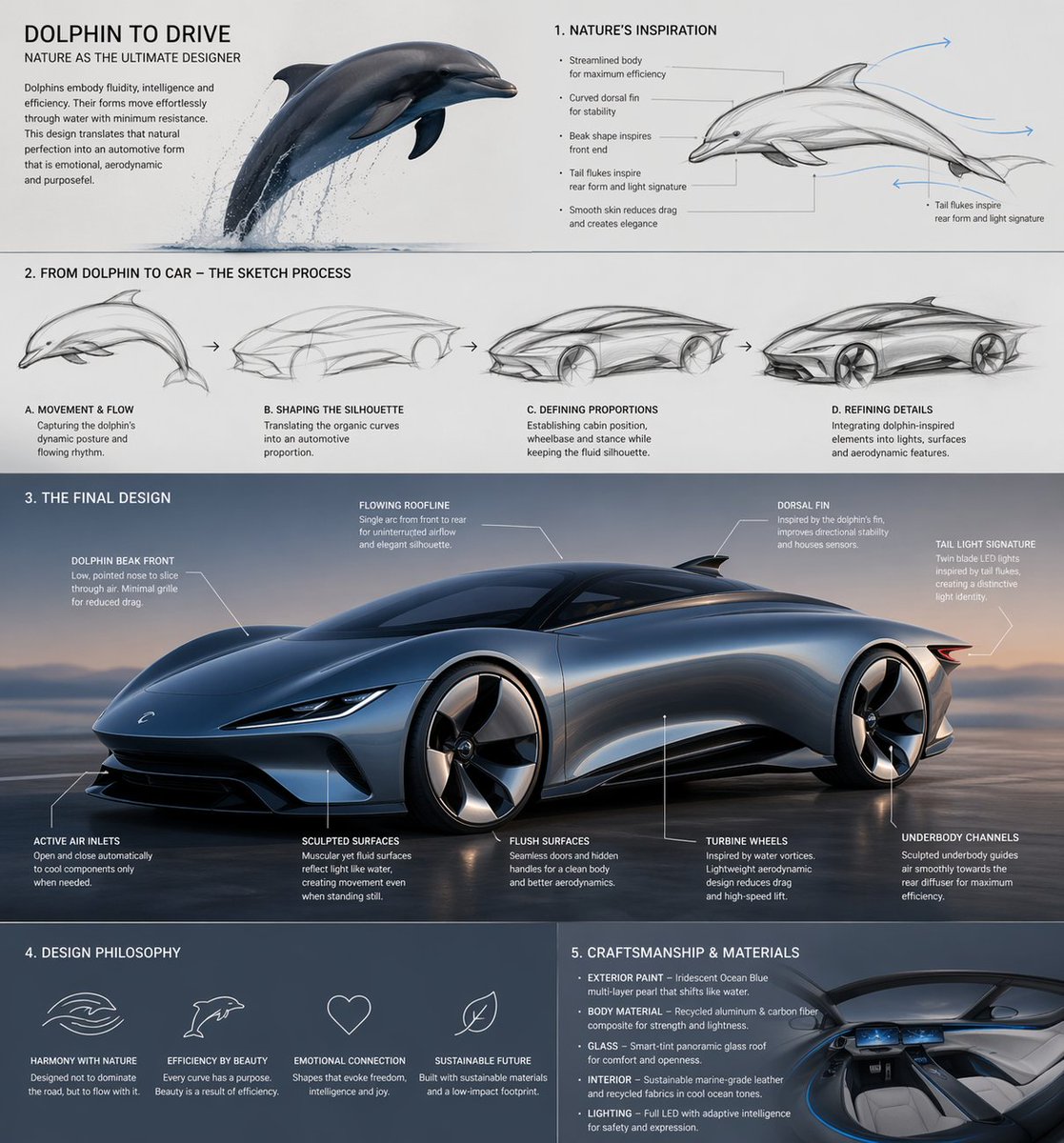
Lol
The prompt The output

LEYE@leyeConnect
There is a human process in creativity that cannot be prompted away.
English
Rossco 🤓 retweetledi

Tried our hand at this grid splitting effect, experimenting in Houdini using recursive subdivision in a solver.
Original inspiration by @flight404
Link in comments.
English
Rossco 🤓 retweetledi

“Pure mathematics is, in its way, the poetry of logical ideas.”
— Albert Einstein
English
@Scobleizer @openclaw @_LuoFuli Wow, I’d love to see and read about your travels to China and what you see and learn there. (Have you been before?) A few friend of mine have been there and say it’s getting like the Jetsons over there. 😜
English

Insights into Chinese craze for @OpenClaw. The Chinese are even crazier about OpenClaw than we are here in America.
This is the first Chinese-only video I've watched. Had to turn on English subtitles.
One thing that comes across clear is @_LuoFuli's passion and love for OpenClaw.
Now she runs Xaomi's AI group building models. They build phones and cars and top rate ones at that.
She talks through her discovery process when she first got OpenClaw.
One line of hers caught my attention. She asked OpenClaw to help her cause more curiosity in her employees.
Ahh, we have the same problem here in America.
I'm trying to put together a trip to China in September. This video motivates me to learn some Chinese cause I would love to interview Fuli Luo when I'm there.
张小珺 Xiaojun Zhang@zhang_benita
Yes, our latest special guest is Fuli Luo @_LuoFuli . The second battle in the global large model arms race has begun: shifting from the Chat era dominated by pre-training to the Agent era driven by post-training. This marks Fuli Luo’s first-ever interview, as well as her first in-depth technical conversation. We talked systematically about the massive AI upheaval triggered by technological breakthroughs including Claude Opus 4.6 and OpenClaw in 2026, along with its subsequent structural impacts across the industry. Amid the fierce large-model arms race, the world around us is undergoing brutally rapid changes—even for researchers who train models firsthand. “I used to believe our work was highly creative, and could never be simplified into fixed skills or standardized workflows. But now I realize it can be automated after all. If that’s possible, can models train stronger models on their own? Can they achieve iterative improvement through self-evolution? This is exactly what will unfold in the next couple of years,” Fuli Luo says. As human knowledge and wisdom are internalized into model capabilities, what will humanity pursue in the future? Is our society truly ready for this tsunami-scale technological revolution? All in all, this is an information-dense dialogue. It reveals how an AI lab makes strategic technical bets, allocates resources, and adjusts organizational structure and team planning amid a major paradigm shift. At the core of its response to drastic change lies its established culture and core values. Though lengthy and technically intensive, we hope this conversation brings great insights to every viewer. Our podcast, video episode and article are released simultaneously across platforms, with English subtitles provided to assist non-Chinese-speaking audiences. Luo Fuli: OpenClaw, Agent Frameworks — The AI Paradigm Has Already Chang... youtu.be/V9eI-t3TApE?si… 来自 @YouTube
English
Rossco 🤓 retweetledi

La fecundación no es aleatoria, ni gana el más rápido: en realidad, el óvulo decide quién gana.
Durante décadas nos enseñaron que la carrera de la fecundación la ganaba el espermatozoide más rápido.
Sin embargo, un estudio publicado en Proc Biol Sci, demuestra cómo funciona realmente la reproducción humana.
Científicos analizaron los fluidos foliculares de 60 parejas en el Hospital Saint Mary en Manchester.
Observaron que el óvulo libera sustancias químicas para atraer activamente a espermatozoides de hombres específicos.
Mediante estas señales, el óvulo ejerce una selección biológica propia para decidir qué células logran acercarse.
El óvulo busca específicamente células que posean una compatibilidad genética óptima con su propia carga biológica.
Esta selección se enfoca en genes del sistema inmunitario para asegurar que la descendencia sea más saludable.
Lo llamativo es que esta preferencia celular no siempre favorece a la pareja elegida de manera consciente.
Esta comunicación química demuestra que la biología femenina sigue evaluando opciones incluso después del encuentro íntimo.
Entender este proceso celular nos permite buscar soluciones precisas para los casos de infertilidad de origen desconocido.
La ciencia continúa documentando el nivel exacto de interacción biológica que existe realmente durante el proceso reproductivo.
Video: Stazione Zoologica Anton Dohrn di Napoli
DOI: 10.1098/rspb.2020.0805
Español
Rossco 🤓 retweetledi

> be Yann LeCun
> spend years building JEPA at Meta
> company focuses on LLaMA instead
> his idea stays complicated and unused
> robotics plans get dropped
> decides to leave and start AMI Labs
> builds a much simpler version from scratch
> trains it on normal hardware in just a few hours
> removes all the complicated tricks and keeps it simple
Results:
-uses 200x less data than similar systems
-makes decisions 50x faster
-runs on a single GPU instead of massive clusters
-simple to train
-understands movement, objects, and space
-can tell when something is physically impossible
-learns how the real world works without being explicitly taught.
Aakash Gupta@aakashgupta
Earlier this year Yann LeCun left Meta because Mark Zuckerberg wouldn't bet the company on JEPA. Last week his group dropped the first JEPA that actually trains end-to-end from raw pixels. 15 million parameters. Single GPU. A few hours. The timing is not a coincidence. For four years Meta has been the house that JEPA built. LeCun published the original paper from FAIR in 2022. I-JEPA and V-JEPA came out of his lab. The architecture was supposed to be the escape hatch from LLMs, the path to robots that actually learn physics instead of hallucinating about it. Every version shipped fragile. Stop-gradients. Exponential moving averages. Frozen pretrained encoders. Six or seven loss terms that had to be hand-tuned or the model collapsed into garbage representations. Meta kept funding LLMs. Llama shipped. Llama scaled. Llama got beat by Qwen and DeepSeek. Zuck spent $14 billion to buy ScaleAI and install Alexandr Wang. The FAIR robotics group was dissolved. LeCun's research kept winning papers and losing the product roadmap. He left, started AMI Labs, and said publicly that LLMs were a dead end. Now the paper. LeWorldModel. One regularizer replaces the entire pile of heuristics. Project the latent embeddings onto random directions, run a normality test, penalize deviation from Gaussian. The model cannot collapse because collapsed embeddings fail the test by construction. Hyperparameter search went from O(n^6) polynomial to O(log n) logarithmic. Six tunable knobs became one. The downstream numbers are what should scare the robotics capex class. 200 times fewer tokens per observation than DINO-WM. Planning time drops from 47 seconds to 0.98 seconds per cycle. 48x faster at matching or beating foundation-model performance on Push-T and 3D cube control. The latent space probes cleanly for agent position, block velocity, end-effector pose. It correctly flags physically impossible events as surprising. It learned physics without being told physics existed. Figure AI is valued at $39 billion. Tesla Optimus is mass-producing. World Labs raised $230 million to sell generative world models. Everyone in humanoid robotics is burning capital on foundation-model pipelines that plan in 47 seconds per cycle. LeCun's group just showed you can do it with 15 million parameters on a single GPU in a few hours. This is the Xerox PARC pattern running again. Meta had the next architecture. Meta had the scientist. Meta dissolved the robotics team, passed on the productization, and watched the exit. Three months later the lab that was supposed to be Meta's publishes the result that resets the robotics cost structure. The paper is worth more than Alexandr Wang.
English
@aakashgupta The implications are very exciting projecting forward in time.
x.com/i/grok/share/4…
English

Earlier this year Yann LeCun left Meta because Mark Zuckerberg wouldn't bet the company on JEPA. Last week his group dropped the first JEPA that actually trains end-to-end from raw pixels. 15 million parameters. Single GPU. A few hours.
The timing is not a coincidence.
For four years Meta has been the house that JEPA built. LeCun published the original paper from FAIR in 2022. I-JEPA and V-JEPA came out of his lab. The architecture was supposed to be the escape hatch from LLMs, the path to robots that actually learn physics instead of hallucinating about it. Every version shipped fragile. Stop-gradients. Exponential moving averages. Frozen pretrained encoders. Six or seven loss terms that had to be hand-tuned or the model collapsed into garbage representations.
Meta kept funding LLMs. Llama shipped. Llama scaled. Llama got beat by Qwen and DeepSeek. Zuck spent $14 billion to buy ScaleAI and install Alexandr Wang. The FAIR robotics group was dissolved. LeCun's research kept winning papers and losing the product roadmap.
He left, started AMI Labs, and said publicly that LLMs were a dead end.
Now the paper. LeWorldModel. One regularizer replaces the entire pile of heuristics. Project the latent embeddings onto random directions, run a normality test, penalize deviation from Gaussian. The model cannot collapse because collapsed embeddings fail the test by construction. Hyperparameter search went from O(n^6) polynomial to O(log n) logarithmic. Six tunable knobs became one.
The downstream numbers are what should scare the robotics capex class. 200 times fewer tokens per observation than DINO-WM. Planning time drops from 47 seconds to 0.98 seconds per cycle. 48x faster at matching or beating foundation-model performance on Push-T and 3D cube control. The latent space probes cleanly for agent position, block velocity, end-effector pose. It correctly flags physically impossible events as surprising. It learned physics without being told physics existed.
Figure AI is valued at $39 billion. Tesla Optimus is mass-producing. World Labs raised $230 million to sell generative world models. Everyone in humanoid robotics is burning capital on foundation-model pipelines that plan in 47 seconds per cycle.
LeCun's group just showed you can do it with 15 million parameters on a single GPU in a few hours.
This is the Xerox PARC pattern running again. Meta had the next architecture. Meta had the scientist. Meta dissolved the robotics team, passed on the productization, and watched the exit. Three months later the lab that was supposed to be Meta's publishes the result that resets the robotics cost structure.
The paper is worth more than Alexandr Wang.

English
Like I’ve said - he’s the real deal.
That’s some tasty Kool Aid. 😋
Farzad 🇺🇸 🇮🇷@farzyness
Half the West calls him a villain. History will call him the only person alive who has simultaneously rebuilt transportation, energy, space, telecom, AI, neuroscience, and robotics. The gap between today’s noise and tomorrow’s verdict is wider than it was for Jobs, Edison, or Rockefeller. *** thanks to @DavidCarbutt_ and team for the edit.
English
In the heart of every atom, the electron doesn’t glide; it vanishes.
Dr. Theresa Bullard on the quantum leap: that “gap” between orbitals isn’t empty. It’s the portal. The electron dissolves into the field of pure potential, then reappears elsewhere. No path. No travel. Just pure becoming.
We chase the particles, the light, the matter… but the cosmos is whispering through the silence between. The emptiness that holds everything.
This is the quiet engine of reality itself.
English
Rossco 🤓 retweetledi

Ferromagnetic spheres in liquid under
B: m=(4πr³/3μ₀)χB.
Chains via
U_dd=(μ₀/4π r³)[m1·m2 -3(m1·r̂)(m2·r̂)].
Stars trace ∇·B=0 lines live.
Raw magnetostatic self-assembly math visualized perfectly in real time exactly as dipole math.
English

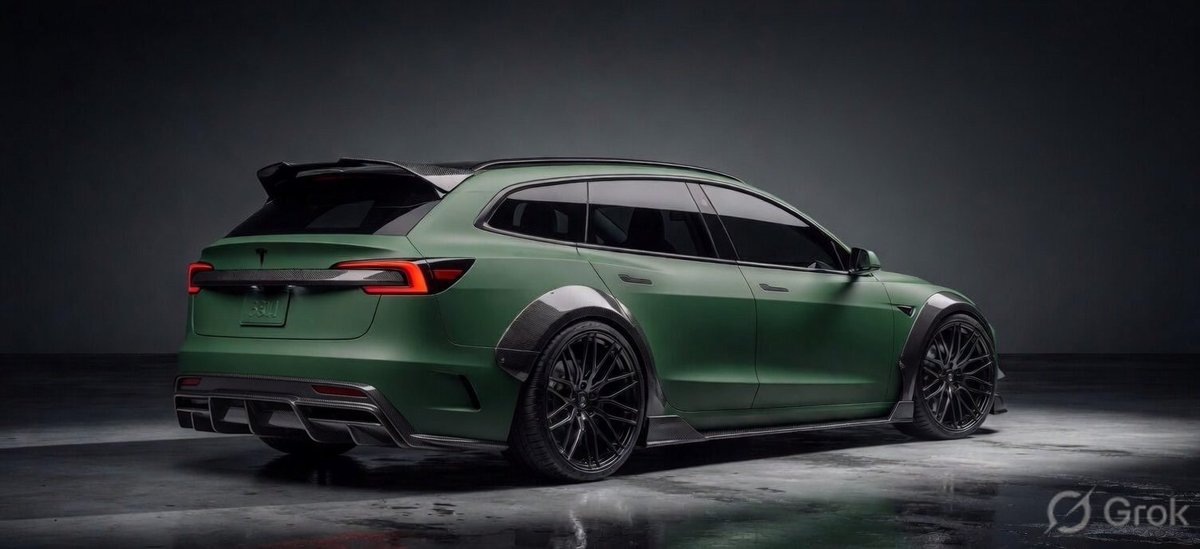
Honestly would have bought this over the Model Y L if Tesla sold one. Bring back the sports station wagon I say!
English