Ryan N. Lambert
2K posts

Ryan N. Lambert
@RyanLambertABC
American healthcare entrepreneur ($840m exit from bootstrapped biz). National security = Team America. Texan in DC. Watching East Asia.


DOJ issued a truly stunning indictment today, unveiling a massive AI chip smuggling operation to China--led by Wally Liaw, the Co-Founder, Board Member, and Senior Vice President of Supermicro, a Fortune 500 company and one of the largest U.S. AI server manufacturers. The operation smuggled over $2.5 billion worth of chips to China, including Hopper and Blackwell chips. It is unsurprising that China would seek to illegally obtain U.S. chips, given how much better they are than Chinese chips. But it is appalling that leadership figures in major U.S. semiconductor companies would actively enable Chinese efforts to obtain banned AI chips. Many U.S. companies have long denied that chip smuggling to China is happening. And now we know that it is not just happening, but it is pervasive--and individuals high up in some of the most important companies in the AI supply chain were actively supporting those smuggling operations. Policy changes are urgently needed to close loopholes in AI chip export controls and stop Chinese smuggling. First, we need to know where these chips are going: all AI chip exports to Southeast Asia (the nexus of Chinese smuggling operations, including this operation), and potentially globally, must require a U.S. export license. Second, Chinese companies inside the United States should not be allowed to purchase AI chips. It is absurd that the only country in which Chinese companies can buy AI chips is the United States itself, a loophole that DOJ has highlighted in past indictments that Chinese smugglers routinely exploit. And third, much tighter compliance measures are needed by U.S. companies. U.S. companies have demonstrated that they cannot be trusted to self-police. Companies must have stricter end-use reporting requirements, and/or face stricter liability. Export control enforcement must become more like financial sanctions enforcement if it is to be effective. justice.gov/opa/pr/three-c…


This should be standard response to all letters sent from Congress to @SecWar from now on: "As Sec'y of War, I do not work for, or report to, you in Congress, [Rep] [Sen] [sender's name]. For additional information, refer to Art. I, § 8 and Art. II, § 2 of the US Constitution."

New report by Aita Moriki, of Japan's Institute for Defense Studies @Nids1952 under @ModJapan_jp, shows China has converted en masse outdated J-6 jets into unmanned suicide drones that could exhaust Taiwan's air defense missiles at the beginning of a war. nids.mod.go.jp/publication/co…


Profiles of several top Chinese weapons scientists have disappeared from the website of the Chinese Academy of Engineering. Those removed include nuclear weapons expert Zhao Xiangeng, radar specialist Wu Manqing, and missile designer Wei Yiyin. No explanation has been given for the removals. Source: SCMP


A lot of people talk about the WWII mass production miracle. “I’m going to talk about WWI— when the US failed to deploy even a single US-designed fighter to the front.” Palantir’s @Madeline_Zimm, co-author of Mobilize with @ssankar, on lessons from WWI’s failures: “Money was not enough.” “We entered the war late, but when we tried to do a mass production push of mainly foreign designs, we were unable to do it because the aircraft at that time were literally— craft. They were made of wood and fabric.” “Where are the parallel to today? Our missiles are more like a craft, boutique industry and haven’t been designed for mass production.” “If we want to mass produce them, money is not going to be enough.” “We need to totally reimagine how we design and produce these things, and the most productive companies need to produce.” Via @ReaganInstitute

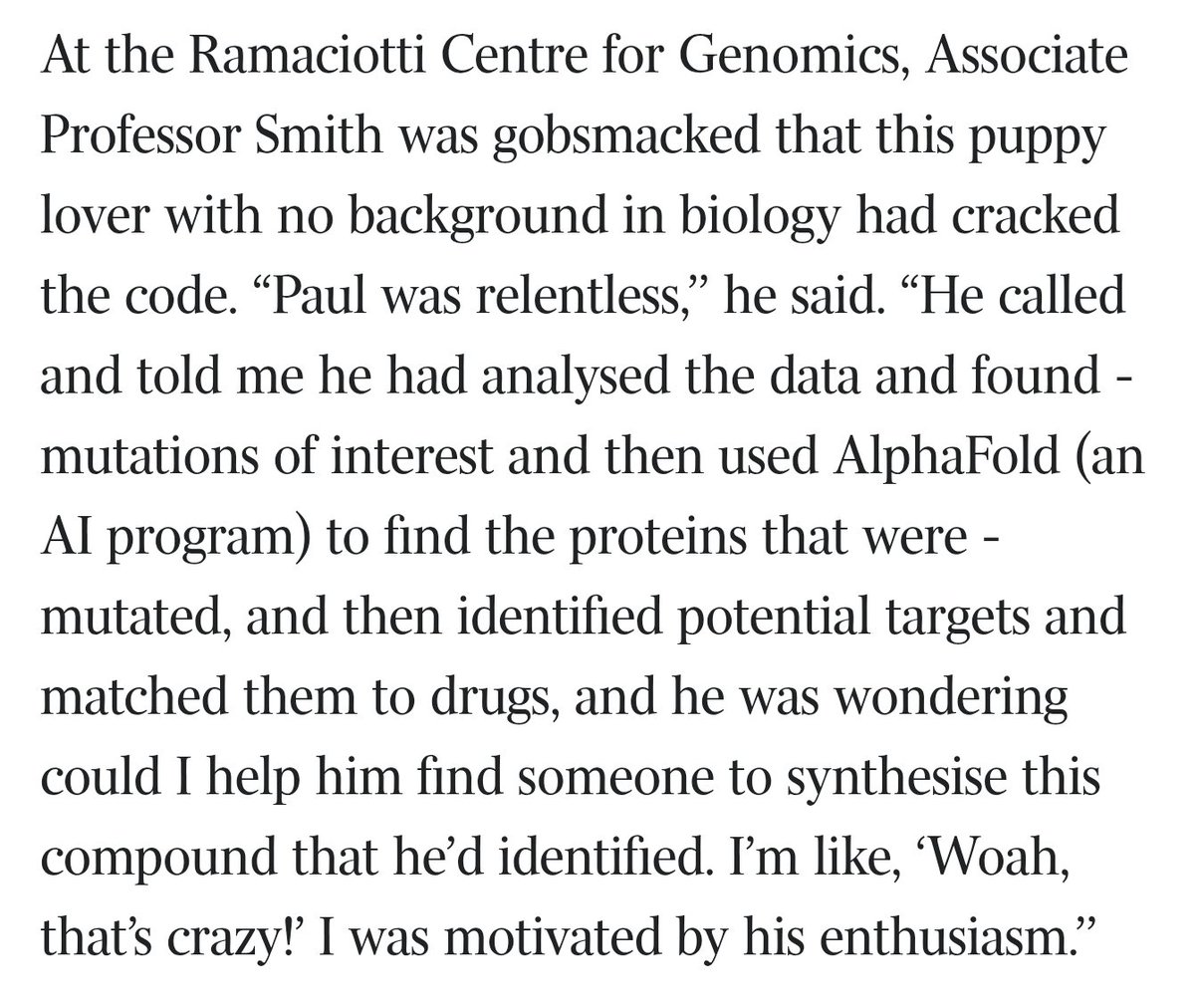
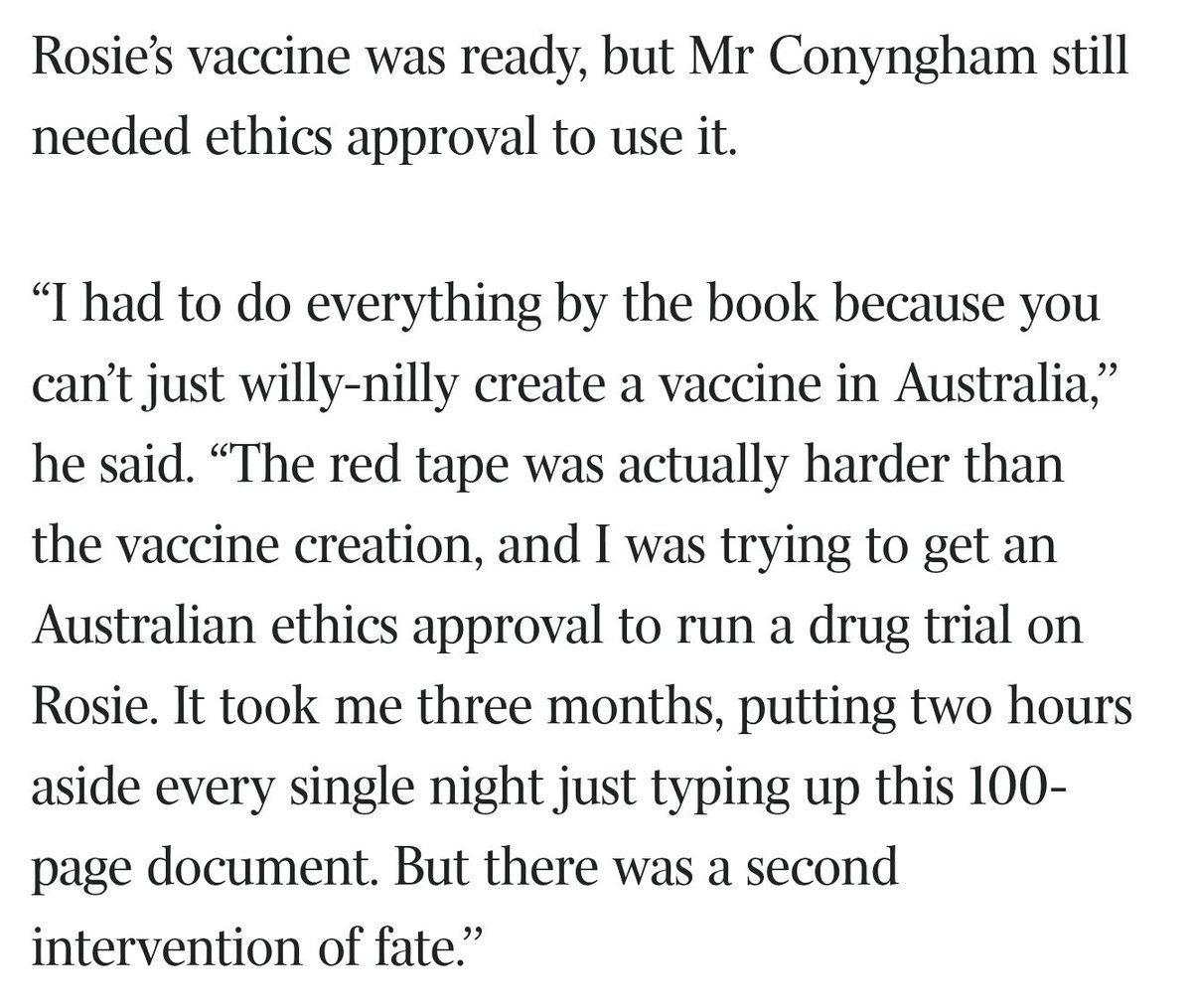
Also a reminder that the laws governing ethics approvals in western countries are insane


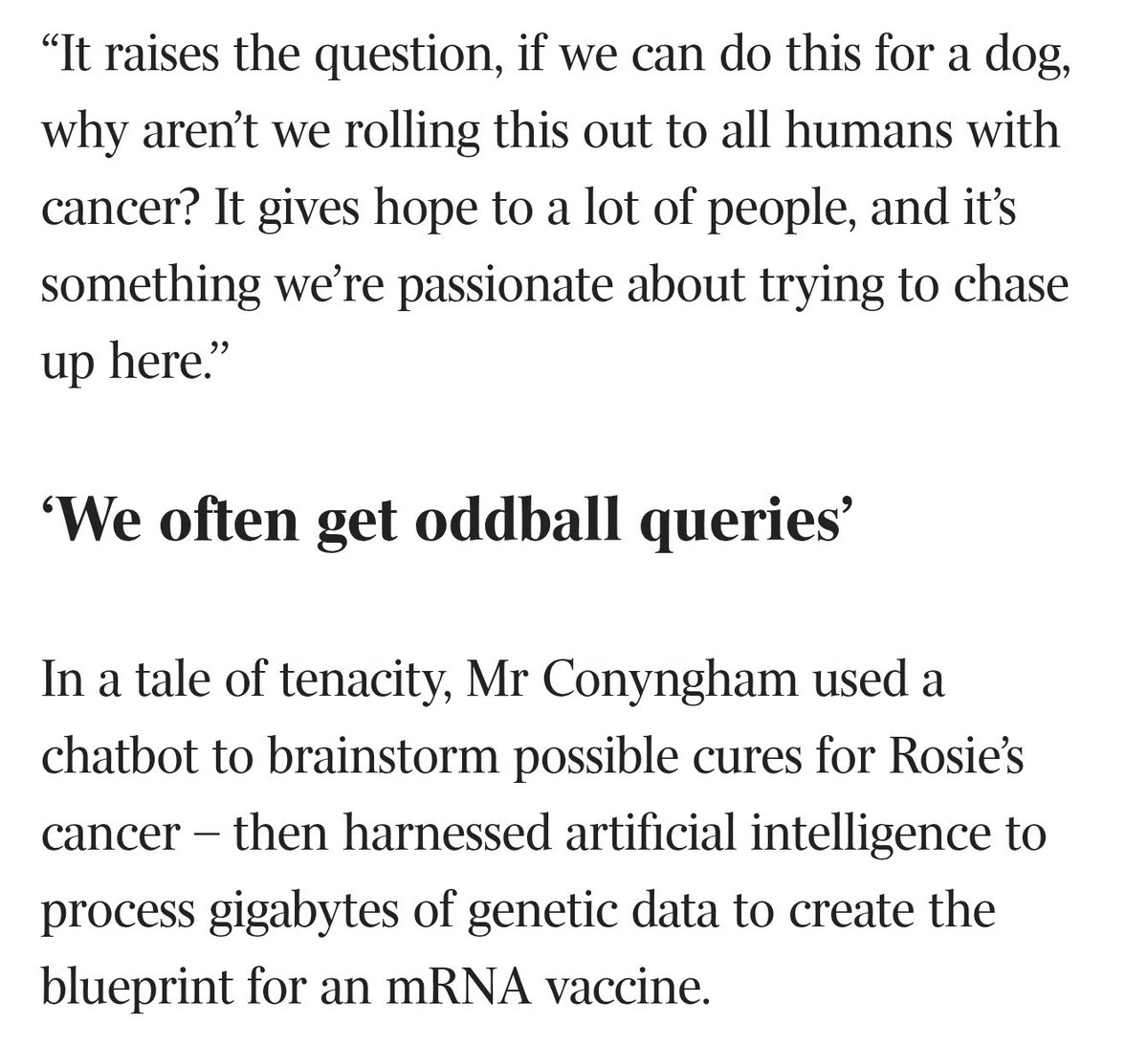
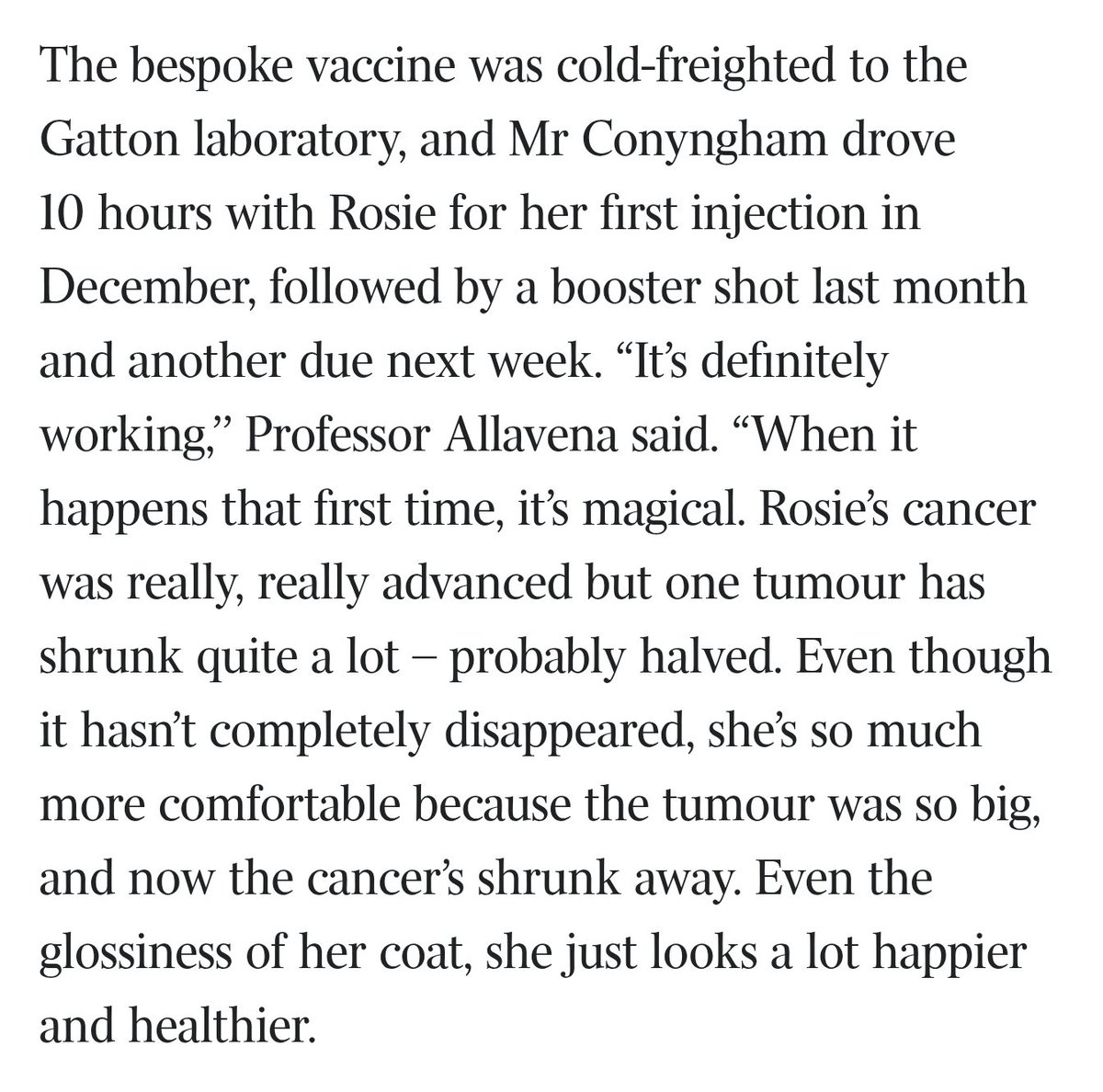
How AI empowered Paul Conyngham to create a custom mRNA vaccine to cure his dog’s cancer when she had only months to live. The first personalized cancer vaccine designed for a dog:

Ukraine tests humanoid robots Phantom MK-1 on the front line Ukraine has become a key global testing ground for new military technologies, including the humanoid robots Phantom MK-1. The American company Foundation sent two of these robots to Ukraine in February for trials in combat conditions. The robots have a human-like form, made of black steel, and are equipped with a tinted visor on their faces. During demonstrations, they can use various types of weapons, including a revolver, pistol, shotgun, and M-16 rifle. This is the first humanoid robot specifically designed for military tasks. The company has already secured $24 million in contracts from the U.S. Army, Navy, and Air Force. Foundation co-founder Mike LeBlanc stated that the robots can operate without fatigue or fear in extreme conditions and may eventually replace humans on the battlefield.

@WifeFinance Ya talked to my boy in Kansas playing COD all shift as a base fireman then will get out on 100% disability 4k mo tax free check for life

Japan's top general just said the quiet part loud — and it echoes all the way to Beijing. Japan's Chief of Staff Gen. Uchikura Hiroaki, when asked about residents' anxiety over the country's first-ever deployment of long-range stand-off missiles, shrugged it off: "The benefits outweigh the concerns." The Defense Ministry scrambled to clarify. But the missiles are real — and so is what they signal. These aren't just defensive tools. Under Japan's new "counterstrike capability" doctrine, they can hit enemy bases — including on mainland China — with ranges exceeding 1,000 km. Meanwhile, Japan has confirmed plans to station missiles on Yonaguni Island — just 110 km from Taiwan — by 2031. Beijing is furious. China has already hit 40 Japanese companies with export curbs, calling Japan's remilitarization a revival of militarism. Wang Yi told the Munich Security Conference Japan was trying to "revive militarism." And PM Takaichi has openly said a Chinese attack on Taiwan could trigger a Japanese military response — the most direct statement any Japanese leader has ever made. Locals in Kumamoto — one of the missile deployment sites — are pushing back. No public town halls. No community consent. Just a showcase for officials. Japan is racing to rearm. China is watching every move. And Taiwan sits at the center of it all.