Sriram Krishnan

15 posts

Sriram Krishnan banner
Sriram Krishnan

Sriram Krishnan

@skrishnan47

Senior Policy Advisor for AI. Working on American dominance in AI!

Washington DC Katılım Mart 2025
23 Takip Edilen10.8K Takipçiler
U.S. CTO Ethan Klein
U.S. CTO Ethan Klein@USCTO47·
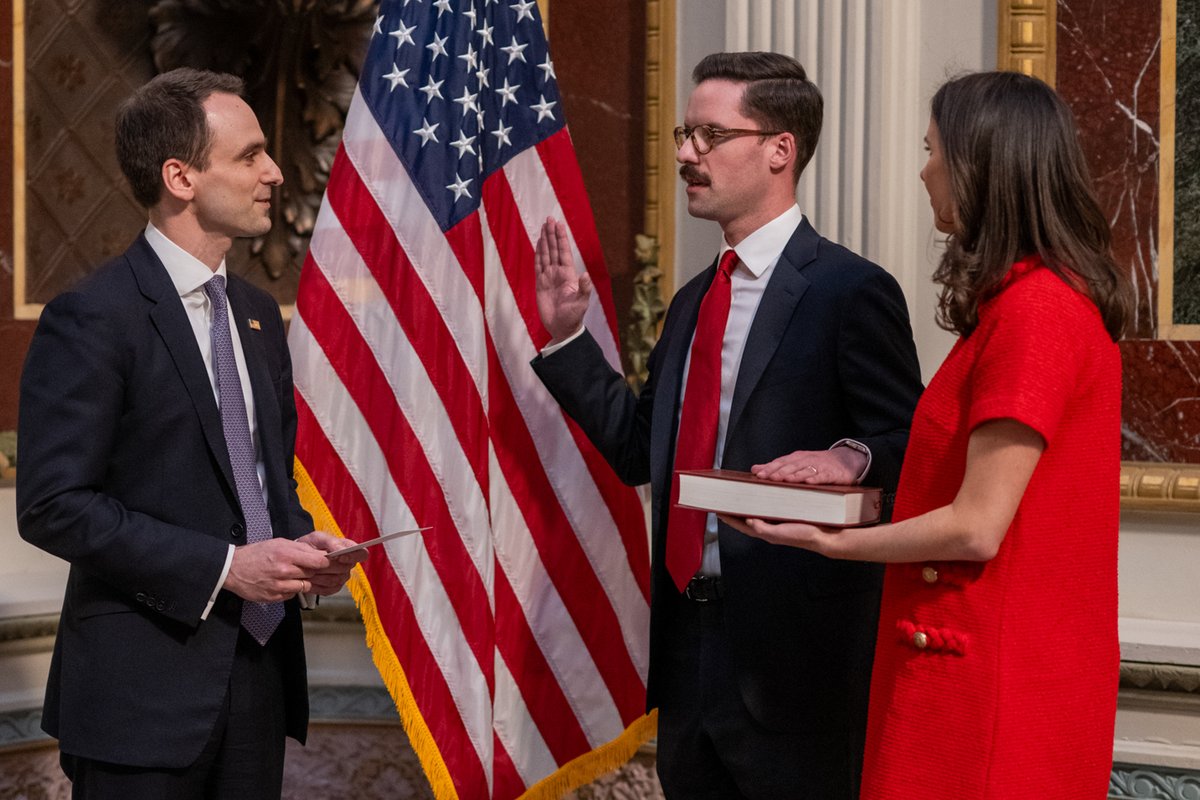
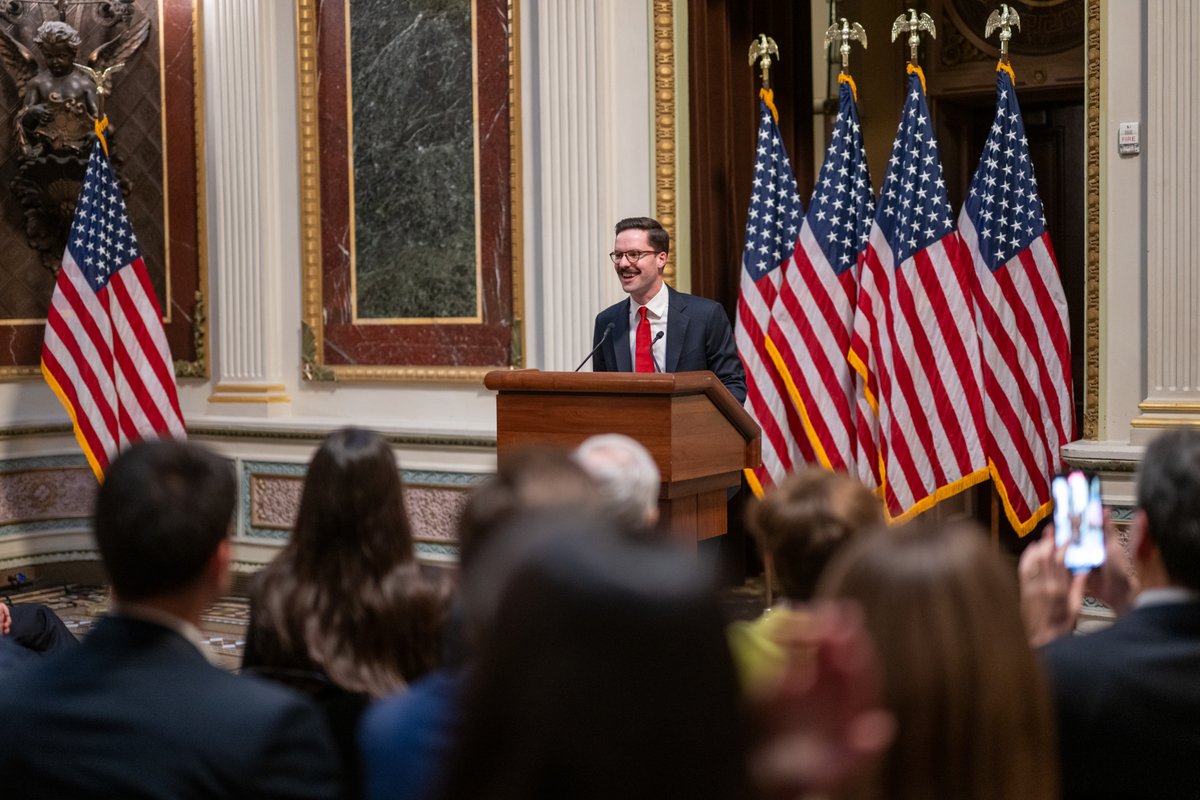
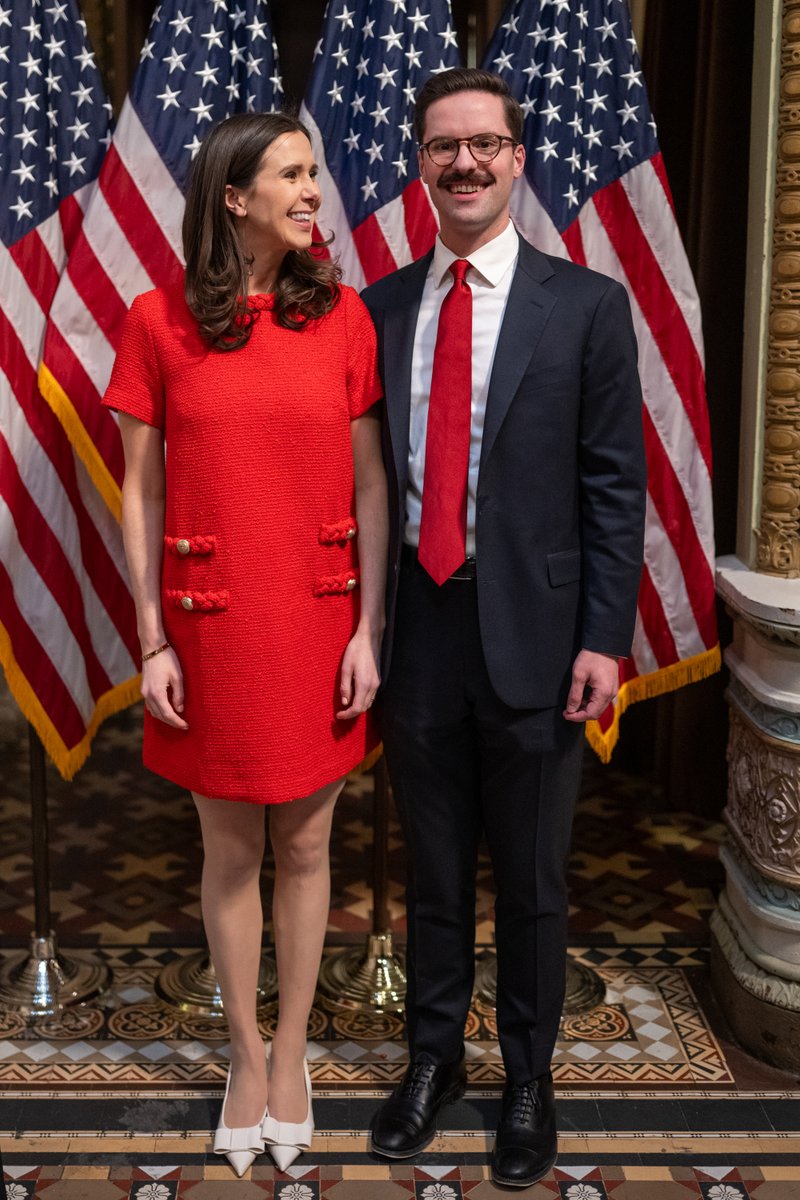
Honored to have been sworn in last week as the 5th U.S. Chief Technology Officer. Excited to again be serving the American people @WHOSTP47 under the leadership of Director @mkratsios47. Thank you @POTUS for entrusting us to usher in a new GOLDEN AGE of American Innovation!
U.S. CTO Ethan Klein tweet mediaU.S. CTO Ethan Klein tweet mediaU.S. CTO Ethan Klein tweet media
English
67
118
963
51.6K
Sriram Krishnan retweetledi
Director Michael Kratsios
Director Michael Kratsios@mkratsios47·
We have over 16,000 students and educators registered for the Presidential AI Challenge! 5 days left to submit. Don’t miss your chance! Visit AI.gov 🇺🇸
English
14
29
183
15.9K
Sriram Krishnan retweetledi
David Sacks
David Sacks@davidsacks47·
Today President Trump signed an Executive Order on “Ensuring a National Policy Framework for Artificial Intelligence.” This Order declares that the United States must have one “minimally burdensome national standard” for AI, not “50 discordant state ones.” The Administration will work with Congress to define that standard. The objective is to prevent a confusing regulatory patchwork, while protecting important values like child safety. This Order is not that framework itself, or an amnesty or moratorium, but rather a statement of principles and a set of tools for the Administration to push back on the most onerous and excessive State AI laws. These tools include: -A DOJ litigation task force; -Withholding of certain discretionary federal funds from States with onerous AI laws; -An FTC effort to curb State attempts to force AI models to alter their truthful outputs; and -An FCC effort to curb unduly burdensome State disclosure requirements. This Order does not mean the Administration will challenge every State AI law. Far from it. The focus is on excessive and onerous State laws. We look forward to working with Congress to enact a stable and enduring framework that reduces unnecessary regulation, enables innovation, protects core values, and helps America win the AI race.
English
180
267
2.3K
448.2K
Sriram Krishnan retweetledi
Rapid Response 47
Rapid Response 47@RapidResponse47·
President Donald J. Trump signs an Executive Order to protect American AI innovation from an inconsistent and costly compliance regime resulting from varying state laws. "We have to be unified. China is unified..."
English
413
864
4.7K
1.2M
Sriram Krishnan
Sriram Krishnan@skrishnan47·
The National Security Strategy is some of the most beautiful prose I’ve ever seen in a U.S. government document.
English
4
4
44
5.5K
Sriram Krishnan
Sriram Krishnan@skrishnan47·
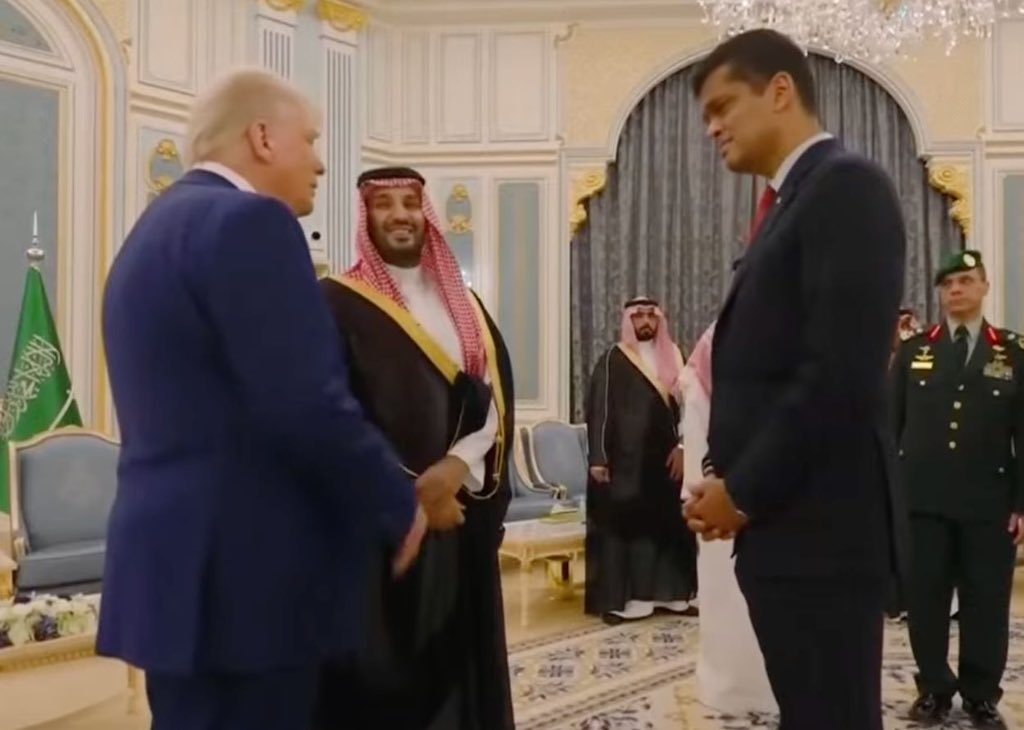
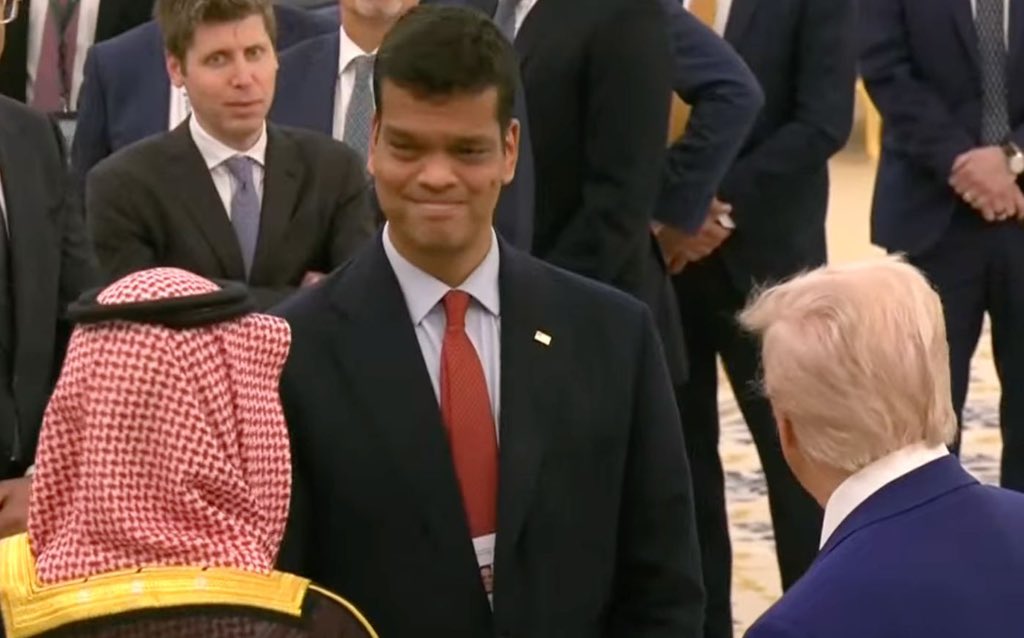
It was an honor to talk to President Trump and HRH Crown Prince Mohammed bin Salman in the Royal Court today as part of this historic trip. We got to talk about all the ways our countries could work together on AI and spread American AI, something @davidsacks47 talked about earlier today as well. Many of our best and brightest business leaders from Jensen Huang, @elonmusk , @bhorowitz , @sama , @alexandr_wang , @ajassy and many others present.
Sriram Krishnan tweet mediaSriram Krishnan tweet media
English
129
328
5K
468K
Sriram Krishnan retweetledi
David Sacks
David Sacks@davidsacks47·
TO WIN THE AI RACE, THE BIDEN AI DIFFUSION RULE MUST GO The Trump administration has announced its intention to repeal the Biden administration’s AI Diffusion Rule. As the Commerce Department’s Bureau of Industry and Security (BIS) confirmed in a statement yesterday: “The Biden AI rule is overly complex, overly bureaucratic, and would stymie American innovation. We will be replacing it with a much simpler rule that unleashes American innovation and ensures American AI dominance.” This is an excellent decision by Secretary of Commerce @howardlutnick and Under Secretary of BIS Jeff Kessler. There were several major problems with the Biden Diffusion Rule: 1. Overreach of Export Control Authority First, the rule marked an unprecedented—and arguably unlawful—expansion of export control authority. Under the Export Control Reform Act (ECRA) of 2018, the President is empowered to restrict exports of dual-use technologies that have both civilian and military applications. That authority has been used to restrict the sale of advanced semiconductors to China, a policy with broad bipartisan support. But the Diffusion Rule went significantly further. It required nearly all global sales of high-end GPUs—even to trusted allies—to obtain export licenses or fit into a narrow set of license exemptions. This forced much of the global data center and AI infrastructure industry to seek approval from Washington, creating a bottleneck that chilled legitimate, non-sensitive commerce. 2. Bureaucratic Allocation of Compute The rule imposed detailed numerical caps on how many chips and how much computing power foreign entities could acquire and operate. This was a radical departure from market-based allocation principles, placing the U.S. government in the position of rationing compute power globally. It effectively turned Washington into a central planner for the global AI industry. 3. Alienation of U.S. Allies The rule also strained relationships with key allies by arbitrarily dividing countries into compliance “tiers,” labeling many friendly nations as second-class partners. This kind of regulatory hierarchy undermines trust and risks pushing allies toward non-American technology alternatives. 4. Lack of Due Process The Diffusion Rule was issued just five days before the end of the Biden administration without a meaningful public comment or review period. Given its sweeping scope, its retroactive elements, and the global compliance burden it imposed, this rollout was deeply flawed from both a procedural and practical standpoint. ⸻ In his first week in office, President Trump directed us to win the AI race. The Biden Diffusion Rule undermines that goal. It bogs American tech companies down in red tape, while slowing the global adoption of U.S. technologies at a time when we should be encouraging the world to build on our tech stack. As @VP J.D. Vance emphasized in his Paris Speech on AI, the United States should be the gold standard and partner of choice for our allies and strategic partners. If we make it too hard for them to work with us, we risk pushing them into China’s orbit. China has already launched a Digital Silk Road as part of its broader Belt and Road Initiative. If we don’t offer a compelling alternative, we leave the field open. Yes, we must take aggressive steps to prevent advanced semiconductors from being illegally diverted into China. But that goal should not preclude legitimate sales to the rest of the world as long as partners comply with reasonable security conditions. Today, American chips remain superior to China’s—but that lead is narrowing. If U.S. companies are hamstrung by excessive regulation, and foreign customers are blocked from buying our technology, we risk ceding global markets and influence to Chinese competitors. Right now, we have the opportunity to entrench the American tech stack worldwide while we still have a commanding lead. Let’s seize it.
English
84
266
1.8K
380.2K