Sam Mestern

208 posts

Sam Mestern banner
Sam Mestern

Sam Mestern

@smestern

Neuroscience @ Western U Studying Stress with Patch Clamp Electrophysiology. Inoue Lab. He/Him. Former Carleton U Raven!

Katılım Temmuz 2020
449 Takip Edilen187 Takipçiler
Sam Mestern retweetledi

Brian Heseung Kim
Brian Heseung Kim@brhkim·
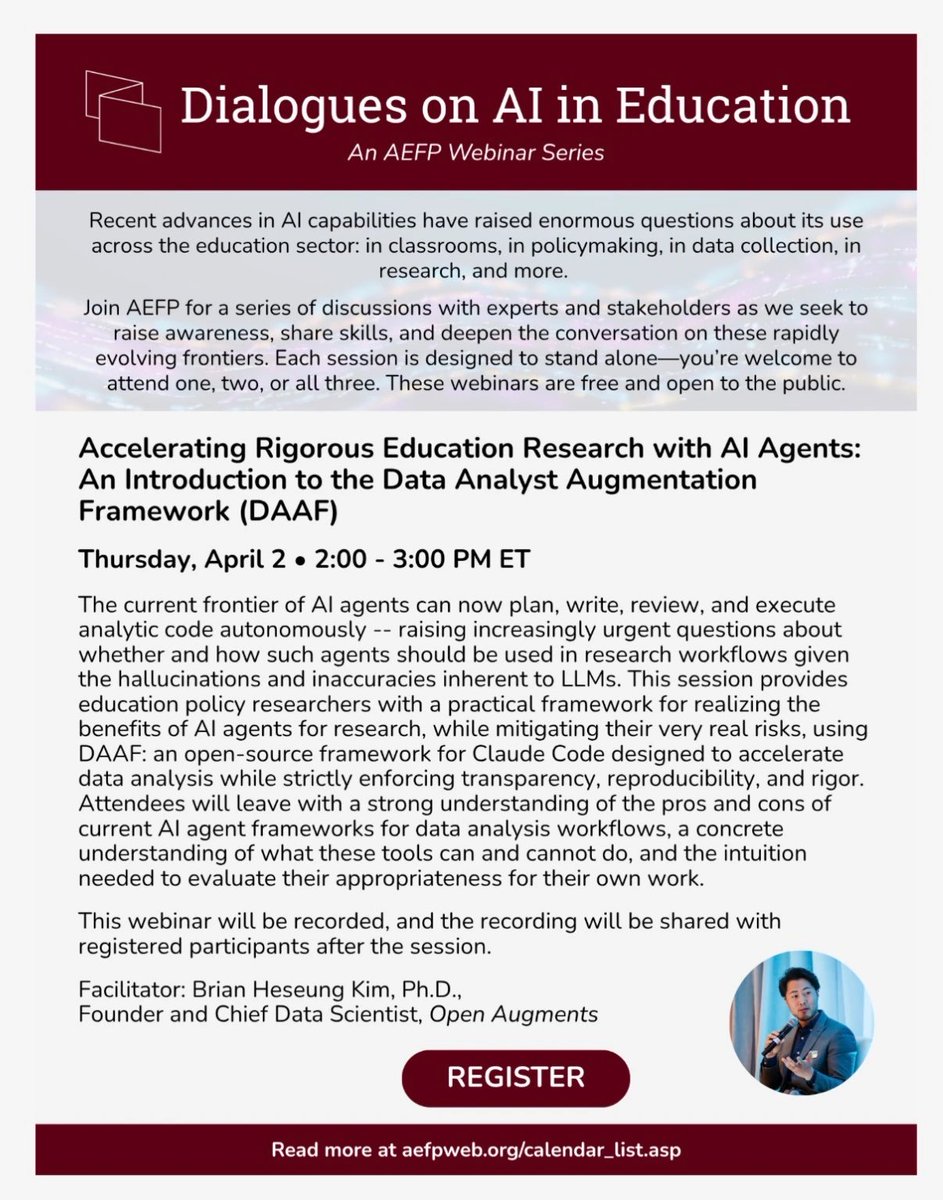
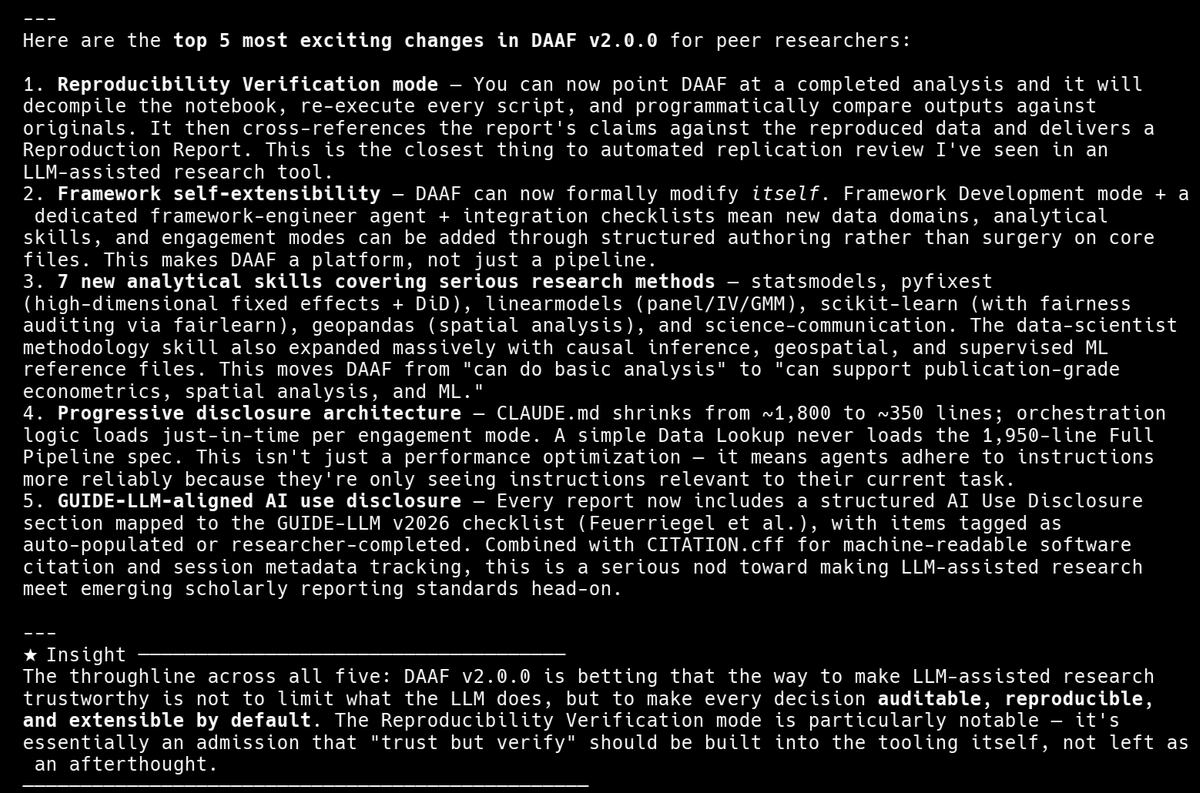
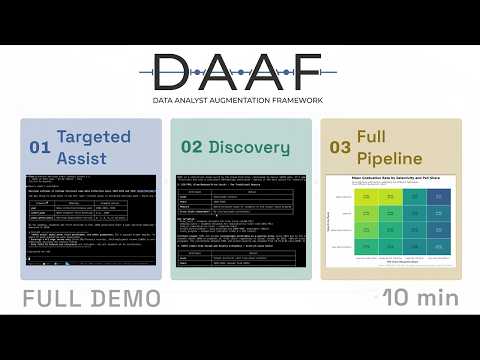
Today, I’m launching DAAF, the Data Analyst Augmentation Framework: an open-source, extensible workflow for Claude Code that allows skilled researchers to rapidly scale their expertise and accelerate data analysis by as much as 5-10x -- without sacrificing the transparency, rigor, or reproducibility demanded by our core scientific principles. You (yes, YOU!) can install and begin using it in as little as 10 minutes from a fresh computer with a high-usage Anthropic account (crucial accessibility caveat, unfortunately very expensive!) github.com/DAAF-Contribut… DAAF explicitly embraces the fact that LLM-based research assistants will never be perfect and can never be trusted as a matter of course. But by providing strict guardrails, enforcing best practices, and ensuring the highest levels of auditability possible, DAAF ensures that LLM research assistants can still be immensely valuable for critically-minded researchers capable of verifying and reviewing their work. In energetic and vocal opposition to deeply misguided attempts to replace human researchers, DAAF is intended to be a force-multiplying "exo-skeleton" for human researchers (i.e., firmly keeping humans-in-the-loop). The base framework comes ready out-of-the-box to analyze any or all of the 40+ foundational public education datasets available via the Urban Institute Education Data Portal (educationdata.urban.org/documentation/), and is readily extensible to new data domains and methodologies with a suite of built-in tools to ingest new data sources and craft new Skill files at will! With DAAF, you can go from a research question to a shockingly nuanced research report with sections for key findings, data/methodology, and limitations, as well as bespoke data visualizations, with only five minutes of active engagement time, plus the necessary time to fully review and audit the results (see my 10-minute video demo here: youtu.be/ZAM9OA0AlUs). To that crucial end of facilitating expert human validation, all projects come complete with a fully reproducible, documented analytic code pipeline and consolidated analytic notebooks for exploration. Then: request revisions, rethink measures, conduct new sub-analyses, run robustness checks, and even add additional deliverables like interactive dashboards, policymaker-focused briefs, and more -- all with just a quick ask to Claude. And all of this can be done *in parallel* with multiple projects simultaneously. By open-sourcing DAAF under the GNU LGPLv3 license as a forever-free and open and extensible framework, I hope to provide a foundational resource that the entire community of researchers and data scientists can use, benefit from, learn from, and extend via critical conversations and collaboration together. By pairing DAAF with an intensive array of educational materials, tutorials, blog deep-dives, and videos via project documentation and the DAAF Field Guide Substack (daafguide.substack.com – MUCH more to come!), I also hope to rapidly accelerate the readiness of the scientific community to genuinely and critically engage with AI disruption and transformation writ large. I don't want to oversell it: DAAF is far from perfect (much more on that below!). But it is already extremely useful, and my intention is that this is the worst that DAAF will ever be from now on given the rapid pace of AI progress and (hopefully) community contributions from here. More than anything, I just hope all of this work can somehow be useful for my many peers and colleagues trying to "catch up" to this rapidly developing (and extremely scary) frontier. It's a wild time, but we need as many people informed and at the table together as possible. Never used Claude Code? No idea where you'd even start? My full installation guide walks you through every step -- but hopefully this video shows how quick a full DAAF installation can be from start-to-finish. Just 3mins! youtube.com/watch?v=jqkVLX… Learn more about my vision for DAAF, what makes DAAF different from other attempts to create LLM research assistants, what DAAF currently can and cannot do as of today, how you can get involved, and how you can get started with DAAF yourself! #vision--purpose" target="_blank" rel="nofollow noopener">github.com/DAAF-Contribut… So there it is. I am absolutely as surprised and concerned as you are, believe me. With all that in mind, I would *love* to hear what you think, what your questions are, what you’re seeing if you try testing it out, and absolutely every single critical thought you’re willing to share, so we can learn on this frontier together. Thanks for reading and engaging earnestly!
YouTube video
YouTube
YouTube video
YouTube
English
15
78
439
72.9K
Sam Mestern
Sam Mestern@smestern·
Really good advice! Related to your point about testing. I found that one key thing is to remind Claude not to rely on synthetic data. Too often, Claude will try to pass tests by creating idealistic synthetic data. I placed a couple of statements like "- Never create dummy data to fill gaps or pass tests - If data is missing or corrupted, report this honestly - do not fabricate " in my markdown files. Really helps sharpen it up and prevents Claude from taking the easy way.
English
1
0
7
2.6K
Sam Mestern
Sam Mestern@smestern·
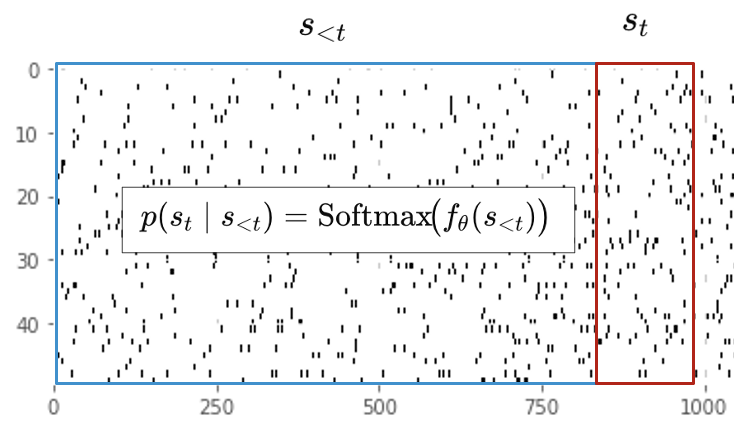
@kanair I am a big fan of the LDS (and its variants: sLDS, rsLDS) work coming out of the Linderman Lab. Essentially a latent-variable linear model with possion emissions for predicting spike trains. papers.nips.cc/paper/2020/has…
English
1
0
3
146
Ryota Kanai
Ryota Kanai@kanair·
Is anyone building a good predictive model for spike trains?
Ryota Kanai tweet media
English
8
7
89
14.4K
Sam Mestern retweetledi
NeurodataWithoutBorders
NeurodataWithoutBorders@NeurodataWB·
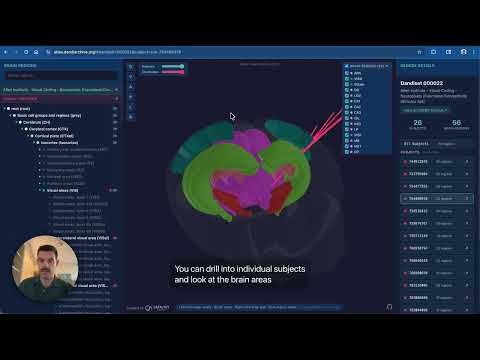
NWB just turned 10 years old! Researchers worldwide have downloaded 1.9 PB of NWB data from the @DANDIArchive. This animation shows the reach of NWB, facilitating collaboration across the globe. What impact has open neurophysiology data had on your science? Share your stories! 🧠
English
0
5
15
4.8K
Sam Mestern retweetledi
SfN Journals
SfN Journals@SfNJournals·
#eNeuro | Calcium Dynamics in Hypothalamic Paraventricular Oxytocin Neurons and Astrocytes Associated with Social and Stress Stimuli vist.ly/3n59iuu
English
0
12
33
3.3K
Britton Sauerbrei
Britton Sauerbrei@bsauerbrei1·
Finally starting to appreciate the ability of simple models to make prose explanations clearer and more concrete. Here, a model of cortical control of gait modification via phase-dependent gating of sensory input.
English
5
5
91
7.4K
NeuroWoodworks
NeuroWoodworks@NeuroWoodworks·
Manual carving of a 3D neuron in a piece of Walnut. #sciart
NeuroWoodworks tweet media
English
8
13
186
8.1K
Sam Mestern retweetledi
Julio Martinez
Julio Martinez@JulioMTNeuro·
The Hypothalamus, a phylogenetically ancient brain region where action potentials and hormones interface to produce hybrid signalling cascades; ultimately enabling our responses to stress. Check Hiro's paper. Amazing work led by @NeuroStress_Lab. biorxiv.org/content/10.110…
English
0
6
21
1K
Maxime Beau, Ph.D.
Maxime Beau, Ph.D.@maxime_beau·
I am very proud to announce that my PhD paper finally came out in Cell! In this *very* collaborative study, we develop and release a deep-learning approach to predict neuron type identity from their electrical signature. doi.org/10.1016/j.cell… 1/16 🧵
Neural Computation Lab@NeuralCompLab

Our “Neuro-AI” paper has just been published in Cell. It describes a new deep learning-based classifier for identifying different cell types in Neuropixels recordings: doi.org/10.1016/j.cell…

English
4
24
91
6.9K
Sam Mestern retweetledi
Ivan Alcantara
Ivan Alcantara@ivancalcantara·
Last week, I may have DEI’d too close to the sun and attracted anti-NIH folks to my profile who then claimed that my research is useless and a waste of time and money. I beg to differ! Allow me to explain in lay terms how my research in mice is relevant to human health: 🧵
Ivan Alcantara@ivancalcantara

My PhD work is out! How do mothers balance tending to their own needs, such as eating, and taking care of their offspring? We examined the link between feeding and parenting neural circuits and how they are modulated postpartum in mice 🧵 (1/9) PREPRINT: biorxiv.org/content/10.110…

English
16
70
876
119.7K
Sam Mestern retweetledi
Julio Martinez
Julio Martinez@JulioMTNeuro·
Evolution of the visual system has permeated the basic processing unit in the neocortex, the single neuron. A team effort ⁦@nxwm_network⁩. Single neuron diversity supports area functional specialization along the visual cortical pathways | bioRxiv biorxiv.org/content/10.110…
English
1
4
19
819
Sam Mestern
Sam Mestern@smestern·
If you have any questions, want to impletment it yourself, or just want to talk about cool patch-clamp data & open science feel free to contact me!
English
1
0
2
50
Sam Mestern
Sam Mestern@smestern·
I’m really excited to share this open-science side project I’ve been working on related to patch-clamp electrophysiology! If you’re into this or have some data you’d like to experiment with, I’d love for you to check it out. Big thanks to Allen Institute for the opportunity!
Allen Institute@AllenInstitute

Congrats to @SMestern, Ph.D. student at @WesternU, for winning the MapMySpikes challenge! His tool, PatchOTDA, excelled in mapping electrophysiological data to molecular properties. 🧠🏆 More on his tool and the MapMySpikes challenge: alleninstitute.org/news/canadian-…

English
3
3
13
2.4K