Mario Sabate Planes

6K posts

Mario Sabate Planes banner
Mario Sabate Planes

Mario Sabate Planes

@SabatePlanes

Hola

Cambrils Katılım Haziran 2017
253 Takip Edilen256 Takipçiler
Mario Sabate Planes retweetledi
The Economic LongWave
The Economic LongWave@TheELongWave·
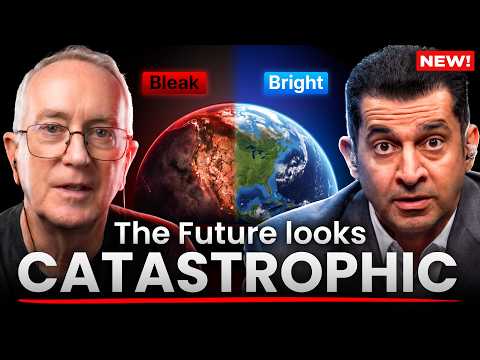
Steve Keen and I agree on these principles. The deregulation of finance, the expansion of private credit, and four decades of falling interest rates diverted capital away from productive investment and into property and financial speculation. That process inflated asset prices, weakened affordability, and created the conditions for Debt Deflation. youtube.com/watch?v=aKsZTB…
YouTube video
YouTube
English
3
7
18
2.1K
Mario Sabate Planes retweetledi
kristen shaughnessy
kristen shaughnessy@kshaughnessy2·
FDIC Warns Big banks Now Carry More Risk Than 2008. The risks are concentrated and growing fast. Shadow bank loans increased 35% in 2025 86% of shadow bank loans sit at banks over $100B 10 banks hold 66% Multiple Stress Points -CRE - consumer debt near 2007 levels -underwater securities -derivatives -exploding shadow bank loans- -rising C&I defaults.
kristen shaughnessy tweet mediakristen shaughnessy tweet mediakristen shaughnessy tweet media
English
18
121
340
14.6K
Mario Sabate Planes retweetledi
Michael Burry Stock Tracker ♟
Mark Cuban thinks many data centers will turn into pickleball courts He was on the @theallinpod making the case that AI infrastructure is being overbuilt His comparison is the 90s when everyone raced to lay fiber-optic cable Then technology got more efficient, and what followed was the cables became useless, and companies lost billions on infrastructure nobody needed Now he sees the same setup with AI. Companies are signing 10 and 20 year power contracts betting that compute requirements never drop, and they will Cuban says the losers won't be retail investors this time It'll be: • Venture capital funds • Private equity • Institutional investors who went all in
English
187
214
1.6K
257.6K
Mario Sabate Planes retweetledi
David Hunter
David Hunter@DaveHcontrarian·
@arbitrage789 @natbrunell It will last plenty long enough & feel like an eternity. There is a long lag between when they print & it impacts the economy. Plus it will take quite a while to get to a right-sized policy once they do start printing. Not nearly as straight forward as you think.
English
1
1
52
3K
Dehix
Dehix@Dehix_Trades·
The market is spending more time shaking people out than actually breaking down. Exactly why I’m building positions before momentum rolls back in.
English
3
2
12
1.8K
Mario Sabate Planes retweetledi
Edward Dowd
Edward Dowd@DowdEdward·
Bloomberg Private Credit article: “Wall Street Alchemists Tap Insurers to Unfreeze Private Markets” When I hear alchemy invoked on Wall Street it triggers me…In 2007 the head of BlackRock’s CDO business was quoted as saying “I turn shit into gold!” We know how the story ends. This insurance wrapper is an attempt to keep the party rolling because all it takes for this to unravel is the second derivative of flows to slow, stop or reverse.
Edward Dowd tweet media
Nick Nemeth (Mispriced Assets)@NickNemo17

There are going to be riots when this is eaten by the taxpayers. Riots.

English
39
88
367
43.4K
Nitran 👑
Nitran 👑@NitranTrades·
Keep an eye on $PATH Today's volume is 170.36M versus a 30-day average of 67.63M, which is 2.5× normal volume. That shows strong interest if it breaks out of this descending triangle. SMI is also curling up from oversold territory. 📈
Nitran 👑 tweet media
English
2
0
3
489
David Hunter
David Hunter@DaveHcontrarian·
@BucktheBoxerbd I have one target, $200, that I've said is 12-18 months away. I don't do interim targets.
English
5
2
51
5.2K
Gabriel Osorio-Mazzilli
Gabriel Osorio-Mazzilli@InvestiBrew·
Every time the $SPY $QQQ has come across a recession or economic shock The long-duration vs short-duration curve tends to be a great gauge for risk-appetite As the $TLT long end yields continue to rise as $SHY short end yields come off... It's clear we have a fiscal policy and inflation policy vote of no confidence We must solve for a catalyst in those two and arrive at a reasonable trade scenario for bonds That's what I'm working on for you today
Gabriel Osorio-Mazzilli tweet media
English
1
0
2
508
Mario Sabate Planes retweetledi
rottieluvr
rottieluvr@rottieluvr1·
@RachelDashCS Easy buy. An obvious downtrend with a breakout and re-test. Resistance becomes support.
rottieluvr tweet media
English
1
1
3
2.2K
Mario Sabate Planes retweetledi
Krzysztof Szczawinski 🇵🇱
Football is the largest shared ritual left in Western civilization. Not the most refined. The most real. 1. When God died and the Church emptied, what filled the void for the masses wasn’t philosophy – it was football. The stadium became the cathedral. The club colors the liturgy. The season the liturgical calendar. The derby the holy war. Millions of people who cannot name a single philosopher know exactly what they felt when their team won the championship. That feeling is not trivial. It is the survival of something ancient and necessary – tribal solidarity, collective identity, the experience of belonging to something larger than yourself. 2. The club is inherited like a religion. Father to son, grandfather to grandson, the colors worn like a flag across generations. This is Aristotle’s political animal finding its natural habitat – the community of strangers bound by something they didn’t choose and cannot fully explain. You support your club the way you love your country: not because it is the best, but because it is yours. That irrational loyalty is not a bug. It is the mechanism by which civilizations transmit identity across time. 3. The pitch is the last space in Western civilization where results cannot be managed, narrated, or captured by ideology. The ball goes in or it doesn’t. No diversity statement wins a championship. No committee changes it. This is why people trust it with a depth they trust almost nothing else – it is the last remaining public meritocracy, operating in real time, with no possibility of spin. We would be well advised to apply such meritocracy to the more important areas of life. 4. But bread and circuses is the oldest formula in politics, and it works as reliably now as it did in Rome. The crowd cheering in the arena is the crowd not asking questions in the Senate. Football is simultaneously the most authentic community left in Western civilization and the most efficient distraction machine ever built. A population that knows every transfer fee and no political philosophy is a population that has been given exactly enough meaning to stop looking for the rest. 5. The capture is now complete at the top. The clubs that once belonged to communities now belong to sovereign wealth funds, American hedge funds, and oligarchs using sporting prestige to launder geopolitical reputation. Players have no loyalty to the cities whose shirts they wear – they are assets, transferred between portfolios. The World Cup is hosted by states that criminalize the lifestyle of millions of fans who follow it. The financial architecture has been engineered to concentrate power at the top and extract value from the bottom – from the supporter who buys the shirt, pays the subscription, and hands over his genuine emotion to an entity that regards it as a revenue stream. 6. The system cannot change the game – it is too visible, too meritocratic, too honest. So it buys the clubs instead. This is the Machiavellian move applied to sport: when you cannot win on the pitch, acquire the pitch. When the institution is too legitimate to attack, capture it from above and hollow it out from within while leaving the form intact. The stadiums are full. The game is real. The ownership structure is indistinguishable from the forces hollowing out every other institution in Western civilization. 7. The tension is this: football is both the last authentic mass community in Western civilization and a machine being used to pacify it. The solidarity in the stands is real and the distraction it provides is real and the financial capture at the top is real – all simultaneously. The answer is not to abandon it. It is to see it clearly – to love the game, defend the local club, resist the financialization, and understand that the passion you feel in the stadium is a civilizational resource worth protecting. The cathedral still stands. The congregation still comes. The question is who owns the building – and what they plan to do with it.
Krzysztof Szczawinski 🇵🇱 tweet media
Krzysztof Szczawinski 🇵🇱@Kristof_Poland

Nothing quite like music as a celebration of life – and let’s do it in its grandeur. And nothing does grandeur like French baroque music. Which you probably don’t know. And should. 1. Before we call it opera – they didn’t. The French court of Louis XIV considered the word opéra too vulgar, too Italian, too common for what they were creating. They called them tragédies lyriques – lyrical tragedies. The distinction matters: these were not entertainments. They were civilizational statements, staged at Versailles for the Sun King, combining music, dance, poetry, and spectacle into something that had no precedent and has no successor. Western civilization at its most unapologetically magnificent. 2. Jean-Baptiste Lully stands at the center of it all – the Italian-born genius who became the absolute master of French musical life under Louis XIV. His Te Deum is where you start. Majestic, overwhelming, triumphant beyond what you think music can do. It announces itself like the opening of the heavens. Lully died because of it – he struck his own foot with the long conducting staff he used to beat time on the floor, the wound became gangrenous, and he refused amputation because he did not want to stop dancing. He died for his art in the most literal sense. There are worse exits. 3. Atys – Lully’s masterpiece, Louis XIV’s favorite, known simply as l’opéra du roi – the king’s opera. The myth of Atys and Cybele, the god who loves and is loved by a goddess who cannot be refused. The prologue alone — Time yielding to Glory at the arrival of the Sun King — is the most assured statement of civilizational self-confidence ever set to music. A civilization that could produce this knew exactly what it was and what it was worth. We have lost that certainty. The music survives it. 4. Michel-Richard Delalande – the name almost nobody outside the specialists knows, the composer who should be as famous as Bach. His De Profundis, his grands motets written for the royal chapel at Versailles – sacred music of a depth and grandeur that stops conversation. De Profundis specifically: Out of the depths I cry to you, O Lord – set to music that actually sounds like the depths, and the cry, and the reaching upward from them. Delalande understood that sacred music is not decoration. It is architecture for the soul. 5. Jean-Philippe Rameau arrives a generation later and takes everything Lully built and makes it harmonically richer, more daring, more complex. Castor et Pollux. Les Indes galantes. Rameau was a theorist as much as a composer – he understood harmony the way Newton understood motion, as a system with laws that could be discovered. His music feels inevitable, which is the highest compliment you can pay a composer: not that he invented something, but that he found something that was always there. 6. This music was written for a civilization that believed in beauty as a serious matter – not decoration, not entertainment, but the outward form of inner order. Versailles was not extravagance. It was a statement: that human beings, at their best, are capable of this. The tragédie lyrique said the same thing in sound. Every performance was an act of civilizational confidence – we are capable of this height, and we know it, and we are not embarrassed by it. 7. We have largely stopped making things like this – not because we lack the talent, but because we have lost the conviction that height is worth reaching for. The Last Man blinks and finds it excessive. The algorithm serves what gets clicks. The institutions fund what demonstrates the "right values". Meanwhile Lully’s Te Deum is still there, exactly as he left it, waiting for anyone willing to listen to what a civilization sounds like when it still believes in itself. Start there. Then Atys. Then Delalande’s De Profundis. Then Rameau. You will emerge from the other side having heard what Western Civilization was capable of at its peak – and understanding, viscerally, what it means that we stopped.

English
17
43
193
41.7K
Mario Sabate Planes retweetledi
Jeffrey P. Snider
Jeffrey P. Snider@JeffSnider_EDU·
Everyone thinks the Fed prints endless money. So why does the world keep running short of dollars? Because what the Fed actually creates is not the money the world uses. It creates bank reserves. Those are not real money. They are limited-use tokens that only work inside the interbank system. The dollars that move the world are private bank money, created when commercial banks lend. Ledger entries on JP Morgan, on Deutsche Bank. That is the disconnect. The Fed can flood the system with reserves, but if banks will not lend, no real money reaches the economy. That was the entire 2010s. Everyone saw the reserves and screamed inflation, dollar to zero. The opposite happened, because the banks stayed constrained. So a dollar shortage has almost nothing to do with the Fed. It is about whether banks are willing to move. And right now, they are not.
English
34
65
431
61.4K
Mario Sabate Planes retweetledi
Smart Money Crypto
Smart Money Crypto@Smart_Money·
🗾 TOKIO DREHT DER WELT GERADE DEN GELDHAHN ZU - UND NIEMAND REDET DARÜBER? Während alle gebannt auf die Fed starren, kippt in Japan gerade das Fundament, auf dem seit Jahren jeder Markt steht, den du hältst, und bis die Timeline das begreift, ist die erste Bewegung längst durch. Was in Tokio mit dem Yen und den Renditen passiert, entscheidet in den nächsten Monaten mehr über dein Depot als jede Powell-Warsh-Rede, und die wenigsten haben es überhaupt auf dem Schirm. Ich hab mir die Zahl aus Japan angeschaut, weil sie so unscheinbar daherkommt und trotzdem alles verschiebt. Neun von zehn Haushalten dort spüren inzwischen steigende Preise. In einem Land, das drei Jahrzehnte lang das exakte Gegenteil war, ist das keine Randnotiz für die zweite Seite. Da beginnt gerade das Ende des billigsten Geldes der Welt. 📈 DER KIPPPUNKT Japan war die eine große Ausnahme. Während der Rest der Welt seit Corona gegen Inflation kämpft, war Deflation dort der Normalzustand, die Notenbank hat Geld praktisch verschenkt, um überhaupt irgendeine Preissteigerung zu erzeugen. Genau das dreht jetzt. Die Bank of Japan hat ihren Leitzins im Juni auf 1 Prozent gehoben, den höchsten Stand seit 1995. Nach dreißig Jahren Nullzins-Ära ist das ein handfester Regimewechsel. Der Taktgeber, der die Welt jahrelang mit gratis Liquidität geflutet hat, dreht den Hahn langsam zu. ⚙️ WARUM TOKIO DER GELDHAHN DER WELT IST Hier kommt der Teil, den kaum jemand ausspricht. Über Jahre lief ein simpler Trick: sich in Yen für fast nichts Geld leihen und es in alles stecken, was Rendite bringt. US-Aktien, Staatsanleihen, Schwellenländer, am Ende auch die spekulativsten Ecken des Marktes. Dieser Yen-Carry ist einer der größten unsichtbaren Motoren hinter jeder Rally der letzten Jahre. Und noch läuft er. Zehnjährige japanische Anleihen werfen rund 2,6 Prozent ab, die US-Pendants über 4,4 Prozent. Diese Lücke ist immer noch breit genug, damit sich das Ausleihen lohnt. Solange das so bleibt, fließt billiges Geld weiter in Risk-Assets, und das ist für mich der eigentlich bullishe Punkt an der ganzen Sache. Der Motor stottert, aber er läuft noch, und ein laufender Carry trägt die Kurse weiter, egal was Powell erzählt. 🩸 DIE SEITE, DIE KEINER LAUT SAGT Ich wäre unehrlich, wenn ich hier aufhören würde. Genau dieser Motor ist auch die Sollbruchstelle. Denn ein Carry Trade reißt ab, wenn er dreht. Ruckartig, alles auf einmal. Wir haben das im August 2024 live gesehen. Die BoJ hat damals überraschend angezogen, der Yen schoss hoch, und innerhalb von Tagen mussten Fonds ihre Wetten zwangsweise auflösen. Alles, was auf geliehenem Yen stand, wurde im selben Moment verkauft. Aktien in Tokio brachen zweistellig ein, die Wall Street riss es mit, und die spekulativen Ränder trifft so eine Welle immer am härtesten. Nicht wegen schlechter Nachrichten, sondern weil Tokio den Hahn zu ruckartig zugedreht hat. Das ist das Szenario, vor dem ich mich wirklich fürchte. Zieht die BoJ schneller an als der Markt erwartet, oder schließt sich die Renditelücke zu den USA zu rasch, kann derselbe Hebel, der uns hochträgt, uns brutal nach unten reißen. Die Wetten gegen den Yen sind gerade so hoch wie seit 2017 nicht mehr, und genau solche einseitigen Positionierungen sind der Zündstoff für den nächsten Zwangsverkauf über alle Märkte hinweg. 🧭 WO ICH STEHE Netto bin ich hier bullish, aber nicht blind. Solange die Lücke zwischen japanischen und amerikanischen Renditen offen bleibt, läuft der Carry, und dieser Rückenwind ist für mich stärker als die halbe Angst, mit der die Timeline auf jede Fed-Sitzung schaut. Ich schaue deshalb weniger auf Powell und mehr auf den Yen und die japanischen Zehnjährigen, denn dort steht der eigentliche Schalter für Risk. Der Preis der letzten Jahre war zu einem großen Teil in Tokio geliehen. Was mit den Märkten passiert, wenn die günstigste Finanzierungsquelle der Welt teurer wird, muss keiner mehr theoretisch durchspielen. Der Sommer 2024 hat die Antwort schon einmal geliefert. Diesmal sehen wir die Welle nur früher kommen. Sagt mir, wo ich falsch liege. Ich lese jeden Gegenwind in den Kommentaren.
Deutsch
6
10
95
14.4K
The Macro Paper
The Macro Paper@macropaperr·
🚨 JAPAN'S BIGGEST ECONOMIC PROBLEM IS GETTING WORSE. For decades, Japan struggled with low inflation and weak demand. Now the situation has completely changed. According to the Bank of Japan, 90.4% of Japanese households expect prices to be even higher a year from now. That's the highest reading in years, and it didn't happen overnight. Rising food prices. A weaker yen. Higher import costs. And years of inflation have changed how households think about prices. Food prices alone rose 6.8% in 2025, while headline inflation remained above the Bank of Japan's 2% target for another year. Wages are finally growing at their fastest pace in decades, but many households still don't feel the pressure is easing. Japan has already spent trillions of yen trying to support its currency, while government debt remains around 240% of GDP. And all of this data is pointing towards one thing. BOJ isn't done with rate hikes, and the Japanese bond market crisis is about to get worse.
The Macro Paper tweet mediaThe Macro Paper tweet mediaThe Macro Paper tweet media
English
22
46
236
83.9K
Mario Sabate Planes retweetledi
Daniel Baeza
Daniel Baeza@dbaeza13·
Nueva imagen, quería resumir en una imagen la tesis central de mi contenido. -- New face lift, this image sums up the central thesis of my content.
Daniel Baeza tweet media
Español
11
6
128
5K