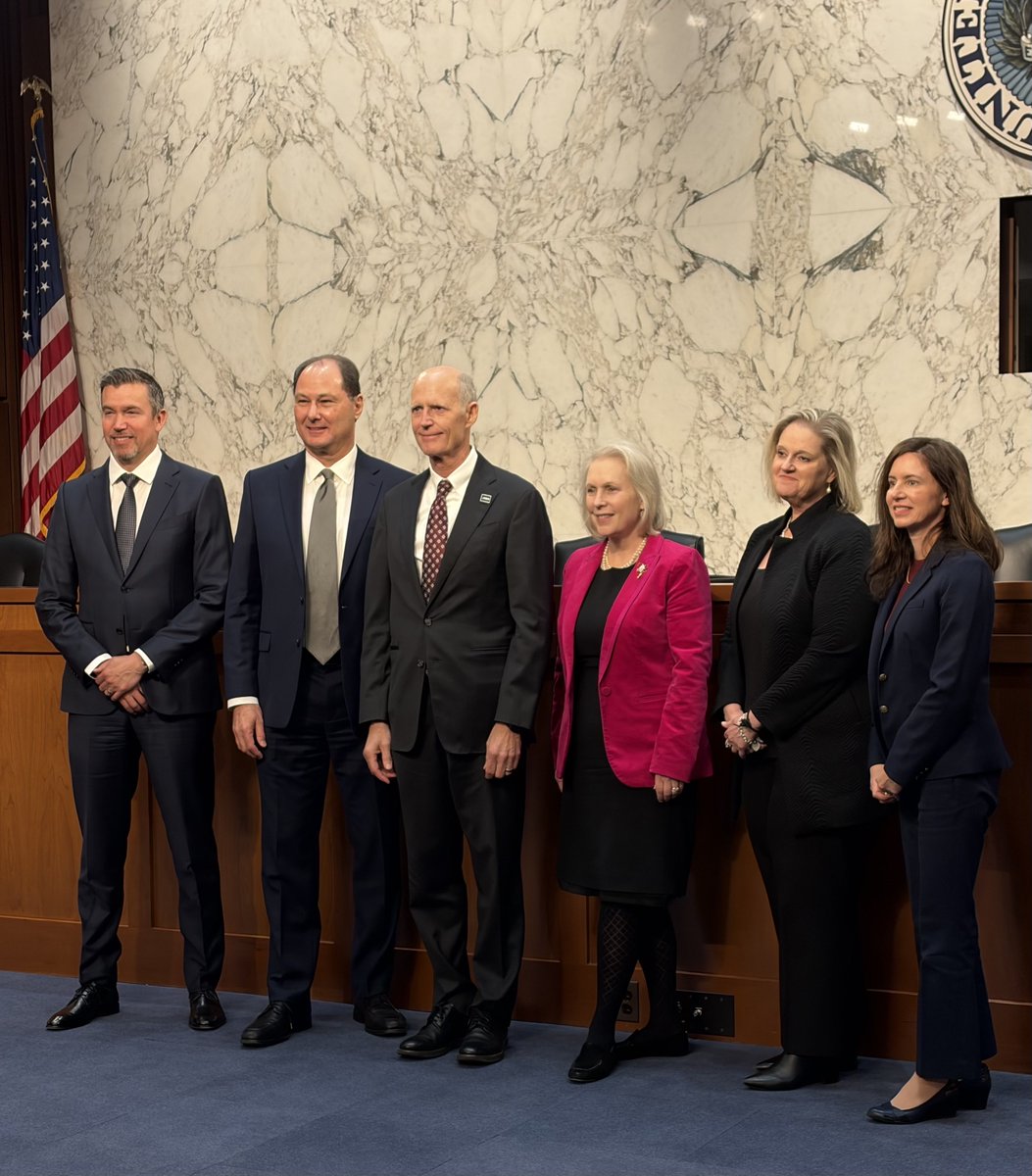
aging.senate.gov/hearings/from-… See the testimony before Senate on Feb 26th. Grateful to the Senators for their bipartisan commitment to FDA oversight, to bring safe and effective treatments to Americans with rare diseases. The @US_FDA needs CPR.
Schmahmann Lab
918 posts

@SchmahmannLab
Jeremy D. Schmahmann, MD Massachusetts General Hospital Ataxia Center & Lab for Neuroanatomy and Cerebellar Neurobiology - Supported by the MINDlink Foundation

aging.senate.gov/hearings/from-… See the testimony before Senate on Feb 26th. Grateful to the Senators for their bipartisan commitment to FDA oversight, to bring safe and effective treatments to Americans with rare diseases. The @US_FDA needs CPR.


NAF is saddened by the passing of Dr. Gilbert L’Italien on November 1. Dr. L’Italien was a devoted researcher who advanced programs to develop treatments for Ataxia across several pharmaceutical companies. (1/2)

Senate is paying attention. FDA sunk Biohaven’s troriluzole yesterday, despite the fact that it slows progression compared to the natural history studies in the US and Europe, according to rigorous statistical analysis of real world evidence. aging.senate.gov/press-releases…


A stunning account from Dr. Patrick Soon-Shiong reveals a catastrophic failure at the FDA, where bureaucratic indifference and potential conflicts of interest are blocking a groundbreaking cancer treatment. His drug, already approved for a form of bladder cancer, is a unique natural protein therapy that activates the body's own immune system (natural killer cells, T-cells). It has shown remarkable long-term results, preserving patients' bladders for over a decade and avoiding radical, high-mortality surgery. Yet, when seeking a simple label expansion for another bladder cancer indication—a logical step—the FDA "Refused to File." In a desperate meeting, Dr. Soon-Shiong confronted two senior reviewers. He posed a heartfelt question: If his own father had bladder cancer, and this safe, approved drug could save his bladder, why wouldn't they give him that chance? Their chilling response: "I don't care." Pushed for rationale, they fell back on outdated dogma: "This is how we've done it for years." They demanded a comparative trial against chemotherapy, which he argued is unethical. Chemotherapy destroys immune memory and carries severe risks, while his treatment offers durable freedom. Weeks later, the hypocrisy was exposed. Johnson & Johnson received a "Priority Review" for a bladder cancer chemotherapy—a treatment with a 1% mortality rate and a 24% rate of devastating low lymphocyte counts. Why the discrepancy? Dr. Soon-Shiong’s drug, despite its breakthrough status, was denied the same priority. This begs the question: Is the "revolving door" between the FDA and Big Pharma putting corporate profits over patient lives? Even with well-intentioned leaders like Bobby Kennedy and Dr. Marty Makary, the entrenched bureaucracy seems immune to both scientific evidence and human compassion. Patients are being left behind, and innovators are being stiff-armed, all while the old, toxic guard is given the red-carpet treatment. This is more than a story of one drug; it's a systemic crisis in American medicine.