Scottrhawk
50.9K posts

Scottrhawk
@Scottrhawk555
I love whales, ships, books, long talks with friends over a table at the local tavern, exploring riverways & backcountry of Upper Mississippi Valley. ✡️🇮🇱🐳🎗

Katılım Aralık 2023
3.5K Takip Edilen2.6K Takipçiler

@miles_commodore Totally insane. But then again, I am happy with Folger’s. Love coffee. Not a coffee snob. Better with cream cheese and bagel. ☕️
English
Scottrhawk retweetledi

He rapes her over a period of years. Walz is unfit for office. Any office.
Benny Johnson@bennyjohnson
Tim Walz DOUBLES DOWN on his decision to pardon the immigrant who abused a 10 year old girl. "Did that make us any safer?—Did it improve the idea that we can't all be judged by our worst day?" Thank GOD he is not Vice President.

English

@BernieSanders @shawn48TO Bernie has always been fond of genocidal fanatics so long as they hate Western civilization.

English
Scottrhawk retweetledi

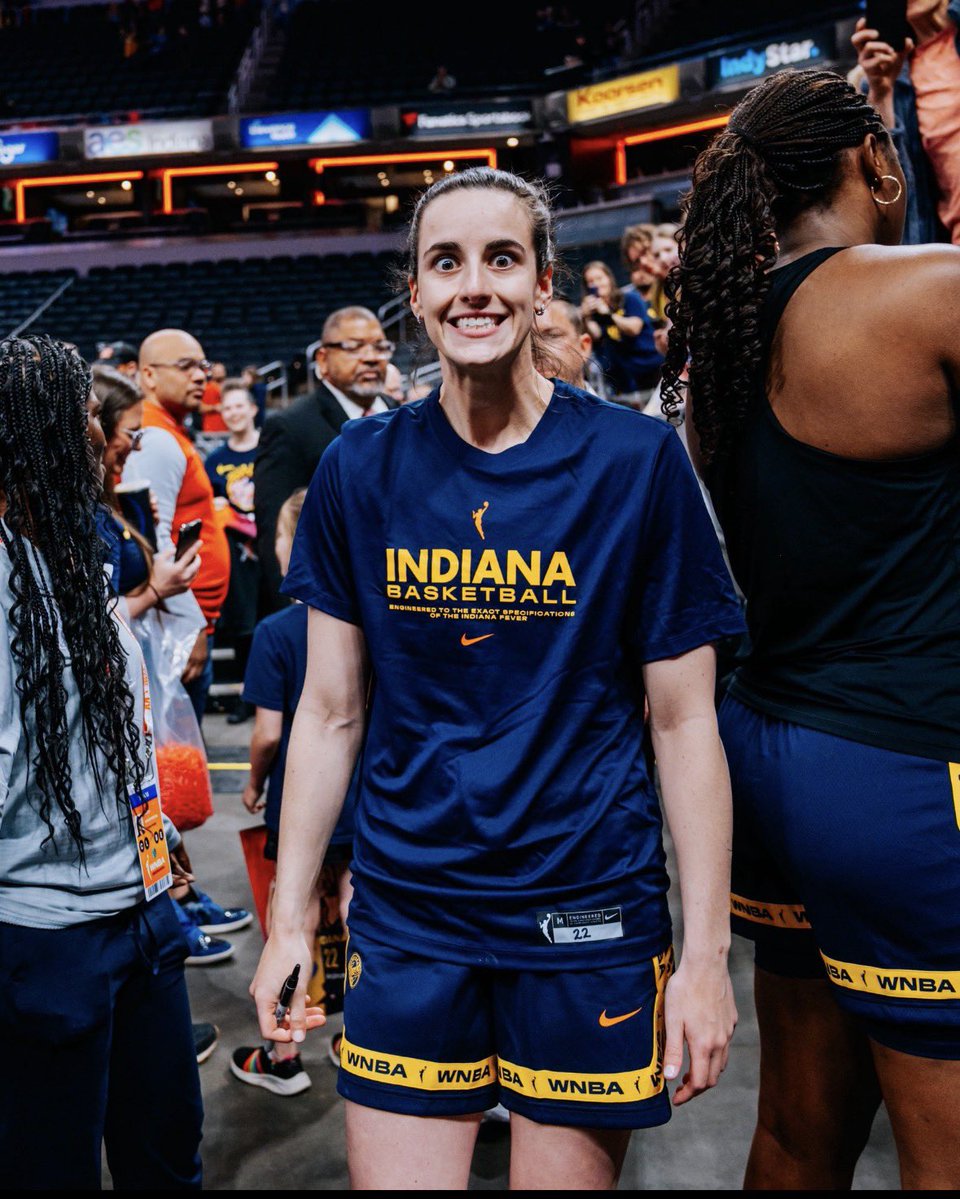
Who Is Making the Decisions About Caitlin Clark... and Why Isn’t the Media Asking?
The Indiana Fever keep telling the public what “we” decided. It is time for reporters to demand the identity, authority and qualifications of the people behind those decisions.
Perhaps the Indiana Fever have a perfectly reasonable medical explanation for everything they have done with Caitlin Clark.
Perhaps every missed game, minutes restriction and unusual substitution pattern has been carefully designed by qualified medical professionals using individualized testing, established rehabilitation principles and reliable evidence.
Perhaps the decision to “flip-flop” Clark and Aliyah Boston during a recent back-to-back was nothing more than responsible workload management for two injured players.
That is all possible.
But no one covering the Indiana Fever appears particularly interested in finding out.
For weeks, reporters have repeatedly asked whether Clark will play, how many minutes she might receive and when she could return to a normal workload. Stephanie White has repeatedly answered with vague references to “the medical staff,” “the performance staff” or what “we” have decided.
Those phrases are not answers.
Who is “we”?
Who medically cleared Caitlin Clark to play?
Who established her minutes restriction?
Who determined that her minutes should initially be divided into brief, disjointed bursts?
Who decided she should sit one game of a back-to-back?
Who designed the so-called “flip-flop” arrangement involving Clark and Aliyah Boston?
Was that plan prescribed by a licensed physician? Recommended by a physical therapist? Constructed by an athletic trainer? Chosen by Stephanie White? Approved by basketball operations?
And perhaps most importantly:
Are the people making each of those decisions properly qualified and authorized to make them?
These are not invasive questions about Clark’s private medical information. No one is asking for her MRI results, diagnostic imaging or confidential treatment records.
These are basic questions about organizational authority and professional responsibility.
The media should already have asked every one of them.
The “flip-flop” that explained almost nothing
Before Indiana’s July 8 game against Los Angeles, White announced that Boston would sit while Clark returned from her back injury. The following night in Phoenix, the two would “flip-flop”: Boston would play and Clark would sit.
On the surface, the explanation sounded simple enough.
Two recovering players. Two games on consecutive nights. Each would play one and rest the other.
The clear implication was that Indiana was cautiously managing the workloads of both stars.
But the actual implementation produced two radically different versions of supposed injury management.
Clark played only 16 minutes against Los Angeles. Her appearances were broken into extremely short stretches that made it nearly impossible to establish rhythm, adjust to the flow of the game or remain fully warm between entries. She finished with nine points, three assists and four rebounds in Indiana’s 106–92 loss.
Boston then returned the following night and played approximately 38 minutes against Phoenix... nearly the entire game and, by the available season logs, her heaviest workload of the year. She scored 21 points and grabbed nine rebounds in Indiana’s 92–89 victory.
That was not a parallel minutes-restriction plan.
One player was returned under an extraordinarily restrictive and fragmented workload. The other was withheld for one night and then immediately asked to carry a near-maximum workload.
If Clark and Boston were both being managed under the same medically motivated “flip-flop” strategy, why did the restrictions look nothing alike?
Was Boston actually under a minutes restriction?
If she was, how did she play 38 minutes?
If she was not, why was her situation publicly coupled with Clark’s rehabilitation?
Were the players independently evaluated under entirely separate medical plans, with their opposite availability merely presented as a convenient package?
Or was the “flip-flop” less about individualized medical treatment and more about making sure one star was available for each game?
There may be a sound explanation.
But reporters must first ask for one.
A minutes limit is not the same as a substitution plan
There is nothing inherently suspicious about limiting a recovering player’s total minutes.
Graded return-to-play programs are common throughout professional sports. A player may be cleared for competition but remain restricted because she has not yet rebuilt the conditioning, strength or workload tolerance necessary for a full game.
But a total-minutes restriction and the manner in which those minutes are distributed are two separate decisions.
A medical professional might reasonably recommend that Clark play no more than 20 or 25 minutes.
That does not automatically mean she must play three minutes, sit down, cool off, reenter for another short stretch and repeat the process throughout the game.
Who selected that pattern?
Did Indiana’s physicians specifically prescribe brief bursts of competitive basketball?
Did the physical-therapy or performance staff recommend limits on consecutive minutes?
Or did the medical staff simply establish a total workload ceiling and leave White to determine how those minutes would be used?
A coach deciding when to substitute a medically restricted player is performing a basketball function. A clinician deciding how much physical stress an injured athlete can safely tolerate is making a medical or rehabilitation judgment.
When White says “we decided,” she erases that distinction.
The media should not permit her to do so.
Is there medical support for repeated short bursts?
There may be a legitimate, player-specific reason for using brief intervals. Without knowing Clark’s precise diagnosis, examination findings and functional testing, no one outside the organization can definitively declare the approach medically sound or medically dangerous.
But that uncertainty is precisely why questions are necessary.
What evidence supports repeatedly moving a recovering basketball player from the bench into immediate, high-intensity competition?
Was Clark kept physically warm while she sat?
Were her intervals based on total minutes, consecutive minutes, sprint volume, accelerations, decelerations, heart rate, pain response or some other measurable criterion?
Were the brief appearances intended to protect the injured area... or were they merely White’s preferred method of fitting a restriction into her normal rotation?
Repeated stop-and-start deployment presents at least theoretical concerns. Basketball does not allow a player to ease gradually into competitive movement. A guard may enter and immediately be required to sprint, stop, change direction, absorb contact and create separation.
A player repeatedly returning from the bench may also experience stiffness or cooling between appearances, depending on the length of the interval and the sideline protocol being used.
The Fever should explain whether the strategy was medically prescribed, medically approved or simply improvised by the coaching staff.
There is also a more serious question:
Could the chosen implementation aggravate the injury or delay full recovery?
Again, no responsible observer can answer that without access to Clark’s diagnosis and medical data. But a responsible reporter can ask whether Indiana’s treating physicians believed the repeated short bursts were preferable to longer, more natural stretches of play.
The public deserves to know whether the restriction itself was medical and whether the peculiar way it was implemented was medical too.
Another back-to-back... and another opportunity for clarity
The questions are no longer merely retrospective.
Indiana hosts Seattle on July 17 and New York on July 18, another back-to-back on the Fever’s schedule.
Clark has continued to appear on Indiana’s injury reporting while returning from her back issue and dealing with a leg contusion suffered against Golden State. Boston has also remained part of the injury discussion.
That gives the media an immediate opportunity to establish the plan before the games begin.
Is Clark medically cleared to play both nights?
Is Boston?
Are either of them prohibited from playing on consecutive days?
Are both still subject to minutes restrictions?
Who established those restrictions?
Are their plans independent, or will White once again coordinate their availability?
If Clark plays against Seattle but sits against New York, will that be a direct medical order... or a strategic decision made by the coaching staff?
If Boston plays one night and not the other, is that because of her individual medical evaluation... or because Indiana has once again chosen to distribute its stars between two games?
Will “limited minutes” mean 20 carefully managed minutes for Clark and another near-full workload for Boston?
These questions should be asked before tipoff, not after another confusing sequence has already occurred.
The original concern surrounding Indiana Director of Medical Services Todd Champlin was whether someone who is not a physician should hold such a title.
Further examination suggests that the title itself is not unusual.
Champlin has been publicly described as a licensed athletic trainer and board-certified sports physical therapist. Comparable roles throughout professional sports are frequently held by athletic trainers, physical therapists or sports-performance professionals rather than MDs or DOs. The Fever has also historically worked with separate team physicians.
A physical therapist may be highly qualified to direct rehabilitation.
An athletic trainer may be highly qualified to manage daily treatment, evaluate function, provide emergency care and coordinate the athlete’s return.
A physician may retain responsibility for diagnosis, medical clearance, prescriptions and other physician-level decisions.
A coach may control substitutions and basketball strategy.
Who is performing each function, where does that person’s authority begin and end, and who retains final responsibility when those functions overlap?
Does Champlin have final authority to clear Clark for competition?
Does a Fever physician?
Does Champlin establish the minutes restriction while White determines the rotation?
Does White have the authority to disregard or modify a recommended workload?
Who approves Clark for consecutive games?
Who determines when she is no longer restricted?
Who monitors her response after each appearance?
The Fever should identify the chain of authority plainly.
Stop accepting “the medical staff” as an answer
Professional sports organizations often hide behind collective language.
“The medical staff decided.”
“We are being cautious.”
“We are taking it day by day.”
“She is progressing.”
“We will see how she responds.”
Those statements are useful when protecting confidential medical information. They become evasive when used to prevent any identification of responsibility.
Reporters do not need to know Clark’s private health information to ask:
Who possesses final medical-clearance authority?
Who set the maximum workload?
Who designed the substitution pattern?
Who approved the back-to-back plan?
Who decided to connect Clark’s availability with Boston’s?
What credentials does each decision-maker hold?
Which decisions were medical, and which belonged to White?
Those are all ordinary accountability questions.
The same media that dissects every Clark turnover, shooting percentage and postgame expression has displayed remarkably little curiosity about who controls the conditions under which she is permitted to play.
That imbalance is difficult to justify.
Perhaps White has followed every medical recommendation exactly.
Perhaps Clark’s short bursts were prescribed by specialists who understood her condition and concluded that this was the safest possible return.
Perhaps Boston’s 38-minute game was fully consistent with her own separate medical plan.
Perhaps the “flip-flop” language was simply an imprecise explanation of two unrelated decisions.
But Indiana’s inconsistency has created another possible appearance... one the organization should be eager to eliminate.
It can look as though “medical restriction” means whatever the Fever need it to mean on a particular night.
For Clark, it meant 16 fragmented minutes.
For Boston, it apparently meant sitting one game before playing almost all of the next.
That discrepancy creates room for more uncomfortable questions.
Is Clark’s limited use entirely medically driven?
Does White believe Clark fits the loose, less structured style of basketball Indiana frequently plays when its star point guard is absent?
Has White become more comfortable with an offense that distributes individual creation across the roster rather than organizing itself around Clark’s singular ability to control the game?
Would publicly benching the most commercially important player in women’s basketball create scrutiny White and the Fever would rather avoid?
Would it damage ticket sales, television viewership and public confidence?
Could injury language provide convenient protection from questions about basketball philosophy?
There is currently no evidence proving that White is disguising a coaching decision as a medical protocol.
That accusation should not be made as fact.
But when an organization refuses to identify who made its decisions, fails to explain contradictory restrictions and repeatedly hides behind the word “we,” public suspicion is inevitable.
Transparency would resolve it.
Silence only deepens it.
The Fever may have completely legitimate answers.
Then they should provide them.
Reporters should not demand Clark’s medical records. They should demand clarity about the process surrounding them.
Who cleared her?
Who restricted her?
Who decided how the restriction would be implemented?
Who constructed the flip-flop?
Why was Boston allowed to play 38 minutes while supposedly participating in the same workload-management arrangement?
What is the plan for Clark and Boston in the next back-to-back?
Are those plans medically individualized, strategically coordinated or commercially influenced?
And are the people making each decision qualified and legally authorized to make it?
The Indiana Fever keep telling the public what “we” decided.
It is time for the media to stop accepting that answer.
Tell us who decided it. Tell us why. Tell us what authority they possessed. And tell us whether the decision was medical... or basketball.

English

Scottrhawk retweetledi

The UK judge Gemma Loughran has ruled that a Gazan refugee and mother of 3 must be allowed to bring 18 family members to the UK.
The judge claims that the woman’s mental health must be protected by allowing her family reunification in the UK and that not letting the relatives in under these circumstances would be a breach of the European Convention on Human Rights from 1950.
The 18 relatives coming to the UK will have the right to many welfare programs.
The refugee will be allowed to bring her parents, a brother, his wife and 4 children, a sister and her 4 children and another sister, her husband and their 3 children.
The refugee woman only has room to house her parents.
The other 16 family members will get to live in apartments paid for by British taxpayers.

English
Scottrhawk retweetledi

Iran is imploding, the regime is broke, and their war machine is running on empty.
Workers aren't getting paid, soldiers are deserting, and military camps are literally facing food shortages. Their entire proxy network is crumbling.
All it takes is one more month of President Trump’s relentless strikes and crushing blockade to finish this. Our region has earned the right to peace and stability after decades of being terrorized by this corrupt, fascist regime.
Keep the pressure on. Finish the job.
English
Scottrhawk retweetledi

They don’t go to North Korea to protest.
They don’t go to China.
They don’t go to Iran.
They don’t go to Cuba.
They go to Israel because they know that the worst thing that might happen to them is not getting good enough footage to go viral on social media.
Andrey X@the_andrey_x
I tried to go to Gaza, Israel didn't let me in:
English
Scottrhawk retweetledi

It’s not your imagination. Hamas runs a sophisticated, and unfortunately highly-effective, propaganda machine designed to demonize & delegitimize Israel.
Back in 2014, Hamas’ Interior Ministry issued explicit guidelines to civilians & activists on how to lie to the media:
- Call every dead terrorist an “innocent civilian.”
- Always frame Hamas attacks as “responses to Israeli aggression.”
- Never show rockets being launched from civilian areas.
- When talking to Westerners, use calm, rational language. Avoid overt antisemitism. Equate Israel with Nazis instead.
- Hide military activity among civilians.
Primary Source: MEMRI translation of Hamas Interior Ministry instructions, July 17, 2014.
These techniques have only gotten more sophisticated since October 7. Captured documents show the strategy has been refined and scaled up with multi-year plans, budgets, and tailored messaging (religious incitement internally, humanitarian language for the West).
Below: Cover of Hamas’ captured 2022–2025 media and propaganda operational plan (“Sword of Jerusalem” framework) for the Gaza Strip.
Hamas embeds fighters and weapons in civilian areas, tells people not to evacuate when Israel warns them, and then counts every death as an “innocent civilian casualty” to feed international outrage.
This is a well-documented system to weaponize civilian suffering while hiding the truth.
And far too many people are still falling for it.


English

@tedcruz Tucker has COMPLETELY lost the plot. Sad, and by this point actually disgusting.
English

Why does Tucker have so many guests on who absolutely hate America?
End Wokeness@EndWokeness
British leftist Roger Waters calls the US "the absolute devil" on Tucker's show today He says the Maduro raid proves it

English
Scottrhawk retweetledi

THEY CALL IT AMERICA FIRST.
Don’t believe it. Every time they attack Israel, they weaken America’s strongest ally in the Middle East. Every time they isolate Israel, they strengthen the regimes working to replace American influence. Iran. Qatar. Turkey. The Muslim Brotherhood. America’s enemies don’t need America to lose a war. They need America to abandon its allies. That’s exactly what Anti-Israel First accomplishes. Call it whatever you want. It isn’t America First. It’s Anti-Israel First.

English
Scottrhawk retweetledi

JD Vance doesn’t need an Israeli conspiracy to explain why people criticize his foolish view of the Islamic regime. Americans, Israelis, Iranians, Arabs, and national security experts have watched him misread the regime, smear allies, ignore Qatar’s documented influence operations, and now even portray 94 million Iranians as a terrorist threat.
His own record is the indictment.
Today on @ILTVNews
English

@nature_viewss I love Caitlin, but I like all the Hawkeye players. Meg, Lucy, and Kate, snd the others coming along. However, I worry for them because the WNBA is toxic.
English
Scottrhawk retweetledi

AOC is the most ignorant person in the House. Obviously, a college degree is not a measure of intelligence or knowledge.
Tom Elliott@tomselliott
Rep. @AOC: The U.S. Senate "was founded on, uh, you know, Jim Crow" (Jim Crow came 174 years after the Senate)
English