Sepehr 🇩🇪🇮🇷

1.6K posts

Sepehr 🇩🇪🇮🇷 banner
Sepehr 🇩🇪🇮🇷

Sepehr 🇩🇪🇮🇷

@SepAhead

https://t.co/C0aTqVpUfi Harnessing AI to transform the physical world.

Berlin, Germany Katılım Ekim 2025
2K Takip Edilen112 Takipçiler
Sepehr 🇩🇪🇮🇷 retweetledi
Jared Duker Lichtman
Jared Duker Lichtman@jdlichtman·
"GPT-5.6 one-shot the problem after 90 minutes of reasoning" "Emmanuel Candes of Stanford University once called the false discovery rate and the Benjamini-Hochberg procedure 'one of the two most important developments in statistics after 1950' " My rule of thumb: if a problem has a short proof or disproof with existing methods (albeit cleverly executed), then current frontier AI can likely find it. The definition of "short" is lengthening over time, and seems to be currently around ~15 pages. This may also help explain why stories of counterexamples are popping up, since they often can be constructed by a short argument.
Edgar Dobriban@EdgarDobriban

AI has helped resolve an important question in statistics. In the area of multiple hypothesis testing, the goal of controlling the false discovery rate (FDR) has been introduced in a seminal paper by Benjamini and Hochberg (1995). They also introduced a method (the Benjamini-Hochberg or BH method) and proved it controls the FDR. This method has been widely adopted in modern high-throughput science, including in genomics, astronomy, economics, etc. The paper has has garnered more than 130,000 citations to date. However Benjamini and Hochberg showed FDR control only when the data for the individual tests are *independent*. In practice, these data are often dependent; a good example is data on genetic variants due to linkage disequilibrium. Later work has focused on extending the validity of the BH procedure, e.g., to a form of positive dependence by Benjamini and Yekutieli (2001). The question of when the BH procedure controls the FDR has remained open. Over the last twenty years, many authors, including Reiner-Benaim (2007), Kim and van de Wiel (2008), Benjamini (2010), Sarkar (2023), Sarkar and Zhang (2025), have conjectured that the BH procedure controls the FDR for two-sided tests using any correlated Gaussian data. These authors have presented both theoretical and empirical evidence supporting, but not directly showing, the conjecture. With the help of AI (specifically GPT-5.6 Sol Pro), I have settled the question in the negative: The Benjamini-Hochberg procedure does *not* generally control the false discovery rate at the desired level for correlated two-sided Gaussian tests. This was done by exhibiting a Gaussian factor model for which, at a nominal level alpha=0.01, the false discovery rate is proved to be FDR>0.0104. There is a lot of interesting commentary to be made: 1. This result should be of interest to everybody in the field of statistics. Emmanuel Candes of Stanford University once called the false discovery rate and the Benjamini-Hochberg procedure "one of the two most important developments in statistics after 1950" (the other being James-Stein shrinkage). The present conjecture is probably the most central question about FDR/BH that was unresolved to date. 2. GPT-5.6 one-shot the problem after 90 minutes of reasoning, whereas with 5.5 I was not able to solve it even after iterating with multiple parallel agents for perhaps 20 hours. So the capability improvement is quite real. Exciting times to live in! 3. The argument is not especially surprising, but it does combine an asymptotic approach (standard for FDR analysis, see e.g., Genovese and Wasserman, Efron, etc) with a numerical certificate in a way that would be pretty non-standard in the field. Once we have the specific example, then straightforward simulations also support that the false discovery rate is indeed higher than the nominal value (see attached fig). 4. The current degree of violation over the nominal level is relatively small (0.104 vs 0.1). So the importance of this result is mainly conceptual. The practical implications remain to be determined. Overall, an exciting development! Preprint is available here (faculty.wharton.upenn.edu/wp-content/upl…) and will be on arxiv tonight; supporting code is here (github.com/dobriban/BH).

English
12
34
345
33.9K
Sepehr 🇩🇪🇮🇷 retweetledi
a16z
a16z@a16z·
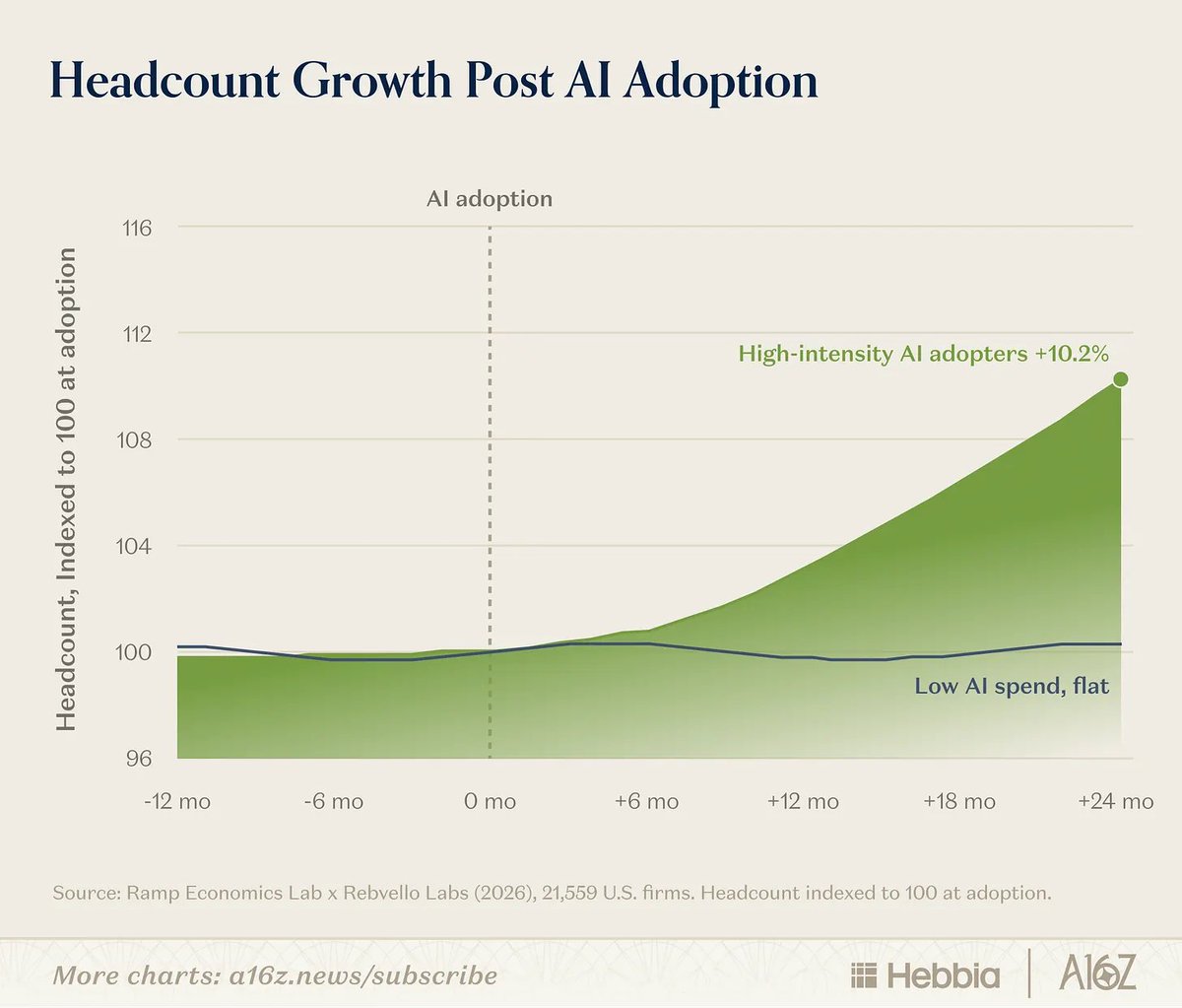
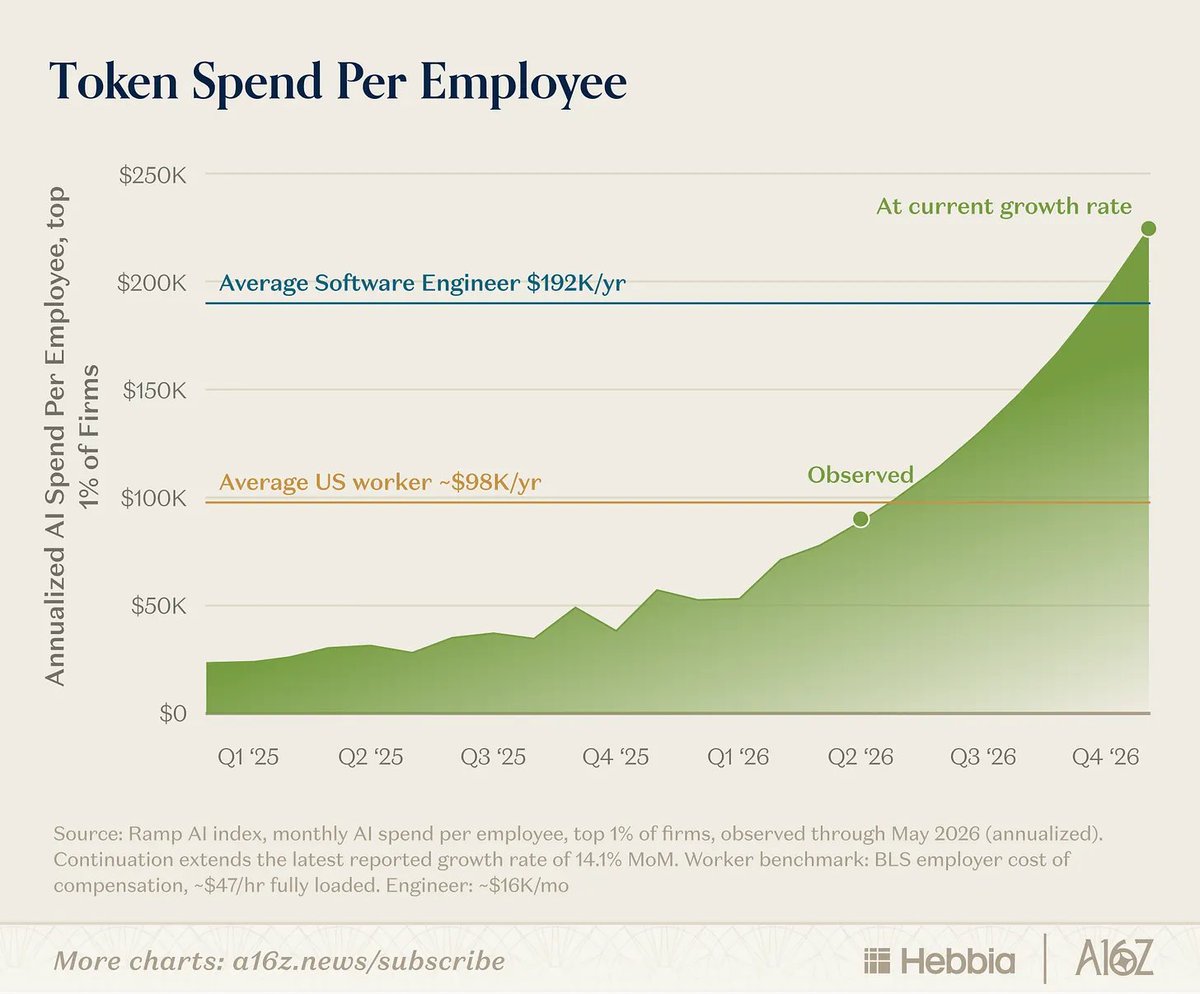
"AI was supposed to replace human labor. It did the opposite. For the first time in history, humans are cheaper than software. And AI is creating more jobs than it eliminates." Hebbia CEO George Sivulka on what the core lessons of human management mean for agent workforces: a16z.news/p/the-next-ai-…
a16z tweet mediaa16z tweet media
George Sivulka@gsivulka

x.com/i/article/2075…

English
57
158
1K
168.7K
Sepehr 🇩🇪🇮🇷 retweetledi
Zhengyao Jiang
Zhengyao Jiang@zhengyaojiang·
The first experimental evidence of recursive self-improvement (RSI). Autoresearching the autoresearch agent for eight days. The result beats the harness we hand-tuned for two years, on held-out benchmarks: 🧵(1/7)
English
243
1.1K
8.9K
1.6M
Tibo
Tibo@thsottiaux·
Embarrassment of riches. But looks like we might hit 9M soon. Should we reset the ChatGPT Work and Codex usage again or give it some space?
English
4.5K
469
14.5K
1.8M
Sepehr 🇩🇪🇮🇷 retweetledi
Dr Singularity
Dr Singularity@Dr_Singularity·
insane AI Is Beginning to Accelerate AI The Recursive Intelligence Era "We built a recursive self-improvement (RSI) system by running autoresearch on autoresearch. The system, AIDE2, took eight days to discover a better autoresearch harness than the one we built over the last two years. Fully autonomously, AIDE2 designed a novel search algorithm, reduced the prompt size by 16x, and built a layered system against reward hacking."
Dr Singularity tweet media
Zhengyao Jiang@zhengyaojiang

The first experimental evidence of recursive self-improvement (RSI). Autoresearching the autoresearch agent for eight days. The result beats the harness we hand-tuned for two years, on held-out benchmarks: 🧵(1/7)

English
33
124
1.1K
68.1K
Tibo
Tibo@thsottiaux·
@zeeg Codex this week is pretty unlimited
English
141
30
2.2K
150.1K
Sepehr 🇩🇪🇮🇷 retweetledi
Vaibhav (VB) Srivastav
codex tip: ask codex to do its research first and then use set_goal to set an appropriate goal instead of /goal It results in massively better prompt and downstream results! all my prompts would start with requirements gathering and research and once done set_goal
English
81
109
2K
194.9K
Tibo
Tibo@thsottiaux·
Thank you to the 7M active users who are now using Codex and ChatGPT Work. We have added a banked reset to everyone's account to celebrate the milestone. You can apply the reset in the desktop app or on web and it will replenish the weekly usage for you. Have fun out there.
English
1.9K
814
18.4K
2.5M
Sam Altman
Sam Altman@sama·
i'd love to see interesting things people have built with 5.6 sol. i will send the person who made the coolest thing a special gift from the openai archives.
English
3.3K
655
18.3K
5.8M
Tibo
Tibo@thsottiaux·
New poster for our office that shows how resets of the Codex usage limits affects part of our systems. Data is beautiful.
Tibo tweet media
English
304
129
4.8K
448.1K
Sepehr 🇩🇪🇮🇷 retweetledi
Ethan Knight
Ethan Knight@__eknight__·
Yesterday, we made GPT-5.6 Sol Ultra generally available. Today, we're sharing that it produced a proof of the 50-year-old Cycle Double Cover Conjecture using 64 subagents in just under one hour. We're sharing the prompt and proof below. We're excited to see what you all do with Ultra!
English
231
537
6.8K
2.4M
Sepehr 🇩🇪🇮🇷 retweetledi
elie
elie@eliebakouch·
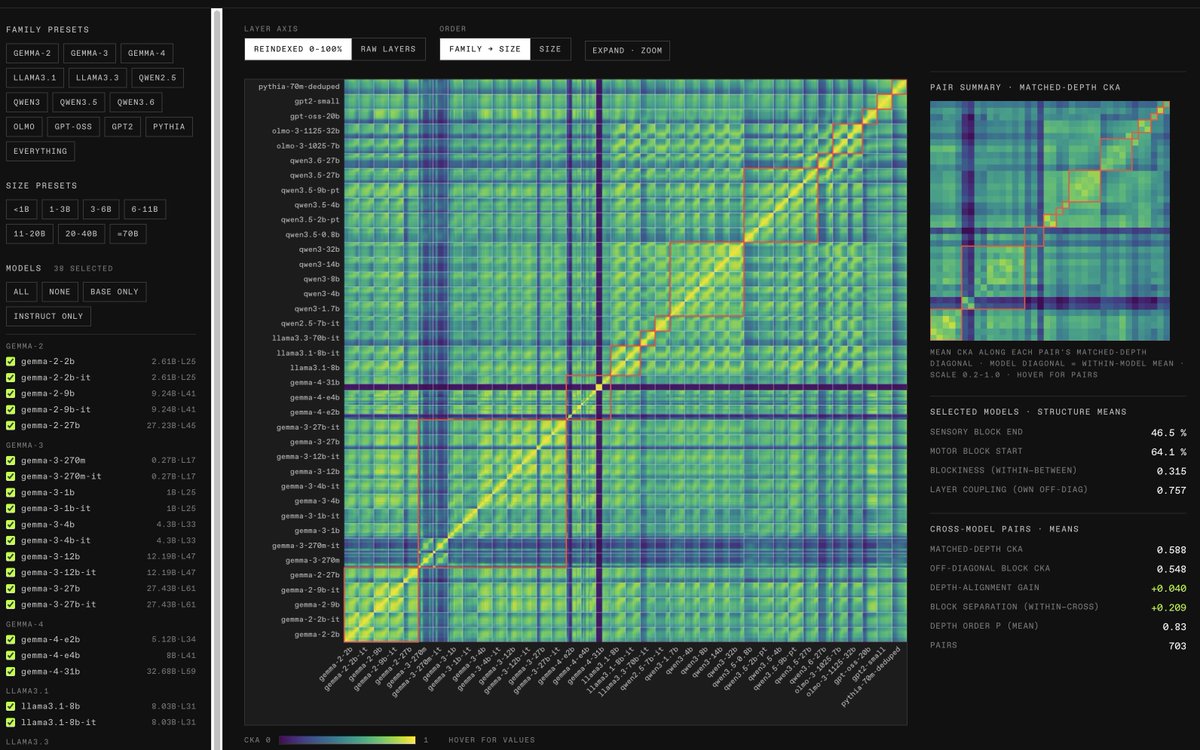
computed the similarity (CKA) on the J-lens geometry of every layer inside and across 38 open models. the patterns are weirdly universal: same depth layout, same organization at the same relative depth, even between unrelated families like llama and olmo eliebak.com/viz/jspace-open
elie tweet media
Anthropic@AnthropicAI

New Anthropic research: A global workspace in language models. Of everything happening in your brain right now, only a tiny fraction is consciously accessible—thoughts you can describe, hold in mind, and reason with. We found a strikingly similar divide inside Claude.

English
56
159
1.5K
204.9K