Sergi Castellà Martínez

236 posts

Sergi Castellà Martínez banner
Sergi Castellà Martínez

Sergi Castellà Martínez

@SergiCastellaM

Aesthetics, Hermeneutics, and Religion @HumanitatsUPF Llull & the modern arts of universal knowledge New OA Book on J.V. Foix (2025): https://t.co/LNEfPtk4Ub

Barcelona Katılım Eylül 2023
189 Takip Edilen80 Takipçiler
Sergi Castellà Martínez
Sergi Castellà Martínez@SergiCastellaM·
Al tanto! "Las historias de la historia de Las mil y una noches", una conversa entre l'artista Chirine El Ansary, que l'ha representada durant dècades a l'Orient Mitjà i a Europa, i Margarida Castells, traductora (@EdKarwan)! 22.04 · 5pm · Aula 20.017 (Ciutadella) Amb baclaua!
Sergi Castellà Martínez tweet media
Català
0
0
0
7
Sergi Castellà Martínez
Sergi Castellà Martínez@SergiCastellaM·
Els compendis d'elogis de Llull ometen una frase clau del relat del caputxí: "que presque tous les doctes personnages de France tiennent pour Heretique, et pour moi ie ne l'ay tenu en guere meilleure estime": gallica.bnf.fr/ark:/12148/bpt… p. 385 i ss.
Sergi Castellà Martínez tweet media
Català
0
0
1
10
Sergi Castellà Martínez
Sergi Castellà Martínez@SergiCastellaM·
[...] il avoit trouvé une medecine générale par l’or potable , avec laquelle il s’estoit conservé sain jusqu’à l’âge de cent quarante-cinq ans, auquel âge il fut martyrisé, et que cela ne devoit apporter aucun ternissement à la mémoire, au contraire la rehausser".
Français
1
0
1
13
Sergi Castellà Martínez
Sergi Castellà Martínez@SergiCastellaM·
El missioner caputxí Pacifique de Provins torna de Pèrsia (1628) i s'atura a Mallorca, on també atura el seu relat per explicar una cosa "que j'ay curieusement notée [...] sur le sujet d'un saint personnage et des premiers hommes du monde": Ramon Llull, esclar.
Sergi Castellà Martínez tweet media
Català
1
0
1
24
Sergi Castellà Martínez retweetledi
Ryan Haecker
Ryan Haecker@RyanHaecker·
THE GEOMETRY OF CHRISTIAN CONTEMPLATION Measure without Measure David ALBERTSON OXFORD UNIVERSITY PRESS, December 2025 global.oup.com/academic/produ… Abstract The writings of ancient and medieval Christian mystics were rediscovered in the twentieth century, and today they are read more widely than ever before. But do modern assumptions about religious experience influence how we hear those premodern voices? Do we do them justice by thinking of mysticism as interior and ineffable? Or can mystical experience intersect with the natural environment, and indeed the cosmos, which science calculates with precise quantities? David Albertson's The Geometry of Christian Contemplation: Measure without Measure suggests a fresh approach to the history of mystical theology that is oriented toward exteriority more than interiority, and toward the measurable world outside more than the invisible world within. The ancient Greek philosopher Plotinus had taught contemplatives to close their eyes and withdraw into the soul. Most Christians followed his directions, but others dissented. In three critical episodes, an alternative model of Christian contemplation began to emerge: from Dionysius the Areopagite, to the Byzantine monks John of Damascus and Theodore the Studite, to eccentric humanists in medieval Paris. Together these episodes add up to a very different theological aesthetics, one that can enliven the modern study of mysticism and correct some of its imbalances. For in the centuries before the scientific revolution and the secularization of nature, Christians still saw God in the exterior world, not only the interior soul. God was not an ineffable and formless Absolute, immeasurable as the soul, but an infinite Measure who leaves behind geometrical traces in the figures of the world. The God who became a human body in the Incarnation not only entered time and matter, but also spatial extension, and with it the conditions of measure: points, lines, curves, shapes, planes, dimensions, and magnitudes. Today the wisdom of this counter-tradition can strengthen the study of mysticism, not only by supplementing our contemporary fascination with negative theology by redefining what it means to name God positively, but by suggesting a new connection between Christian mysticism and the hyper-measured, hyper-technologized world that surrounds us. Author David Albertson is Associate Professor of Religion at the University of Southern California in Los Angeles, where he studies medieval Christianity and philosophy of religion and serves as Executive Director of the Nova Forum for Catholic Thought. He is the author of Cusanus Today: Thinking with Nicholas of Cusa Between Philosophy and Theology (CUA, 2024), Mathematical Theologies: Nicholas of Cusa and the Legacy of Thierry of Chartres (Oxford, 2014), and Without Nature? A New Condition for Theology (Fordham, 2009). His research is supported by the National Endowment for the Humanities and the Alexander von Humboldt Foundation.
Ryan Haecker tweet media
English
1
11
85
3.9K
Sergi Castellà Martínez retweetledi
Samuel G. Parkison
Samuel G. Parkison@samuel_parkison·
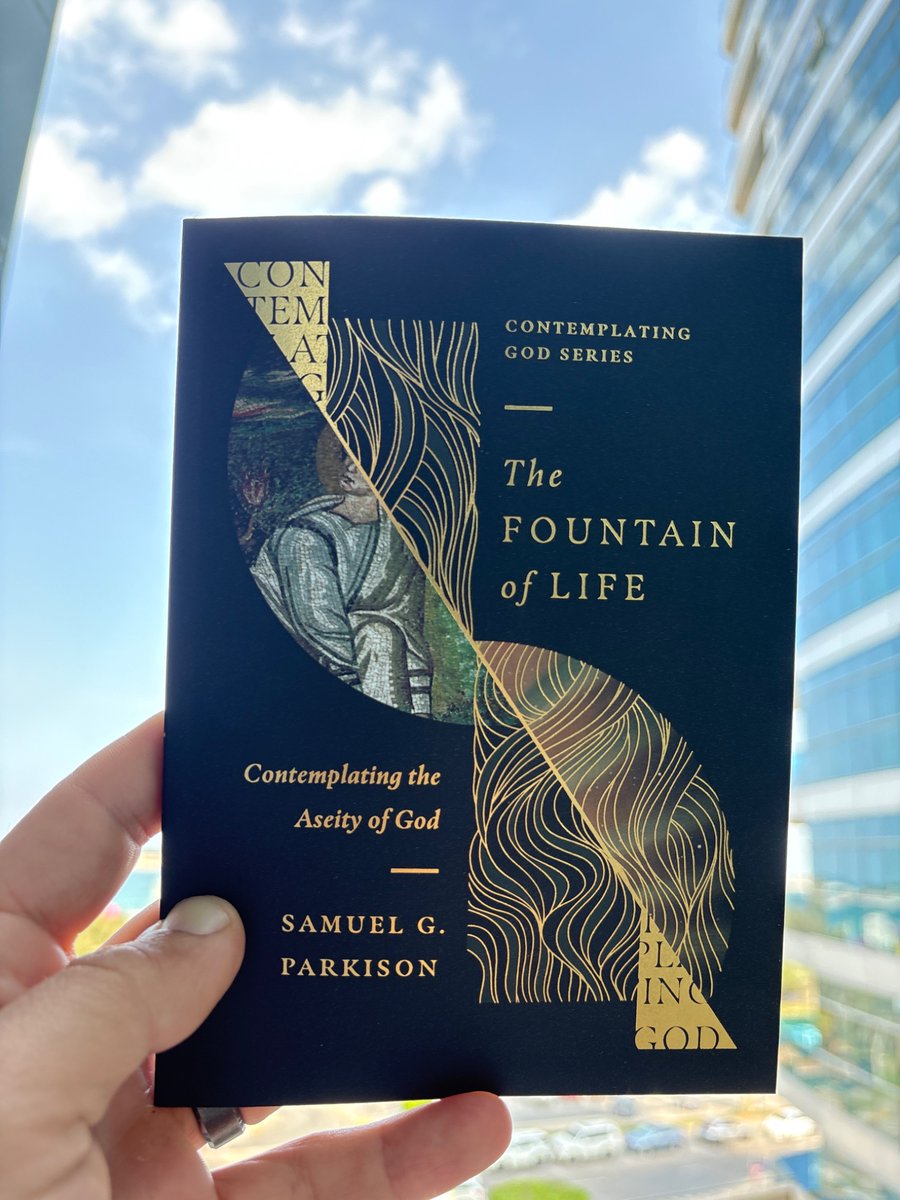
There’s still time to pre-order my forthcoming book with @crossway: The Fountain of Life. This is a *very* short introductory book on God’s independent and full life written for the average Christian. You can pre-order it here: a.co/d/6KFiMne
Samuel G. Parkison tweet media
English
3
14
123
8.8K
Sergi Castellà Martínez retweetledi
Tim Howles
Tim Howles@AimeTim·
"The Edinburgh Critical History of Early Modern and Enlightenment Philosophy" Edited by Stephen Howard & Jack Setter edinburghuniversitypress.com/book-the-edinb… Critical essays on topics and figures central to early modern and Enlightenment philosophy.
Tim Howles tweet media
English
1
22
122
5.5K
Sergi Castellà Martínez retweetledi
Bloomsbury Philosophy
Bloomsbury Philosophy@BloomsburyPhilo·
'The Mystery of Being' showcases the contributions of esteemed scholars in Heideggerian studies, delving into the inquiry of the mystical essence inherent in Heidegger's thought. Preview: bit.ly/4oNSXc2 Available now: bit.ly/48Uc9zc
Bloomsbury Philosophy tweet media
English
3
30
145
6.7K
Sergi Castellà Martínez retweetledi
Tatiana Fajardo
Tatiana Fajardo@Tatiana19796·
'Weird Mysticism' identifies and evaluates a new category of theoretical inquiry by showing the influence of speculative writing on three intersecting critical categories: horror fiction, apophatic mysticism, and philosophical pessimism. lupress.lehigh.edu/publication/we…
Tatiana Fajardo tweet media
English
6
129
980
34.4K
Sergi Castellà Martínez retweetledi
Marta Marfany
Marta Marfany@MartaMarfany·
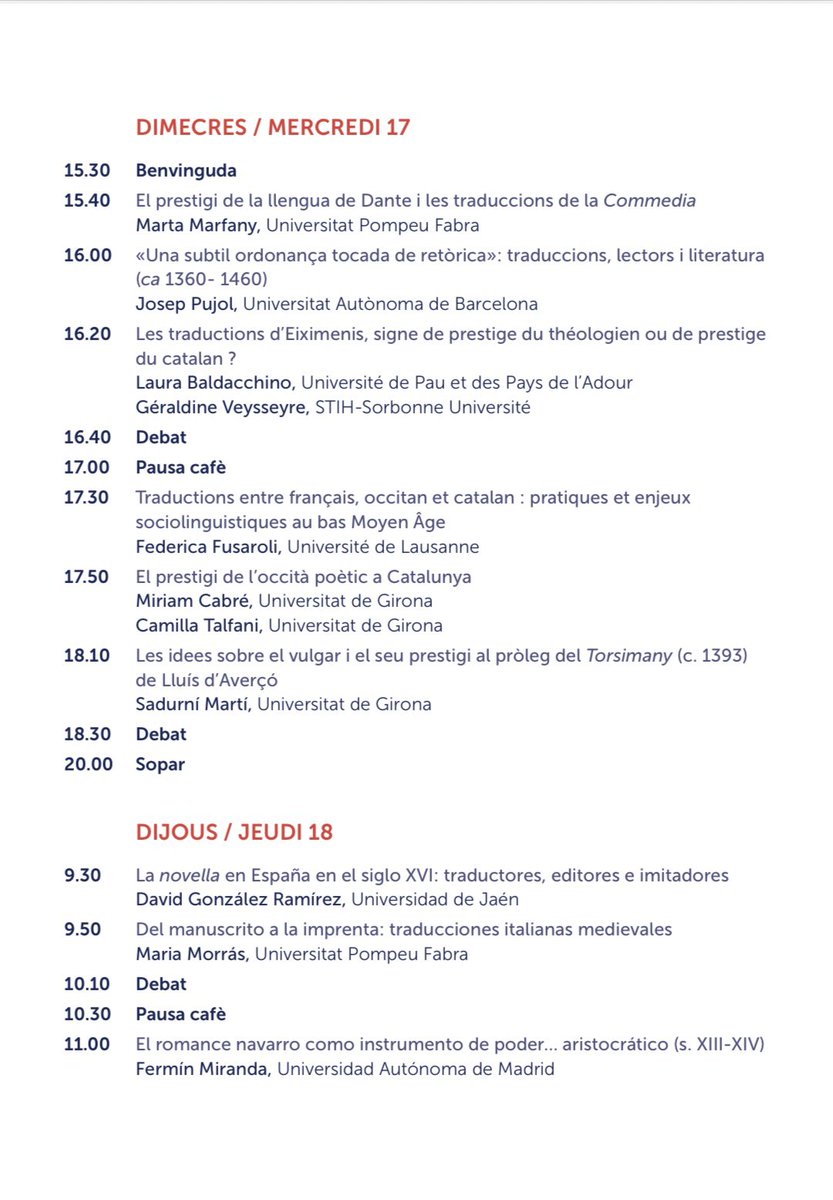
Marta Marfany tweet mediaMarta Marfany tweet mediaMarta Marfany tweet media
ZXX
0
6
12
418
Sergi Castellà Martínez retweetledi
Lucila Mallart
Lucila Mallart@LucilaMallart·
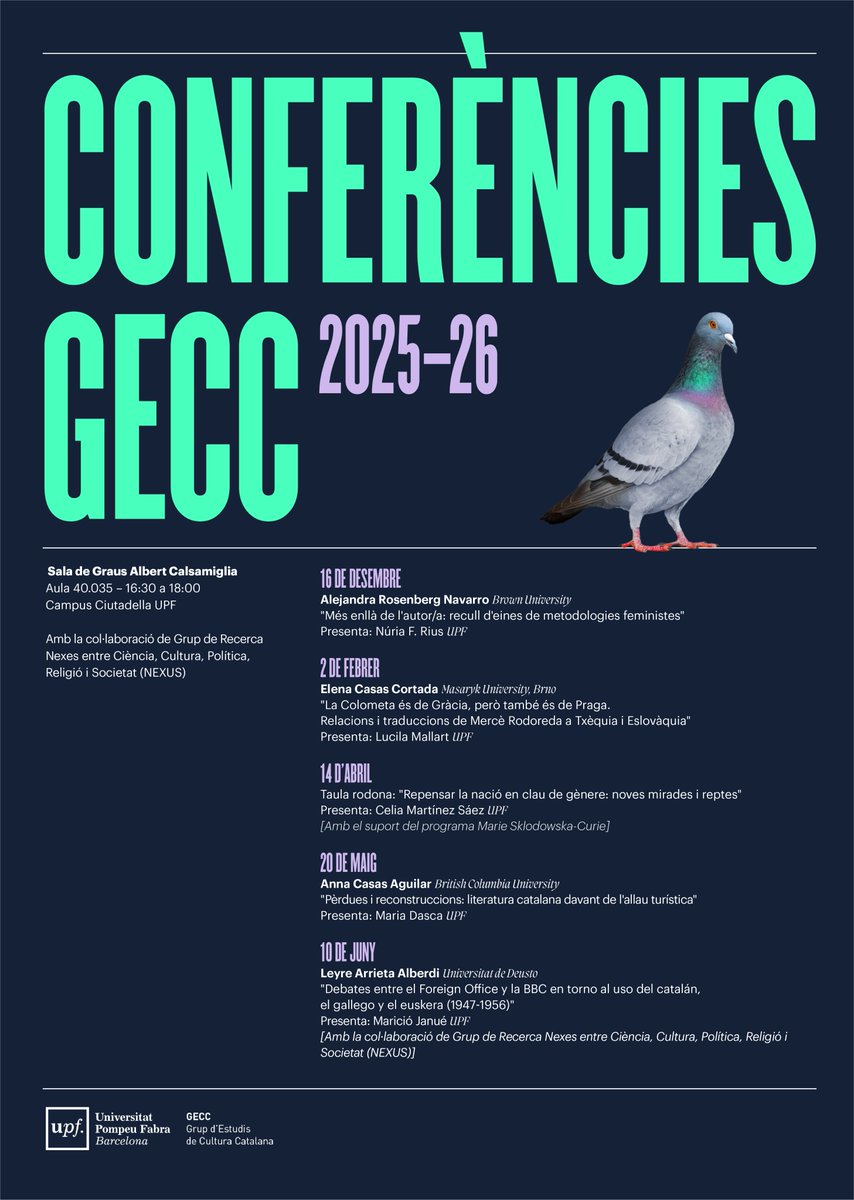
Us presentem el programa d'activitats del Grup d'Estudis en Cultura Catalana (GECC) d'@HumanitatsUPF. Comencem demà amb una conferència d'Alejandra Rosenberg, de Brown University, sobre estudis visuals i metodologies feministes. Us hi esperem!
Lucila Mallart tweet media
Català
1
12
33
3.5K
Sergi Castellà Martínez
Sergi Castellà Martínez@SergiCastellaM·
Gaudent brevitate moderni: longa enim solent sperni. Bernard de Lavinheta, ca. 1475-1530
Català
0
0
0
22
Sergi Castellà Martínez retweetledi
Faculty of Theology and Religious Studies
600th anniversary KU Leuven. On 9 December 1425, Pope Martin V authorised the establishment of a university in Leuven. This was recorded in a charter: the ‘foundation bull’ buff.ly/df4kyWo
English
0
2
6
191
Sergi Castellà Martínez retweetledi
Lucas Capellas Franco
Lucas Capellas Franco@lucascapellas·
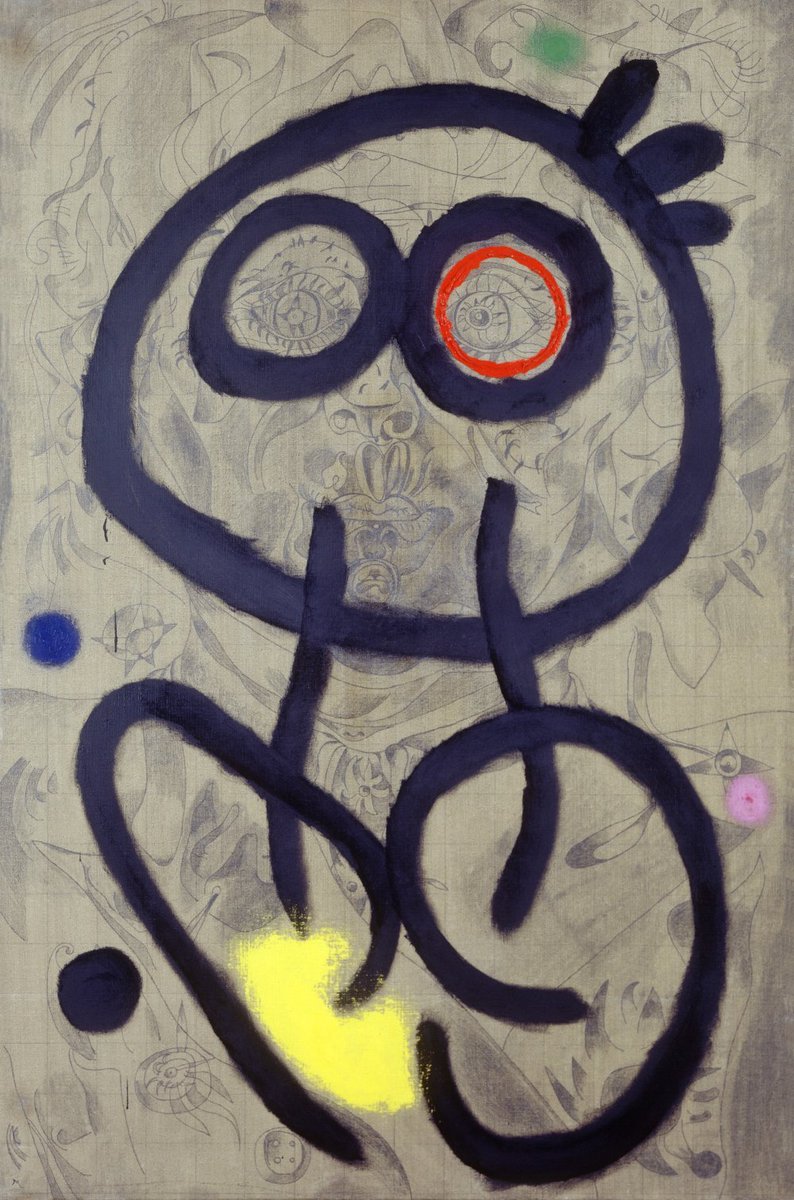
"Cap feina no és, a darrera hora, inútil, quan el cor l'estimula" (Foix). Com podria ser inútil aquesta feina, si suma vida a la vida i possibilita l’existència d’una llibertat dirigida, orientada, en el si d’una llibertat absurda?
Lucas Capellas Franco tweet media
Català
1
1
2
97