Shawn Ma

16 posts

Shawn Ma

Shawn Ma

@ShawnXMa

Interventional Radiology resident @PennMedicine

Katılım Mayıs 2019
124 Takip Edilen110 Takipçiler
Shawn Ma retweetledi

Vedant Acharya, MD
Vedant Acharya, MD@vedantacharya20·
Physician tech entrepreneurs are rare. Honored to speak with @wboonn, a successful cofounder/CEO of 2 radiology startups and current Chief Medical Officer at @radai on his entrepreneurial journey and how his clinical practice is a key differentiator in building successful products. (link below)
Vedant Acharya, MD tweet media
English
1
4
10
1.5K
Shawn Ma retweetledi
Vedant Acharya, MD
Vedant Acharya, MD@vedantacharya20·
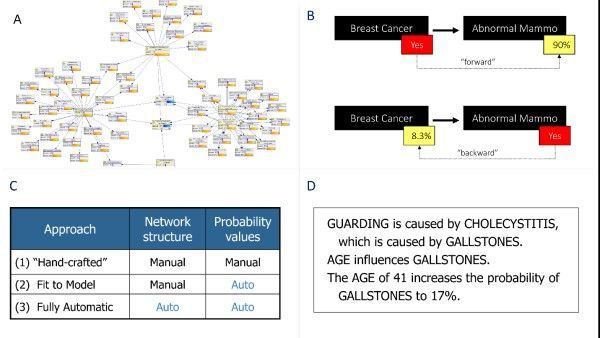
Excited to have presented our work on the use of #LLMs to identify the screening colonoscopy interval at #IS24 A clinician friendly LLM application can be accessed at GICalc.com @viggykumaresan
Vedant Acharya, MD tweet media
English
0
3
14
597
Shawn Ma retweetledi
Longevity Journal Club
Longevity Journal Club@LongevityJC·
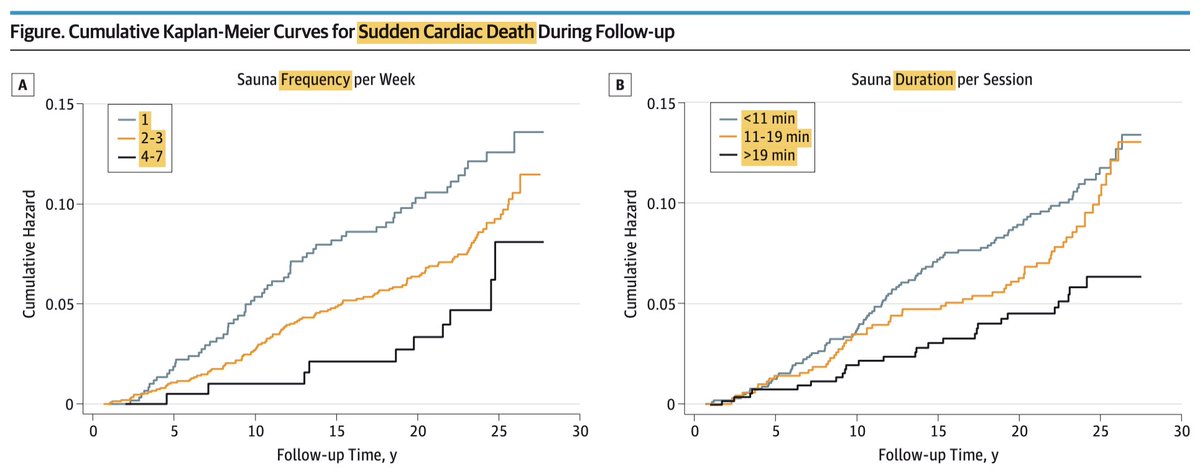
JAMA IM 2015: Association Between Sauna Bathing and Fatal Cardiovascular (CV) and All-Cause Mortality Events BOTTOM LINE - Strong dose-dependent association of dry sauna and lower CV + all-cause mortality - For optimal benefit, suggest sauna 4+/week for 19+ min at >171F Details CLINICAL QUESTION: Is frequency and duration of sauna associated with risk of sudden cardiac death (SCD), fatal coronary heart disease (CHD), fatal cardiovascular disease (CVD), and all-cause mortality? DESIGN: - Prospective, cohort (observational) study, population-based sample of 2315 men (42-60 yo) from Eastern Finland - 3434 invited → 2682 participated (78%) → 2315 sauna data available (68%) - Grouped by frequency (1, 2-3, 4-7 per week) and session duration (<11, 11-19, >19 min) - Baseline characteristics measured once at beginning of the study: -- Labs/vitals -- Chronic diseases assessed by internist -- Cardiorespiratory fitness measured by VO2 max cycle testing -- Physical activity by 12 month questionnaire - Self-reported sauna data by typical week; temperature measured by participant at head level - Outcomes/deaths by interview, hospital records, death certificates by 2 reviewers (blind to sauna data) Baseline, avg (sd): - Age 53 (5.1) - BMI 27 (3.5) - LDL-c 156 (39) - SBP 134 (16) - VO2 max 30 (8.0) mL/kg/min - Physical activity 372 (357) kcal/day - 30% smokers - 24% CHD - 34% HTN (21% on anti-HTN meds) - 5% T2DM Sauna: - 2.1 (1.1) sessions per week - 14.2 (7.5) min per session - 174 (17) degrees F RESULTS: - Avg follow-up time 19 years (no loss to follow-up) - Avg sauna session duration did NOT differ significantly by frequency - Avg temp of 4-7/week 171F vs. 1/week group 176F (p<0.001) Hazard ratios adjusted for age, BMI, SBP, LDL-c, smoking, alcohol, T2DM, CRF, physical activity, SES Subgroup analysis: Avg characteristics of 4-7/week group compared to 1/week: - 2 years younger - Slightly higher VO2 max - Slightly higher BMI - More HTN, T2DM - Less smokers - NO physical activity data provided More benefit in terms of CV mortality in less healthy population, aka patients with: - T2DM - Oldest third - Bottom third of VO2 max - BMI >25 - Trending toward benefit in middle/top third of VO2 max, not statistically significant (not powered for this analysis) - More benefit for non-smokers, likely due to overwhelming negative impact of smoking on CV health STRENGTHS: - Relatively generalizable sample - population-based group, no formal exclusion criteria -- Middle-aged -- Slightly overweight on average by BMI -- No exclusion based on co-morbidities -- VO2 max similar (30 vs. 33 for males 50-59 by FRIEND database - FRIEND excluded CAD/CHF likely explains slightly higher VO2 max) - Large sample size (2315) - Long follow-up duration (~19 years) - Use of 1 sauna session/week as control group, rather than no sauna -- Controls some confounding (all can tolerate sauna, all have access/time for at least some sauna) LIMITATIONS: - Homogenous population (male, not ethnically diverse) - Observational study, likely residual confounding - Regression dilution bias: one-time sauna reporting (sauna habits could change over long the follow-up period) - Duration should have been compared between frequency groups, or compared total weekly sauna time -- Once-a-week, 20 min session (20 min weekly total) is in >19 min group, but daily 10 min session (70 min weekly total) is in <11 min group → likely explains weaker associations with sauna duration - Biggest critique: Did not break out physical activity in the subgroup analysis of frequency groups -- Large variance in activity among participants (avg 372, st dev 357), can imagine a strong correlation with frequency of sauna -- Although HR was adjusted for physical activity, likely still residual confounding related to exercise OTHER DISCUSSION: - 4-7/week group was slightly healthier than 1/week group at study enrollment (age 52 vs. 54, VO2 max 32 vs. 29, less T2DM, less HTN) - However, may be in part due to existing sauna habit prior to study enrollment - Authors attempted to adjust for these with adjusted HR which included age, smoking, HTN, T2DM, cardiorespiratory fitness Potential rebuttal: “Those who can tolerate more frequent sauna are healthier” - Avg temp of 1/week is higher than 4-7/week - Higher temp is more taxing, 1/week can regularly tolerate this higher physiological stress Potential rebuttal: “one-time sauna reporting is too limiting” - Agree, more sampling of sauna data would be useful (though practically difficult) - Per article: “Practically, Finnish people are accustomed to have a sauna bath regularly at least once per week.” - Assuming this is directionally true, the biggest possible regression would be in the 4-7/week group, which would decrease the effect size, not increase it Applicable Bradford Hill criteria: - Strength (effect size) - Biological gradient (dose-response) In the context of other literature (to be covered): - Consistency (reproducibility) - Temporality - Plausibility - Coherence - Experiment CONCLUSION: - In this population of middle-aged men, there is a large beneficial association of sauna with CV death (adjusted HR 0.6) and all-cause mortality (adjusted HR 0.5) for 4-7 sauna sessions/week compared to 1 sauna session/week, in a dose-dependent relationship across frequency and duration - Stated magnitude of effect probably overestimated due to residual confounding even after adjusting hazard ratio, most likely due to correlation of sauna frequency with physical activity - Trending toward a causal relationship given most Bradford Hill criteria met for this study in the context of the broader literature - Subgroup analysis shows increased magnitude of benefit for more unhealthy population, but trending toward benefit in healthier populations as well (not sufficiently powered for this analysis) - This study suggests that sauna 4+ sessions/week for 19+ min/session at a temperature >171F (avg temp of 4-7/week group) may be optimal for mortality benefit Link: jamanetwork.com/journals/jamai…
Longevity Journal Club tweet mediaLongevity Journal Club tweet media
English
1
1
3
241
Shawn Ma retweetledi
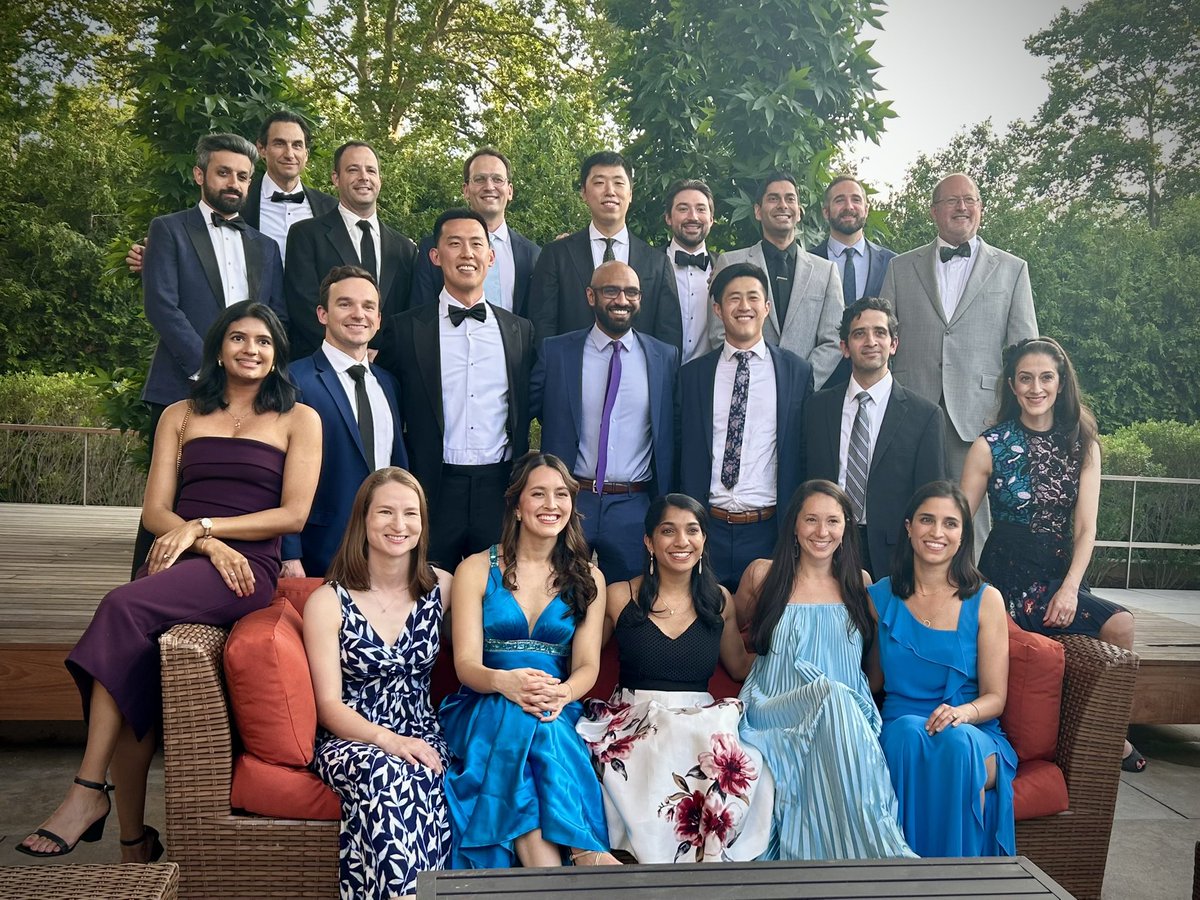
Penn Radiology Residents
Penn Radiology Residents@PennRadRes·
Penn has been selected as a winner of Best Radiologist Training Program in the Minnies, our annual event recognizing excellence in radiology! We are so proud of our program and efforts of everyone who make it such a great place to train! Thank you @AuntMinnie for this honor!
Penn Radiology Residents tweet media
English
3
17
88
0
Gavin Bowman
Gavin Bowman@GreenGuyGavin·
Beyond honored to receive the Harry Misuriello Award for Advancing Building Energy Codes. Chicago is on the forefront of equitable #buildingdecarbonization, and I look forward to carrying on Harry’s legacy through my work for @SustainChicago #SummerStudy22 #energytwitter
ACEEE@ACEEEdc

At #SummerStudy22, @GavinTaves of the Chicago Mayor's Office accepts the first ever Harry Misuriello Award - supporting emerging building codes professionals in Harry's memory. Taves shares an update on Chicago's progress toward building decarbonization.


English
2
0
11
0
Shawn Ma
Shawn Ma@ShawnXMa·
@SahilBloom Explore vs. exploit - important to know when to toggle back and forth between the two, not necessarily only early vs. late
English
0
0
0
0
Sahil Bloom
Sahil Bloom@SahilBloom·
Lie: You should say no to most opportunities. It's in vogue to say that you should learn to say no in order to protect your time. I think it depends. Early on, say yes—it puts you into growth-conducive situations. Once you're established, say no—to focus & build leverage.
English
5
104
1.3K
0
Sahil Bloom
Sahil Bloom@SahilBloom·
23 lies you've been told about the world:
English
526
6.7K
22K
0
Liam Hughes
Liam Hughes@lphughes26·
I’m going to be a neurosurgeon!! Let the countdown to Friday begin 🥳 #Match2022
Liam Hughes tweet media
English
29
24
967
0
Strike
Strike@Strike·
like this tweet if @jackmallers should tip folks who reply to this tweet with tips enabled to celebrate tips being rolled out to all @Twitter users and to salute (the real) @jack and promote #bitcoin and lightning in this 🏠 1 like and @jackmallers will giveaway thousands ⚡️💰
English
1.8K
311
6.3K
0
Shawn Ma
Shawn Ma@ShawnXMa·
@LynAldenContact I’d look into Named Data Networking - new decentralized internet architecture already with several real world applications (eg. IoT devices, US military communication)
English
0
0
0
0
Lyn Alden
Lyn Alden@LynAldenContact·
TCP/IP was invented in the 1970s and all these decades later we still run the internet on it, with no signs yet of that changing for the foreseeable future. Pretty wild when you think about it.
English
231
357
4.1K
0
Shawn Ma
Shawn Ma@ShawnXMa·
@hubermanlab @CellPressNews Also data showing circadian rhythm effects w/ improved glucose metabolism in the AM (@foundmyfitness podcast) - likely overlapping mechanisms favoring anabolism earlier in the day. More reason to move up feeding window for time-restricted feeding.
English
0
0
0
0