

Sigrid Nakrem
876 posts
Sigrid Nakrem
@Sinakrem
RN, Professor PhD NTNU Norway. Twitrer på egne vegne.
Trondheim, Norway Katılım Nisan 2013
203 Takip Edilen165 Takipçiler

Sigrid Nakrem retweetledi



Gratulerer, Guro og teamet
Kjersti Grønning@KGronning
For en dag, for en performance🤩GRATULERER med en strålende gjenomført disputas @guroluro👩🏻🎓👏👏👏Denne avhandlinga har stor nytteverdi - både for utdanningen og klinisk praksis 🏥Takk til @norsksykepleier for finansiering! @NTNUhelse @NTNU_ISM @StOlavshospital
Norsk
Sigrid Nakrem retweetledi

In our latest study a 10% increase in the proportion of temporary RNs was associated with a 2.3% increase in the risk of death, with no difference between agency and bank staff. We were surprised, are you? jamanetwork.com/journals/jaman…
English

When the manuscript you've been working on for 1.5 years is accepted on the same day as your co-authors wedding 💒✨😍 🙌
#doublerainbow
@Maria_Hrozanova @IJSPPjournal


English
“This constant lying is not aimed at making the people believe a lie, but at ensuring that no one believes anything anymore. A people that can no longer distinguish between truth and lies cannot distinguish between right and wrong.”
Hannah Arendt, German historian and philosopher
English
Sigrid Nakrem retweetledi

Americans spend more on health care than any other nation. Yet almost half can't afford care. cbsn.ws/3LvwZJK
English
Sigrid Nakrem retweetledi

– Jeg vet ikke om noe annet land i verden som offentliggjør så mye negativt og grusomheter om seg selv, sier forsker Hilde Henriksen Waage.
forskning.no/historie-israe…
Norsk
Sigrid Nakrem retweetledi

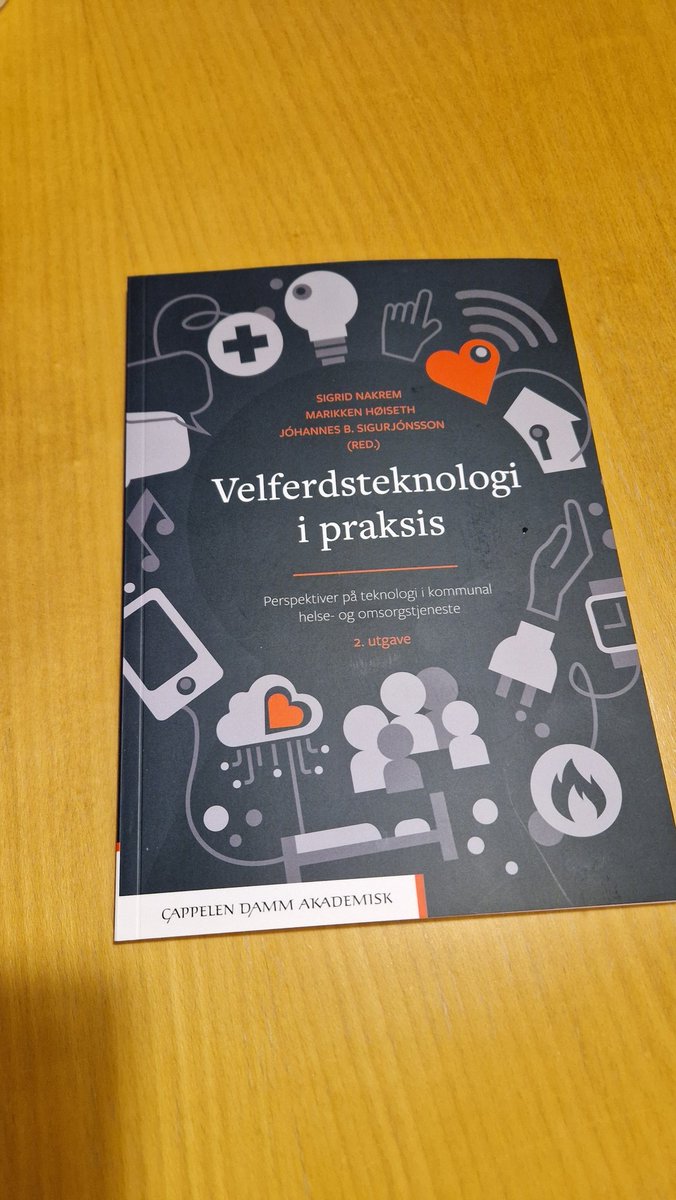
Nå er 2. utgave klar. Løp og kjøp (eller anbefal til dine studenter)!
Norsk
Sigrid Nakrem retweetledi

Welcome to Advanced Trolling:
Sealioning Death by a million bad-faith questions.
The objective of this brief course is to teach you advanced rhetorical skills in Troll-ology. We will specifically be focused on how to master the art of sealioning, which is a relatively newly minted term used to describe a specific kind of social media trolling.
The term sealioning was derived from a Wondermark comic by David Malki. In essence, it can be described as death by a million bad-faith questions.
It is not for the faint of heart. The goal of sealioning is to push an ideological agenda by means of leaving the targeted opponent tired, breathless, and speechless — much like a victim of Muhammad Ali’s rope-a-dope boxing tactic, but without the knockout.
Sealioning is an insidious Trojan horse. It cloaks misinformation and propaganda in many disguises: politeness, sincerity, curiosity, compassion, and even martyrdom. It is the sophisticated adult-version of the fraternity-esque “debate me bro” plea. At its core, however, those who engage in sealioning still have their ears plugged and their eyes shut, and they’re annoying as hell.
Now that we’ve identified and attached a name to the sealioning phenomenon, you will notice how easy it is to spot it in the wild. It shows up in political discourse. It’s a mainstay tactic of those who harass scientists and health professionals (think: anti-vaccine movement). It is truly fascinating to witness — unless it’s happening to you, in which case it’s an almost unbearable experience.
You might ask, what exactly would we see if we used a hypothetical magnifying glass to zoom into the world of sealioning to observe its dynamics in its natural social media habitat? Well, we would see that sealioning can be distilled and extracted into several different strategies. They are not mutually exclusive. You can be speared by one or more of the following darts.
Sealioning strategies.
The flipper: Distort, flip, and then reflect back your target’s words. This kind of misrepresentation will leave your target jaw-dropped. For example, if your target says something like, “The scientific method is the best way to find out whether medicines work.” Implement the flipper. Announce, “The scientific method is the best AND THE WORST way to find out whether medicines work BECAUSE SCIENCE IS FUNDAMENTALLY CORRUPT.”
Finding the middle ground: Those who engage in sealioning delight to lay claim to the idea that they’re seeking to find a middle ground in reasonable debate, which in reality, secretly serves to legitimize a component of their agenda. Ask questions and talk at experts in the name of finding a false middle ground. The American clinical psychologist, Paul Meehl, nailed this sentiment when he quoted the statistician, MG Kendall: “A friend of mine once remarked that if some people asserted the earth rotated from East-West and others from West-East, there would always be a few well-meaning people to suggest that the truth probably lay between the extremes or did not rotate at all.”
Whataboutism/Whataboutery: Besides being a variant of the tu quoque logical fallacy, it also induces hair-pulling. It is a red herring. It is a rhetorical defense that responds by reversing a claim, charging hypocrisy, or raising a different issue. The response is irrelevant to the truth of the claim. For example, Person A: Pseudoscientific therapies can be harmful. Person B: What about Big Pharma?!
The armchair critic’s pipe: The metaphorical armchair critic is the enemy of reason and the champion of postmodern philosophy because they eschew hard-won expertise for their own personal anecdotes that are regarded as equally valid. If Donald’s second-cousins’s former roommate says so, then it must be true. Overwhelm your target with a shotgun of personal anecdotes in the form of a series of questions to render them paralyzed with frustration.
Dr. Google’s jugular punch: Expertise be damned. Everyone can become an expert in three simple clicks. Question your target by linking to a non-peer-reviewed source such as a blog or an extremist website that hosts a variety of cherry-picked, low quality research studies that you don’t understand. The spirit of this weapon is perhaps best captured by physician and author Atul Gawande: “Few dismiss the authority of science. They dismiss the authority of the scientific community. People don’t argue back by claiming divine authority anymore. They argue back by claiming to have the truer scientific authority.”
Blind Socratic questioning: Named after the philosopher, Socratic questioning is a focused, incisive, good-faith questioning method that was used by Socrates to help clarify thoughts, critically appraising them, and discover truth. But you’re not Socrates. Blind Socratic questioning involves first equipping yourself with an entitled aura and then proceeding to pointlessly nit-pick every nook and cranny of your target’s comments until neither you nor they understand what the hell is being discussed. A maddening process.
Trope abuse (also known as ideological puppetry): Occurs when a person’s thoughts and behaviors are heavily guided by an ideology that transcends their own critical faculties. In other words, when a person’s strings are being pulled — like a puppet — by ideas beyond their awareness. All you have to do is imbue your questioning with often-repeated mottos, phrases, and rebuttals that are hallmarks of the agenda you wish to advance. For example, “So many people can’t all be wrong!”, “Science doesn’t have all of the answers!”, and “Galileo was persecuted too!”
Game of tag: Finally, the power of sealioning can be strengthened by recruiting slippery sealioning friends to participate in the ambush. Death by a million questions can quickly amplify to a billion questions. It’s like being poked and prodded by countless and simultaneous wet dog noses — you may think that sounds desirable but trust me, it isn’t.
I am sometimes asked: how is genuine good-faith questioning differentiated from disingenuous bad-faith sealioning? Admittedly, it’s a grey zone. But a helpful compass to direct your inquiry would be to look for social media context. Does the person who is engaging in suspected sealioning repeatedly post about particular themes, such as climate change or abortion? If so, then it might be the case that they are well-practiced at spreading their ideas veiled in this killing-with-kindness approach.
You too, can earn your place on the wrong side of the debate. Ultimately, sealioning is a literary art. And an ugly one at that.
Now, go forth, master these skills, and make the world a little worse off than where you found it.
medium.com/digital-diplom…

English
Sigrid Nakrem retweetledi
Det kan komme sosiale roboter som hjelper til på eldrehjem eller som du kan ha i stua. Er det fare for at det erstatter kontakt med andre mennesker? forskning.no/kunstig-intell…
Norsk
Sigrid Nakrem retweetledi

Reality:
I went to the loo.
LinkedIn:
I am thrilled, excited, humbled and honored to announce that I have successfully participated in an effort to transform state-of-art nutrition into organic waste with the potential to be used as biofuel in a vuca world.

English
Sigrid Nakrem retweetledi

Studien viser hvordan sykepleieres arbeidsforhold, trivsel, pasientsikkerhet og kvalitet har utviklet seg i sykehus over tid. @AnnersLerdal @Folkehelseinst @LovisenbergSH @UniOslo
sykepleien.no/forskning/2024…
Norsk
Sigrid Nakrem retweetledi

Studien viser hvordan sykepleieres arbeidsforhold, trivsel, pasientsikkerhet og kvalitet har utviklet seg i sykehus over tid. @AnnersLerdal @Folkehelseinst @LovisenbergSH @UniOslo
sykepleien.no/forskning/2024…
Norsk
Sigrid Nakrem retweetledi

Sigrid Nakrem retweetledi

Learn more on WHAT, WHY and HOW to make healthy workplaces 🌸 linkedin.com/posts/innstran…
English
Norsk
Er kompetanseheving i kommunehelsetenesta ein del av NTNUs samfunnsoppdrag? on sykepleien.no sykepleien.no/meninger/innsp… via @Sykepleien1
@NTNU_ISM @NTNUhelse
Norsk