Let’s listen to the bandura.
It’s a traditional Ukrainian string instrument, somewhat similar to a mix of a lute and a harp.
This old man often plays on the grounds of St. Sophia in Kyiv.
@VoyaWolfProject Aldo Leopold viewed wolves as critical apex predators necessary for ecosystem health, and dogs as steadfast hunting companions... highlighting the profound difference between how humans interact with domesticated pets and the untamed wild
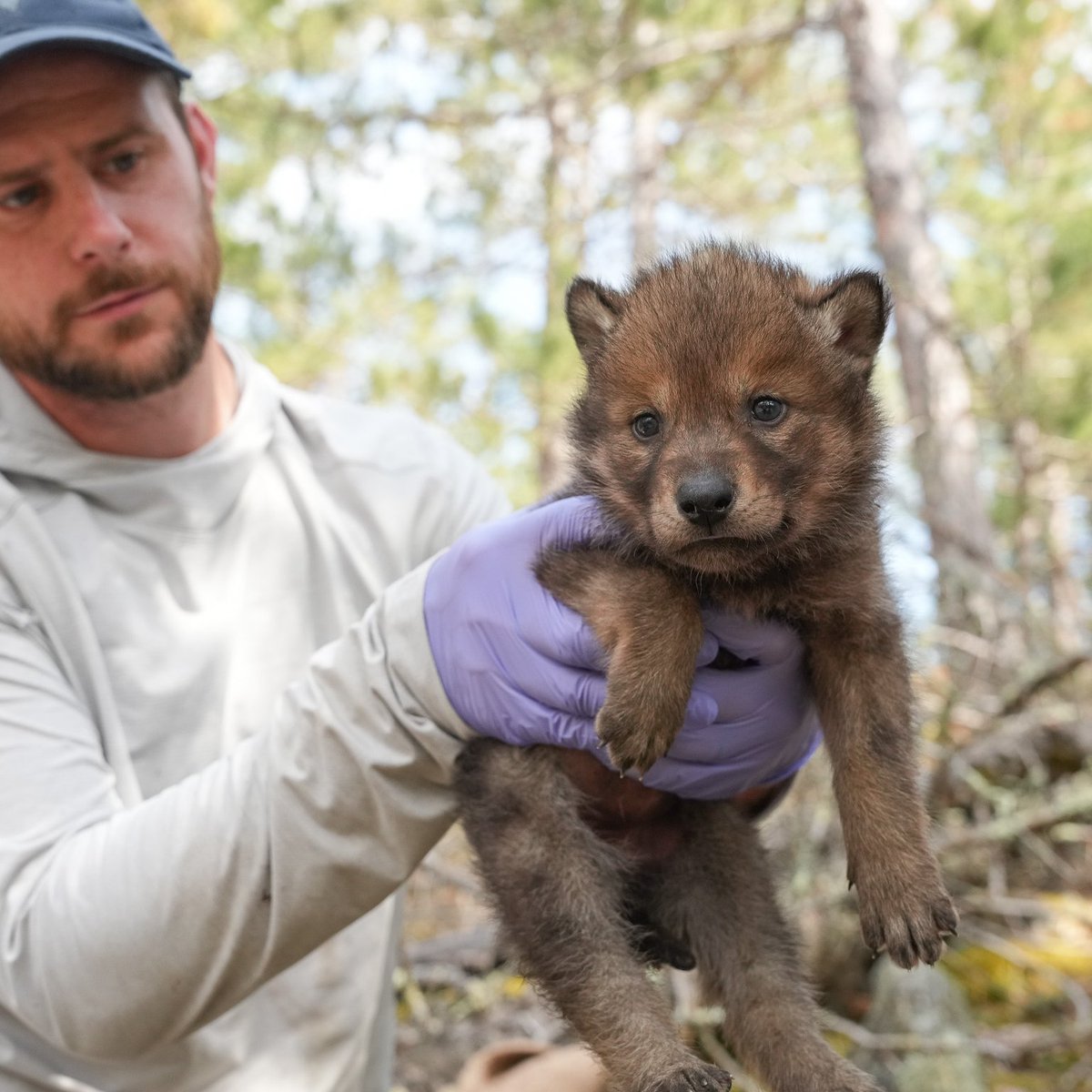
"How are you able to remove wolf pups from the den without getting attacked by their parents”?
We get this question quite often as well as general questions about how we stay safe while studying wolves. E.g., we have been asked if we carry guns for our safety from wolves more times than we can count. So we figured we would share a bit about how we view staying safe from wolves in the field.
The short answer: we are not exaggerating when we say have no concern whatsoever about wolves attacking us because wolves simply are not a threat to our safety because they really don’t want anything to do with us.
And if anyone should get attacked by wolves or concerned about being attacked, it should be us given our work. Let us elaborate.
We have visited active wolf dens and tagged pups every spring for over a decade. We often see or hear adult wolves at dens while doing this work. Yet, we have not had a single evenly remotely concerning or aggressive encounter with an adult wolf while doing this.
If there was any time an adult wolf would have a motive for attacking and killing people, it would be when visiting a den and handling their pups. Think about what would happen if you grabbed a bear cub in front of its mom?
On a similar vein, we spend much of our year studying wolf predation, hiking into recent kills by ourselves to document the kills. Sometimes, especially during winter, this means we get to kills while the carcass is very fresh, sometimes steaming and warm because it occurred an hour or two ago.
In such instances, wolves are undoubtedly somewhere very close by and well aware of our presence. If disturbing a wolf’s kill is what triggers an attack—the kind of things we read about online and see portrayed on TV— then we definitely should have been attacked by now. Yet, we have never had a wolf so much as approach us when checking out their kills (and we have documented a few thousand kills in the past 12 years).
Furthermore, we have had 6-8 people in the field most days of the year visiting areas GPS-collared wolves spend time. We know from our GPS-collar data that we are frequently close (25-200 m) to collared wolves when in the field. And we are typically spending most of our time in the very areas wolves like to spend time!
If being in close proximity to wolves on a frequent basis is what increases the odds of getting attacked, then someone on our project should have been attacked by now. This is especially true because we do almost all of our fieldwork solo because it is most efficient.
And yet, despite all of this and many years of intensive fieldwork, we have not had a single even remotely concerning encounter. This does not mean we have not had close encounters with wolves. We have had over a hundred at least.
But a close encounter where the wolf does not immediately flee does not mean the wolf is being aggressive or showing a lack of fear. Sometimes wolves, like most other animals, are just curious or inquisitive. Instead of being afraid in such moments, we just savor such rare moments and take it in.
Now, these are just our experiences but the data across North America only substantiates our assessment here. There are literally millions of people across North America who hike, camp, and live in wolf country and yet wolf attacks are almost unheard of.
Sure, there have been a few EXTREMELY rare instances where wolves have threatened or attacked people but this is also true of white-tailed deer—in fact there are far more white-tailed deer attacks on people than wolves. Interestingly, though, no one we know regards deer as a threat to human safety (outside of vehicle collisions).
NOTE: if you value this kind of educational content, please help us continue to create it by donating to our annual fundraiser at the link below. Your donations make this kind of content possible—without donor support, our project quite literally would not be able to continue. By donating you support our research and our outreach efforts!
Donate here and support our work: crowdfund.umn.edu/campaigns/VWP2…
Happiness is....being as close to your calf as possible 🥰
Watched Maxy lay down & she judged her spot inch perfect to allow her to rest her head over the calf.
Happy birthday to the “Mother of Paleontology,” Mary Anning! Born #OTD in 1799, she hailed from Lyme Regis on the coast of Dorset, England, & grew up collecting fossils. A few of her many accomplishments include unearthing one of the first ichthyosaurs & discovering Dimorphodon!
Ever wonder how our researchers determine the sex of Spotted Turtles in the field? Here’s a quick crash course!
•At a glance: generally speaking, females tend to have lighter/brighter colored lower jaws and eyes, while males tend to have darker faces and eyes.
Diadema Cichlid (Aequidens diadema). Here are brooding cichlids in the shallow flooded forest of the Oran Creek. Look carefully at the second fish. Below the protective parent are hundreds of tiny cichlid fry just hatched. Good parents aren't something we associate with fish, but here is a good example!
#iquitos#fish#ecolodge#amazonriver
The dog’s first bone, donated by Frau B. Me? I don’t eat mammals. (Apparently, neither does the dog, as he appears uninterested—could it be that we’ve acquired a vegetarian puli?)