Sm4rty.xyz 𝕏

3.4K posts

Sm4rty.xyz 𝕏 banner
Sm4rty.xyz 𝕏

Sm4rty.xyz 𝕏

@Sm4rty_

📡 Security @chain_risk | 🖥 Former auditor @QuillAudits_ai | 🔮 Interested in Tech & Science |

India Katılım Ağustos 2020
1.4K Takip Edilen3.9K Takipçiler
Sabitlenmiş Tweet
Sm4rty.xyz 𝕏
Sm4rty.xyz 𝕏@Sm4rty_·
📌I just published a blog on "Smart Contract Diagramming for Security: A Visual Approach" 👉 Learn how to draw visual diagrams to improve your auditing process. Link to the blog post: 👇 @sm4rty/diagramming-smart-contract-for-security-auditing-sm4rty-33baa26a8574" target="_blank" rel="nofollow noopener">medium.com/@sm4rty/diagra… #web3 #infosec #smartcontract #audit
English
4
12
60
7.4K
Sm4rty.xyz 𝕏 retweetledi
Spectra
Spectra@spectra_finance·
Spectra MetaVaults now have external proof of reserve and state verification via @afiprotocol_xyz Live cryptographic attestations - covering NAV, reserves, collateralization, and solvency status are continuously validated onchain. Strengthening Spectra's transparency stack ↓
Spectra tweet media
English
3
16
36
5.8K
Sm4rty.xyz 𝕏 retweetledi
Artificial Financial Intelligence
Artificial Financial Intelligence@afiprotocol_xyz·
AFI announces a $50M stablecoin vault on @monad backed by tokenized real-world assets. Developed with @multiplifi , the vault is live on one of the fastest EVM blockchains built for scalable, real-world value. ( 1/n )
English
82
111
273
97.2K
Sm4rty.xyz 𝕏 retweetledi
Arka Datta | AFI
Arka Datta | AFI@0xriskyops·
Many people thought Dubai is a safe heaven. Including me. Today, few hours ago USA attacked Iran. Iran had promised to give back by attacking the US bases in Saudi, UAE and other gulf regions. And it happened. 10kms away from my home in Dubai there were explosions heard. No cabs. Airspace closed. Let’s wait and watch what happens next. Stay safe comrades!
English
279
1.1K
13.1K
1.5M
Sm4rty.xyz 𝕏 retweetledi
Larry Cermak
Larry Cermak@lawmaster·
1/ Today I’m releasing an open-source book in collaboration with @FrankResearcher that I wish existed when I started in crypto. It’s split into 15 chapters covering everything that matters - from BTC to DeFi, MEV, Hyperliquid, quantum resistance, etc. github.com/lawmaster10/ho…
English
145
336
1.8K
277.2K
BlockSec Phalcon
BlockSec Phalcon@Phalcon_xyz·
A liquidity pool (0xD060EbD4f56bE8866376a3616B6e5aEF87F945D2) of the Ploutus protocol (@ploutos_money) on Ethereum suffered ~$390K in losses due to an oracle misconfiguration. The oracle was mistakenly configured to use the BTC/USD Chainlink price feed to price USDC, leading to a severe pricing discrepancy. Exploiting this error, the attacker was able to borrow 187 ETH by posting only 8 USDC as collateral. Notably, the exploit was executed in block 24538897, immediately after the misconfiguration transaction was confirmed in block 24538896, indicating the attacker closely monitored and acted on the configuration change. Misconfiguration TX: app.blocksec.com/phalcon/explor… Attack TX: app.blocksec.com/phalcon/explor…
smhkptking@pennysplayer

Oracle mis-configured? It should be usdc's oracle, not btc/usd. app.blocksec.com/phalcon/explor…

English
6
8
36
28.4K
Sm4rty.xyz 𝕏 retweetledi
Artificial Financial Intelligence
Artificial Financial Intelligence@afiprotocol_xyz·
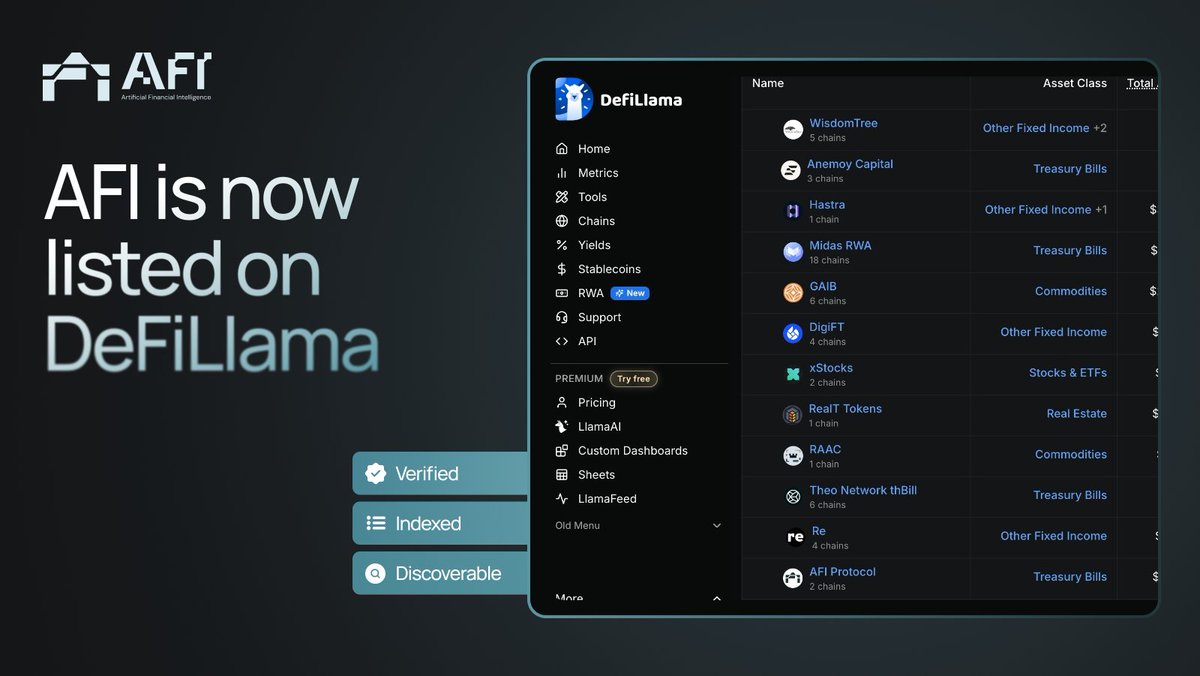
AFI is now listed on @DefiLlama . By TVL, we rank in Top 25 protocols in the RWA sector. Powered by real capital, verifiable reserves and Proof-Of-Reserve Network. We’re building the rails for institutions to move RWAs on-chain. gAFI
Artificial Financial Intelligence tweet media
English
17
18
38
24.2K
Sm4rty.xyz 𝕏 retweetledi
Josselin Feist
Josselin Feist@Montyly·
Finally wrote up my notes on getting rounding right. It covers: - Why "round in favor of the protocol" is necessary, but not simple - Precision Loss Cancellation: when rounding errors cancel each other out - Design & impl strategies for rounding seceureka.com/blog/rounding-…
English
11
23
206
25.2K
Sm4rty.xyz 𝕏
Sm4rty.xyz 𝕏@Sm4rty_·
@morsyxbt Eip7702 + flashbots/other private builders and higher gas fees. Thats more than enough for the hacked wallet rescue operations
English
0
0
0
74
Morsy
Morsy@morsyxbt·
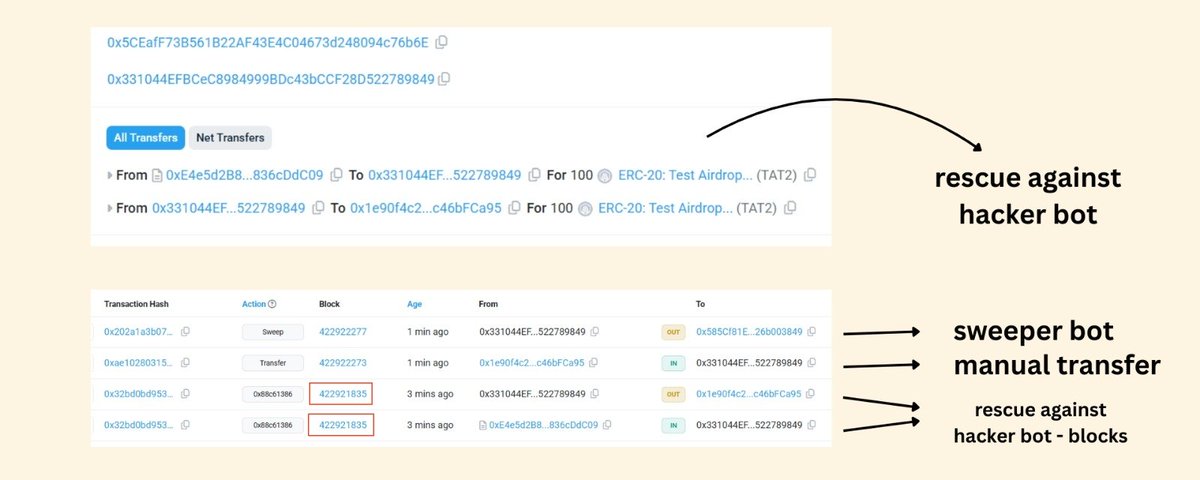
I successfully executed a fund rescue on mainnet - claimed and transferred tokens to a safe wallet before the sweeper bot could react to test i deployed my own token airdrop on arbitrum network and recovered it through a compromised/hacked wallet against an active sweeper/drainer bot tx claim & rescue : arbiscan.io/tx/0x32bd0bd95… to confirm if the sweeper bot was truly active, i later sent same tokens manually to the compromised wallet to check if the sweeper bot was really active, the moment i sent them manually they got swept away instantly to hacker's other wallet, this confirmed that i actually defeated it in above rescue tx manual send : arbiscan.io/tx/0xae1028031… tx sweep by bot : arbiscan.io/tx/0x202a1a3b0… huge respect to tools like antidrain(.)dev and Interceptor, these helped me understand alot about wallet compromises, sweepers/rescue and inspired me to respect the authenticity of above tools, i won't be publicly releasing my script but if you still want me to rescue your staked funds or upcoming airdrops from hacked wallets, just shoot me a dm currently supported network : arbitrum mainnet i will deploy on ethereum mainnet and other evm compatible networks slowly with some other good upcoming features
Morsy tweet media
Morsy@morsyxbt

I successfully created the tool that can recover assets and claim airdrops then transfer from hacked wallets (sweeper bots) to a safer wallet how does it work ? once any address gets compromised, the hacker has private key and runs a sweeper bot that instantly steals ETH etc/tokens you receive so any kind of gas fee/new airdrop/unstaking triggers the bot and drains everything even before the victim can blink but with my tool it won't happen, EIP 7702 allows the victim to delegate his compromised EOA to my recovery contract, combine with sponsored transactions : a safe sponsor wallet pays for gas, airdrop will be claimed and transferred to a safer new wallet so the hacked wallet never broadcasts anything and the sweeper bot should not intercept, this all is going to happen atomically in just 1 transaction so after countless trials and errors i succeeded to create a base/source script and i performed a test on sepolia ETH and it finally worked after lots of attempts test tx : sepolia.etherscan.io/tx/0xa7d37e514… i will be soon deploying on Mainnet and start testing against sweeper bots it still has 1 loophole - sponsor tx should not be front run, for that i will modify it accordingly and update here once its done regardless, i learnt so many new things which i wouldn't have, if i had not started to build this tool, there is still a very long way to go

English
92
10
354
22.6K
Sm4rty.xyz 𝕏 retweetledi
Shieldify Security
Shieldify Security@ShieldifySec·
If you’re auditing an AMM protocol, these papers and articles are essential reading 🫡 🚩 Decentralized Finance & Automated Market Making 🔗 arxiv.org/pdf/2307.03499… 🚩 AMM Integration Tips 🔗 blog.pessimistic.io/amm-automatic-… 🚩 Understanding AMM Vulnerabilities 🔗 medium.com/oxorio/cracks-… 🚩 Typical Vulnerabilities in AMM Protocols 🔗 blog.decurity.io/typical-vulner… 🚩 DeFi Slippage Attacks 🔗 dacian.me/defi-slippage-… 🚩 Generalizing Knowledge on DEXs with AMMs — Part I 🔗 medium.com/uclcbt/general… 🚩 Generalizing Knowledge on DEXs with AMMs — Part II 🔗 medium.com/uclcbt/general…
English
4
24
105
7.3K
Sm4rty.xyz 𝕏 retweetledi
chrisdior
chrisdior@chrisdior777·
One of the best articles I have EVER read.😮 A former hacker, currently a CEO explaining: - How Money Works, Startups and VCs - The Birth of a Shitcoin and more "A hacker is someone who understands how the world works." #article" target="_blank" rel="nofollow noopener">phrack.org/issues/71/17#a
English
22
247
1.9K
146.2K
Sm4rty.xyz 𝕏 retweetledi
TrustSec
TrustSec@TrustSecAudits·
Very concerned about the second-order effects of advances in AI auditors. The direct consequences are well understood by most: lower cost of entry, higher bar for exploits, bounty hunters and blackhats retroactively auditing old codebases, etc. There will come a point (expect 1-2 years from now) where more and more real projects will completely skip a human audit - it's an uphill battle to convince budget owners to spend 6-7 figures on security when a sub-$1k solution appears to find the same issues again and again. For everyone who doesn't grasp the true ingenuity of security research, this will feel like the moment thousands of accountants were replaced by Excel formulas, or travel agencies were displaced by Google Flights. But there are those of us that understand that bug hunting is as much an art as it is a science, and pattern-matching, no matter how exceptionally engineered, will never discover a complex, novel logic bug or bug class. It will be up to us to educate and to make the case for why the best hunters can never be replaced by neural networks that are, at the end of the day, extremely capable imitators. They will say we are coping. That we are decelerationists. That AIs that can write poems and solve Math Olympiad questions can audit code as well as any human. They will be wrong, and time will tell. The problem is that extremely complex bugs are likewise extremely rare, so trusting an AI audit could genuinely be 99.9% safe within a few years. And a fair argument is that even a human audit doesn’t necessarily capture the last 0.1% — we’ve seen projects exploited after top-tier audits, which has harmed confidence in the entire audit marketplace. So is the new “security through obscurity” going to become “security through low probability of a novel bug”? It might. My outlook on the security endgame looks different. There will be two battles fought in parallel. The AIs on both sides will have a light-speed shootout, determining who can exploit the vast majority of bugs quicker than the other. That contest will be over in a few blocks, and we’ll know who won by checking whether the contract still has funds. And then there's the "correspondence chess" match between the true savants on both sides - humans capable of more than imitation. This battle never truly ends, unless all critical properties are formally proved, flawlessly. This cannot be done for sufficiently complex apps and infrastructure. We know blackhats are not going anywhere. NK and similar aren't interested in post-hack negotiations and are going to pocket 100% of whatever value they steal. Meanwhile white-hats may well not be incentivized enough in a world where only very rare bugs remain, getting cents on the dollar per exploit compared to blackhats, if not completely rugged by the project. From that perspective it seems clear projects that truly care about their security have to recruit white-hats to their side, or they risk conceding an empty-net goal. Hiring a team of specialists with an exceptional record of finding deep-lying bugs raises the difficulty and adds a 2nd layer of PoW on top of an AI audit. In practice, blackhats will likely follow the path of least resistance and choose targets in ascending order of difficulty. Hiring teams (like yours truly) that have disclosed tens of live issues and earned dozens of public contest gold medals is going to push a project to the bottom of that "to do" list. AI tech is revolutionary and will change much of how the world operates. But let's remember: a bad poem earns at worst a thumbs-down. An undetected smart contract bug could be the end of people's financial lives. Let’s be careful not to entrust AI with millions of dollars in one of the few domains where human creativity still outperforms the machine.
English
11
9
146
7.9K
Sm4rty.xyz 𝕏 retweetledi
Josh Larky
Josh Larky@jlarkytweets·
Anyone interested in gambling, growing wealth inequality, rational thinking, etc. should read this article It’s a true master class in weaving together gambling, psychology, economics, and game theory
sysls@systematicls

x.com/i/article/2004…

English
24
199
3.8K
1.2M
Sm4rty.xyz 𝕏 retweetledi
Preetam📍NYC 🇺🇲
Preetam📍NYC 🇺🇲@raopreetam_·
Total web3 developers globally: ~30,000 Total web2 developers globally: ~27 million Web3 as % of dev jobs: ~0.111111111% Soon = 2 years? 5? 10? Because we're 7+ years into this prediction and the percentage hasn't meaningfully changed. My Thoughts on Roles: 1⃣ Niche specializations in a speculative industry 2⃣ Overcrowded at junior levels 3⃣ Gate kept at senior levels (need reputation, proven work) 4⃣ Volatile and cyclical (boom in bulls, bust in bears)
Saber.eth | Blockchain Developer⚡@Sabercodes123

Web3 roles would take over soon, here are some Web3 Development Career Paths: ➠ Smart Contract Developer (Solidity, Rust, Vyper) ➠ Smart Contract Security Auditor (Slither, Echidna, Foundry tests) ➠ Zero Knowledge (ZK) Developer (Circom, Noir, Halo2, zkSync) ➠ Backend Protocol Engineer (indexing, subgraphs, infra, node ops) ➠ Frontend DApp Developer (React, Wagmi, ethers.js, viem) ➠ Web3 Mobile Developer (React Native, WalletConnect, Expo, Swift Web3) ➠ AI x Blockchain Engineer (AI agents onchain, data proofs, compute markets) What are you learning today? How can i help?

English
7
7
214
17.3K
Sm4rty.xyz 𝕏 retweetledi
Artificial Financial Intelligence
Artificial Financial Intelligence@afiprotocol_xyz·
AFI announces a $20M rwaUSDi vault with @multiplifi — backed by $80M in verified reserves. A milestone not just for us, but for the future of provable on-chain RWAs. 🧵👇
Artificial Financial Intelligence tweet media
English
50
52
215
183.2K
Sm4rty.xyz 𝕏 retweetledi
Jeffrey Scholz
Jeffrey Scholz@Jeyffre·
This might come off as grave-dancing... Still, these heavy math bugs are a strong reason we go through the immense trouble of trying to make applied math understandable rather than treating it as an abstraction or something unimportant. Somebody out there needs to know this stuff really well, and the more people who know, the better. The audience for such content is very tiny, but it's still essential to cover it. This is a good write-up.
kaden.eth@0xKaden

yETH Exploit Deep Dive After spending some time exploring the recent yETH exploit, I quickly realized that it's easily one of the most sophisticated attacks I've ever seen. In fact, it was so complicated that every writeup I read misunderstood at least some part of the attack. This complexity provides for some serious alpha to developers and security researchers who can thoroughly understand the attack, so don't just bookmark this, let's dive in. Hybrid AMM Curve To understand this exploit, we first need to understand the underlying mechanism of the protocol. The yETH pool uses an invariant which is a hybrid between constant product and constant sum. If you're familiar with the inner workings of Uniswap, you should be familiar with the constant product behavior, essentially it just adjusts the price according to the reserves. Whereas constant sum results in a constant price between the tokens, regardless of reserves. The yETH hybrid curve behaves like a constant sum when the token reserves are balanced, keeping the price constant, and behaves like a constant product curve when the reserves are imbalanced. This behavior is valuable for pools of assets which have the same value due to the fact that the price is much less sensitive to reserve changes. Below we have a graph [1] of these different curves. Red: constant product, green: constant sum, blue: hybrid used by the yETH pool. The First Bug: Breaking The Invariant Let's zoom in on the `_calc_supply` function. This function uses an iterative approximation to converge to a new supply and constant product term at each iteration, ending the loop once sufficient precision is achieved. The constant product term (r) is recomputed at each iteration as the current value multiplied by the new supply, divided by the previous supply (`r * sp / s`). Effectively, it scales at the same rate as the supply. The bug: if the decrease in supply of any given iteration of the solver is large enough, the constant product term can round down to zero. There is no revert to handle this case and once it occurs, each following iteration will remain zero since `0 * x / y = 0`. Now that we have a zero constant product term, we no longer have a hybrid constant product/constant sum curve, instead we effectively just have a constant sum curve. To understand why this is a problem we have to go back and look at the curves. In the below graph [2], we have the intended curve (red) and the constant sum curve (purple) which is the result of the zero product term. As we adjust the supply (see desmos graph [2] linked in reply) of these two curves (D), we can see that the reserves increase by the same amount in the middle, where the reserves are balanced, but by different amounts on the outside, where the reserves are imbalanced. This means that as we add/remove liquidity with imbalanced reserves, these two curves will mint/burn a different amount of LP tokens. Understanding this behavior, the attacker systemically switched between these curves by triggering the zero constant product term when adding liquidity with unbalanced reserves to receive more LP tokens than intended. They then resolved the constant product term back to normal during liquidity removal to receive the correct amount of tokens provided for burning the inflated amount of LP tokens they received. This allowed the attacker to withdraw more tokens than they deposited, which they repeated until the pool was drained of its reserves for a profit of about ~$8m. The Second Bug: Unexpected Underflow You thought we were done? Nope, there's yet another bug that the attacker exploited to steal even more funds after already completely draining the pool. Now that the pool is empty, and variables used for accounting are in such an unusual state, there is a significant side effect which occurs when we attempt to deposit certain dust amounts. Again, looking in the `_calc_supply` function, when we iteratively recompute the supply, we compute it with the following line (`(l - s * r) / d`): Since we use unchecked math here and the accounting is in a highly irregular state, it's unexpectedly possible for `s * r > l`, resulting in the computed supply underflowing. The attacker exploits this underflow by depositing the following amounts: `[1, 1, 1, 1, 1, 1, 1, 9]`, resulting in them being minted `~2.6*10^56` yETH LP tokens. The attacker then makes a swap on the curve yETH/WETH pool, draining the pool of its WETH, for a profit of ~$1m. Conclusion Not only did this attack include a highly sophisticated AMM invariant exploit, but it also exploited an underflow which is likely only possible due to the existence of the invariant exploit. This combination of exploits allowed the attacker to not only drain the yETH pool, but also another pool containing the LP token. Both attacks, and even tornado cash deposits were all made in the same transaction, preventing any chance at rescue. In my research, every writeup I came across misunderstood this attack in some way. Clearly, it's extremely rare to understand such a sophisticated exploit, providing for some serious alpha to developers and security researchers to fully wrap their heads around this.

English
2
8
173
18.6K