Susan Timoney
4.3K posts

Susan Timoney
@SmTimoney
pastoral theologian (@CUATheology) interested in parish vitality and the Catholic spiritual tradition.
Washington, D.C. Katılım Temmuz 2009
539 Takip Edilen961 Takipçiler

"He is the Passover that is our salvation."
share.google/images/eEsNg7R…
English

I joined an Easter procession for the fitness... and stayed for the faith ft.trib.al/KWUEsJ7
English

@bronwenmcshea @PiadeSolenni I say so often that the problem isn't that women were not present but that we do not know how to tell the story of women's leadership in the church and world.
English

I finally started reading the Dicastery for the Doctrine of the Faith's Study Group 5 final report related to "The Participation of Women in the Life and Leadership of the Church", and I am disappointed from the very beginning at its lack of basic historical grounding. E.g. one of its opening lines starts, "The entry of women into public life—which developed and consolidated during the twentieth century..."
Surely those at the higher levels of the Catholic Church who are behind documents such as this know that NUMEROUS women were active in various ways in what we can describe as "public life" for MANY CENTURIES prior to the 20th, even if they were not (as most men were not most of that time, either...) voting for candidates for, or serving themselves in, democratically-elected offices.
But then again, maybe they don't know this? I see also that the list of women featured in the document's Appendix II, "Important Women in the History of the Church," only mentions two women we might describe as "public" (or political perhaps is a better term) from Catholicism's past: Joan of Arc and St. Helena -- the latter of whom was given the rank and some powers as Empress by her son Constantine. The list by contrast does NOT include a single truly politically-and-ecclesially powerful woman from Catholicism's very long and rich history, even though there are numerous such figures to choose from in this regard, some of them even canonized saints.
To name just a few women whose rather public roles and exercise of leadership functions within and for the Church who are absent from the Study Group 5 final report's list:
-- Empress Irene of Athens (convoked the 2nd Council of Nicaea)
-- St Adelaide of Italy, first papally anointed Holy Roman Empress (major patroness of the Cluniac reform)
-- St Adela of Normandy, Regent of Blois, mother of Stephen of England
-- Queen Mélisende of Jerusalem, first of five female rulers of the Crusader Kingdom of Jerusalem
-- Matilda of Canossa, Margravine of Tuscany (helped bring Henry IV to heel for Pope Gregory VII)
-- Blanche of Castile, Queen Regent of France while her son St. Louis IX was off on Crusade
-- St Jadwiga of Poland, sovereign of Poland even called "King" at times
-- Queen Margaret I of Denmark, Norway, & Sweden, who was behind the canonization of Bridget of Sweden
-- Holy Roman Empress Barbara of Cilli (present at the opening of the Great-Western-Schism-ending Council of Constance, which she helped her husband Emperor Sigismund host in their domains)
-- Margaret of Austria, Governor of the Habsburg Netherlands (fought Protestantism in her domains & helped train her nephew, the future Emperpr Charles V, to rule)
-- Queen Isabella of Castile (granted vast powers by three popes to choose the bishops of her realms)
-- Long lists of pre-Reformation Imperial Abbesses of Zürich, Princess Abbesses of Quedlinburg, and other territorial abbesses whose authority in some ecclesial affairs in their domains came as much or more from privileges granted by Holy Roman Emperors, other monarchs, and Popes as from their consecrations as abbesses per se
-- Queen Mary I of England, who tried her best to reverse her father Henry VIII's break with Rome
-- Juana of Austria, Regent of Spain, protectress of the Jesuit order
-- Archduchess Isabella Clara Eugenia, co-sovereign of the Spanish Netherlands who helped institute the Council of Trent's reforms there (and who also chose bishops for her realms)
-- Empress Maria Theresa of Austria, arguably the most powerful Roman Catholic in the world in the 18th c.
There are numerous other women in the history of the Church, active from the earliest days of Christianity through the 19th century, who may also be said to have been active in various ways in both public life and in leadership roles within and for the Church. But their legacies (and the wisdom their examples may hold for today's Church, respecting not just the role of WOMEN but even more so the role of the LAITY in ecclesial affairs) seem elided by the DDF / synod document I just started reading.
And perhaps we are not quite ready in the Catholic world to admit that a more serious, historically grounded discussion of women's participation in ecclesial leadership requires us also to take the much more extensive history of MEN'S and especially LAYMEN'S participation in this area more seriously -- beginning, say, with that of St. Helena's son the Emperor Constantine in convoking the First Council of Nicaea.
English

Creat a clean heart in me, O' Lord and place in me a steadfast spirit. #Lent2026
English

@NolanOnNursing @CUANursing Such great team work. Congratulations!
English

Thank you O’Toole Family Foundation for $120,000 for nursing students first in their family to attend college. The "Take Flight" Nursing program strengthens academic confidence and practice readiness. Led by Ms. Kimberly Walsh, Dr. Martha Scheckel & Ms. Sandra Zupan @CUANursing


English

Thanks @NBCOlympics for highlighting the beauty of Milan's Cathedral! #Olympics2026
English

Thanks @KatiePMcGrady for pointing out that Henri Didon, OP coined the original Olympic motto of Faster, Higher, Stronger-together!
GIF
English

@CatholicPods The Church awards STL's a d STD's to women and gives Mandatums to women theologians teaching in ecclesiastical faculties, so not sure that I understand the question.
English

City living win! With parking retrictions going into effect in 30 minutes, scored a spot on the block! #snow
GIF
English

@catholicourtney @eliseannallen My first thought when I read of John's death was that he is always so gracious!
English

There is a deep sadness among the Vatican press corps today with the loss of the great John Allen.
A moving tribute by @eliseannallen on John’s life lessons and reflections on hope amid his long battle with cancer:
1. “In a world where anger and contempt often dominate our interactions with others, John would always say, ‘Just be gracious. I have never regretted being the more gracious party in a dispute, but I’ve often regretted being the more reactionary.’
2. “Never reduce someone to their worst moment.”
3. “Hope is not empty, and it does not disappoint when things don’t go our way or when God doesn’t answer prayers the way we want; in fact, it is precisely in those moments that hope holds its most precious meaning, because they challenge us. They force us to dig deep, to look beyond ourselves to God, remembering that his design for our lives is one of love, and it is far bigger than our limited understanding.”
“The jubilee year, for us, was spent enduring the most difficult and trying phase of John’s illness. It was agonizing, but at the same time beautiful. We learned that hope is not a superficial wish that everything will get better, or that painful circumstances will change … Christian hope ultimately lies in the fact that we have been offered eternal life.”
English

@CrazyVibes_1 What I remember most from my wedding from 25 years ago is looking at everyone my husband and I loved most in the world. Can not tell you what my Mom or his mom were wearing!
English

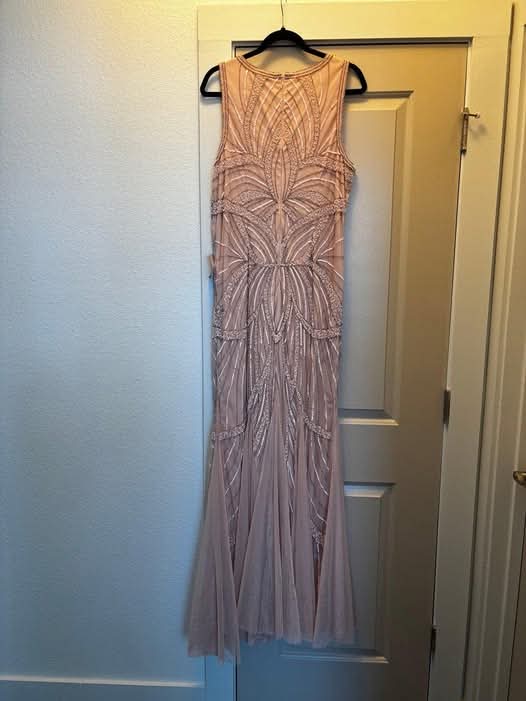
My future mother-in-law just informed me that she paid over $1K for this light pink beaded dress and plans to wear it to our wedding next week, completely ignoring our “navy blue because we want the mothers to be our something blue” conversation from months ago. When I gently reminded her about the color scheme, she got defensive and said, “well, your family can be in blue,” like this is some kind of competition between the mothers instead of a wedding where we hoped everyone would follow the same plan.
Now I’m stuck wondering if I should buy my own mother a matching pink dress so she doesn’t feel underdressed, or if that makes me the crazy one for enabling this whole situation.
I’ve already found the perfect secondhand formal dress online that would match his mother’s style and price range, and I’m sitting here debating whether spending money I don’t have on a dress my mom doesn’t even want is worth keeping the peace at my wedding.
Part of me thinks I should just let it go and have mismatched mothers, but the other part of me knows my mom will feel self-conscious standing next to someone in a thousand-dollar gown while she’s wearing something from her closet. And honestly, I’m so tired of managing everyone else’s feelings about my wedding that I might just elope instead.
Credit - Emilia Berry

English

Love this!
The Catholic University of America@CatholicUniv
The Catholic University of America was named one of the Best Colleges for Future Leaders this fall by TIME magazine. After assessing a broad range of sources and career milestones, the researchers counted the frequency of each university mentioned in a CV, resulting in a Leadership Index of 125 universities. This is the latest honor for the University, which was designated an R1 research institution in 2025, placing it among the top research universities in the United States. catholic.edu/all-stories/ca…
English

So excited to share that @lillyendowment has awarded @CUATheology and @CatholicProj @PaulistFathers @cmsmtweets a 7.1 million dollar grant to develop pastoral leadership skills at all stages of Ministerial life.
English