Emmanuel Adebiyi

16.1K posts

Emmanuel Adebiyi

Emmanuel Adebiyi

@SmartE03

AI Infrastructure @ TestGorilla | Voracious Reader | Big @fcbarcelona fan | Obsessed with .NET and AI | Proudly Christian

Nigeria Katılım Eylül 2011
2K Takip Edilen474 Takipçiler
Emmanuel Adebiyi retweetledi
Nicolas Bustamante
Nicolas Bustamante@nicbstme·
For what it's worth, I love using M365 & Copilot. Before working at Microsoft, I had the same perspective as my San Francisco startup friends, aka Copilot is a clunky, confusing product. But today I use it all the time. 1/ Copilot is everywhere. When I have a question and I'm on Teams, PowerPoint, Outlook, the icon is always there. It’s even a key on my computer keyboard! It's deeply integrated with all the software I use (which are all made by MSFT). 2/ Copilot is integrated to everything. I'm new, so I often have questions about the org chart, some documents on SharePoint I can't find but Copilot can, some acronyms I don't understand but Copilot has our company knowledge, etc. There is also the multi-model part. This is especially true for coding with Copilot-cli, where depending on the task, I might use GPT 5.5 or Opus 4.7. Same when I use the Excel/Powerpoint/Word agents. Now, the elephant in the room, why does Copilot have a bad reputation on X? My own view, and I might be wrong: 1/ We often mess up. We are a 51-year-old large company moving at the speed of AI, and sometimes we ship inconsistent product experiences or product experiments that we unify later. 2/ Deployment takes a long time, so users often have older versions of Copilot. Also some great features are first available in our Frontier program and will be generally available later. 3/ Privacy and compliance are very important for us, so sometimes IT admins haven't unlocked all the Copilot features yet. 4/ Microsoft is often compared to the world’s most advanced AI labs (some didn’t even exist five years ago and are the fastest-growing businesses in history!). IMO that comparison is a compliment. It pushes us to hold ourselves to an even higher standard in how we serve our customers. Voila, just my 2 cents! (talking about cents, it's wild that you can have elite AI deeply integrated everywhere in all the software stack for $30/month) ps: I'm French, so I’m very direct and extremely low BS. I wouldn't have written that if it weren’t my reality.
Bill Ackman@BillAckman

As two of the largest forces in equity markets -- growing index ownership and increasing amounts of capital controlled by extremely short-term-oriented, leveraged, volatility-intolerant investors -- converge, we have found occasional opportunities to acquire some of the most dominant long-term compounding franchises at attractive valuations. For example, we acquired Alphabet $GOOG when the stock declined substantially on the release of ChatGPT in late 2022, Amazon $AMZN in the weeks following Liberation Day, and $META more recently on the market's response to the company's unexpectedly large cap ex guidance and expenditures. In our 13F which we will file later today, we will disclose a new position in Microsoft, a company we have followed for many years now offered at a highly compelling valuation. While $PSUS will not be filing a 13F tomorrow, it has also recently made $MFST a core holding. Microsoft operates two of the most valuable franchises in enterprise technology, which account for approximately 70% of the company's overall profits: M365 and Azure. M365, the company's productivity suite, is the dominant operating platform for knowledge work, with over 450 million workers using Word, Excel, PowerPoint, Outlook, and Teams on a daily basis. Azure is the world's second-largest hyperscaler cloud platform and, like AWS in our Amazon investment, is a direct beneficiary of the multi-decade migration of enterprise IT workloads to the cloud, which is now further accelerated by surging demand for AI inference workloads. Both M365 and Azure are underpinned by Microsoft's unparalleled enterprise distribution and the security, compliance, and identity infrastructure it has built and refined over decades. Beyond these core franchises, Microsoft also owns a portfolio of other leading businesses, including LinkedIn (the world's largest professional network with 1.3 billion members), its gaming platform (Xbox and Activision Blizzard), and search and news advertising (Bing and the Edge browser). We began building our position in MSFT in February following a meaningful share price decline after the company reported its fiscal Q2 2026 results. We were able to establish our position at a valuation of 21 times forward earnings, broadly in line with the market multiple and well below Microsoft's trading average over the last few years. Notably, MSFT's headline multiple does not reflect the value of Microsoft's approximately 27% economic interest in OpenAI, which would represent approximately $200 billion, or 7% of Microsoft's market capitalization, at OpenAI's most recent funding round valuation. We believe Microsoft's recent share price decline has been principally driven by investor concerns around two key issues: i) the competitive positioning of M365 against increasingly capable AI lab offerings (notably Anthropic's Claude Cowork), and ii) the durability of Azure's growth, especially in light of Microsoft's evolving relationship with OpenAI. In our view, investors underestimate the resilience of the M365 franchise given its deeply embedded role across enterprises and highly attractive price-value proposition. Unlike point software solutions, which may be vulnerable to disintermediation by better-performing AI alternatives, M365 is tightly integrated into the daily workflow of nearly every large enterprise and is supported by Microsoft's identity, security, compliance, and data governance infrastructure, which would be nearly impossible to replicate. Attractive bundle economics further reinforce Microsoft's advantage, with monthly average revenue per user on the M365 suite at approximately $20, less than half of what customers would pay to purchase the underlying applications individually from different vendors. Moreover, we are encouraged to see Microsoft prioritizing its R&D efforts and investment in Copilot, its own AI agent embedded across M365, with direct involvement from CEO Satya Nadella. We believe these efforts will translate into improved product velocity and greater customer adoption over time. Alongside Copilot's rollout, the company has also begun shifting its pricing model from pure per-seat licensing to a hybrid model of seats plus metered consumption, which helps expand the company’s revenue opportunity as AI agents drive incremental usage that a seat-only structure would not capture. These initiatives should help sustain M365’s strong underlying growth momentum, which was already evident in the business unit’s 15% revenue growth (in constant currency) last quarter. We believe concerns regarding Azure's growth trajectory are similarly misplaced, particularly in light of the franchise's exceptional recent performance. Azure revenue grew 39% in constant currency last quarter, with company guiding to modest acceleration through the second half of the year. We view Microsoft's recent decision to restructure its OpenAI partnership not as a concession but as part of a deliberate pivot toward a more open, multi-model architecture that better serves enterprise customers, who increasingly seek optionality across model providers. Microsoft recently disclosed that over 10,000 enterprise customers have used more than one model on Azure Foundry, the company’s modular AI model marketplace. This model-agnostic approach also strengthens Copilot, which can auto-route queries across multiple models to deliver the optimal output for a given task. To support Azure's rapid growth amid persistent supply constraints, Microsoft has raised its calendar year 2026 capex budget to approximately $190 billion. Consistent with what we have observed at hyperscaler peers Amazon and Google, we view this spend as growth capex that should drive future revenue generation. This is particularly true for Microsoft, given that roughly two-thirds of its capex budget is allocated to server and networking equipment that correlates directly with near-term revenue. Like our purchases of $GOOG, $AMZN, and $META, we believe that $MSFT offers analogous and compelling long-term value at today's valuation.

English
25
10
165
49.6K
Emmanuel Adebiyi retweetledi
Nick Chapsas
Nick Chapsas@nickchapsas·
Man, does anyone care about Aspire outside of Microsoft? It feels like the AI hype has overshadowed one of the coolest projects that launched in a very unfortunate time, solving a problem everyone already had a solution for
English
99
11
347
84.3K
Emmanuel Adebiyi retweetledi
Six Labors
Six Labors@SixLabors·
It's Release Day! 🚀 New releases across the Six Labors ecosystem are here, alongside revamped docs. I'll be sharing release posts for each library. Please share the posts far and wide. It really helps support the project. #dotnet #oss
GIF
English
1
29
44
3.4K
Emmanuel Adebiyi retweetledi
Jeff Hollan
Jeff Hollan@jeffhollan·
Here's another reason why @Microsoft Foundry is the BEST platform in the world to build and run your agents: Our durable, long running agents come with Toolbox 🔨 Toolbox allowed me to reduce input tokens 90%(!!) and significantly simplify the amount of code needed Check out the demo below and see how you can bring hundreds of tools through a single MCP endpoint -- all running in Foundry at cloud scale! ☁️
English
27
63
468
115.7K
The Touchline | 𝐓
The Touchline | 𝐓@TouchlineX·
🚨 Let's be honest, you would love to have Saka at your club.
The Touchline | 𝐓 tweet media
English
233
98
1.9K
62.3K
IsaacXVoxel
IsaacXVoxel@IsaacXVoxel·
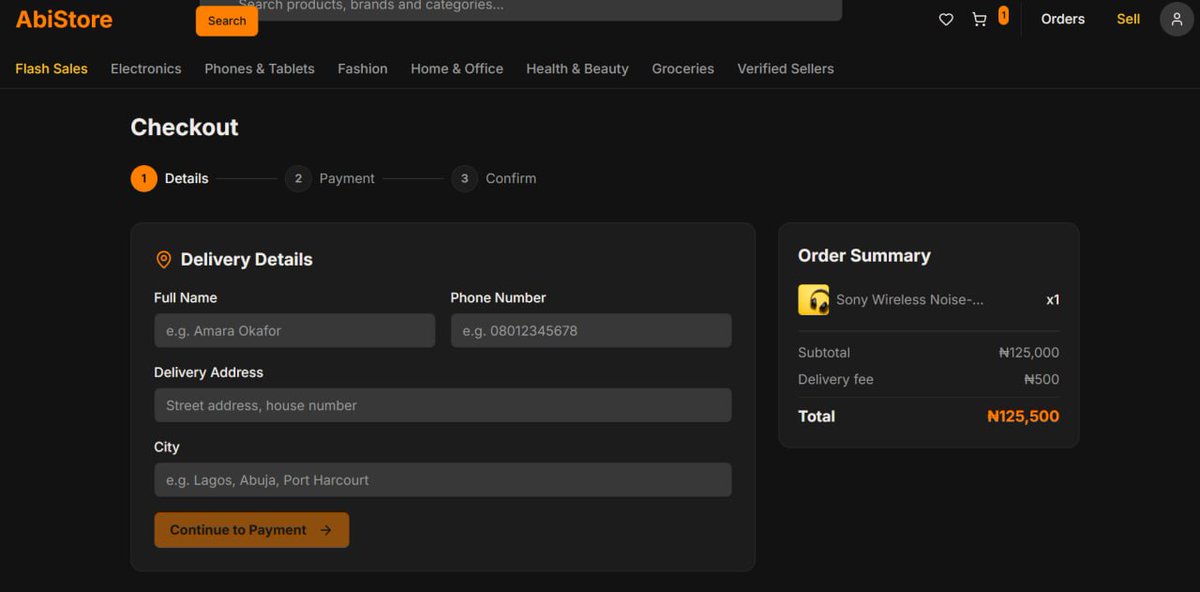
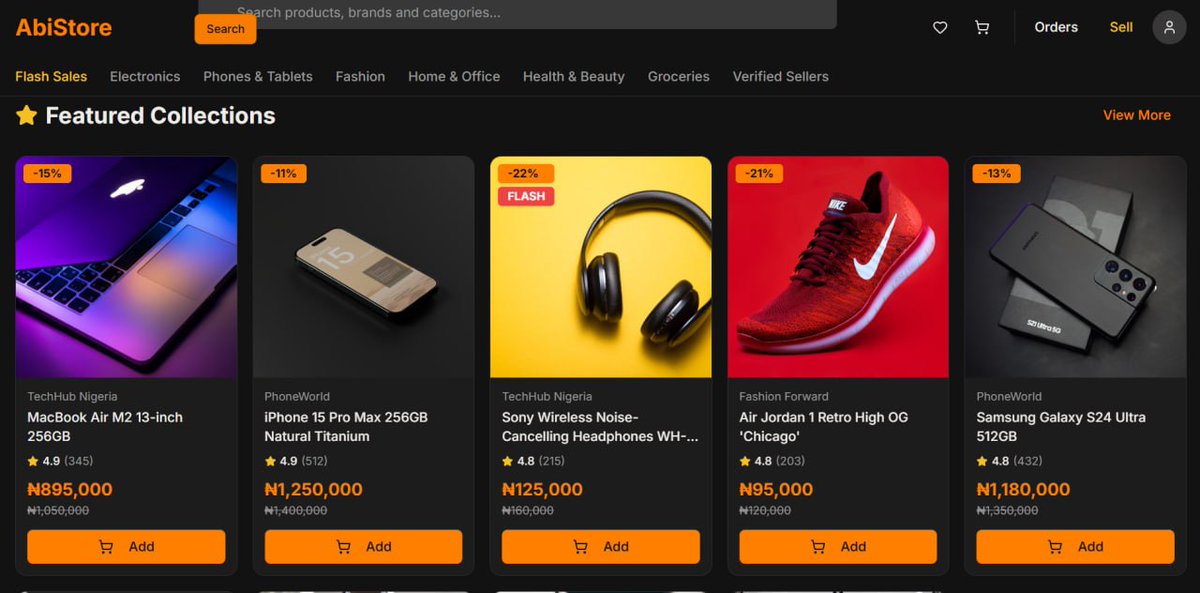
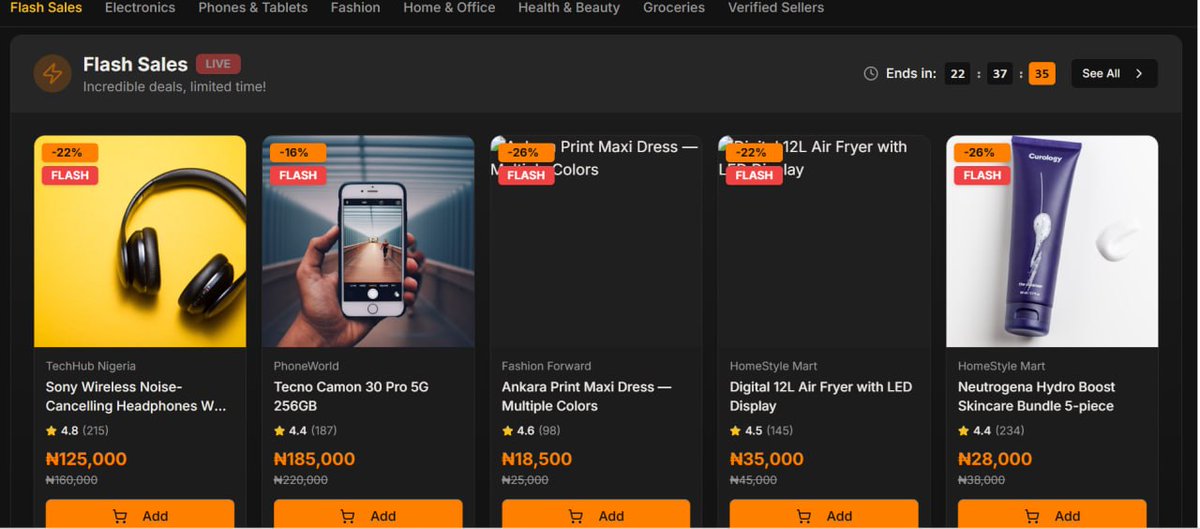
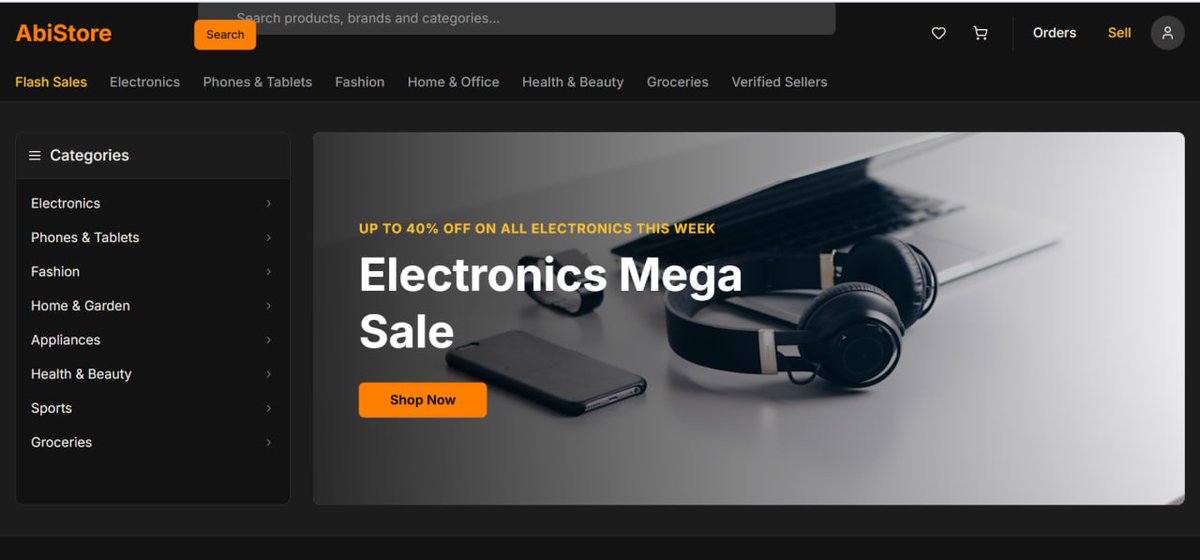
On this Jumia Saga, hobbying, i name it after my daughter. I can't possibly build the business aspect of Jumia. But AI can build the tech part in 2 weeks, even without paying, this is day1, just wasting my time here, you don't have to mind. Its systematic approach not emotional. @echo_vick
IsaacXVoxel tweet mediaIsaacXVoxel tweet mediaIsaacXVoxel tweet mediaIsaacXVoxel tweet media
English
87
7
122
213.5K
Mat Velloso
Mat Velloso@matvelloso·
I don't say this often enough, but @OpenRouter is just awesome. Being able to easily experiment with a bunch of different models is so powerful.
English
5
3
32
6.5K
Emmanuel Adebiyi
Emmanuel Adebiyi@SmartE03·
Most booleans in backend systems are just poorly disguised timestamps. "HasPaid" tells you IF "PaidAt" tells you IF & WHEN Choose wisely.
English
0
0
1
18
Emmanuel Adebiyi retweetledi
Luke Parker
Luke Parker@LukeParkerDev·
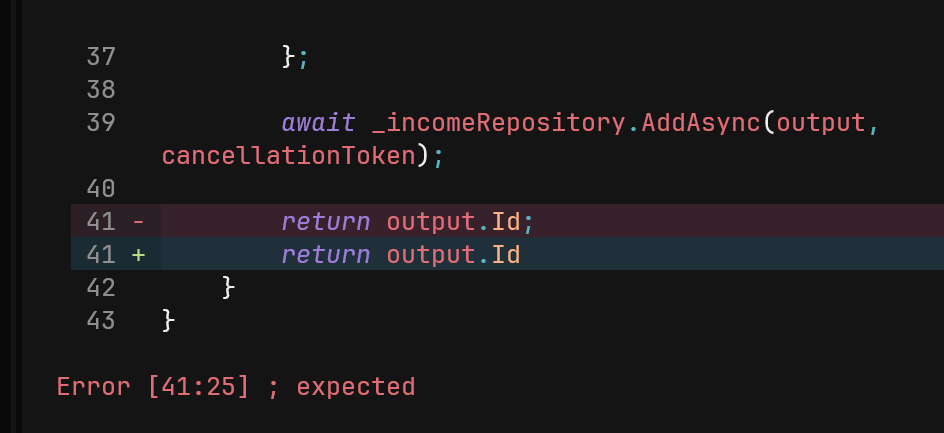
C# devs we're now on the offical rosyln lsp so modern features will work properly! In this update I essentially overhauled our LSP support. Should be a lot more stable and faster.
Luke Parker tweet media
OpenCode Changelog@OpenCodeLog

OpenCode v1.14.21 released. TL;DR: • LSP pull diagnostics for C#/Kotlin • Refactored session compaction for token efficiency • Mistral Small reasoning support • BOM preservation in text tools LSP & Language Servers • Added comprehensive support for LSP pull diagnostics (`textDocument/diagnostic` and `workspace/diagnostic`). ▸ Solves missing diagnostics for languages that rely on client pulls (like C# and Kotlin) by seamlessly merging push and pull diagnostics natively. • Replaced `csharp-ls` with `roslyn-language-server` as the default C# provider, delivering vastly improved, Roslyn-powered language intelligence. Session Compaction • Re-engineered context compaction to use a strict, structured Markdown template that preserves file paths, errors, and task states accurately. • Compaction now seamlessly anchors off previous summaries, intelligently hiding prior compaction turns from the prompt to maximize token budgets. • Turn splitting is now calculated at the message boundary, preventing token overflow when a single large turn exceeds the preservation budget. • Truncates tool output at 2000 characters during summarization passes to prevent context window explosion. Models & Tools • Added reasoning variant support (`reasoningEffort`) for Mistral Small (`mistral-small-latest`, `mistral-small-2603`). • Text tools (`edit`, `write`, `apply_patch`) now strictly preserve Byte Order Marks (BOM) during file read/write round-trips. • The TUI now fails fast with clear errors when attaching to a corrupted or invalid session, preventing hangs. • Fixed project caching for bare Git repositories by correctly resolving the Git common directory. Compare: github.com/anomalyco/open…

English
11
18
266
33K
Paul Shell
Paul Shell@PaulShellDev·
@jeffhollan TIL Jeff Holland is back at Microsoft With a banger! ❤️
English
2
0
4
527
Jeff Hollan
Jeff Hollan@jeffhollan·
Excited to announce the new preview for Microsoft Foundry Agents 🎉! You can now build, run, and deploy your agent using any model, any framework, any harness in the cloud 🧑‍💻 - check out the demo below This is not just any cloud compute environment; it's an agent-optimized platform with: 🖥️ Persistent microVMs - securely scale up and down without losing context 🛠️ Built-in tools (1000+) 👀 Observability and evaluations 👷 Guardrails 🔐 Private networking... and more
English
35
95
669
155.1K
Nikita Bier
Nikita Bier@nikitabier·
Ladies and gentlemen, today we're launching one of our biggest changes to 𝕏 Introducing Custom Timelines This feature allows you to pin a specific topic to your home tab. With support for over 75 topics, you can dive deep into your favorite niche on X. It's powered by Grok's understanding of every post with the algorithm's personalization—meaning every timeline is made just for you. And it works even better when it's a topic you already engage with. This was a huge undertaking across many months, so we're excited for you take it for a spin. We're giving early access to Premium subscribers on iOS (and Android coming very soon).
English
4.5K
2.8K
27.1K
5.2M
Emmanuel Adebiyi retweetledi
Sherwood
Sherwood@shcallaway·
OVERRATED: running tons of agents in parallel; working on too many things at once; perpetual context-switching; opening lots of low-quality PRs that may never land. UNDERRATED: using one or two agents at a time; focusing on the task in front of you; thinking deeply; finishing stuff; making your code works in prod.
English
221
399
5K
246K