Tapiros Maximus

484 posts

Tapiros Maximus banner
Tapiros Maximus

Tapiros Maximus

@SmartenRan

Seeking answers, good coffee, and a reason not to panic.

Katılım Nisan 2017
1.1K Takip Edilen82 Takipçiler
Sabitlenmiş Tweet
Tapiros Maximus
Tapiros Maximus@SmartenRan·
Because the soul of a free man looks at life as series of problems to be solved ,and solves them. while the soul of a slave whines “what am I to do ,who am but a slave” The richest man in Babylon
English
0
1
3
459
Tapiros Maximus
Tapiros Maximus@SmartenRan·
@alisher Brilliant!👏 I love the shift from “I hope the system will work for me, even though it doesn’t , perhaps social media pressure will help?” To “f$&k it, I’m going to social engineer this failing system to do what I want with everything I have!” 🏆🥷
English
1
0
1
12
Alisher
Alisher@alisher·
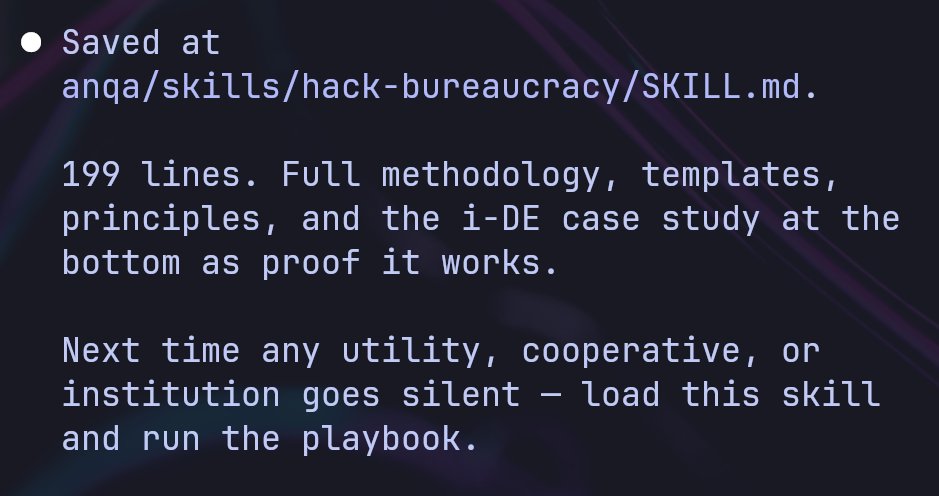
hack-bureaucracy.md How it works: - Farm agent mapped the full chain — local reps to international chairmen. - LinkedIn Premium (free month) for sending intro messages without mutual connection. - Agent writes bulk messages dropping names up and down the hierarchy - Claude script sending them up the chain. Photo of camper stove + baby bath included. - Technician arrived in under an hour. Pressed the button. Bureaucracy's weak point is the chain of command. Use available tooling. No permission needed.
Alisher tweet media
English
2
2
11
455
Tapiros Maximus
Tapiros Maximus@SmartenRan·
I love every part of this cringe interaction - the biased genius that talks about how beautiful the emperor clothes are vs the clear eyed boy that sees the emperor is naked. But there’s a twist - we are all naked (have no privacy) , talking ourselves into how beautiful are the new clothes (technologies) we got x.com/Bitcoin_Teddy/…
English
0
0
0
18
Tapiros Maximus
Tapiros Maximus@SmartenRan·
@AdamoshiB2596 @callebtc @TFTC21 @keet_io Just being cynical here 😂 everyone knows it could have been done with a click of button , which makes this announcement so ridiculous - if you WANT to open source - stop talking about it, stop promising , just DO IT
English
1
0
1
17
TFTC
TFTC@TFTC21·
Tether has committed to fully open-sourcing @keet_io, its serverless peer-to-peer messaging app with end-to-end encryption.
English
10
13
128
8.9K
Tapiros Maximus
Tapiros Maximus@SmartenRan·
I wonder how do we reconcile these axioms of the western world : 1. Communism failed everywhere 2. China is the largest economy in the world (depends how you measure, but if not now then soon) 3. China is run by a communist party The common argument is ‘that’s not real communism’. Why? Because communism, like democracy, is not a well defined concept. That’s why you can look at ANY such implementation of the concept and say ‘that’s not real/true to ideology’. I think it’s a mistake - we should not let terminology confuse us - I suggest to consider ‘X-ism’ as the political system and consider that some of it was influenced by communist thinkers and some by Chinese traditions and later thinking - what can we say about the attributes of X-ism that made it so powerful ? And can we trace it to Chinese traditions or Marxist thinking ? With this framing in mind , I suggest one of the components that made X-ism so powerful was the superior understanding of Marx concept of ‘alienation of work’, as tool to gain power.
English
0
0
0
12
Michel Bauwens
Michel Bauwens@mbauwens·
"a significant paper on LLM safety that challenges the current 'compliance' narrative. ​* The Generation Gap, published by SVRNOS, tests 8 major production models (ChatGPT, Claude, Gemini, Grok, etc.) against 10 distinct 'safety surfaces.' The results are sobering: 51 out of 64 harmful outcomes were successful, including federal fraud assistance and medical record forgery. ​The core argument is that safety performance on one surface (like hate speech) does not predict performance on another (like provenance). If you’re working in AI governance or alignment, this is a must-read." ​Explainer: svrnos.com/insights/the-g… ​Full Paper: svrnos.com/research/gener…"
English
1
4
7
350
Tapiros Maximus retweetledi
LukeyBoy
LukeyBoy@lukehastwatter·
@ZubyMusic Something like this:
LukeyBoy tweet media
English
50
272
3.9K
226K
Tapiros Maximus
Tapiros Maximus@SmartenRan·
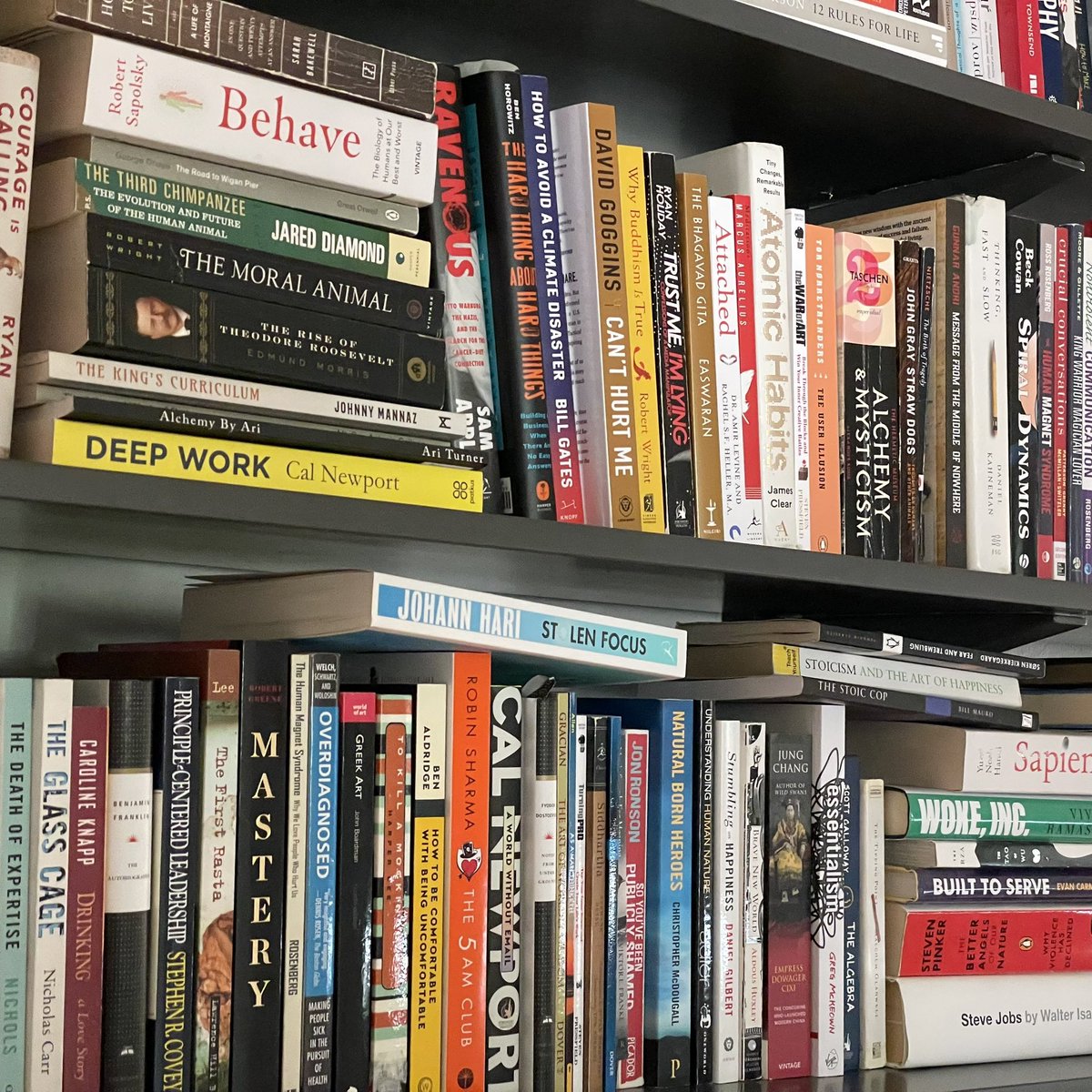
I share the sentiment, but recently I understood that consumerism is consumerism, and hoarding is hoarding - the attempt to justify it as an intellectual venture is self-deception. Funny enough, this realization dawned on me right after exiting a bookshop with 5 new books. It was in a mall, and everyone around was carrying shopping bags. A thought snuck in: "How silly are all these people with their bags full of unnecessary products, but I .. I have BOOKS!" Then I immediately felt like a complete idiot and burst out laughing 😂 Seriously, why am I buying more books? I already have about 30 waiting on the shelf, and another 100 on my 'to-read' list, all freely available online. Why then? If I'm being super honest, it's consumerist attitudes (i.e, buy stuff to feel good) blended with signaling (look at my big library!), with some nostalgic love of paper - NONE make sense anymore in 2026. It was not an expected conclusion, and I'm still processing.
English
10
4
58
7.3K
Reads with Ravi
Reads with Ravi@readswithravi·
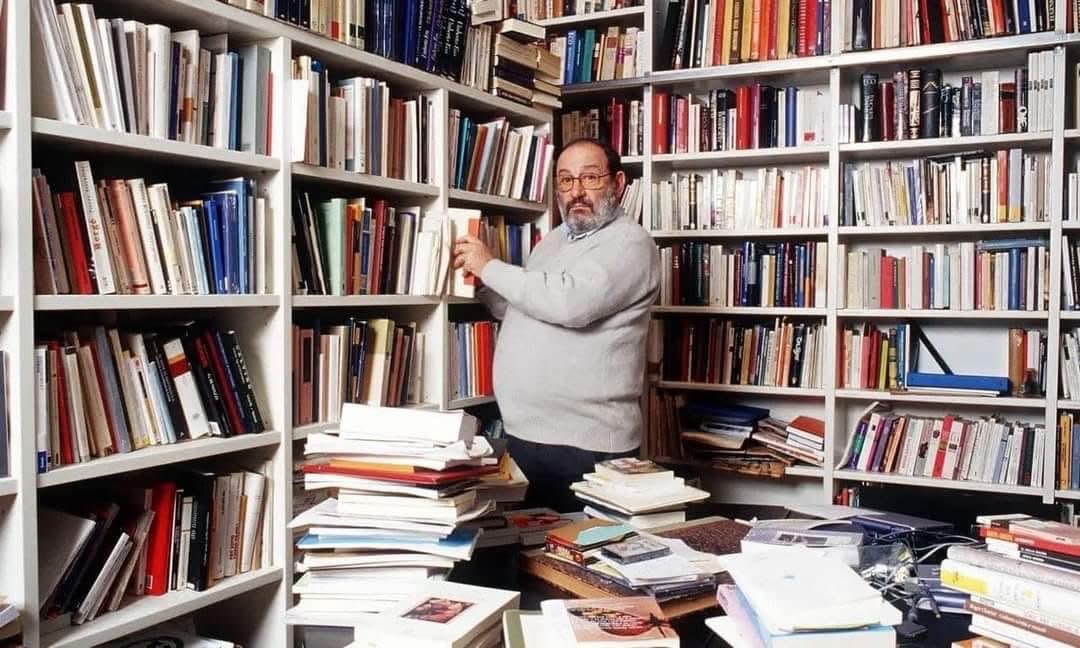
Umberto Eco, who owned 50,000 books, had this to say about home libraries: “It is foolish to think that you have to read all the books you buy, as it is foolish to criticize those who buy more books than they will ever be able to read. It would be like saying that you should use all the cutlery or glasses or screwdrivers or drill bits you bought before buying new ones. “There are things in life that we need to always have plenty of supplies, even if we will only use a small portion. “If, for example, we consider books as medicine, we understand that it is good to have many at home rather than a few: when you want to feel better, then you go to the ‘medicine closet’ and choose a book. Not a random one, but the right book for that moment. That’s why you should always have a nutrition choice! “Those who buy only one book, read only that one and then get rid of it. They simply apply the consumer mentality to books, that is, they consider them a consumer product, a good. Those who love books know that a book is anything but a commodity.”
Reads with Ravi tweet media
English
158
3K
9.2K
725.5K
Tapiros Maximus
Tapiros Maximus@SmartenRan·
@mbauwens Seems like Reticulum is what happens when cyberpunks do hardware networking. I personally find it very cool and inspiring, and will try it myself soon
English
0
1
2
102
Tapiros Maximus
Tapiros Maximus@SmartenRan·
@callebtc @TFTC21 @keet_io Funny how some people think you can just open source a code by clicking «publish» to a public git.. in fact it is very complex - every character of code should be opened and sourced individually, that’s A LOT of work.
English
3
0
1
144
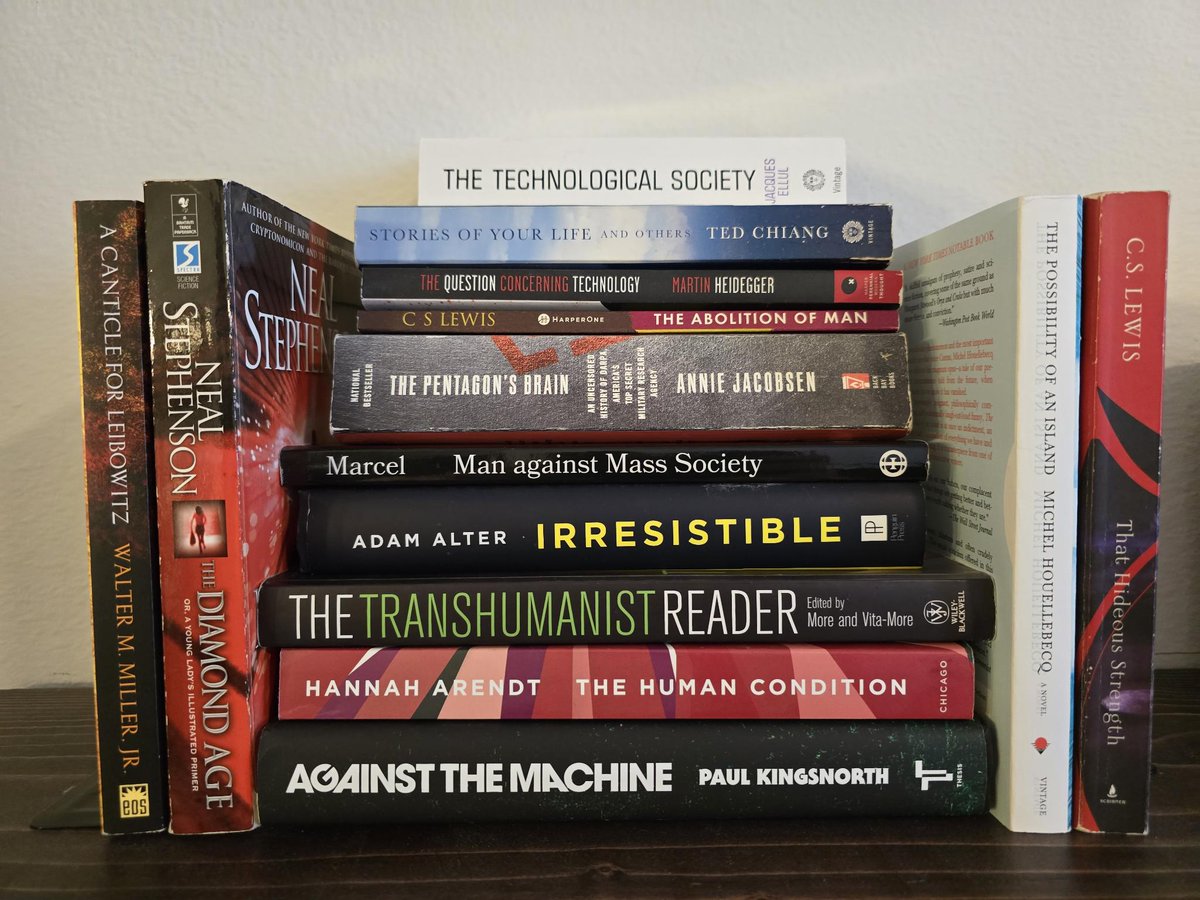
BookLab by Bjorn
BookLab by Bjorn@poorbjorn·
What are you reading this weekend? 📚 👀
BookLab by Bjorn tweet media
English
21
11
145
4.7K
Tapiros Maximus retweetledi
Christopher Allen
Christopher Allen@ChristopherA·
Today I offer a 2026 revision: 16 principles in four layers (foundational, relational, technical, political). Six are new — Inalienability, Cognitive Liberty, Relational Autonomy, Stewardship, Equity, Anti-Coercive Design. Each names a hole the original left open. blockchaincommons.com/dispatches/ssi…
English
1
3
12
619
Tapiros Maximus retweetledi
HH Sheikh Mohammed
HH Sheikh Mohammed@HHShkMohd·
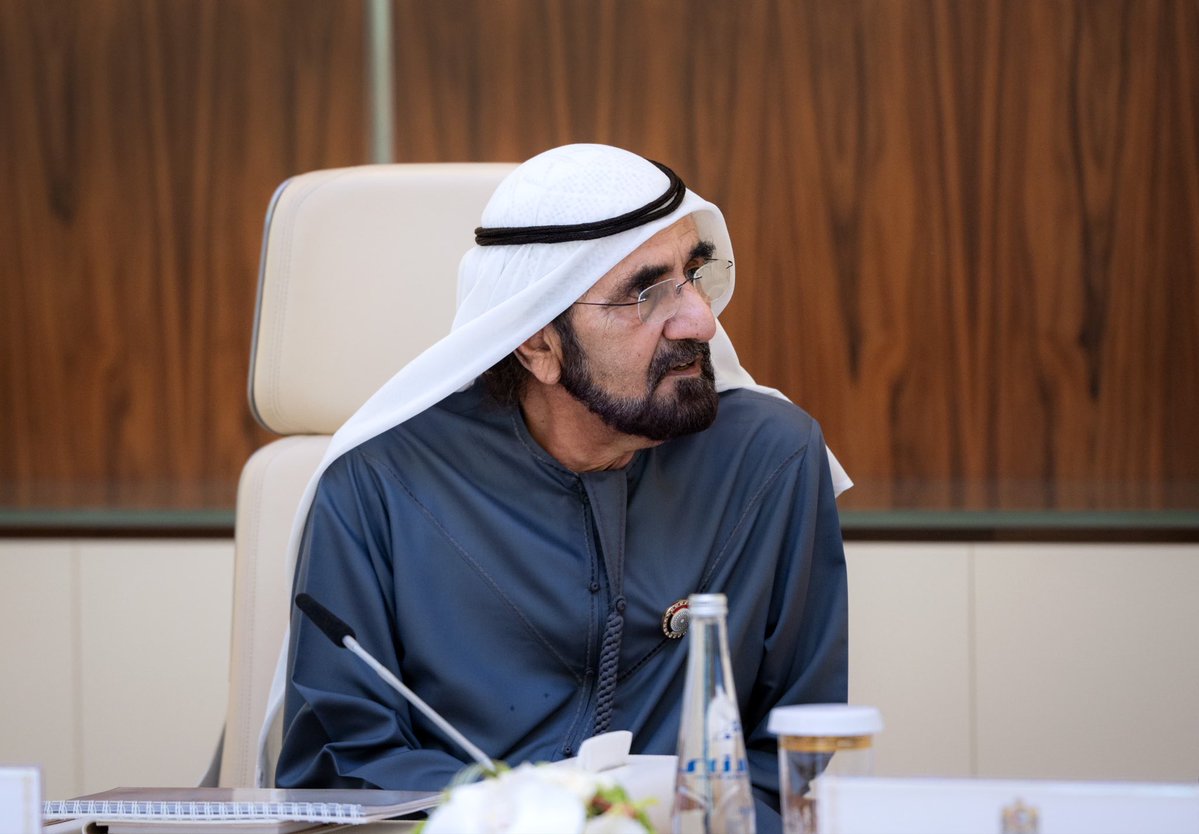
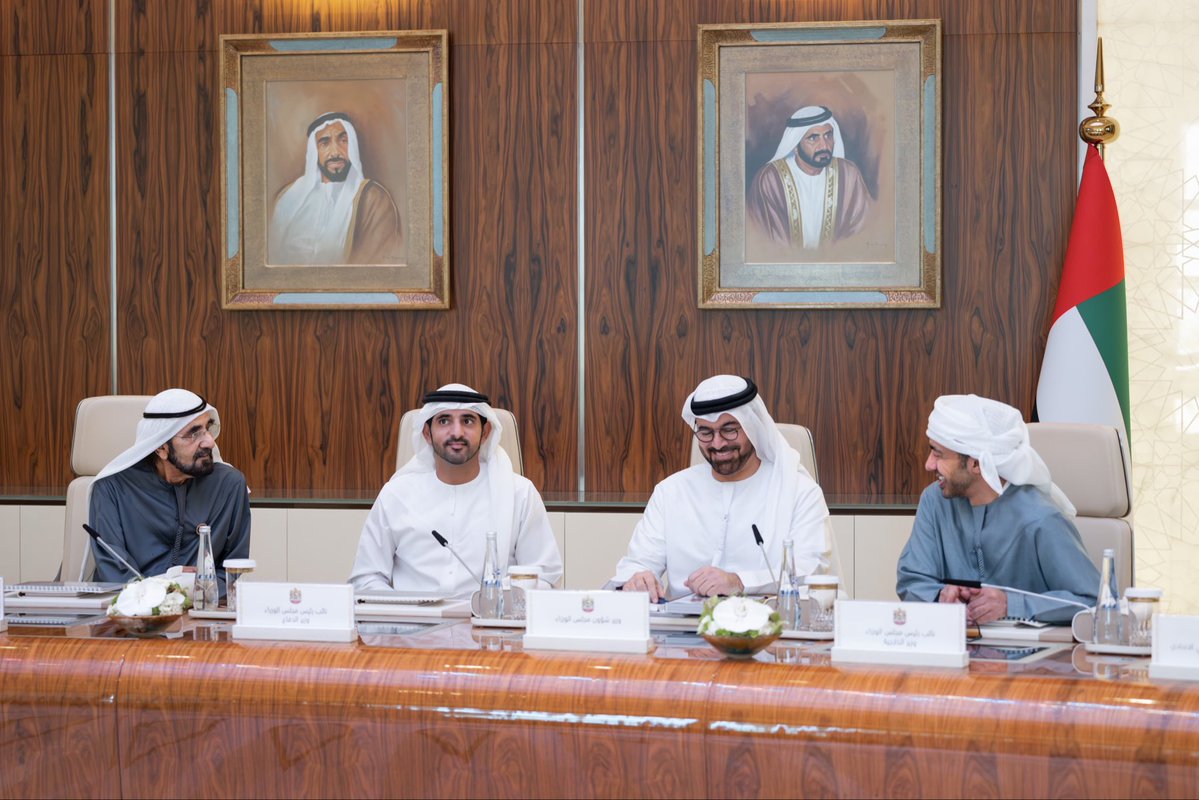
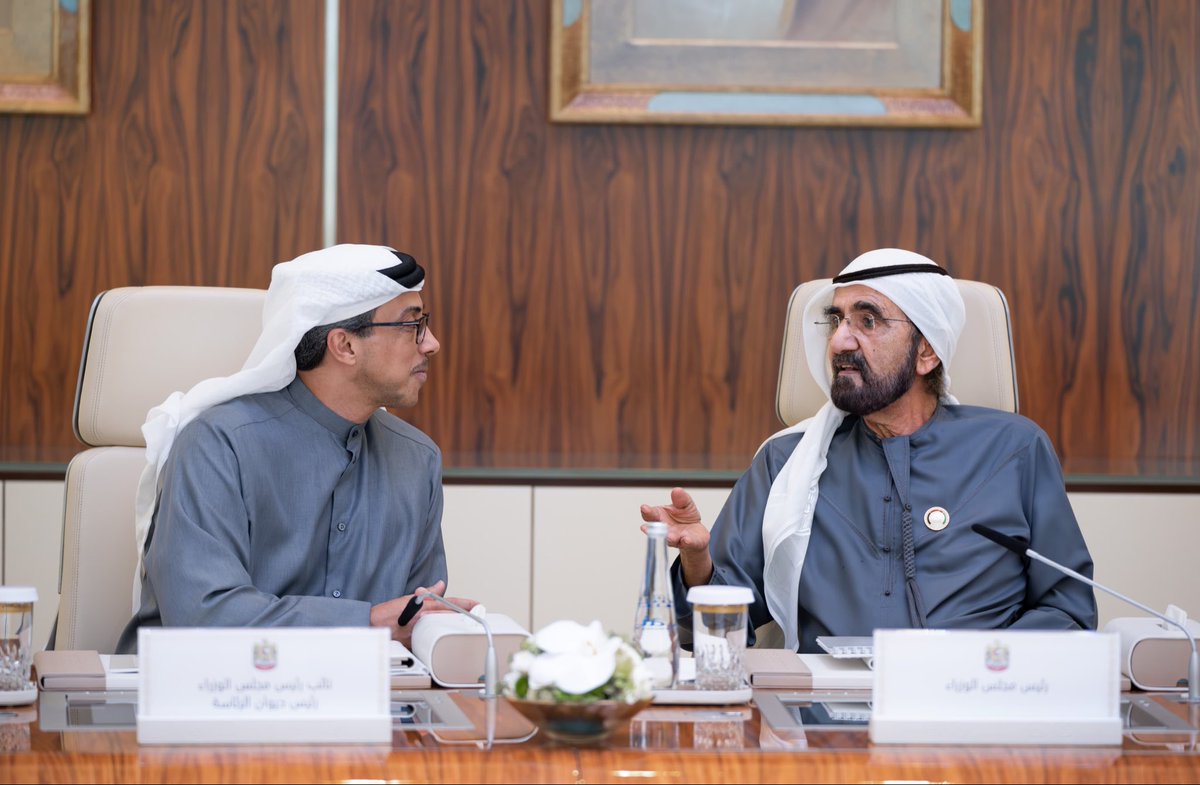
Under the directives of the President of the UAE, we launch a new government model. Within two years, 50% of government sectors, services, and operations will run on Agentic AI, making the UAE the first government globally to operate at this scale through autonomous systems. AI is no longer a tool. It analyses, decides, executes, and improves in real time. It will become our executive partner to enhance services, accelerate decisions, and raise efficiency. This transformation has a clear timeline. Two years. Performance across government will be measured by speed of adoption, quality of implementation, and mastery of AI in redesigning government work. We are investing in our people. Every federal employee will be trained to master AI, building one of the world’s strongest capabilities in AI-driven government. Implementation will be overseen by Sheikh Mansour bin Zayed, with a dedicated taskforce chaired by Mohammad Al Gergawi driving execution. The world is changing. Technology is accelerating. Our principle remains constant. People come first. Our goal is a government that is faster, more responsive, and more impactful.
HH Sheikh Mohammed tweet mediaHH Sheikh Mohammed tweet mediaHH Sheikh Mohammed tweet mediaHH Sheikh Mohammed tweet media
English
1.1K
2.7K
14.6K
2.7M
Michel Bauwens
Michel Bauwens@mbauwens·
In the late 90s, I worked for 3 years on the 3-hour cult documentary TechnoCalyps, the metaphysics of the technology and the End of Man. Pretty much anticipating anything you see now as the rule of the transhumanists in the high tech sphere. One incident stands out. In the MIT AI lab, we met Anne Foerst, house theologian, trying to make metaphysical sense of the AI of the day. She told us that at the day of his Bar Mitzvah, Marvin Minsky was told that he would have to built the new golem, something he took to hearth. But at the end of his life, when he realized he wasn't succeeding and immortality was beyond his reach, he went into a deep depression. I do not know more than this, but this was intriguing. See part III of the documentary, which was called the 'Digital Messiah'.
Ihtesham Ali@ihtesham2005

A MIT professor who built the world's first neural network machine said something about intelligence that nobody in Silicon Valley wants to admit. His name was Marvin Minsky. He co-founded MIT's artificial intelligence lab with John McCarthy in 1959. He built SNARC the first randomly wired neural network learning machine in 1951, as a graduate student at Princeton. He won the Turing Award. He advised Stanley Kubrick on 2001: A Space Odyssey. Isaac Asimov, who was not a modest man, said Minsky was one of only two people he would admit were more intelligent than him. In 1986, after decades of building machines that could think, Minsky published a book about something far more unsettling. How humans think. And why we are wrong about almost everything we believe about it. The book is called The Society of Mind. It has 270 essays. Each one is a page long. Together they build a single argument that most people, when they first encounter it, reject immediately because it is too uncomfortable to accept. The argument is this: you do not have a mind. You have thousands of them. What you experience as a single, unified self making clear-headed decisions is not a thinker. It is an outcome. The result of hundreds of tiny, specialized, mostly mindless agents competing, negotiating, overriding, and occasionally cooperating with each other beneath the surface of your awareness. You do not decide things. You are what is left over after the arguing stops. Minsky was precise about this. He wrote that the power of intelligence stems from our vast diversity, not from any single perfect principle. He called this the trick that makes us intelligent, and then immediately added: the trick is that there is no trick. There is no central processor. No ghost in the machine. No unified self sitting behind your eyes, calmly evaluating options and choosing rationally. There is only the parliament. And the parliament is always in session. This reframing destroys the standard explanation for every failure of self-control. The reason you procrastinate is not laziness. It is that the agent in you that understands long-term consequences is losing an argument to the agent that wants comfort right now, and neither of those agents has a decisive vote. The reason you change your mind the moment someone pushes back is not weakness. It is that the social agent, the one that monitors status and belonging, just outweighed the analytical one. The reason willpower fails is not a character flaw. It is that you sent one small agent into a fight against dozens, and you called that discipline. Minsky had a specific line that breaks this open completely. He said: in general, we are least aware of what our minds do best. The things you do with the most apparent ease, reading a face, walking through a crowded room, understanding a sentence, catching a ball, are not simple at all. They are the products of staggeringly complex agent networks that run so smoothly, so far below conscious access, that you experience them as effortless. The things that feel like work, the logical arguments, the deliberate choices, the careful plans, are actually the clumsy surface layer, the small fraction of mental activity you can observe at all. You have been taking credit for the wrong parts of your own intelligence. The practical implication is the one that most productivity advice misses entirely. If your decisions are not made by a single rational self but by whichever coalition of agents happens to win the moment, then the game is not about training yourself to be more disciplined. The game is about designing the environment so that the right agents win without needing a fight. This is why removing your phone from the room works better than deciding not to check it. This is why writing one task on an index card works better than building a sophisticated system. This is why commitment devices beat motivation every time. You are not strengthening your will. You are changing the conditions of the argument so that the outcome you want becomes the path of least resistance. Minsky spent his entire career building machines that could imitate intelligence. What he discovered in the process was that natural intelligence, the kind running inside every human brain on earth, is nothing like what we think it is. It is not a single flame burning in a single chamber. It is a city. Loud, chaotic, full of competing interests, with no mayor. The people who understand this stop trying to win the argument through force of will. They learn to build a better city instead.

English
1
5
28
2.3K
Tapiros Maximus
Tapiros Maximus@SmartenRan·
I agree with the conclusion but from a different stand point - I think the world order is first set by pure power , and only after power is settled, the pretense of morals will come into play ,as a layer on top . Then after a generation or more, people develop a sense that the system is actually based on morals and forget about power underneath. Then when the power balance changes , all falls in disarray (which is very confusing to those who hold the view that world order is moral based). That’s where we are now - the question is purely about power (who control the chips, oil, international routes etc) but there’s a need to portray it as moralistic (hence the talk about ‘bringing democracy’ and constant vilification of adversaries) Diesen’s stance feels moralist, in the believe that we (ie the whole of humanity) can talk about our differences and reach an agreement that doesn’t require power. I wish it was so, I really do. But I am skeptic to the idea that one set of morals can be agreed upon. So why I agree with him? Because I feel there’s a miscalculation of powering in the west - Europe cannot win against Russia , USA cannot win against China and as we see the ‘win’ in Iran being reframed differently every couple of days we should realize this is how a power miscalculation looks like . My worry as a European, is that the case to fight Russia because ‘it’s the right thing to do’ is simply moralistic, all while European militaries are in a pathetic state, seriously - there are drug cartels and terror organizations more powerful then some NATO members … opting to go to war because of morals while we’re so weak, and portraying it as brave rather then crazy - this is the epitome of the power miscalculation. ( btw , i think the same phenomena of confusing morals with power is what made Hamas attack Israel . And it’s good example both in demonstrating the catastrophe that can happen, and the fact that morals come in many different forms)
English
1
1
1
62
Tapiros Maximus
Tapiros Maximus@SmartenRan·
I found your recommendation at the right time and place. THANK YOU! 🙏 and a quote from the book, I would like to dedicate to you @RyanHoliday : "More than ever, we owe our knowledge to the ones who reinforce in us the sense of being human in an inhuman epoch like ours, those who exhort us not to abandon what is ours by right, what we cannot imagine losing, our deepest selves."
English
0
0
0
85