Smit Patel, MD, MPH

1K posts

Smit Patel, MD, MPH banner
Smit Patel, MD, MPH

Smit Patel, MD, MPH

@SmitdPat

Neuro-endovascular Surgeon at Saint Francis Health System, Tulsa; Former Residency at @UConnHealth; Former Fellowships at @UCLAHealth & @hartfordhosp

Tulsa, OK Katılım Ağustos 2022
420 Takip Edilen252 Takipçiler
Smit Patel, MD, MPH retweetledi
Amit Chaudhari MD
Amit Chaudhari MD@NeuroIRdoc·
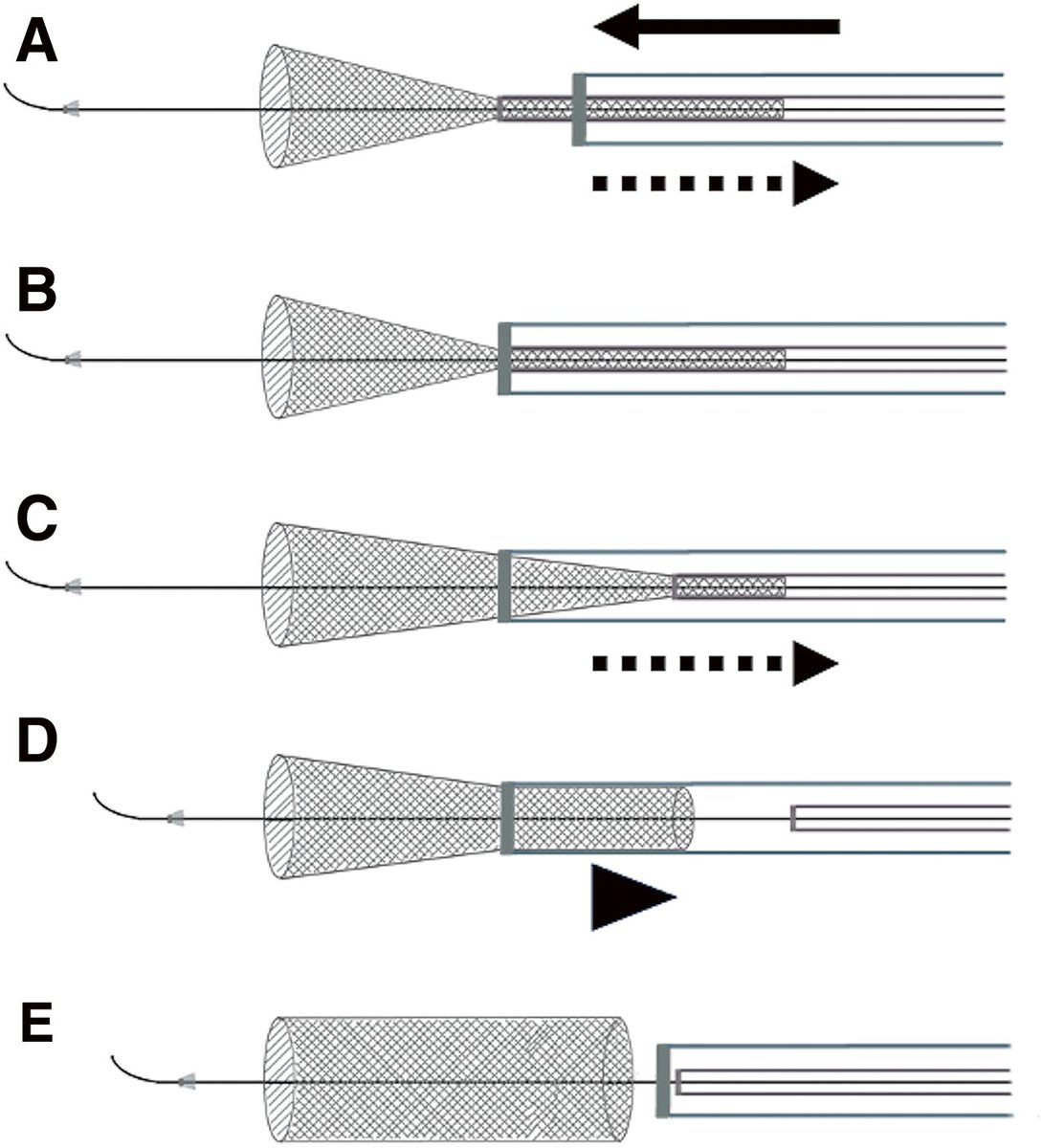
Tenzingplasty 💪 🎉 "All treated segments had improved narrowing, with 78 (95.1%) having residual narrowing <50%. No procedural complications occurred." jnis.bmj.com/content/18/5/1…
English
0
1
1
297
Smit Patel, MD, MPH retweetledi
Manuel Moquillaza
Manuel Moquillaza@mmoquillazaACV·
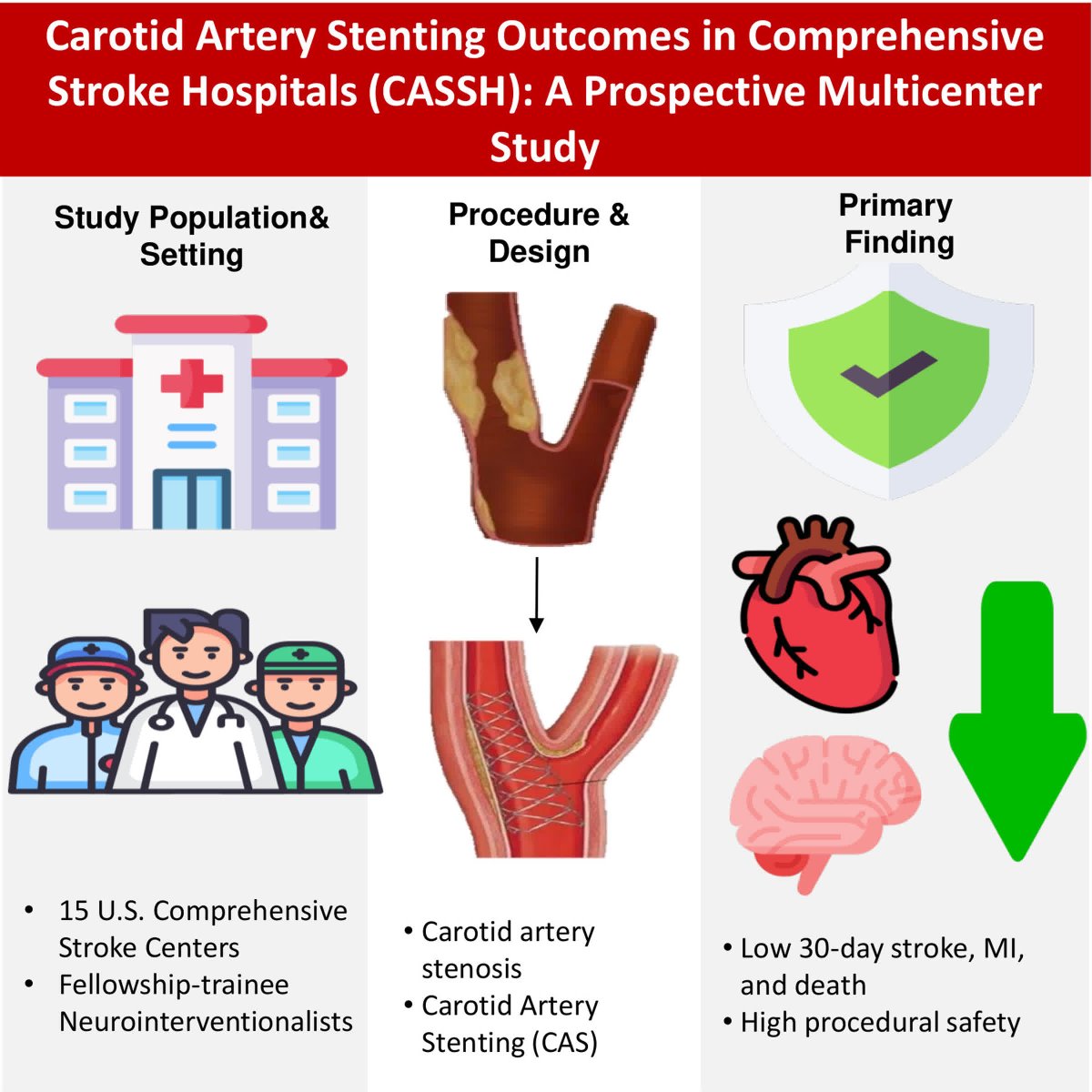
🧠 ESTENOSIS CAROTÍDEA ASINTOMÁTICA: ¿Cuándo revascularizar en 2026? 1️⃣ El riesgo de ictus ipsilateral en estenosis ≥70% bajo terapia médica intensiva es ~1.5%/año (CREST-2, NEJM 2026) — mayor de lo estimado por estudios observacionales previos (0.5–1.0%/año). 2️⃣ CREST-2 (n=2485): Stenting redujo el evento primario vs. terapia médica sola (2.8 vs. 6.0%; NNT=31). CEA no alcanzó significancia estadística (3.7 vs. 5.3%). Ambas técnicas mostraron tasas perioperatorias similares (~1.3–1.5%). 3️⃣ La revascularización en estenosis 70–99% asintomática se sugiere SOLO si: expectativa de vida ≥5 años + riesgo perioperatorio de ACV/muerte <1.5% (umbral actualizado post-CREST-2). Estenosis 50–69%: terapia médica intensiva sin intervención. 4️⃣ Marcadores de alto riesgo que individualizan la decisión: émbolos silentes en TCD, infarto silente ipsilateral en neuroimagen, hemorragia intraplaca en RM (HR 7.9), placa ecolucentе, área negra yuxtacanal >10mm² (stroke rate 5%/año). 5️⃣ La terapia médica intensiva es la base universal: estatinas (LDL <70mg/dL), antiagregación, control PA <130mmHg, cesación tabáquica y actividad física. Sin esto, ninguna revascularización optimiza su beneficio real. 🏥 Clínica Ricardo Palma — Centro Avanzado de Stroke | Lima, Perú ✍🏽 Dr. Manuel A. Moquillaza Valle | Neurólogo Vascular e Intervencionista | CMP 54060 / RNE 25595 #IctusIsquémico #EstenisisCarotídea #NeurologíaVascular #CREST2 #StrokePrevention
Español
1
32
105
5.3K
Smit Patel, MD, MPH retweetledi
NEJM
NEJM@NEJM·
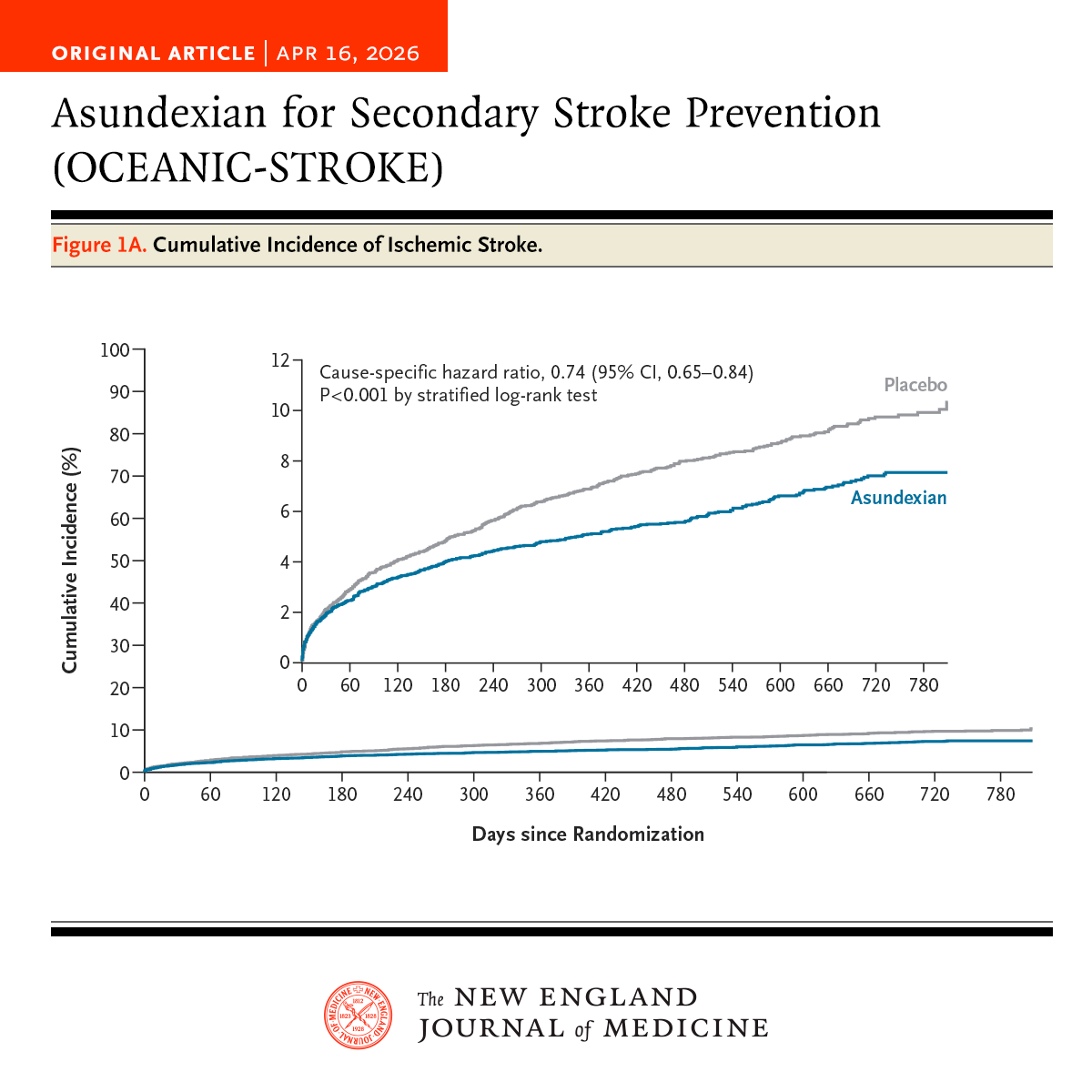
In the phase 3 OCEANIC-STROKE trial involving patients with noncardioembolic ischemic stroke or high-risk TIA, asundexian added to antiplatelet therapy led to a lower risk of ischemic stroke without increasing major bleeding. Full trial results: nejm.org/doi/full/10.10… Editorial: Asundexian for Noncardioembolic Ischemic Stroke nejm.org/doi/full/10.10…
NEJM tweet media
English
6
135
321
48.4K
Smit Patel, MD, MPH retweetledi
Amit Chaudhari MD
Amit Chaudhari MD@NeuroIRdoc·
More evidence to show that waiting for 7 days after stroke to stent a proximal carotid lesion is NOT necessary "Delaying the ICAS according to current FDA recommendations may not be necessary when ICAS is indicated." jnis.bmj.com/content/18/4/9…
Amit Chaudhari MD tweet media
English
0
5
16
1.2K
Smit Patel, MD, MPH retweetledi
Stephan A Mayer
Stephan A Mayer@stephanamayer·
Useful information for neurointensivists and neurohospitalists. When working up autoimmune CNS inflammatory syndromes, the Kappa Free Light Chain Index can distinguish MOGAD (very low to undetectable), NMOSD (moderately elevated), and MS (extremely elevated). KFLCI is calculated as the ratio of CSF versus plasma levels, with elevated values indicating intrathecal B-cell mediated antobody sysnthesis, a key feature of MS. neurology.org/doi/10.1212/WN…
English
0
21
40
2.2K
Smit Patel, MD, MPH retweetledi
Stephan A Mayer
Stephan A Mayer@stephanamayer·
Endovascular vs Medical Treatment of Basilar Artery Occlusion @JAMANeuro “At 3 years, the clinical benefit of EVT in patients with acute BAO was durable, with substantially better functional outcomes and reduced mortality compared with medical management. These results reinforce EVT as the standard of care for BAO and support broader implementation and timely access to thrombectomy services.” #curingcoma jamanetwork.com/journals/jaman…
English
1
13
38
2.2K
Smit Patel, MD, MPH retweetledi
Shadi Yaghi
Shadi Yaghi@ShadiYaghi2·
The new AHA lipid guidelines are out, recommending a target LDL < 55 mg/dL in very high risk patients (e.g. symptomatic ICAD or ECAD). This can be achieved by high dose statin, or adding ezetemibe, PCSK9 inhibitors, or other treatments to high dose statin. ahajournals.org/doi/10.1161/CI…
Seemant Chaturvedi@ChaturvediNeuro

Patients with intracranial athero should now be targeted to LDL<55 mg/dl, given the new ACC/AHA lipid guidelines. This should be adopted in CAPTIVA and other ongoing trials, as well as routine practice @BrianHoh1 @ESOstroke @WorldStrokeOrg @AHAScience

English
2
36
88
10.9K
Smit Patel, MD, MPH retweetledi
JNIS
JNIS@JNIS_BMJ·
🧠💉 In TNK-treated LVO stroke patients eligible for EVT, thrombus migration occurred in 36% and made EVT impossible in 26% vs 4% without migration. Thrombus migration significantly reduced rates of complete reperfusion but did not affect functional outcomes. Read more here: bit.ly/4lpk658 @jildazz
JNIS tweet media
English
6
37
116
7.5K
Smit Patel, MD, MPH retweetledi
Dr sthanu subramanian
Dr sthanu subramanian@drsthanus·
This is a 15 years old male. What can be seen here?
Dr sthanu subramanian tweet media
English
13
15
114
30.8K
Smit Patel, MD, MPH retweetledi
NEJM
NEJM@NEJM·
Ischemic stroke, defined as a central nervous system injury caused by loss of blood flow, is most often due to arterial thromboembolism. Evaluation should include relevant blood tests and cardiovascular and cardiac investigations (seen in table). Learn more: nej.md/3OFpJ2C
NEJM tweet media
English
0
75
244
19.9K
Smit Patel, MD, MPH retweetledi
Jason Davies, MD,PhD
Jason Davies, MD,PhD@JMDaviesMDPhD·
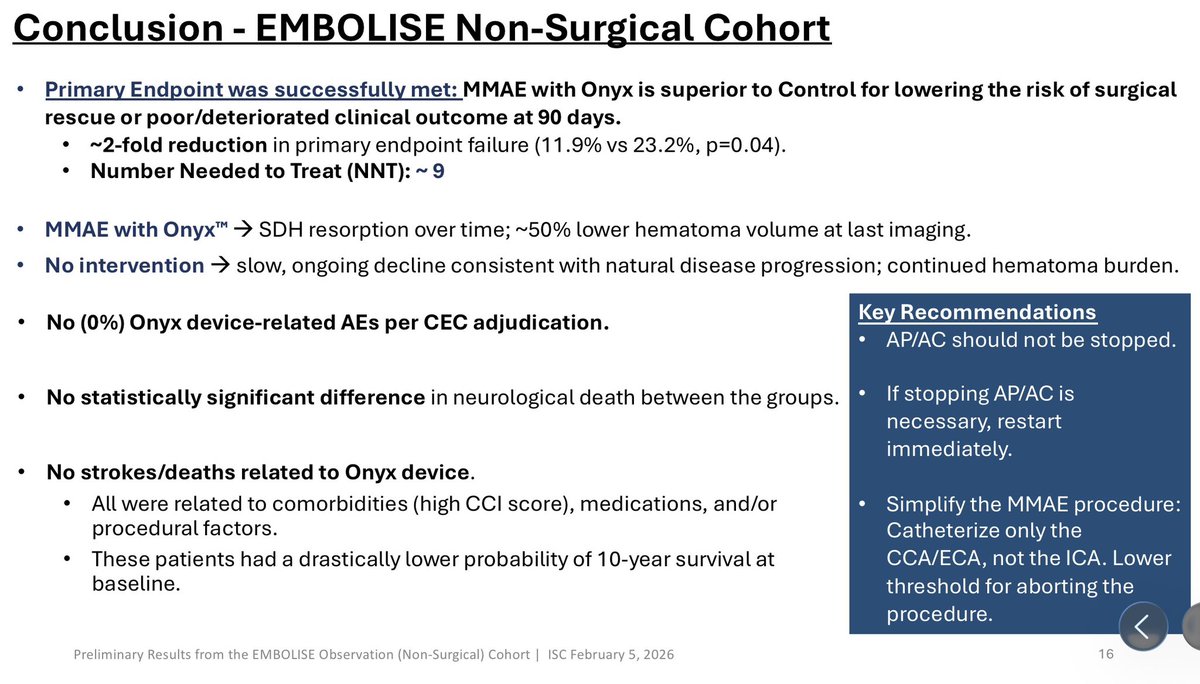
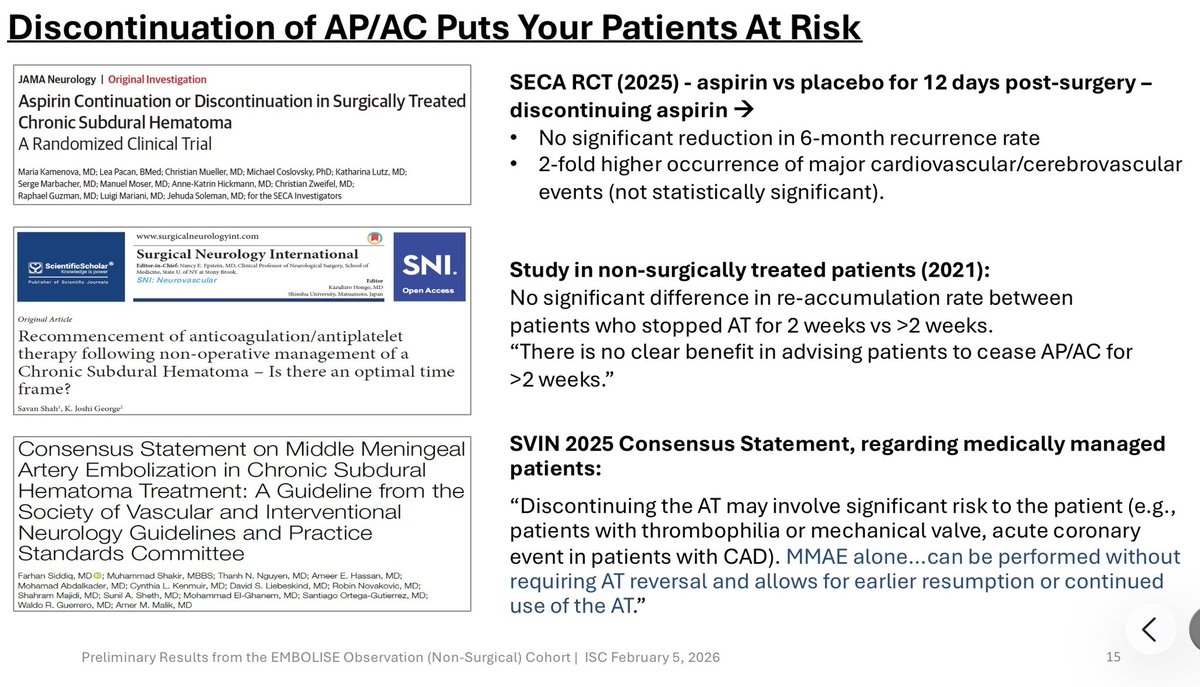
#EMBOLISE2 Observation cohort showed that we need to keep our SDH patients on AC/AP. High baseline rates of comorbidity mean they suffer if we stop their meds. #ISC26
Jason Davies, MD,PhD tweet mediaJason Davies, MD,PhD tweet media
English
2
11
27
5.1K