
Wiep Klaas Smits

13.9K posts

Wiep Klaas Smits banner
Wiep Klaas Smits

Wiep Klaas Smits

@SmitsLab

Assoc. prof. @LUMC_Leiden/CMAT. Cdiff, DNA replication, AMR, microbiome, anaerobes. Clostpath SC. Education officer ESGCD. Also: @smitslab.bsky.social

Leiden, Nederland Katılım Ağustos 2015
2.4K Takip Edilen2.3K Takipçiler
Sabitlenmiş Tweet
Wiep Klaas Smits
Wiep Klaas Smits@SmitsLab·
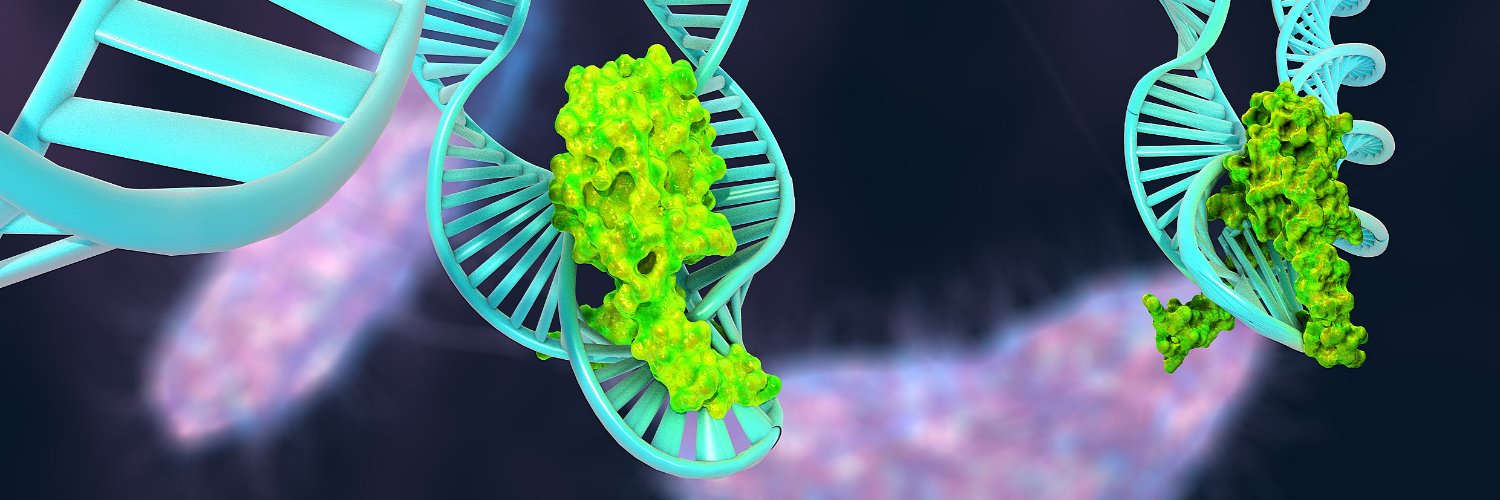
🚨Publication alert! Stoked to report the structural basis for activity of a novel class of antimicrobials targeting Gram positive priority pathogens in @NatureComms. There is something for everyone on this paper; highlights 👇 1/9 doi.org/10.1038/s41467…
English
1
1
4
386
Wiep Klaas Smits
Wiep Klaas Smits@SmitsLab·
New bookchapter published! The book Clostridioides difficile has a chapter on Nanoluciferase use by Jeroen Corver, Ana Paiva and myself: #toc" target="_blank" rel="nofollow noopener">link.springer.com/book/10.1007/9… Also check out the contributions of all the other experts in this volume!
English
0
2
2
235
Wiep Klaas Smits retweetledi
Cell Host & Microbe
Cell Host & Microbe@cellhostmicrobe·
S. copri keeps pace with modern lifestyles Subset of Segatella copri strains have acquired an additional oxygen regulator via horizontal gene transfer, which confers increased oxygen tolerance. These strains are more prevalent in industrialized countries cell.com/cell-host-micr…
Cell Host & Microbe tweet media
English
0
7
17
1.6K
Wiep Klaas Smits retweetledi
good papers
good papers@paperperday·
BisCEET: A Visual Browser for Biosynthetic Gene Clusters Aiding in the Identification of Natural Product Variants and Distinct Tailoring Enzymes "a tool for the comparison of related BGCs and visualization of core and novel tailoring enzymes" pubs.acs.org/doi/10.1021/ac…
good papers tweet media
English
2
9
36
2.3K
Wiep Klaas Smits retweetledi
Harry Low’s Lab
Harry Low’s Lab@thelowlab·
Most bacteria remain uncultured and don’t grow in the lab.. to address this am excited to share EDEN - an enhanced domestication method to grow uncultured bacteria & new diversity. Using EDEN we isolate a new species active against MDR pathogens.. doi.org/10.1093/ismeco…
Harry Low’s Lab tweet media
English
6
72
299
18.5K
Wiep Klaas Smits retweetledi
Prof. Nikolai Slavov
Prof. Nikolai Slavov@slavov_n·
Bacteria are full of diverse molecular tricks. This Science article reports an interesting one that is being misrepresented by news coverage, including the coverage in Science. The study describes an enzyme complex that synthesizes alternating dinucleotide repeat DNA as part of an immune response. Protein templating DNA is a cool observation, even if the sequence is only a repeating dinucleotide. The headline-grabbing takeaway is the mechanism of the Drt3b subunit. While its partner, Drt3a, uses a canonical RNA template (reverse transcription), Drt3b synthesizes the complementary strand in the absence of a nucleic acid template. Instead, it uses specific amino acid residues (a glutamate and an arginine) to stabilize and "select" the incoming dNTPs. It is tempting to view this as a radical shift in our understanding of information transfer, a "protein-templated" genetic sequence. However, we should be cautious with the "paradigm shift" narrative. Why this isn't "rewriting" the Genetic Code: Despite claims in the news coverage, this finding does not represent a new form of hereditary information transfer. This is not a protein "reading" itself to create a complex message; rather, it is a highly specialized structural constraint. The protein is essentially a "stuttering" machine, physically keyed to produce a simple, repetitive sequence. The "information" is hard-coded into the protein's fold to perform a single, specific defensive task, rather than acting as a general-purpose template for diverse genetic messages. The Parallel to tmRNA: This observation is not entirely unprecedented when we look at how bacteria handle biochemical "dead ends." It reminds me of transfer-messenger RNA (tmRNA). In trans-translation, when a ribosome stalls on a broken mRNA, the tmRNA molecule steps in to provide both the tRNA component and a short mRNA "tag" to rescue the ribosome: - The "Non-Standard" Template: Much like tmRNA provides an external sequence to fix a stalled process, the DRT3 ncRNA and the Drt3b protein provide "internal" instructions to create DNA where no genomic template exists. - Specialized Rescue: Both mechanisms are niche "emergency" responses, one for proteostasis (tmRNA) and one for viral defense (DRT3). In the end, this discovery doesn't replace our understanding of the genetic code; it expands the "toolbox" of how cells can synthesize polynucleotides when the standard rules don't apply. It is a beautiful reminder that in the microbial world, if a chemical shortcut is possible, evolution has likely found it.
Prof. Nikolai Slavov tweet media
English
6
94
372
29.6K
Wiep Klaas Smits
Wiep Klaas Smits@SmitsLab·
Genomic Analysis of Community-Associated C. difficile Infection Demonstrates Integration With National and International Strain Clusters and Limited Direct Transmission academic.oup.com/jid/article-ab…
English
0
0
0
120
Wiep Klaas Smits
Wiep Klaas Smits@SmitsLab·
EM crowd: for a project we are looking for Quantifoil R0.6/1 copper grids that are currently unavailable from the manufacturer. If anybody has any stock to spare, please let me know! #cryoEM
English
0
0
0
156
Wiep Klaas Smits retweetledi
Trends in Microbiology
Trends in Microbiology@TrendsMicrobiol·
The impact of artificial sweeteners on bacterial physiology and the microbiome dlvr.it/TS1SjC
Trends in Microbiology tweet media
English
0
24
61
3.4K