smol ai (follow @latentspacepod for ainews)

498 posts

smol ai (follow @latentspacepod for ainews)

smol ai (follow @latentspacepod for ainews)

@Smol_AI

latent.space Katılım Şubat 2023
6 Takip Edilen23.6K Takipçiler
Ben Fleming
Ben Fleming@benfleming__·
hey guys at @Smol_AI @swyx absolutely love ai news it’s my go to! seems my ai news emails aren’t coming through - I have unsubscribed and resubscribed to no success I love this service so can help to fix if needed!
English
1
0
0
381
smol ai (follow @latentspacepod for ainews) retweetledi
Thomas Bustos
Thomas Bustos@ThoBustos·
@swyx built this inspired from @Smol_AI . fully opensource. react + python + pydantic + vercel + supabase. opik + langgraph for logs, costs, tokens, agentic workflows, traces and prompt versioning. will do some technical writings around this. two repos. the engine to generate issues and my personal website for frontend. vibe coded with intention. vibe engineered I guess. clean repos architectures. repos below 👇
Thomas Bustos tweet mediaThomas Bustos tweet mediaThomas Bustos tweet media
English
1
1
6
1.9K
smol ai (follow @latentspacepod for ainews) retweetledi
John Thilén
John Thilén@JohnThilen·
@Suhail news.smol.ai/issues/ has the integrity to say "not much happened today". I curate my filter bubble almost fanatically, but @Smol_AI still saves me a boatload of time.
English
0
2
5
1.6K
smol ai (follow @latentspacepod for ainews)
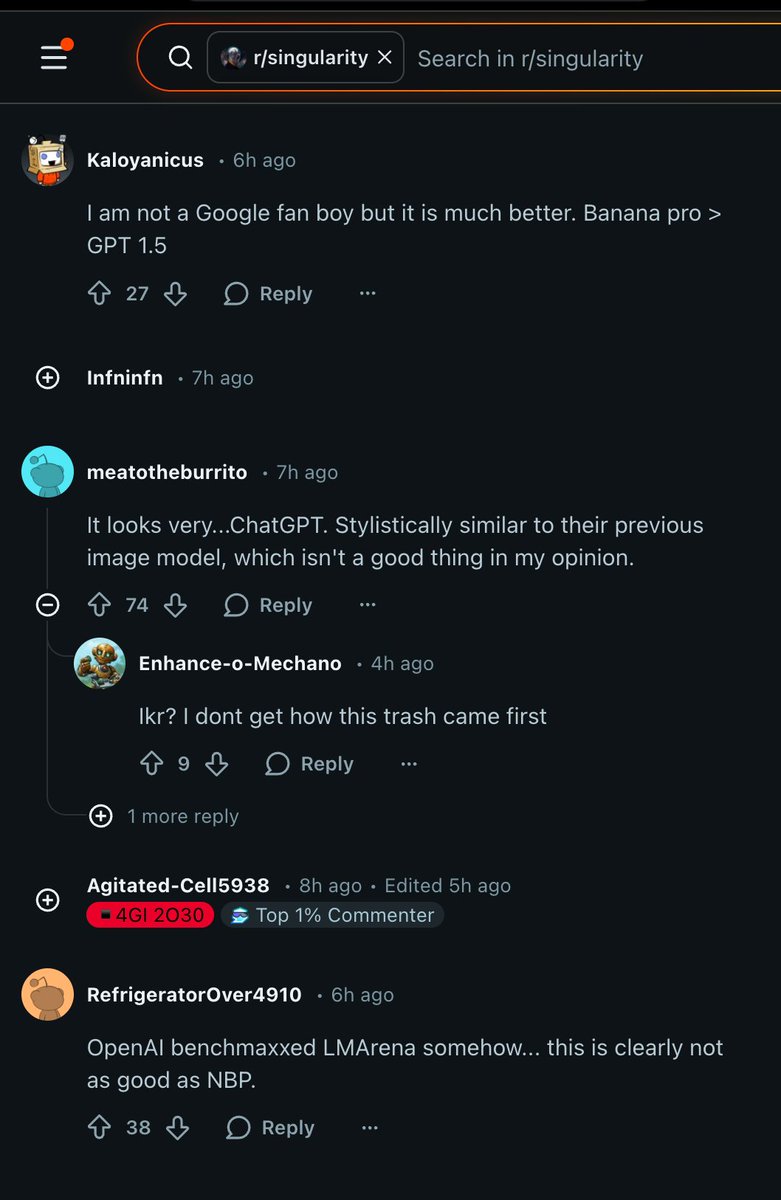
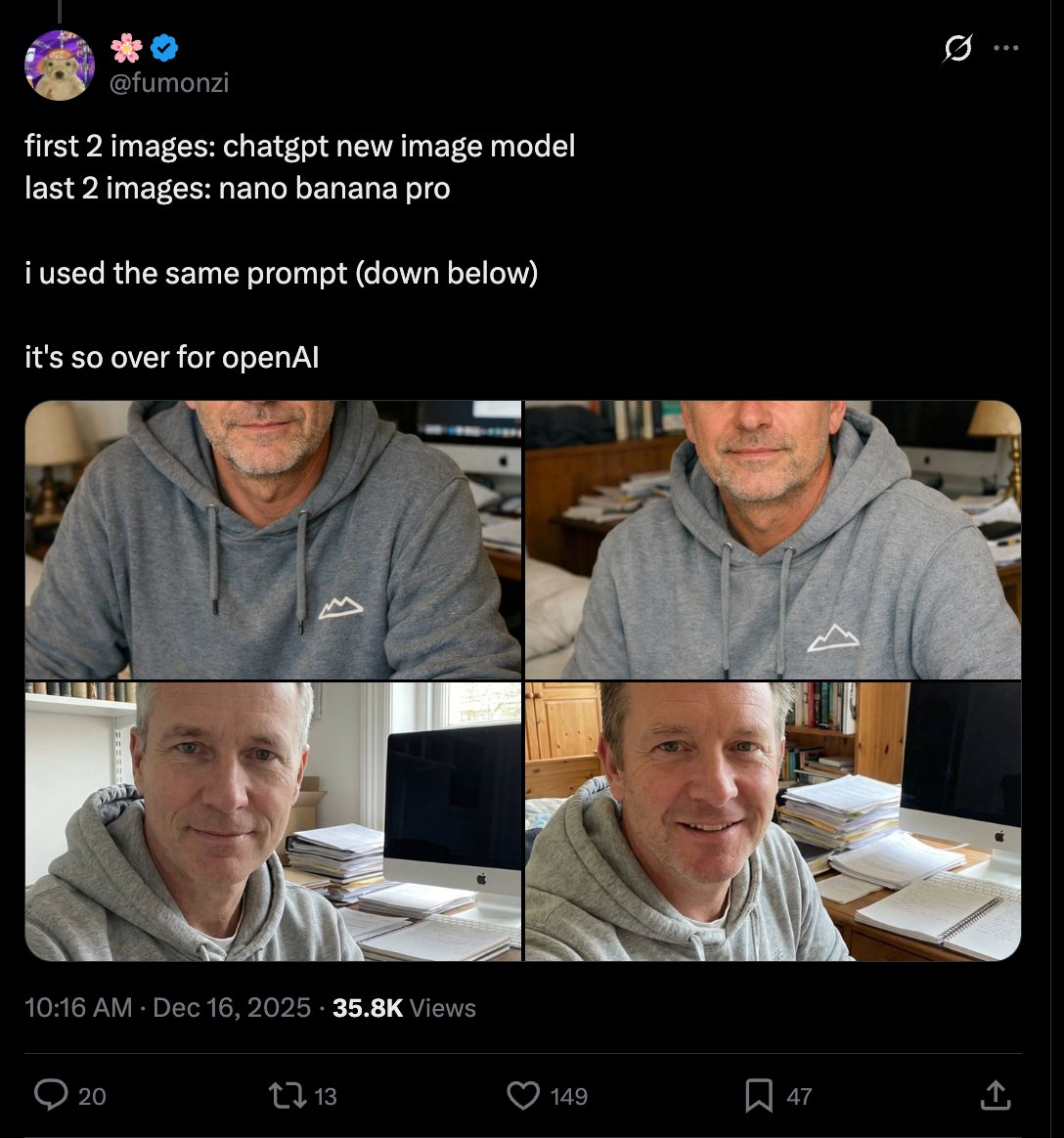
[16 Dec 2025] OpenAI GPT Image-1.5 claims to beat Nano Banana Pro, #1 across all Arenas, but completely fails Vibe Checks news.smol.ai/issues/25-12-1… Shipping anything is hard, so we rarely call out misses, and OpenAI rarely misses. But this was clearly a miss.
smol ai (follow @latentspacepod for ainews) tweet mediasmol ai (follow @latentspacepod for ainews) tweet media
OpenAI@OpenAI

Introducing ChatGPT Images, powered by our flagship new image generation model. - Stronger instruction following - Precise editing - Detail preservation - 4x faster than before Rolling out today in ChatGPT for all users, and in the API as GPT Image 1.5.

English
0
1
6
22.5K
smol ai (follow @latentspacepod for ainews) retweetledi
Freddie
Freddie@freddie_spirit·
NeurIPS and community highlights by @Smol_AI Reasoning and alignment focus: Yejin Choi’s keynote shout‑outs included EPO (Entropy‑Regularized Policy Optimization) alongside broader reasoning work mentionEPO refs. Sakana AI’s “Continuous Thought Machine” drew big crowds; it implements test‑time compute scaling via continuous dynamics (Neural ODE) rather than Transformer depth @yasuotabei.
English
0
1
4
2.2K
smol ai (follow @latentspacepod for ainews)
[4 Dec 2025] news.smol.ai/issues/25-12-0… OpenRouter's State of AI - An Empirical 100 Trillion Token Study!
OpenRouter@OpenRouter

We collaborated with @a16z to publish the **State of AI** - an empirical report on how LLMs have been used on OpenRouter. After analyzing more than 100 trillion tokens across hundreds of models and 3+ million users (excluding 3rd party) from the last year, we have a lot of insights to share.

English
1
1
3
7.7K
smol ai (follow @latentspacepod for ainews)
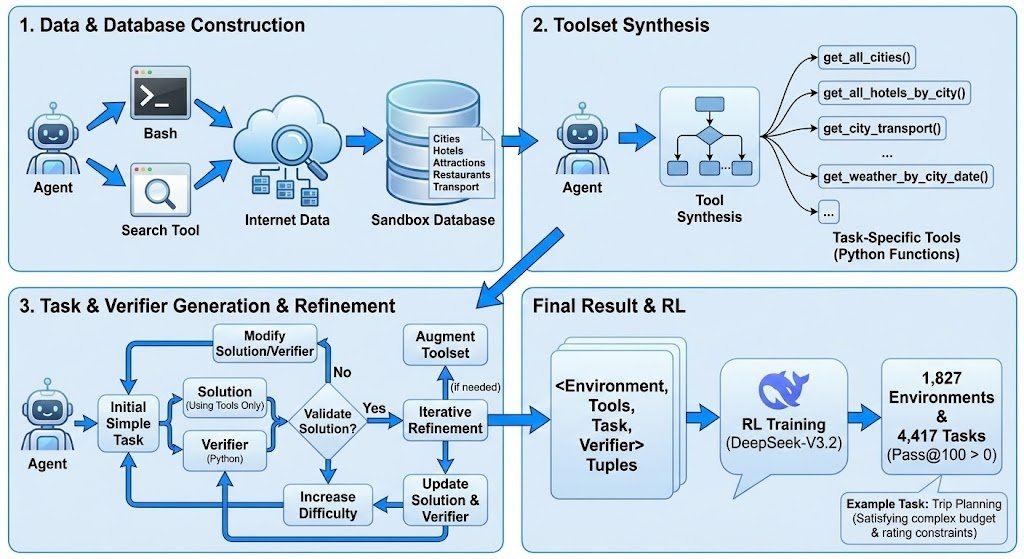
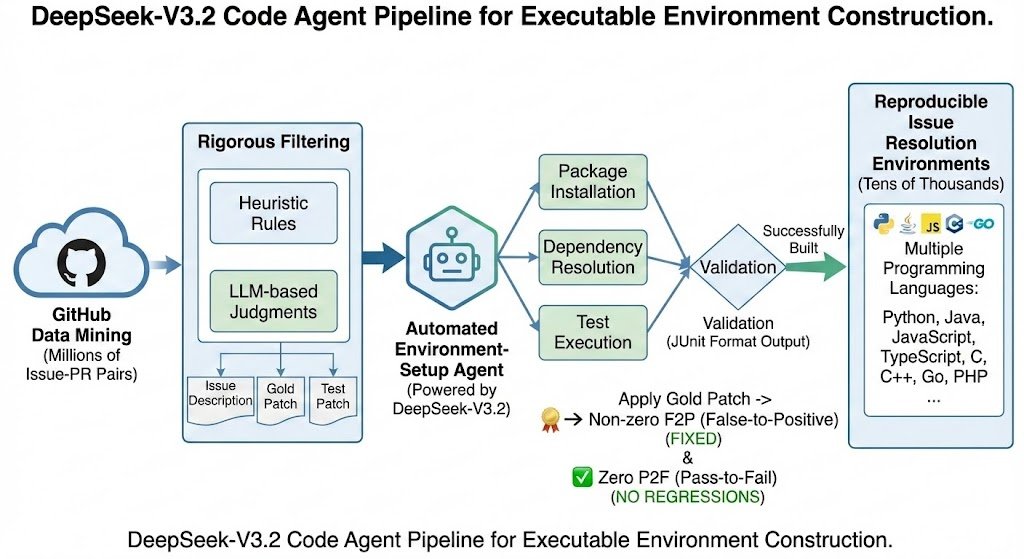
[1 Dec 2025] DeepSeek V3.2 & 3.2-Speciale: GPT5-High Open Weights, Context Management, Plans for Compute Scaling news.smol.ai/issues/25-12-0… congrats @deepseek_ai on again leading SOTA open weights models with actually good research writeups! we had a crack at illustrating the new pipelines for: - general agent - code agent - search agent pretty cool!
smol ai (follow @latentspacepod for ainews) tweet mediasmol ai (follow @latentspacepod for ainews) tweet mediasmol ai (follow @latentspacepod for ainews) tweet media
Susan Zhang@suchenzang

Incredible writeup! Some notable 💎s: Deepseek reduced attention complexity from quadratic to ~linear through warm-starting (w/ separate init + opt dynamics) and adapting the change over ~1T tokens. They also use separate attention modes for disaggregated prefill vs decode (is this the first public account of arch difference between the two? 👀). 1/🧵

English
0
3
11
3.5K
swyx
swyx@swyx·
first try of the new Cursor Composer model (btw I'm still a DAU of Cursor! @smol_ai is entirely a Cursor vibecode) one impressive example - Composer 1 finished 2 rounds of human feedback and debugging with me and got me what I wanted, while Sonnet 4.5 was still working on its tasks and showing a loading spinner lol i think Fast Agents are clearly a thing and a LOT of people should take the slightly-dumber-than-SOTA-but-fast-enough-to-take-2x-human-feedback tradeoff.
swyx tweet media
Lee Robinson@leerob

Composer is fast and intelligent!

English
18
14
202
49.7K
smol ai (follow @latentspacepod for ainews) retweetledi
Pedro Ramos
Pedro Ramos@pedrogcramos·
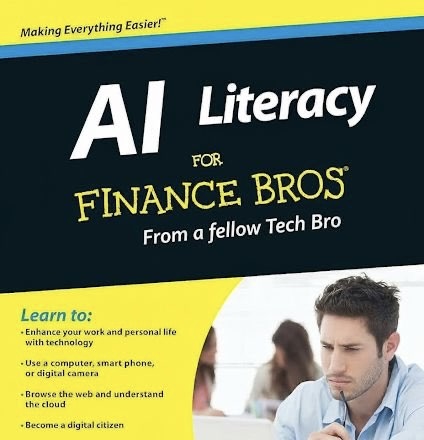
A dozen finance-bros and consultants asked me how I keep up to date with AI. We may be reaching the peak of inflated expectations before the trough of disillusionment. But I still think it’s a great time to capture that initial excitement and give enough of a jumpstart so that one is motivated to cross the through. LEVERAGE + CURIOSITY Learning is a form of leverage to take better decisions in the future, but the long term motivator is learning for the sake of learning. So the first question to ask is if you are truly curious about AI. I’m both interested in AI research for its own sake and in its business implications. The second question to ask is how much time is reasonable to invest in Learning vs Doing (the former you learn quickly but not deeply, the latter you learn slower but deeply, since you learn from first-hand experience and mistakes). FOUNDATIONS + HISTORY If you are indeed curious enough to dedicate several hours a week on a new topic, then you should start by learning the fundamentals. A friendly way of starting is by watching the @3blue1brown series on Neural Networks. If you don’t have Linear Algebra background, it is worth watching first the 3b1b series on Linear Algebra. If after that you are even more motivated to learn, you should read about the history of Neural Networks (NNs): 1970s: NNs dismissal and AI Winter 1998: CNNs (Computer Vision architecture) 2014: AlexNet (scaling CNNs produced great results) 2017: Transformers (Language Model architecture) 2020: GPT-3 (scaling Transformers produced great results) 2023: Distillation (scaling training data with GPT4 outputs produced great results) 2024: Reasoning (scaling inference time token generation produced great results) 2025: Reinforcement Learning (scaling training in verifiable domains will produce great results) You can see the pattern here, the Bitter Lesson is that simple architectures that scale well outperform complex ones that don’t scale as well. So the primary vector for progress is increasing computational and energy capacity to scale models even further. Which means that Moore’s law and the chip manufacturing value chain (NVIDIA -> TSMC -> ASML) play a crucial role. But one should also beware of the limitations of the current Transformer architecture and prepare for eventually hitting a wall. So research cannot have all eggs on the same basket and serious effort is being put on alternative architectures and approaches. The reason research in AI moves at such a fast pace is because of a property of Computer Science that distinguishes it from other Sciences. New developments are trivially reproducible when the software is open-source. This property allows for rapid spread of information with much less need for peer-reviews and journal publications. Lately this property is no longer fully applicable, since the major AI labs don’t do a lot of open research and the training costs of state-of-the-art (SOTA) models require millions or billions in compute. SOTA Now with greater contextual awareness, it’s worth moving from general news outlets to more in depth coverage of AI developments. The quickest update is the @Smol_AI newsletter, less than 1min read a day, with updates from the major AI labs. To listen more from researchers follow the @dwarkeshpodcast. To deep dive on SOTA research, you need to actually take the time to read the papers on arXiv. Maybe read some of the classics while you learn about the history of NNs and then do a random walk through the main conferences (NeurIPS, EMNLP), finally follow your curiosity through the tree of citations. BUSINESS IMPLICATIONS The chatGPT moment was about productizing a technology so general that OpenAI didn’t know how to productize it at first, so they launched an API to let others figure out the monetization. OpenAI only became the accidental consumer AI company when they trained GPT-3 on human feedback and launched GPT-3.5 (in the user friendly interface of chatGPT). To better understand the business dynamics involved, start by learning how the internet disrupted consumer markets. The Aggregation Theory explains that the profits accrue to who has the relationship with users, commoditizing the rest of the value chain. Then subscribing to @stratechery will give you a view of the tech news through this Aggregation Theory lens. Then take into account that, in the age of AI, the marginal costs are not zero, to be on top of the infrastructure implications read some of the @SemiAnalysis_ articles. To learn about the history of great businesses and entrepreneurs you should listen to @AcquiredFM and @FoundersPodcast. To be on top of the internet culture you are in the right place here on X, follow the @tbpn show and see some of the people I follow. All these suggestions form a highly curated but still overload of content. So keep in mind the trade-off of Learning vs Doing and invest time learning how to do. Learn to code and to sell, in order to build. The best way to predict your future is to create it ~ Abraham Lincoln
Pedro Ramos tweet media
English
0
2
10
2.3K