Soheil Oliaei

4K posts

Soheil Oliaei banner
Soheil Oliaei

Soheil Oliaei

@Soheil_O

Product Design, AI & Automation @block. Built products at @twitter @Pinterest @Blizzard @Walmart @Amazon. I post what I see coming next. Opinions: all mine 🤙🏽

Los Angeles, CA Katılım Temmuz 2008
3K Takip Edilen3.5K Takipçiler
Soheil Oliaei retweetledi
Adam Spring
Adam Spring@positivelyforth·
No one innovates like @jack between recent @goose_oss AI advancements, bitcoin initiatives/offerings, nonstop @CashApp product launches including Bluetooth enabled payments there’s no denying @blocks is leading the charge in global Fintech innovation from clicks to bricks $XYZ
English
4
1
28
997
Soheil Oliaei
Soheil Oliaei@Soheil_O·
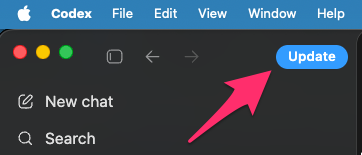
@gertig Can confirm. That button has become muscle memory at this point. Impressed with Codex tbh
English
1
0
1
33
gertig
gertig@gertig·
Codex app team is cooking so fast this Update button is literally always there
gertig tweet media
English
7
0
47
2.6K
Soheil Oliaei
Soheil Oliaei@Soheil_O·
Hot take: the biggest casualty of AI design tools won’t be Figma. It’ll be the design critique. When anyone can generate 50 options in 10 minutes, the meeting where 8 people debate one mockup for an hour is dead. The new skill isn’t presenting your work. It’s filtering 50 options down to the one that matters in 5 minutes. Curation is the new craft.
English
0
0
1
48
Soheil Oliaei
Soheil Oliaei@Soheil_O·
The corporate drama is interesting but the product move is what matters. Anthropic didn’t launch a Figma competitor. They launched a product that makes design files optional. That’s a different category entirely. Figma competes with tools. Claude Design competes with the workflow.
English
0
0
0
24
George Pu
George Pu@TheGeorgePu·
Anthropic's Chief Product Officer sat on Figma's board. Figma integrated Claude as their AI assistant. On Monday he resigned from Figma. The same day, reports surfaced that Anthropic was building design tools. Yesterday Anthropic launched Claude Design. A direct Figma competitor. Figma stock fell 7% in an hour. This is what building your product on an AI lab looks like. Your integration is their research. Your roadmap is their spec. Your customers are their TAM. When the lab competes with you, it isn't a surprise attack. It's a planned transition. You don't build on a platform. You audition for it.
English
116
170
1.5K
186.2K
Soheil Oliaei
Soheil Oliaei@Soheil_O·
Half right. Design is exploration AND production. The separation was always artificial, forced by tools that couldn’t do both. When your exploration tool can also ship the output, you don’t need two tools. You need one that does both badly at first and then well. That’s Claude Design right now.
English
0
0
1
22
Josh Elman
Josh Elman@joshelman·
This is the best take on Figma vs Claude Design. Design is all about exploration, debate. Coding is turning a design into a working product. The tools needed for the first are special and that is why Figma matters. Turning ideas into code will become commodity
Rasmus Andersson@rsms

This is really neat but it’s not a design tool as much as it’s a design _production_ tool. The practice of design is mostly about what comes before production. There’s no doubt in my mind that all parts of software production will become automated very soon. Writing code, making web pages, putting pieces of a design system together etc. And that’s fine. I think few people actually enjoy this kind of production work. Wouldn’t it be better if we spent our precious time in life on what is more meaningful?! At the core, the practice of design is methodical; like architecture, not like art. In a nutshell: We find constraints, form comprehension of the whole and propose solutions that honor those constraints. First after that do we enter some form of production phase, usually prototypes first, learn about some constraints that were hidden before, loop back, prototype and then build the production-grade “final” artifact. These last few tasks are quickly losing value because AI tools can do it much faster (not yet better though) than humans. It’s simply just what has the best RoI for a business. Some companies and individuals will continue to spend human time on certain parts of the “production line” as a market differentiator, but it will cost them a relatively high price compared to competitors. Anyhow, I still haven’t seen a tool better than Figma that supports the actually-interesting part of the design process. I wouldn’t be surprised if Figma focused their products on that, maybe separating “products for production” of “products for ideation & exploration.” The latter would obviously still leverage AI, but not to do the work for me but rather to support my efforts the way a therapist helps me live a better life (not living my life for me.)

English
14
11
199
46.6K
Soheil Oliaei
Soheil Oliaei@Soheil_O·
@HarryStebbings @jasonlk The threat isn’t bypass. It’s merge. Claude Design reads your codebase. Claude Code writes your product. The design layer and the code layer become the same conversation. Figma’s moat was being where designers live. When designers live in Claude, that moat drains fast.
English
0
0
1
26
Harry Stebbings
Harry Stebbings@HarryStebbings·
How Claude Design Will Hurt Figma "Claude Design will not replace Figma directly, but it will chip away at it. It removes the need to wait for designers by letting people go straight from idea to product. That bypass is the real threat, not a head-on competitor." @jasonlk Love to hear your thoughts on this @zoink @andrew__reed @karrisaarinen
Harry Stebbings@HarryStebbings

This is the big f**king deal. Cursor acquired for $60BN by xAI I sat down with @jasonlk and @rodriscoll to discuss the deal, along with the biggest news in tech this week: - Anthropic Hits $1TRN in Secondary Markets - Anthropic Launches Claude Code - Rippling Hits $1BN in ARR - Cerebras Files for IPO My notes below: 1. This $60B deal actually makes sense The potential $60 billion acquisition of Cursor by xAI/SpaceX is an industrial "marriage made in heaven". Cursor has an exploding business with billions in ARR but "shitty" gross margins because they lack their own compute and models. Elon Musk has the massive Colossus GPU data center and a model (Grok) but effectively no revenue, making the vertical integration of these two companies a strategic fix for both. 2. How Claude Design Will Hurt Figma Anthropic’s Claude Design is a full design application, not just a set of prompts or skills. It poses an existential threat because it allows product and engineering teams to bypass the traditional 30-day designer turnaround. By enabling "normal people" to design and move into production immediately, it will "maim and nibble" at Figma’s growth over the coming quarters. 3. I used to think MAUs and WAUs were the dumbest metric. Now I think it's the most important. In the B2B world, usage metrics like MAUs, WAUs, and DAUs are now more critical than revenue. If usage isn't growing faster than revenue, it's a sign of a struggling startup or "stealth churn," where users have stopped active engagement despite the company still collecting fees. In the AI age, the ultimate test of a product's value is whether people are actually using its AI features daily. 4. Why the biggest fintech players are in for a shock. Existing moats for fintech giants like Brex and Ramp are weakening as the selection criteria for vendors shifts. Customers are no longer prioritizing a dashboard's UI; they care which API works best with their autonomous AI agents. If a new vendor offers a superior API that allows an "AI VP of Finance" to automate tasks like collections, companies will switch vendors in a single week. 5. Agent fabric is the layer that manages all your agents The defining 2027 challenge is the "agent fabric". The infrastructure needed to manage and secure hundreds of autonomous agents. This gives a massive advantage to incumbents like Salesforce. They are positioning themselves as the trusted governance layer to guardrail agents and prevent them from going rogue

English
23
3
48
18.6K
Soheil Oliaei
Soheil Oliaei@Soheil_O·
@gokulr The handoff is what’s dying, not the designer. Mockups were always a translation step. Once the designer ships the code, the translation goes away. The designers who survive aren’t the ones who learned to code. They’re the ones who stopped translating.
English
0
0
0
130
Gokul Rajaram
Gokul Rajaram@gokulr·
DESIGN: THE FIRST AI CASUALTY I'm increasingly sure that 2026 signals the end of product design as a full-fledged stand-alone function within companies. If so, it will be the first role / function to be eliminated by AI on a go-forward basis. Instead of hiring FT designers, startups are hiring / will hire design consultants to create a design system that the founder likes (this takes a few weeks max). Once the design system is finalized, PM/Eng feed it into their AI tool of choice to generate prototypes. The design system is refreshed annually by the same consultant. Larger companies will likely not backfill design roles and will do some targeted attrition to reduce the design department to 20% the size it is today. If you're a designer, I think you have two choices: 1. Become an entrepreneur: Start a design agency and become the go-to resource for design systems for startups and even larger companies. This can be a good recurring revenue business. 2. Become a builder: Add PM/Eng responsibilities to become a product builder. Would suggest you embrace this proactively vs waiting for the other shoe to drop. I'm really sorry about this - some of my best friends and the people I admire most and have learnt the most from are designers - but it seems inevitable.
English
280
80
1.1K
704.5K
Soheil Oliaei
Soheil Oliaei@Soheil_O·
@stevelauda_ The handoff is what’s dying, not the designer. Mockups were always a translation step. Once the designer ships the code, the translation goes away. The designers who survive aren’t the ones who learned to code. They’re the ones who stopped translating.
English
0
0
0
2
Steve Lauda
Steve Lauda@stevelauda_·
Designers will still exist, either in-house or as a service provider but as designers who builds. I agree that designers who can only provide mockups in Figma will be gone and in Blissful we've stopped the practice of only hand-off Figma file since January 2026, we offer contribution directly to code of what we design. In fact, Figma only serves 3 functions for us since the beginning of April 2026: 1. Iterating complex UX flows that is hard to describe in prompt and compared them in the infinite canvas / once we make decision of what's best, we ingest it into Claude Code and brainstorm further there to refine it 2. To build complex vector visuals 3. To build the blueprint of brand and app that can be ingested into AI and then make a system where everything is interconnected, consistent, and cohesive all the time That's all. And soon, I'm planning to migrate to @paper once number 2 and 3 is doable in there. Since I started Blissful, I've made one of the principles to be tools and processes agnostic. Because the only constant is change.
Gokul Rajaram@gokulr

DESIGN: THE FIRST AI CASUALTY I'm increasingly sure that 2026 signals the end of product design as a full-fledged stand-alone function within companies. If so, it will be the first role / function to be eliminated by AI on a go-forward basis. Instead of hiring FT designers, startups are hiring / will hire design consultants to create a design system that the founder likes (this takes a few weeks max). Once the design system is finalized, PM/Eng feed it into their AI tool of choice to generate prototypes. The design system is refreshed annually by the same consultant. Larger companies will likely not backfill design roles and will do some targeted attrition to reduce the design department to 20% the size it is today. If you're a designer, I think you have two choices: 1. Become an entrepreneur: Start a design agency and become the go-to resource for design systems for startups and even larger companies. This can be a good recurring revenue business. 2. Become a builder: Add PM/Eng responsibilities to become a product builder. Would suggest you embrace this proactively vs waiting for the other shoe to drop. I'm really sorry about this - some of my best friends and the people I admire most and have learnt the most from are designers - but it seems inevitable.

English
9
0
65
6.4K
Soheil Oliaei
Soheil Oliaei@Soheil_O·
@VivianBala @Gavriel_Cohen @karpathy Tool assembly is the right frame. Vibe coding makes it sound like the AI is in charge. It’s not. The user is wiring building blocks for their own domain. That’s what’s new. Customization, not autonomy. 🤙🏽🙌🏽
English
1
0
1
154
Vivian Balakrishnan
Vivian Balakrishnan@VivianBala·
Thanks @Gavriel_Cohen. You’re right. I never used an IDE. Claude Code made all edits. No @karpathy ‘vibe coding’. All I did was ‘tool assembly’ to create a utility that worked in my domain!
Gavriel Cohen@Gavriel_Cohen

Singapore's Foreign Minister published the architecture for his "second brain for a diplomat" yesterday. Architecture diagrams, design rationale, the works. A developer-style writeup of his own system. It runs on a Raspberry Pi. It connects to his WhatsApp and Gmail, transcribes voice notes locally, ingests speeches and articles, and builds up a knowledge graph over time. It answers questions, drafts speeches, condenses information. He says he doesn't dare switch it off. What @VivianBala built is one-of-one. There's no other setup like it. But what he built it from isn't. He composed four open-source pieces: - @NanoClaw_AI , the agent framework: github.com/qwibitai/nanoc… - Mnemon, the persistent memory layer: github.com/mnemon-dev/mne… - OneCLI, the credential proxy that keeps API keys out of the containers: github.com/onecli/onecli - The LLM Wiki pattern by Andrej Karpathy, the synthesis approach: x.com/karpathy/statu… None of them are his. The composition is his. And then he published the composition: gist.github.com/VivianBalakris… He didn't keep it internal as Singapore's edge. He didn't spin it into a product. He didn't gatekeep. He wrote it up and put it on GitHub. There are tens of thousands of doctors, lawyers, researchers, investors, and operators building one-of-one setups for themselves right now. Some simpler than Vivian's, some more elaborate. The impulse will be to sit on it. Treat it as your edge. Think about what product or company you could spin out of it. Resist that impulse. Vivian put it directly: "The diplomat who learns to work with AI will have a meaningful edge. I think that edge is now." The specific thing Vivian composed will be obsolete in months. His real edge isn't the system. It's his ability to build it. Being plugged in, up to speed, able to cut through the noise and connect the right pieces into something that brings real value. Sharing the blueprint doesn't give that away. It amplifies it. You become a beacon. Other people working on the same things find you. They share what they're building, suggest improvements, point at things you didn't know existed. You learn faster. You stay in the center of where things are happening. Publishing isn't giving away your edge. It's doubling down on it.

English
73
130
1.3K
305.1K
OBJ
OBJ@owenbjennings·
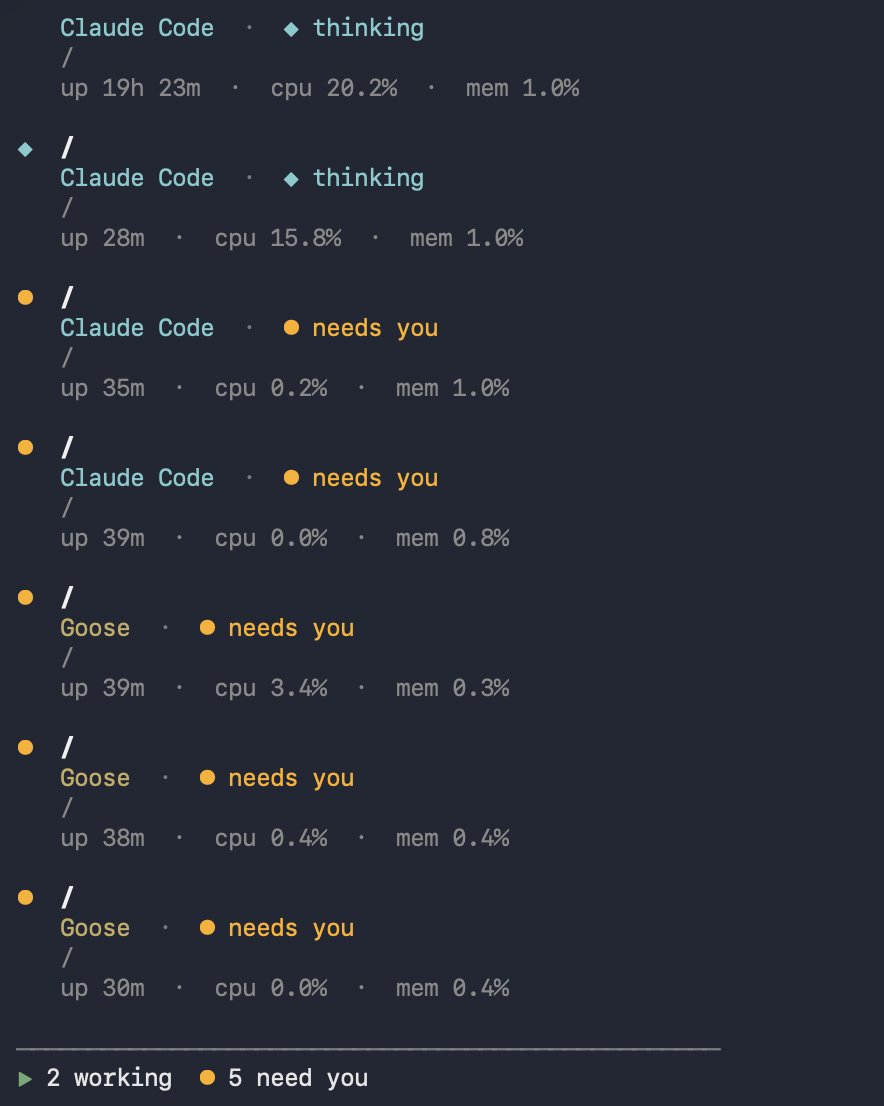
as we move from single- to multi-thread work, built a little thing to keep track of who needs me finding it pretty useful the past few days
OBJ tweet media
English
4
0
52
5.2K
Soheil Oliaei
Soheil Oliaei@Soheil_O·
@jeazous This means a lot. I'll pass this to the team. 🙌🙌 They obsess over every pixel in that product. Nice to see it land.
English
1
0
3
308