Dylan Field

12.5K posts

Dylan Field banner
Dylan Field

Dylan Field

@zoink

eliminate the gap between imagination and reality

Interesting Times Katılım Ekim 2007
2.2K Takip Edilen266K Takipçiler
Sabitlenmiş Tweet
Dylan Field
Dylan Field@zoink·
CUSTOM SHADERS BUILT WITH THE FIGMA AGENT
English
48
88
2K
204.3K
Dylan Field
Dylan Field@zoink·
Sorry to be a grumpy old man, but 6-7 is one of the worst memes ever invented. Even worse than The Game.
English
142
11
1.1K
345.4K
Dylan Field
Dylan Field@zoink·
@dannyskelley @figma Making tools is the best. Once you start you can’t stop :) We are pretty excited about how you can easily create generative plugins and parameterized shader fills / effects now with the Figma Agent: #generative-plugins" target="_blank" rel="nofollow noopener">figma.com/blog/config-20…
English
2
2
26
4K
danny skelley
danny skelley@dannyskelley·
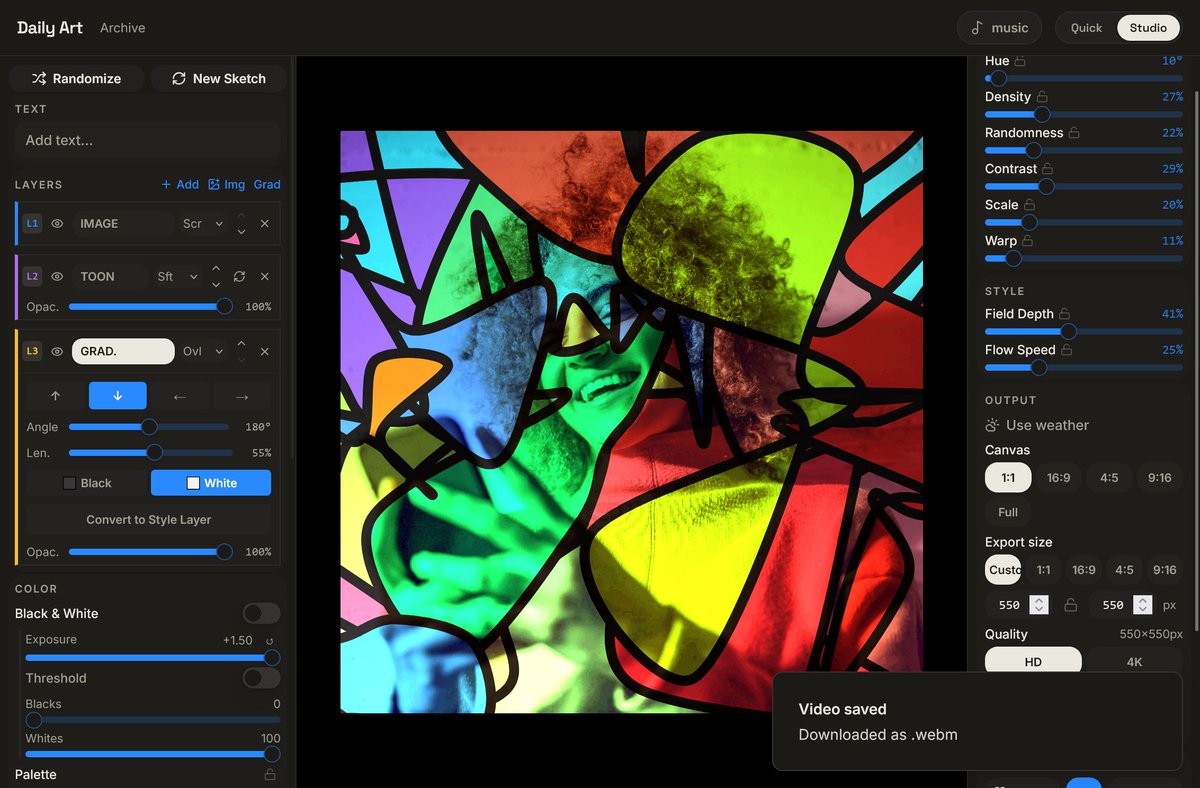
this is my newest vibe coded app. it is a creative tool that is fun to use. Maybe even more fun than @zoink's @figma
danny skelley tweet media
English
2
0
6
2.7K
Dylan Field
Dylan Field@zoink·
@jeanxcrj It will be fun when AI has any level of UX sensibility. So many capabilities are simply missing when it comes to design. Turns out adding IQ points doesn’t translate to all domains…
English
2
0
28
3K
Jean Chen
Jean Chen@jeanxcrj·
Hot take making something look pretty should be the easiest part of design. Fade doomers pls
Dylan Field@zoink

I have been thinking about whether to comment on this. Not clear if Gal is serious, rage baiting, etc. Whatever the case, it has spread enough in the design community that I want to share some thoughts. The psychological journey people go through with AI is quite fascinating to me. A new model launches, people think the world has changed, they sometimes have an existential crisis, then they play with the model, they understand its strengths and limitations and then they settle down. A few weeks later, the cycle repeats. On top of this, even before AI, designers have often shown insecurity and imposter syndrome. There are probably many reasons for this. First, before ~2010 design wasn't valued by the tech industry in the way it is today. Second, the people attracted to working in the field of design are often very open to new ideas and have high empathy. Third, there is no "one path" to working as a designer and designer backgrounds are often pretty random. Ironically, despite the insecurity + imposter syndrome so many designers feel, design is more important than ever. I truly believe this. And yes, I have an incentive to believe this. But just think about it... the logic couldn't be more clear. More design is entering the world, the attention economy is real and therefore creativity / design / point of view is how you will stand out. Your brand, marketing, product design, moments of delight and overall customer journey must be excellent. Some companies already get this and are fighting wild battles over design talent. Other companies are still figuring it out. Everyone will get there and it will be obvious in retrospect. This isn't a new trend with AI. It is a trend that we've seen over the last decade. Designers used to complain about not having a seat at the table. Now designers have a seat at the table. And many of the businesses I speak with are pulling from their design bench when looking for new leaders for their business... they know that design thinking and the design process is what they need to adopt everywhere to win. I'm not saying that every stakeholder gets it. But so many are trying to learn right now. Designers need to do more than create great work, they have to spend a lot more effort educating. Showing work can also trigger anxiety. Sometimes the best solution to a design challenge is the first thing you think of. And other times you have to explore for quite a long time to come up with something great. Inputs to a design process might include things that feel like traditional office work and are easy to point to... reading docs, talking with teammates, formal research, etc. Inputs might also include a walk in the park, an interesting dream you had the night before, a good song you listened to on the radio during your commute, a painting from the 1800's or all sorts of other cultural / emotional input. In summary, I've never been more confident in the role of design and impact design can have. I wish designers felt the same confidence. This is the moment to be more bold, to take more creative risk, to double down on the power of design. Everyone is on their own journey, and there are lots of fascinating ways to move through life, so if Gal is serious about "quitting design" then I wish him the best in his adventures ahead. But I hope if others follow they do it because there are other things they are so excited about spending time on vs fear of AI.

English
2
0
18
7.8K
Dylan Field retweetledi
Marc Andreessen 🇺🇸
Optimistically this is the end of Refinement Culture (c.f. @PaulSkallas) and the start of a wild explosion of cultural creativity?
Dylan Field@zoink

I have been thinking about whether to comment on this. Not clear if Gal is serious, rage baiting, etc. Whatever the case, it has spread enough in the design community that I want to share some thoughts. The psychological journey people go through with AI is quite fascinating to me. A new model launches, people think the world has changed, they sometimes have an existential crisis, then they play with the model, they understand its strengths and limitations and then they settle down. A few weeks later, the cycle repeats. On top of this, even before AI, designers have often shown insecurity and imposter syndrome. There are probably many reasons for this. First, before ~2010 design wasn't valued by the tech industry in the way it is today. Second, the people attracted to working in the field of design are often very open to new ideas and have high empathy. Third, there is no "one path" to working as a designer and designer backgrounds are often pretty random. Ironically, despite the insecurity + imposter syndrome so many designers feel, design is more important than ever. I truly believe this. And yes, I have an incentive to believe this. But just think about it... the logic couldn't be more clear. More design is entering the world, the attention economy is real and therefore creativity / design / point of view is how you will stand out. Your brand, marketing, product design, moments of delight and overall customer journey must be excellent. Some companies already get this and are fighting wild battles over design talent. Other companies are still figuring it out. Everyone will get there and it will be obvious in retrospect. This isn't a new trend with AI. It is a trend that we've seen over the last decade. Designers used to complain about not having a seat at the table. Now designers have a seat at the table. And many of the businesses I speak with are pulling from their design bench when looking for new leaders for their business... they know that design thinking and the design process is what they need to adopt everywhere to win. I'm not saying that every stakeholder gets it. But so many are trying to learn right now. Designers need to do more than create great work, they have to spend a lot more effort educating. Showing work can also trigger anxiety. Sometimes the best solution to a design challenge is the first thing you think of. And other times you have to explore for quite a long time to come up with something great. Inputs to a design process might include things that feel like traditional office work and are easy to point to... reading docs, talking with teammates, formal research, etc. Inputs might also include a walk in the park, an interesting dream you had the night before, a good song you listened to on the radio during your commute, a painting from the 1800's or all sorts of other cultural / emotional input. In summary, I've never been more confident in the role of design and impact design can have. I wish designers felt the same confidence. This is the moment to be more bold, to take more creative risk, to double down on the power of design. Everyone is on their own journey, and there are lots of fascinating ways to move through life, so if Gal is serious about "quitting design" then I wish him the best in his adventures ahead. But I hope if others follow they do it because there are other things they are so excited about spending time on vs fear of AI.

English
29
9
185
96.5K
Dylan Field
Dylan Field@zoink·
@sev_hz lol I’ve been saying it for years, would say pretty lukewarm at this point 😂
English
0
0
40
9.1K
sev
sev@sev_hz·
“design is more important than ever” how is that even remotely a hot take? a new paradigm is currently reshaping software (how it’s created AND used) and will requires us to completely rethink human interfaces. fully agree with your take, imo this is one of the best time to be a designer. you can feel this so strongly when building AI-native apps, there’s simply so much more work to do.
English
2
0
23
14.1K
Dylan Field
Dylan Field@zoink·
I have been thinking about whether to comment on this. Not clear if Gal is serious, rage baiting, etc. Whatever the case, it has spread enough in the design community that I want to share some thoughts. The psychological journey people go through with AI is quite fascinating to me. A new model launches, people think the world has changed, they sometimes have an existential crisis, then they play with the model, they understand its strengths and limitations and then they settle down. A few weeks later, the cycle repeats. On top of this, even before AI, designers have often shown insecurity and imposter syndrome. There are probably many reasons for this. First, before ~2010 design wasn't valued by the tech industry in the way it is today. Second, the people attracted to working in the field of design are often very open to new ideas and have high empathy. Third, there is no "one path" to working as a designer and designer backgrounds are often pretty random. Ironically, despite the insecurity + imposter syndrome so many designers feel, design is more important than ever. I truly believe this. And yes, I have an incentive to believe this. But just think about it... the logic couldn't be more clear. More design is entering the world, the attention economy is real and therefore creativity / design / point of view is how you will stand out. Your brand, marketing, product design, moments of delight and overall customer journey must be excellent. Some companies already get this and are fighting wild battles over design talent. Other companies are still figuring it out. Everyone will get there and it will be obvious in retrospect. This isn't a new trend with AI. It is a trend that we've seen over the last decade. Designers used to complain about not having a seat at the table. Now designers have a seat at the table. And many of the businesses I speak with are pulling from their design bench when looking for new leaders for their business... they know that design thinking and the design process is what they need to adopt everywhere to win. I'm not saying that every stakeholder gets it. But so many are trying to learn right now. Designers need to do more than create great work, they have to spend a lot more effort educating. Showing work can also trigger anxiety. Sometimes the best solution to a design challenge is the first thing you think of. And other times you have to explore for quite a long time to come up with something great. Inputs to a design process might include things that feel like traditional office work and are easy to point to... reading docs, talking with teammates, formal research, etc. Inputs might also include a walk in the park, an interesting dream you had the night before, a good song you listened to on the radio during your commute, a painting from the 1800's or all sorts of other cultural / emotional input. In summary, I've never been more confident in the role of design and impact design can have. I wish designers felt the same confidence. This is the moment to be more bold, to take more creative risk, to double down on the power of design. Everyone is on their own journey, and there are lots of fascinating ways to move through life, so if Gal is serious about "quitting design" then I wish him the best in his adventures ahead. But I hope if others follow they do it because there are other things they are so excited about spending time on vs fear of AI.
Gal Shir@galshirart

It’s over. I’m quitting design. A client of mine just created a logo with Fable 5, and the result left me speechless. It understood the brand story, values, audience, strategy, and turned all of it into a smart, minimal symbol. A genuinely brilliant concept. The kind of idea that captures everything at once. Something I honestly don’t think I would have come up with myself. And it didn’t just nail the idea. It executed the design pixel-perfectly. So I raise the white flag. My skepticism about AI’s ability to do great design is officially gone. There, I said it: AI beat me at design. Now that AI finally took my job, I can peacefully quit and dedicate my life to studying the only thing it may never achieve: human consciousness and the pathways to God. Good luck everyone.

English
159
260
2.2K
572.1K
Dylan Field retweetledi
Daniela Muntyan
Daniela Muntyan@daniela_muntyan·
Still kind of crazy to me that you can create something like this with motion + shaders, right inside @figma. Try combining shader fills with shader effects. i’ve been browsing shadertoy for inspiration, then tweaking shaders with an agent to fit what i need.
English
10
8
195
11K
Dylan Field
Dylan Field@zoink·
GPT-5.6 is now in Figma Make! My deeply-researched, very analytical take: It's good. It’s very good. Excited for you to try it out!
GIF
English
28
20
473
43K
Dylan Field
Dylan Field@zoink·
A lot of people want to compare Fable vs 5.6 Sol. This is a mistake. They are apples and oranges. Despite all the research achievements, we are still very very early in exploring the tech tree for model training.
English
31
13
541
61.5K
Dylan Field
Dylan Field@zoink·
More ridiculous behavior
Evan Reiser@evanreiser

.@AnthropicAI has filed a lawsuit against @Abnormal claiming we copied their brand to mislead security customers, and they are asking for “all revenues, earnings and profits” This is obviously not true. They don’t own every A/slash design in AI cybersecurity, and they don’t get to turn a logo dispute into a claim on Abnormal’s entire business. It would be easier to concede quietly. But Abnormal was built on trust, innovation, and intellectual honesty. Values are what you do when tested (especially when inconvenient) Our behavioral security platform and our AI models are ours. Everything meaningful about Abnormal was built the hard way: the technology, the customer relationships, and the trust. We earned that trust by protecting customers, and we will defend it. My blog post about it (link below):

English
26
33
837
169.5K
Dylan Field retweetledi
Kevin Lu
Kevin Lu@kevinlu625·
We’re extremely excited to announce the @budapp (formerly Orchids) team is joining @figma! Since day one, we built this company around a vision of how AI could transform and democratize the ability to build software. The limitations and bottleneck for building something great has never been rote technical knowledge. As all else commoditizes, human ingenuity and creativity are where value eventually accrues - the true final frontier. Figma is one of, if not the, defining product company of our time to capitalize on this. It’s where ideas start, iterate, and come to life and a natural home for this exciting new era of work. We couldn’t be more excited to help shape this future at Figma. More soon!
Kevin Lu tweet media
English
33
13
174
22.6K
Dylan Field retweetledi
🇨🇭Matt Stenquist
🇨🇭Matt Stenquist@internetdialup·
This feels like cheating. @figma just opened pandoras box with a pack-a-punch upgrade for every team that cares about tooling, design systems, and governance. I've already got a stack of internal tools that are just driving my workflows like a well oiled machine.
🇨🇭Matt Stenquist tweet media
English
1
2
39
7.1K
Dylan Field
Dylan Field@zoink·
@twistartups @Jason @Lons @alex Maybe listen to the video again? Jason says it will be April, I say I don’t want to be a downer, he says “you think it could be May or June” and I say that it could be a lot longer / I don’t know. (Sorry, you triggered my “someone is wrong on the internet” reflex…)
English
3
0
14
2.9K
This Week in Startups
This Week in Startups@twistartups·
In March 2020, @jason predicted COVID would be over by April 15th… Trump said, "We'll be back for Easter." Figma CEO, @zoink was slightly more bearish. He thought maybe May or June. We cut to @Lons and @alex reacting in real time. In March 2020, saying "June" was considered hysterical… Some predictions age like fine wine. These both aged like milk. Who could possibly have predicted what came next… @Lons @alex
English
3
1
11
8.6K
Piers Cowburn
Piers Cowburn@pierscowburn·
Just with wild outlines vs with wild outlines + 3d inflate
Piers Cowburn tweet mediaPiers Cowburn tweet media
English
2
0
11
603
Piers Cowburn
Piers Cowburn@pierscowburn·
Oh my god, the 3D Inflate shader just dropped straight on top of the Wild Outlines shader and did this 🤯 I nearly fell off my chair
English
11
6
199
8.7K
Matt Liston
Matt Liston@no__________end·
I found these a few weeks ago (not Z(11,20)) and also had the system write papers about method. I didn't really know what to do with the results since I'm not an academic, so it's been sitting on my computer (with ~10+ other papers). I formalized some of them, but don't want to spam journals / am not sure they allow AI authored papers anyway. The automated research process has been fun/addictive for me, but I'm demoralized since it seemed there's no venue for them so would love to talk about it. It would be great to get in touch. Here are the abstracts (will send you full papers + computations): Deficiency congruences for near-tight small Zarankiewicz numbers Author information to be inserted Draft of June 11, 2026 Abstract We introduce a modular deficiency-congruence method for sharpening near-tight small Zarankiewicz upper bounds. Viewing a K3,3-free m Å~ n binary matrix as a multihypergraph on m vertices with n hyperedges in which every vertex triple has codegree at most two, we enumerate the possible column-size profiles at a proposed top value and apply congruences to local row- and pair-deficiency identities. This gives a short proof that no 9Å~23 K3,3-free matrix has 104 ones. Together with an explicit 103-one construction, this determines z(9, 23; 3, 3) = 103. The same method proves z(10, 21; 3, 3) ≤ 107, z(10, 23; 3, 3) ≤ 114. Finally, combining the congruence eliminations with two exact-cover UNSAT certificates for the residual 111-one profiles determines z(10, 22; 3, 3) = 110. The proof artifacts for the two UNSAT certificates should be distributed with the final version of this note.
English
2
0
6
1.6K
John Palmer
John Palmer@johnpalmer·
if you're not using Fable 5 to instantly become a millionaire, everyone hates you and you should basically feel terrible about yourself
English
17
3
140
22.8K