Sabitlenmiş Tweet
Jay Sorg
3.2K posts


Jay Sorg
@Sorg_Jay
Corn and soybean grower. Key Account Manager for @agrispraydrones Retired dairy farmer. UWRF ‘19. Strip-Till Mafia™️ member. Opinions are my own
New Richland, Minnesota Katılım Mart 2012
644 Takip Edilen1K Takipçiler


@Jones6807 Yeah I’ve heard the E’s are terrible. 855 and a 865C other than the HVAC they’re solid
English

@moprecagronomy Challenger 1042 and a Fendt 1042 or a 738/938 for example. Same thing different color
English

@Sorg_Jay Nope not even close to the same tractor
English
@Sorg_Jay Fendt is a better tractor they replaced the Cat tractors with!!
English


@russpauls No, phased out to Fendt in 2020. I’ve actually never seen a Massey combine in person
English

@Sorg_Jay And the Massey combine line.
Can’t you still get Challenger track units?
English
@Qshizzle97 @BaldurBarons Everybody knows the crop is made in mid March.
English


Is it pretty dry through the states? Or am i just seeing the worst of the worst on my algorithm?
English



This is the worst Corn Belt map in history.
Shanaka Anslem Perera ⚡@shanaka86
A law written for energy independence is now the mechanism for food dependence. The Renewable Fuel Standard mandates that 15 billion gallons of corn ethanol be blended into American transportation fuel annually. That volume consumes approximately 43 percent of the US corn crop. The mandate was established by the Energy Policy Act of 2005 and expanded by the Energy Independence and Security Act of 2007. It was designed for a world where corn was abundant and America wanted to reduce reliance on foreign oil. That world no longer exists. Corn acres are falling to 94 million from 98.8 million because urea at $610 makes the nitrogen economics impossible. The RFS takes its 15 billion gallons from a shrinking harvest. The percentage of remaining corn available for feed, food, and export compresses with every acre that switches to soybeans. The mandate does not flex. The biology does. Waiving the RFS requires the EPA Administrator to make a formal determination that implementation would cause severe economic or environmental harm. The process involves a public comment period, regulatory review, and potential legal challenges from the ethanol industry. The EPA proposed 2026 and 2027 RFS volume requirements in June 2025 and has been targeting Q1 2026 for the final rule. The rulemaking machinery was designed for normal agricultural cycles. It was not designed for a war that closed the world’s most important fertiliser transit route during planting season. Even if the EPA Administrator initiated a waiver today, the timeline from announcement to implementation stretches weeks to months. The corn planting window closes in three to four weeks. The legal process cannot outrun the biological calendar. By the time a waiver could take effect, the acreage decisions it was meant to influence would already be irreversible. The RFS is the transmission belt that converts a fertiliser crisis into a food crisis. Without the mandate, a shrinking corn crop would still produce less total output, but the available supply could be allocated flexibly between feed, food, and fuel based on market signals. With the mandate, 43 percent of whatever corn exists is legally spoken for before a single hen eats a kernel or a single tortilla is pressed. The flexibility that markets provide is overridden by the rigidity that law imposes. The cattle herd is at 86.2 million head, a 75-year low. Poultry operations rebuilt from the 2025 avian flu but face rising feed costs. Dairy herds are contracting. Every animal that eats corn competes with a fuel pump that has legal priority. The protein cascade, from corn to feed to meat to eggs to dairy to the grocery shelf, begins at the point where the RFS takes its cut. Corn Belt legislators who championed the RFS to support their farming constituents now face a perverse outcome: the law they wrote to help farmers is the law that prevents the market from adjusting to a crisis their farmers are living through. The ethanol industry will resist any waiver. The livestock industry will demand one. The consumer will pay the difference. And the EPA rulemaking process was designed for annual adjustments, not emergency response during a 21-day-old war. Fifteen billion gallons. Written into statute. Consuming 43 percent of a crop that just lost 4.8 million acres to a fertiliser price that originates in a strait the law never contemplated. open.substack.com/pub/shanakaans…
English
@agtradertalk I am confident by the end of this summer NCGA/ASA will golf E15 and SAF into existence
English

Watching a global war break out in oil and thinking the US renewable lobby stood a chance. If this doesn't show you who butters the bread I can't help you.
English

Much like politics, you can divide basketball fans into 2 main groups:
1 - Everything is a travel
2 - Nothing is a travel
English
@awaynepioneer Don’t worry I’ve got sell orders in for $9 and $9.50 😂
English

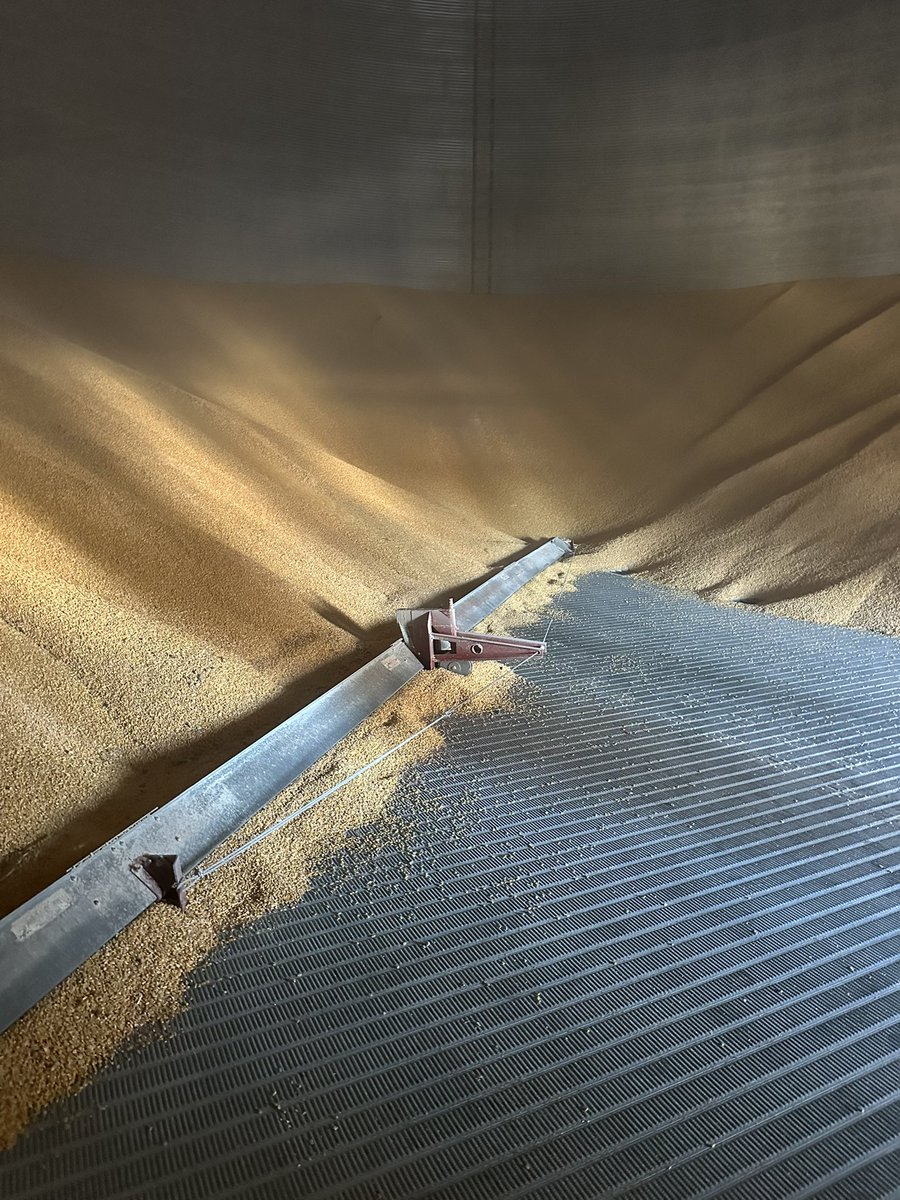


@Sorg_Jay Wait…if you deliver now how are you going to sell $10.56?
English
@agtradertalk @Qshizzle97 I asked Claude if he would shovel, but he said he was too anxious
English

@Sorg_Jay @farmerdoug93 I guess the only Prince song I know on my violin is “P-control”
English
We're taking requests for after market close. @farmerdoug93 wants O' Danny Boy
Anna Fox@ajfox620
should I post some mediocre Irish fiddling yay or nay
English
@steffensenry25 @AdamLasch1 Correct, unfortunate for the descendants of the 26%. But that’s not really a majority by any means…
English

@Sorg_Jay @AdamLasch1 Looks like to me 26% think they can rule it from the grave.
English