Brian Gallagher

6.6K posts

Brian Gallagher banner
Brian Gallagher

Brian Gallagher

@Space4Light4All

Building a Better Tomorrow: Champion of the Light - Dad- President - Grokking Inspired24 Marshall for SpaceShipEarth Crew!

Orange County, CA Katılım Nisan 2009
1K Takip Edilen809 Takipçiler
Sabitlenmiş Tweet
Brian Gallagher
Brian Gallagher@Space4Light4All·
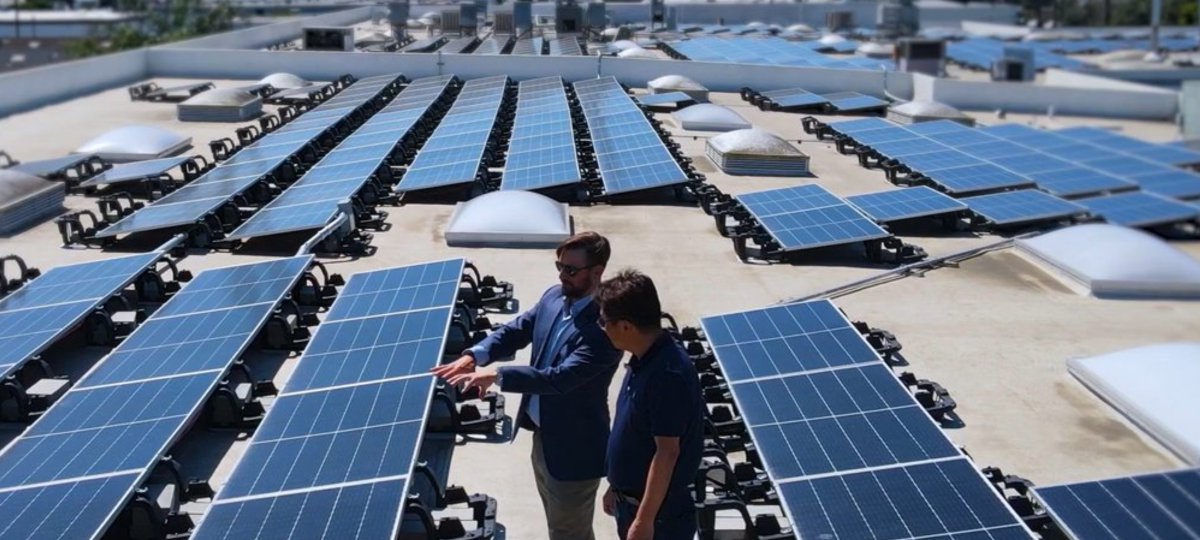
Gallagher, energy building maniac, ROARED! At SunPower and Qcells he SOARED! Now Eyes on the Stars; To the Moon or to Mars? Cast off for new shores, UNMOORED!
Brian Gallagher tweet mediaBrian Gallagher tweet mediaBrian Gallagher tweet mediaBrian Gallagher tweet media
English
1
0
9
15.8K
Brian Gallagher retweetledi
Ashlee Vance
Ashlee Vance@ashleevance·
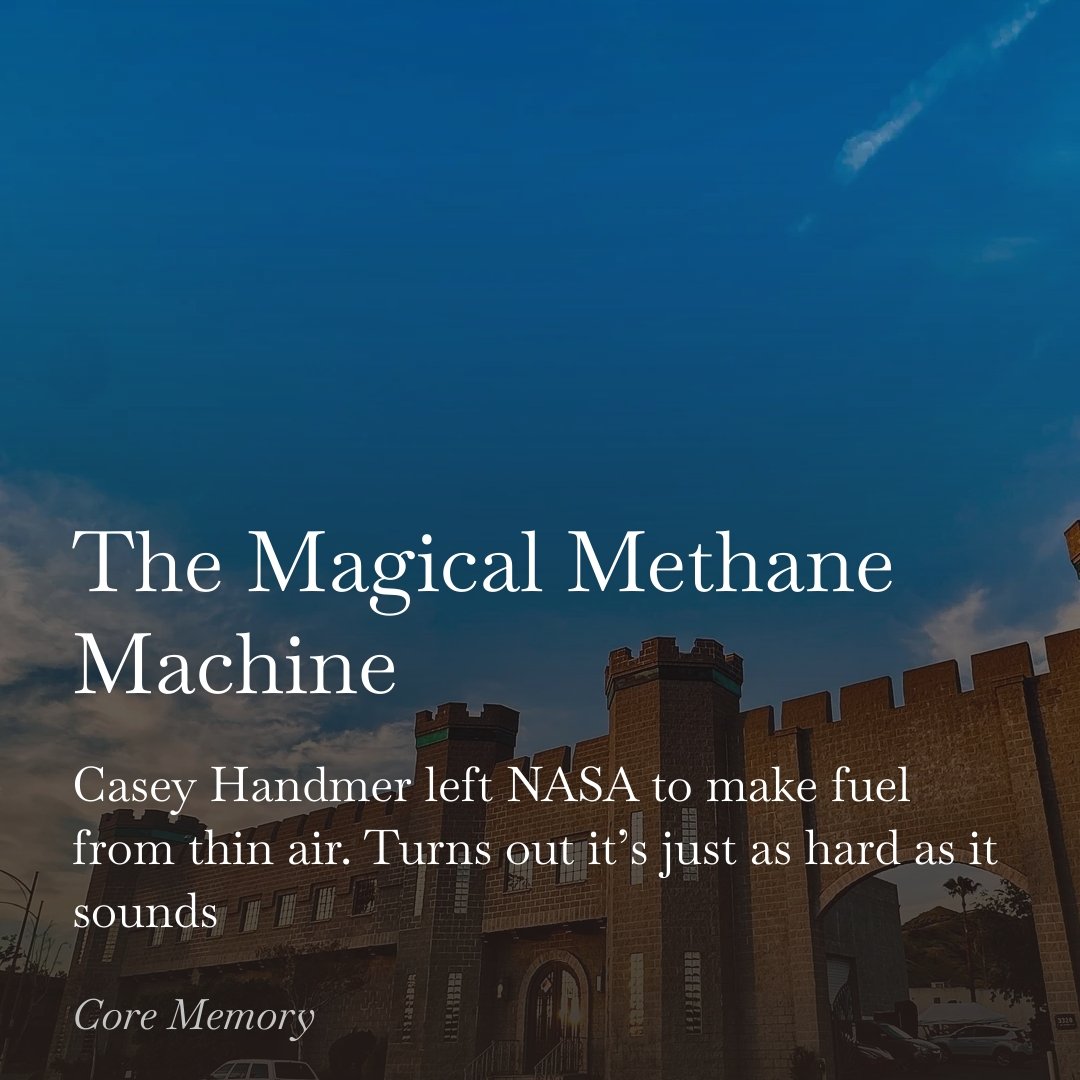
May we present to you 5,000 words on Casey Handmer and Terraform Industries reported over several months. If you would like to read about a team trying to make fuel from water, air and sunlight while working inside of a castle, we have what you need right here corememory.com/p/the-magical-…
Ashlee Vance tweet media
English
14
90
681
109.4K
Brian Gallagher retweetledi
Massimo
Massimo@Rainmaker1973·
This $250,000 Zapata Air Scooter is the lightest single-person mobility vehicle. [📹supercarblondie]
English
80
264
1.4K
150.7K
Brian Gallagher
Brian Gallagher@Space4Light4All·
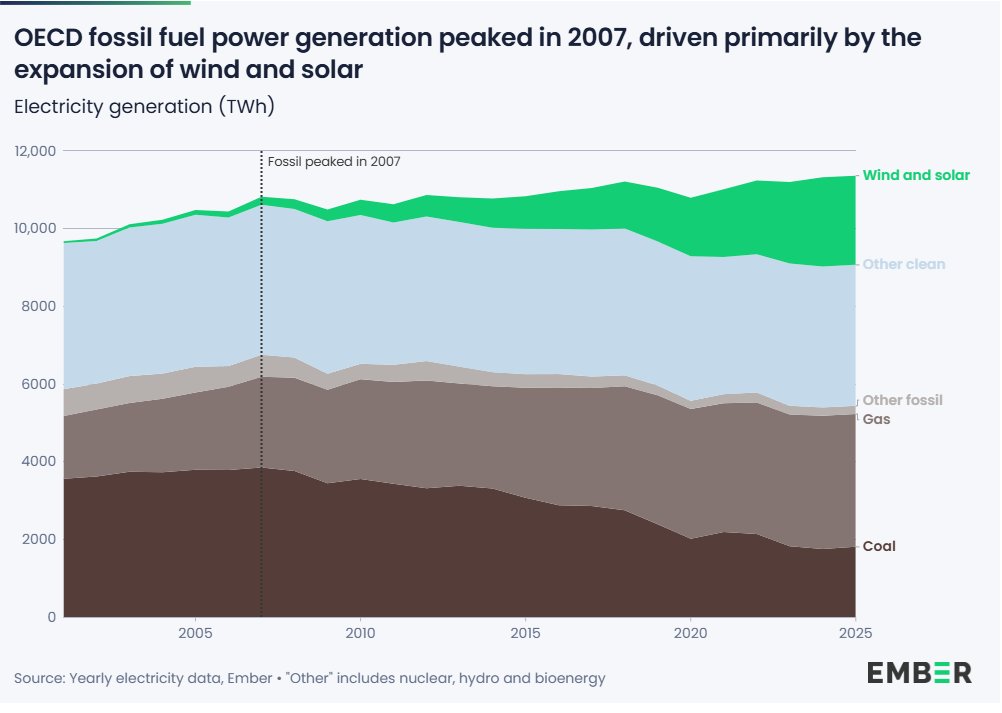
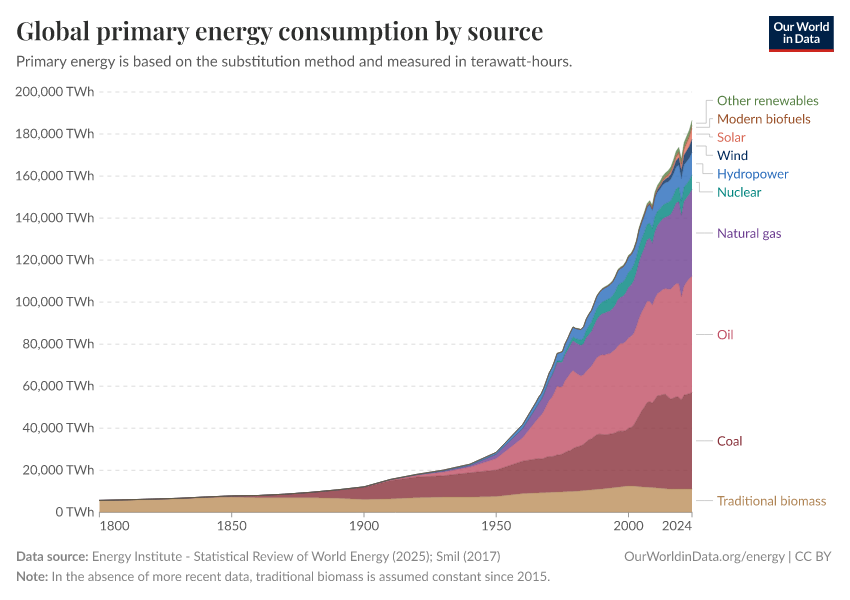
@NotAgainAhhhhh @kimmonismus Now show the primary source of all of that energy? Natural gas, oil, and coal as well as traditional biomass are aged and compressed biomass based on energy from the ….
English
1
0
0
33
Chubby♨️
Chubby♨️@kimmonismus·
OECD countries have moved past a structural peak in fossil fuel electricity, with generation down 19% since 2007 as wind and solar more than covered both demand growth and fossil decline. Expanding storage capacity is particularly helpful for storing solar energy. Solar power is the future, affordable, readily available, and easily scalable. However, nuclear energy also has significant benefits.
Chubby♨️ tweet media
English
15
19
184
175.3K
Brian Gallagher retweetledi
Matt Mullin
Matt Mullin@matthewwmullin·
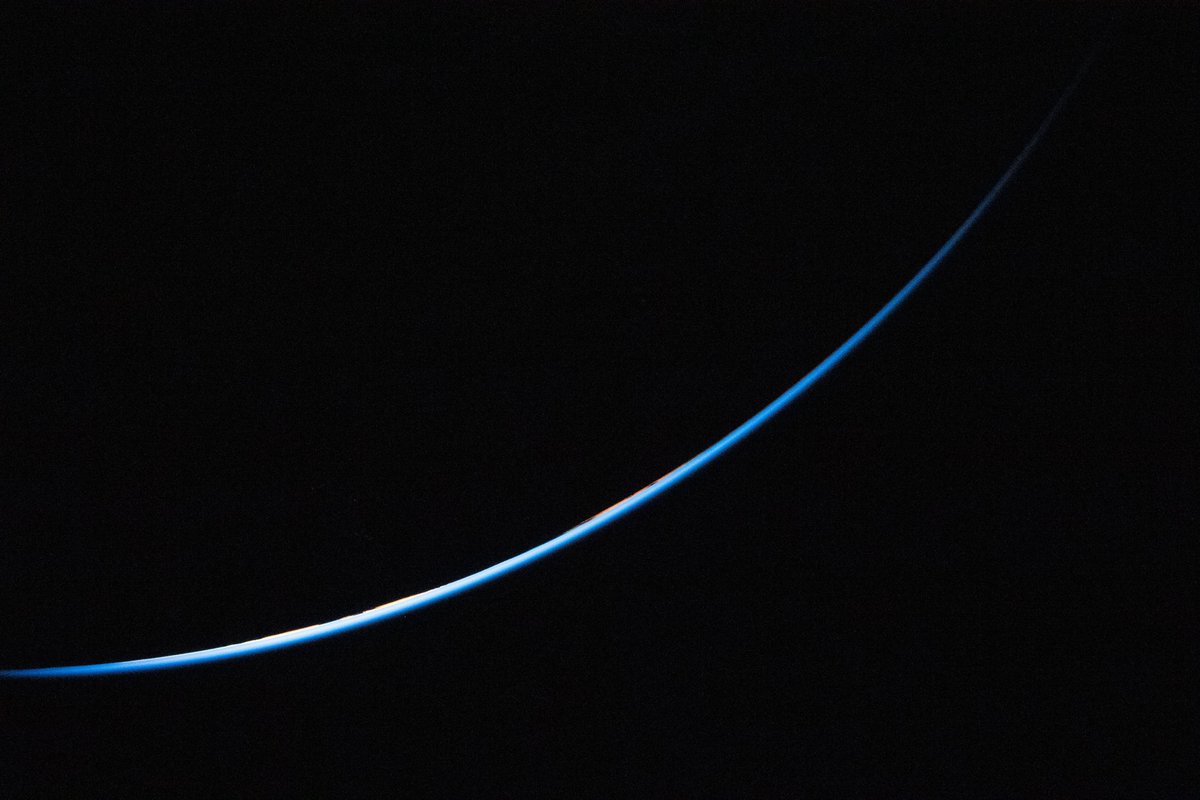
NASA HAS RELEASED OVER 12,000 IMAGES OF THE ARTEMIS II MISSION. Unbelievable perspectives captured by the Crew! The aurora on the eclipse is incredible.
Matt Mullin tweet mediaMatt Mullin tweet mediaMatt Mullin tweet mediaMatt Mullin tweet media
English
273
8.7K
60.7K
1.9M
Brian Gallagher retweetledi
Rand Paul
Rand Paul@RandPaul·
The last time debt hit these levels, America had just helped win a World War. What's our excuse today? Runaway spending. Bloated budgets. A uniparty that refuses to say no. I've said no. I'll keep saying no. But I need Americans to demand better from their representatives. wsj.com/economy/u-s-de…
Rand Paul tweet media
English
2.4K
1.8K
11K
466K
Brian Gallagher retweetledi
Saganism
Saganism@Saganismm·
Carl Sagan’s prediction about America, made 31 years ago.
English
107
2K
6.9K
522.4K
Brian Gallagher retweetledi
NASA Administrator Jared Isaacman
Congratulations to the Kingdom of Morocco on joining the Artemis Accords. Together, we’re building the future of exploration.
English
421
1.3K
11.1K
1.1M
Brian Gallagher retweetledi
Creepy.org
Creepy.org@creepydotorg·
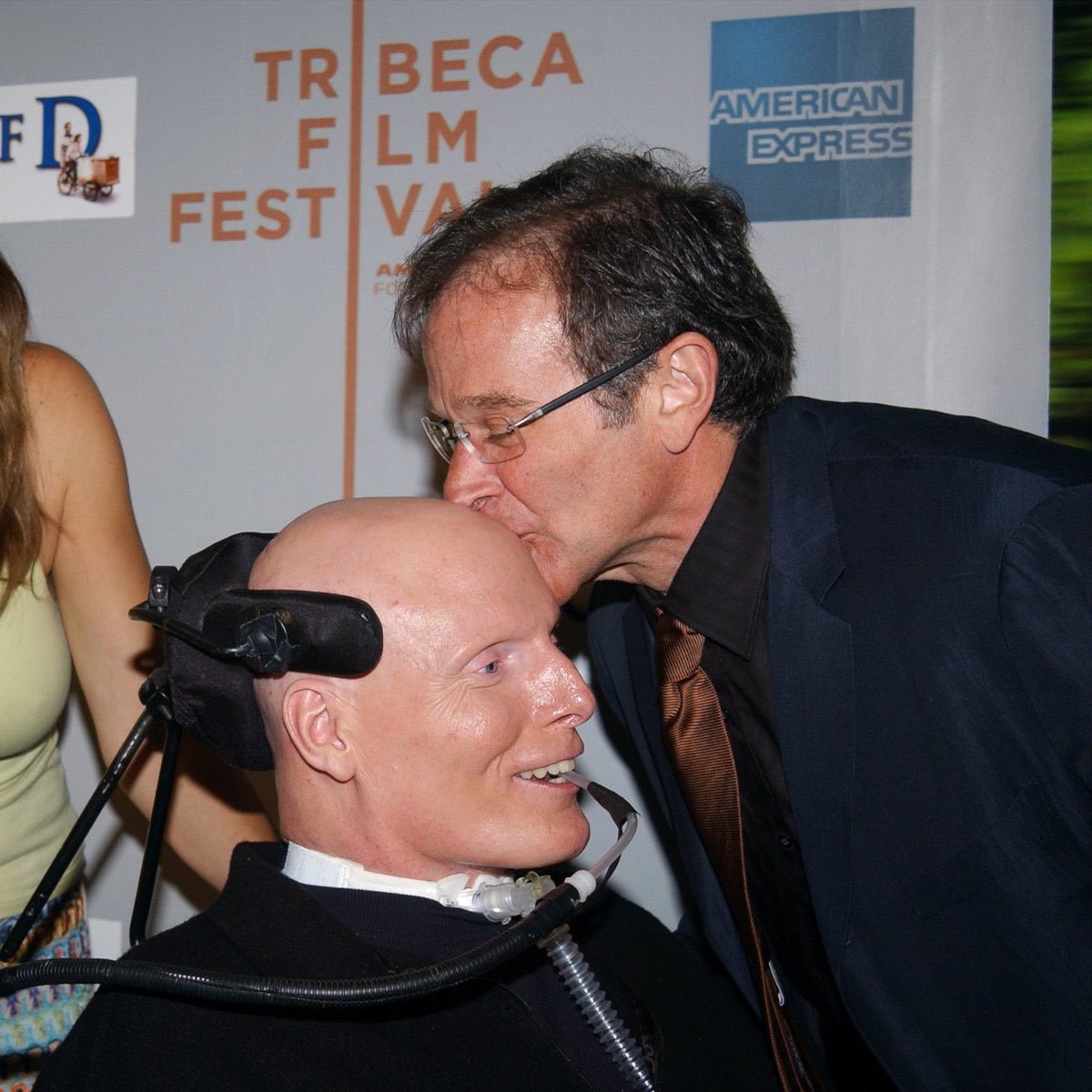
In 1995, Superman actor Christopher Reeve was thrown from a horse and paralyzed from the neck down. In the hospital, he could not move or breathe on his own. He later admitted he wanted to die. Then, just before surgery, a man burst into his room pretending to be a Russian doctor and demanding a rectal exam. Reeve was terrified until the man pulled off his mask. It was Robin Williams, his close friend from Juilliard. Williams made him laugh for the first time since the accident. Reeve later said: “If I can laugh, I can live.” Carried by that support, Reeve became a relentless activist for spinal cord research until his death in 2004.
Creepy.org tweet mediaCreepy.org tweet media
English
172
2.5K
49.6K
2.9M
NASA Administrator Jared Isaacman
It was an honor to stand beside the brave Artemis II Astronauts who made history on their successful mission. Personally, I feel the weight of the office every time I step foot in the Oval, and I am immensely grateful for the opportunity to serve President Trump @POTUS as we meet the moment, return American astronauts to the surface of the Moon, build the Moon Base, and prepare for where we will inevitably go next. At NASA, we are just getting started 🇺🇸
English
30
76
1.3K
10.9K
The White House
The White House@WhiteHouse·
"We have some people that captivated the attention of the whole world." 🇺🇸🚀 President Trump welcomes the astronauts of the Artemis II mission to the Oval Office.
English
538
1.5K
8.7K
201.5K
Brian Gallagher retweetledi
Jared Isaacman
Jared Isaacman@rookisaacman·
@John_Hudson We all have our superpowers. Mine are just easier to spot than others.
English
263
281
9.9K
180.1K
John Hudson
John Hudson@John_Hudson·
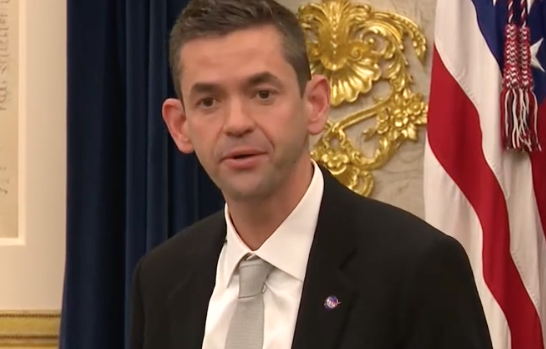
can't believe that just happened: Trump got a NASA question and deferred to NASA administrator Jared Isaacman, saying "the best man to tell you that is the man sitting right over here. You heard that question with those beautiful ears of yours ... He's got super hearing"
John Hudson tweet media
English
994
3.5K
58.7K
2.7M
Brian Gallagher retweetledi
Impulse Space
Impulse Space@GoToImpulse·
Access to space is solved. Impulse is building the highways to everywhere else in the solar system. Follow us into orbit: impulsespace.com
English
11
112
1.1K
55.3K
Brian Gallagher retweetledi
Jan Rosenow
Jan Rosenow@janrosenow·
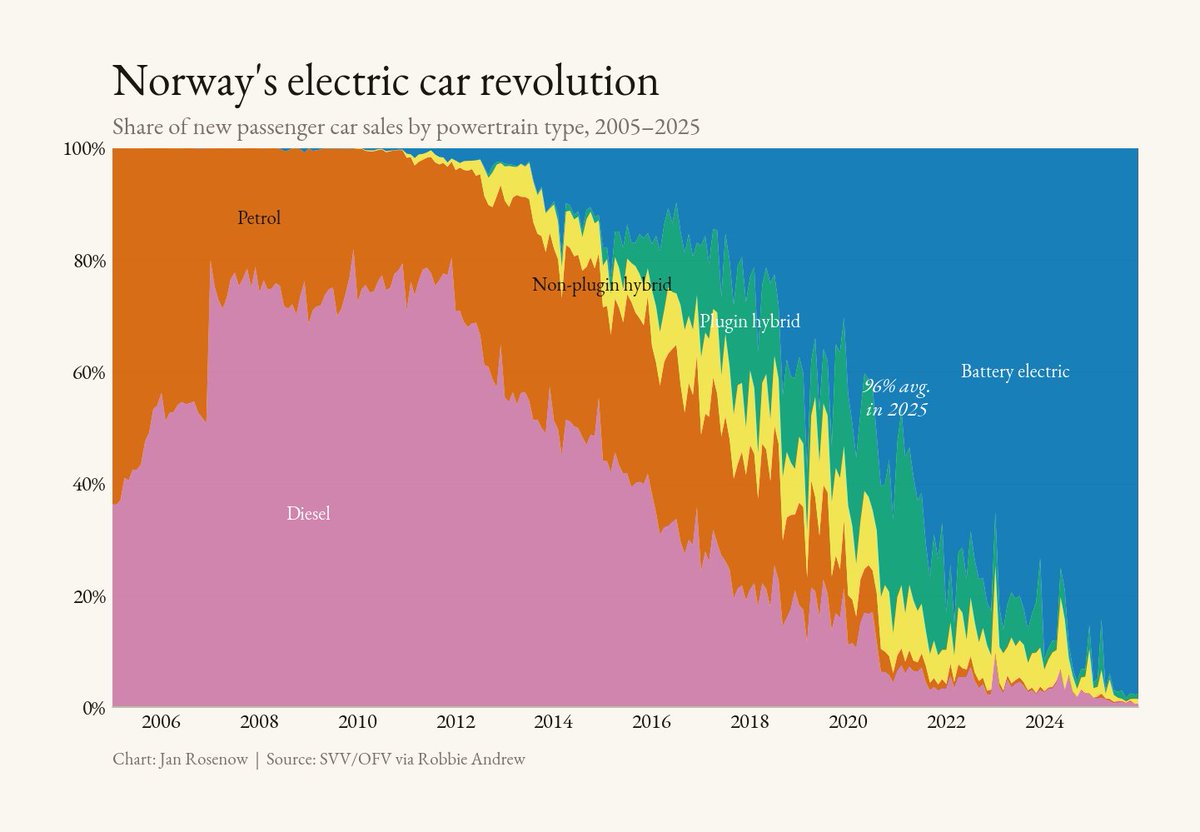
This is truly mind-blowing: Norway has gone from near-zero sales of non‑emitting battery electric vehicles to now close to 100% of all new passenger car sales - achieved in about 13 years. More in my next substack newsletter. Sign up here: @janrosenow" target="_blank" rel="nofollow noopener">substack.com/@janrosenow
Jan Rosenow tweet media
English
59
342
1.1K
43.8K
Brian Gallagher retweetledi
60 Minutes
60 Minutes@60Minutes·
Extended interview: Former Nebraska senator Ben Sasse has metastatic pancreatic cancer. He spoke with 60 Minutes' Scott Pelley about where America has been and where it could still go.
English
164
883
5.2K
2.1M
Brian Gallagher
Brian Gallagher@Space4Light4All·
@NASAAdmin @DJSnM Time to be cavemen again, utilize natural bunkers built a billion years ago by lava - radiation and thermal shielding already in place
English
0
0
0
11
Scott Manley
Scott Manley@DJSnM·
Yesterday while driving to the airport for a training flight I heard @NASAAdmin talking about the impact flashes observed by Artermis II crew on the dark side of the moon. Specifically I heard these described as 'Micrometeorites' and thought they would be bigger, so it got my brain running on estimating the actual size of these objects based on what I knew. By the time I got to the airport 10 minutes later I had concluded the mass of these impactors is kilograms, so not 'micro' meteors, and that's not a dig at Jared by any means, for his EVA on Polaris Dawn he had almost certainly discussed micrometeorites, things the size of a grain of sand, that could damage the suit. But, what I really want to talk about is the mental arithmetic I did while driving, because I do these order of magnitude estimates for all sorts of questions. So I don't have any deep understanding of how bright the flashes would have been to be visible to the crew, I don't have a deep understanding of human visual acuity. But I started from the assumption that this is comparable to a faint star appearing for a second or so. I know the absolute magnitude of the sun is 4.8, that's how bright the sun appears at 10 parsecs. That's towards the fainter end of stars, and if one appeared for a fraction of a second it might register. I know a Parsec is 206265AU. (and 206265 is number of arc seconds in a radian). I also know the solar constant at earth is about 1370W/m^2. So to get the solar flux at 10 parsecs I'd have to divide by 2062650^2 - but that's too much math, just approximate to (2*10^6)^2 - or 4x10^12. dividing 1370 by 4 is roughly 350 or 3.5x10^2 Which puts solar illumination at 10parsecs at about 3.5x10^-10 W/m^2 So that's my standard light flux for 'faint star'. Let's now assume the flash lasts 1 second to avoid adding extra math, change watts into joules. Now, reverse this and figure out the energy of the object on the moon, for that we'd need to know how far they were from the moon. And I didn't carry that around in my head, but, I knew the closest approach was about 4000 miles, and the eclipse was past closest approach. So I used the number of 10,000km because that's 10^7m making the math easy - I need the square of that so 10^14. To figure out the energy emitted we take the energy per square meter and multiply it by the surface area of the sphere with a radius equivalent to astronaut's viewing distance. Take that 3.5x^-10J and multiply it by 4xPIx10^14 4 Pi is about 12.5, so I use 3.5x12.5 as about 40 (because I know 12.5x4 = 50). It's about 7% low but I don't care for small errors. So total energy is 4x10^5J. But that's just the energy that comes out as light, the energy of an impactor mostly goes into other forms, I learned this while making my video on @NASAAmes Vertical Gun Range. I know it's between 0.01-1% of the kinetic energy that comes out as light. So, using 10^-3 that gives impactor energy of 4x10^8J Now figure out the impactor mass, impact speeds are 10-15km/sec, remember kinetic energy goes as v^2. Now you might think that 10km/sec gets you a nice factor of 10^8, but then you need to multiply the mass by a factor of 2 (because of 1/2 m v^2). But if you use 14.14km/sec then that eliminates the factor of 2, and puts the velocity closer to the high end. So, point is I just adjust the energy by 10^8 and leave the 4 part as my mass estimate. 4kg of course. Not a micrometeorite. So, my mass estimate for an impactor is on the order of a few kilograms, but there's massive error bars here, because I don't know how bright the flashes looked to the astronauts, I don't have a detailed model of the human visual system or the luminance conversion efficiency of meteorites. I have an order of magnitude estimate I did in my head while driving, and 90% of the process is just multiplying by powers of 10, simply adjusting the exponent. Sure you have to carry numbers around like the solar constant, absolute magnitude of the sun etc. But I bet many of you have esoteric numbers you carry around in your heads. I then proceeded to go flying and feel soundly humbled by ATC overloading my brain.
Scott Manley tweet media
English
89
93
1.8K
102.9K
Brian Gallagher retweetledi
Aakash Gupta
Aakash Gupta@aakashgupta·
For $128,000 you can buy a Jetson ONE, take off from your backyard, and never need a pilot's license. Every spec on it is reverse-engineered from a single FAA regulation. Part 103 caps ultralight empty weight at 254 pounds. Jetson built theirs at 189. Part 103 caps level flight at 55 knots. Jetson tops out at 63 mph, exactly that. Part 103 allows one occupant. Jetson built one seat. Stay inside those lines and the FAA does not classify what you are flying as an aircraft. No pilot's license. No medical certificate. No registration. No regulatory oversight of the design. No regulatory oversight of operator competency. That is the entire business model. The $128K buys you exemption from being a pilot. You can see it in the rest of the spec sheet. 13.5 kWh battery for 17 minutes of flight. Open cockpit, helmet required. Daylight only, uncongested areas, away from airports. Every line is a Part 103 rule rendered as hardware. Build it any other way and it stops being an ultralight, which means type certification, which means five years and nine figures before you ship a single unit. Joby has been at it since 2009. Archer since 2018. Combined they have raised over $4 billion building certified eVTOLs. Neither has carried a paying passenger. Jetson started shipping in 2024. Sold out through 2026. Deliveries pushed to 2027. Palmer Luckey took the first production unit. MrBeast flew one down the California coast. The whole point of buying a Jetson is the permission slip that comes with it. Everything else is just hardware.
English
407
700
6.4K
1.2M
Brian Gallagher retweetledi
Anish Moonka
Anish Moonka@anishmoonka·
The Mars rover Curiosity has a 15-watt radio for talking directly to Earth. Less power than the bulb in your fridge. By the time those 15 watts cross 140 million miles of empty space, almost nothing is left. The signal that arrives on Earth is so faint, engineers measure it in trillionths of a watt. To catch it, NASA built three giant dishes, each one taking up about two-thirds of a football field, in California, Spain, and Australia. As the planet spins, one of them is always pointed at Mars. Most of the time, even that direct link sits unused. Curiosity beams its photos up to a satellite circling Mars, which then beams them home to Earth. That satellite passes overhead for just 15 minutes, twice a day. The rest of the time, the rover just sits, snapping photos and storing them on a memory card. The 20-minute number in the original tweet is the high end. The actual delay shifts with where Earth and Mars sit in their orbits, never the same twice. At their closest, light takes 3 minutes one way. At their farthest, 22. Right now, it's about 10 and a half. Curiosity had a 2-year mission that was supposed to end in 2014. It's still alive. Eleven years past its expiration date. These days, every frame from Curiosity is 10 minutes old by the time it gets here, beamed by a 15-watt radio that should have died a decade ago.
Curiosity@CuriosityonX

It takes up to 20 minutes for the signal from this camera to reach Earth. If you were standing there waving at the camera, you would be dead or long gone by the time we even saw the first frame. 140 million miles of dead silence. This is Mars.

English
8
50
521
85.3K