
Tim Stearns

6.6K posts

Tim Stearns banner
Tim Stearns

Tim Stearns

@StearnsLab

Professor and Dean at The Rockefeller University. Cell biologist. Believer in the power of science education.

New York, NY Katılım Kasım 2010
1K Takip Edilen16.2K Takipçiler
Tim Stearns retweetledi
Edgar Dobriban
Edgar Dobriban@EdgarDobriban·
AI has helped resolve an important question in statistics. In the area of multiple hypothesis testing, the goal of controlling the false discovery rate (FDR) has been introduced in a seminal paper by Benjamini and Hochberg (1995). They also introduced a method (the Benjamini-Hochberg or BH method) and proved it controls the FDR. This method has been widely adopted in modern high-throughput science, including in genomics, astronomy, economics, etc. The paper has has garnered more than 130,000 citations to date. However Benjamini and Hochberg showed FDR control only when the data for the individual tests are *independent*. In practice, these data are often dependent; a good example is data on genetic variants due to linkage disequilibrium. Later work has focused on extending the validity of the BH procedure, e.g., to a form of positive dependence by Benjamini and Yekutieli (2001). The question of when the BH procedure controls the FDR has remained open. Over the last twenty years, many authors, including Reiner-Benaim (2007), Kim and van de Wiel (2008), Benjamini (2010), Sarkar (2023), Sarkar and Zhang (2025), have conjectured that the BH procedure controls the FDR for two-sided tests using any correlated Gaussian data. These authors have presented both theoretical and empirical evidence supporting, but not directly showing, the conjecture. With the help of AI (specifically GPT-5.6 Sol Pro), I have settled the question in the negative: The Benjamini-Hochberg procedure does *not* generally control the false discovery rate at the desired level for correlated two-sided Gaussian tests. This was done by exhibiting a Gaussian factor model for which, at a nominal level alpha=0.01, the false discovery rate is proved to be FDR>0.0104. There is a lot of interesting commentary to be made: 1. This result should be of interest to everybody in the field of statistics. Emmanuel Candes of Stanford University once called the false discovery rate and the Benjamini-Hochberg procedure "one of the two most important developments in statistics after 1950" (the other being James-Stein shrinkage). The present conjecture is probably the most central question about FDR/BH that was unresolved to date. 2. GPT-5.6 one-shot the problem after 90 minutes of reasoning, whereas with 5.5 I was not able to solve it even after iterating with multiple parallel agents for perhaps 20 hours. So the capability improvement is quite real. Exciting times to live in! 3. The argument is not especially surprising, but it does combine an asymptotic approach (standard for FDR analysis, see e.g., Genovese and Wasserman, Efron, etc) with a numerical certificate in a way that would be pretty non-standard in the field. Once we have the specific example, then straightforward simulations also support that the false discovery rate is indeed higher than the nominal value (see attached fig). 4. The current degree of violation over the nominal level is relatively small (0.104 vs 0.1). So the importance of this result is mainly conceptual. The practical implications remain to be determined. Overall, an exciting development! Preprint is available here (faculty.wharton.upenn.edu/wp-content/upl…) and will be on arxiv tonight; supporting code is here (github.com/dobriban/BH).
Edgar Dobriban tweet mediaEdgar Dobriban tweet mediaEdgar Dobriban tweet media
English
75
331
2K
1M
Tim Stearns
Tim Stearns@StearnsLab·
The public comments are in for the proposed rules change giving OMB unprecedented control over federal grants. This is an excellent analysis of the >250K comments. The large majority (94%) of were opposed, citing the danger of politicizing the process. techpolicy.press/the-public-rej…
English
0
2
6
687
Ronald Breaker
Ronald Breaker@RonBreaker·
Some personal news: Today, I start my service as the FAS Dean of Science at Yale. It is a tremendous honor to help lead such a vibrant scientific community. I’m grateful for the opportunity and eager to support the groundbreaking research and teaching that defines Yale science.
Ronald Breaker tweet media
English
9
0
49
2.9K
Polly Fordyce
Polly Fordyce@fordycelab·
@anshulkundaje @AakaashMeduri @davidasinclair The thing that is frustrating me about the story is that the sequencing isn’t the hard part and hasn’t been for a while. The challenge is taking that data and actually extracting meaning from it.
English
1
5
64
9K
Tim Stearns retweetledi
Zihan Xu
Zihan Xu@xu_zxu·
PerturbFate is officially out in @Nature today! From chromatin to RNA, we dissect the causal regulatory logic linking genotype to phenotype. Huge thanks to my PhD advisor @junyue_cao @Wei_Zhou_1989, and @RockefellerUniv for providing such an incredible research home!
Rockefeller University@RockefellerUniv

A @Nature study from Rockefeller's @junyue_cao describes a new platform called PerturbFate that reveals how diverse genetic perturbations funnel into shared disease states, a method that could unlock therapeutic targets for complex diseases. 🔗: bit.ly/4thIsRw

English
5
41
203
29K
Tim Stearns retweetledi
euan ashley
euan ashley@euanashley·
New AI paper from us this week. When my student first showed me his initial findings, I really didn’t know what to make of them. I felt that this was an interesting but curious loophole phenomenon that would shortly be closed. I was very wrong. arxiv.org/abs/2603.21687
euan ashley tweet media
English
59
257
1.5K
477.7K
Tim Stearns retweetledi
Li Zhao
Li Zhao@lizzyzhao·
We wrote a review on using machine learning to study evolutionary genetics and molecular evolution in Trends in Genetics @TrendsGenetics . It is open access—please read it if you are interested in this topic sciencedirect.com/science/articl…
Li Zhao tweet media
English
2
100
463
21.8K
Tim Stearns retweetledi
Rockefeller University
Rockefeller University@RockefellerUniv·
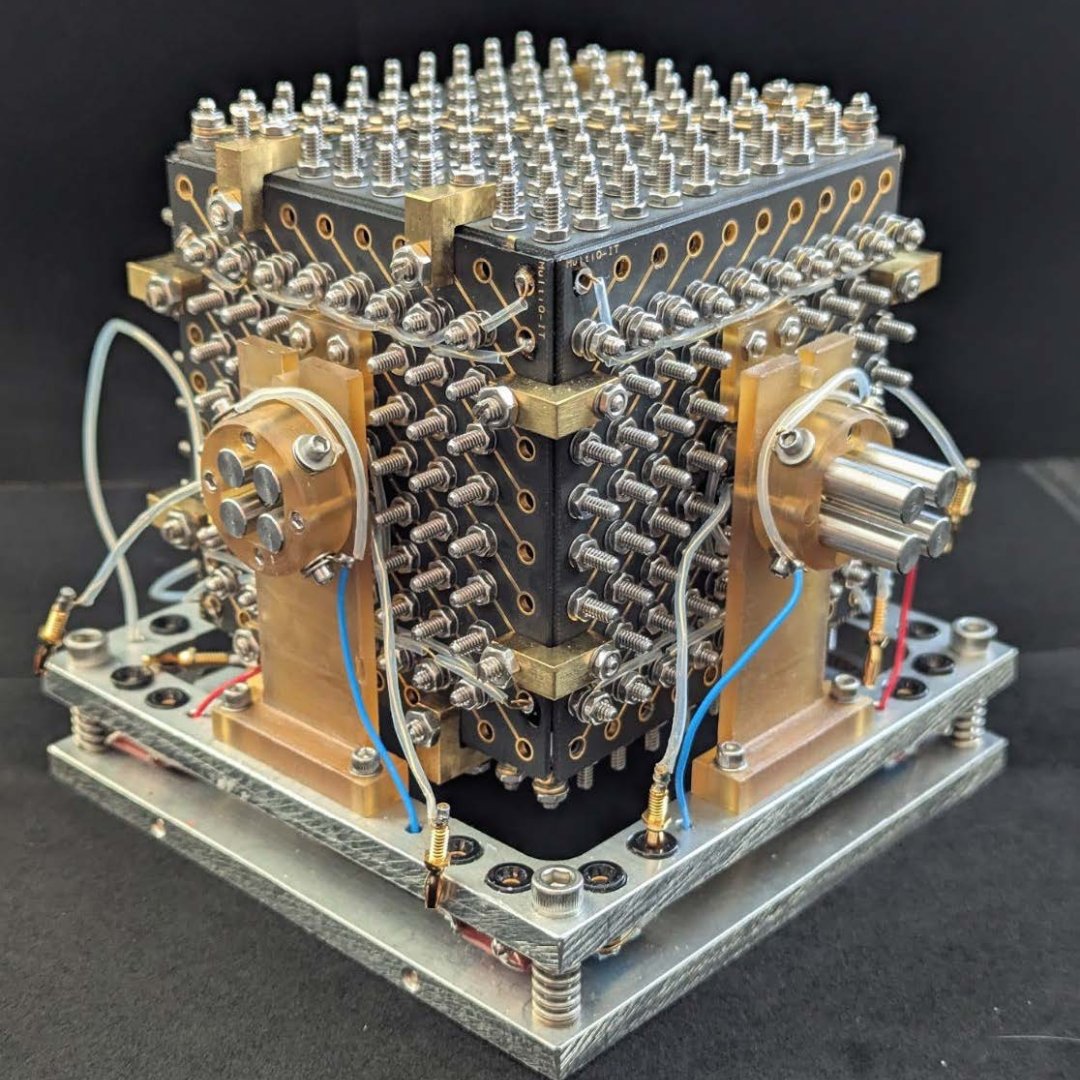
Most mass spectrometers still analyze molecules one or just a few at a time. Now, a new MultiQ-IT prototype from Rockefeller's Brian Chait described in @ScienceAdvances can cool, trap, filter, and redirect over a billion ions simultaneously. 🔗: bit.ly/47FWUd6
Rockefeller University tweet media
English
4
19
104
35.2K
Tim Stearns retweetledi
Genetics Society of America
Genetics Society of America@GeneticsGSA·
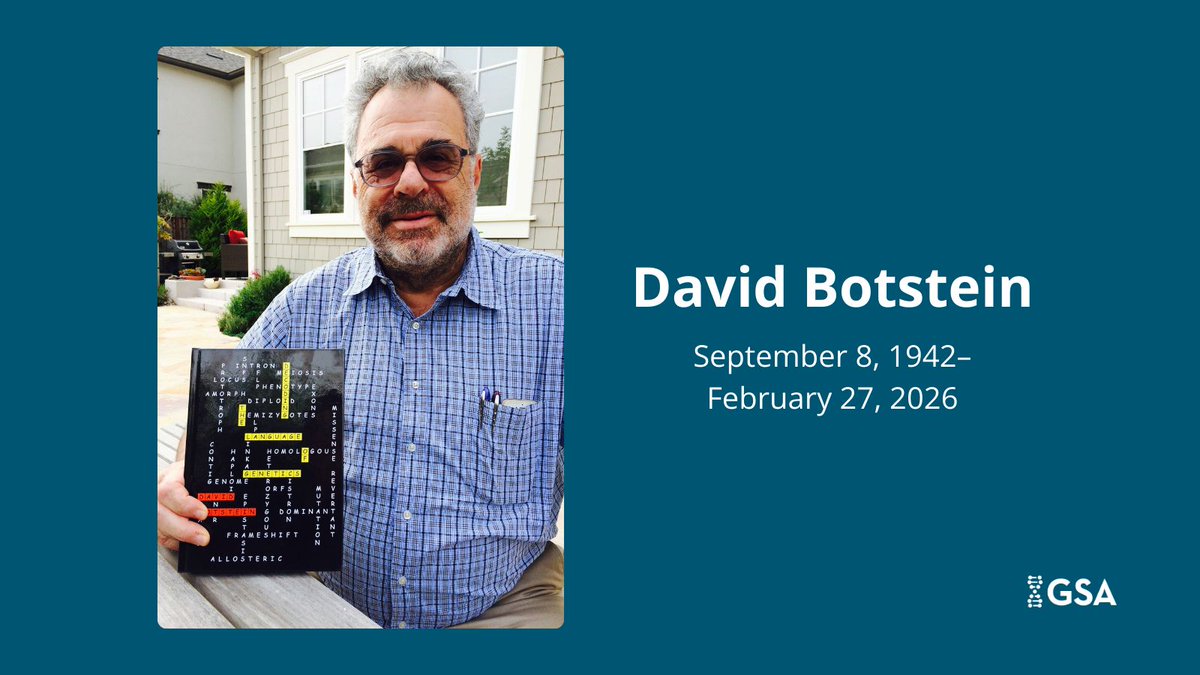
David Botstein, a titan within the scientific community, died last week. GSA mourns his passing and celebrates his legacy. Read more about his significance to our community in this thread ⬇️🧵
Genetics Society of America tweet media
English
1
5
7
804
Tim Stearns retweetledi
Rockefeller University
Rockefeller University@RockefellerUniv·
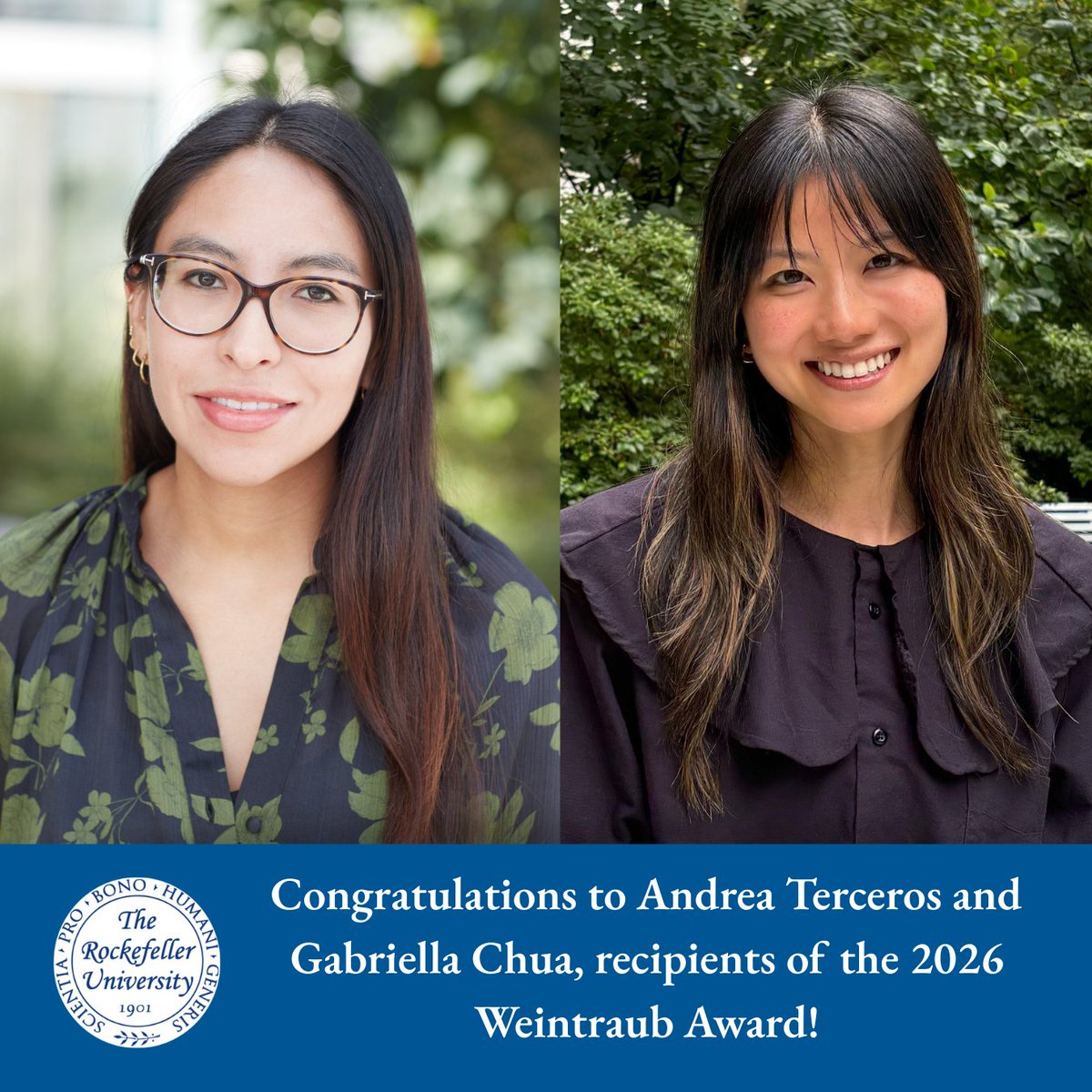
Huge congratulations to Gabriella Chua (@BadAtCloning) and Andrea Terceros, 2026 recipients of the Weintraub Award! The award, given by @fredhutch, is considered among the most prestigious prizes for graduate students in the biosciences: bit.ly/4sfaxI9
Rockefeller University tweet media
English
0
6
23
3.3K
Tim Stearns retweetledi
Prachee Avasthi
Prachee Avasthi@PracheeAC·
Ok so I tried out the tool on an area where I’m an expert where I already have very strong knowledge of the literature and understanding of the prevailing wisdom of the field. I also input a dataset I generated and analyzed myself (literally with my hands) so I knew the methodology backwards and forwards. Quick aside to define some terms: nearly all of your cells have an antenna, a cilium, that does two way communication to sense and transmit signals and its length has everything to do with its function. Hundreds of genes are involved in the formation, maintenance, and function of this antenna. When they’re mutated, you get a whole host of multi-symptom disorders from blindness to sterility to developmental disorders to kidney disease and and and and …. The mechanisms that affect cilium length/function are therefore of great translational interest. The dataset I generated (like 15+ years ago) was a chemical screen of 1280 FDA approved drugs with known targets to identify mechanisms affecting cilium length and function. The hypothesis it generated with the greatest surprisal score was an interesting one. The prior was indeed a vague opinion I held, that on the basis of existing research, there was a potential mechanistic tie between cilium resorption and autotomy (self-severing in response to stress). Think shrinking vs. severing. Various studies showed the activities occur in tandem or in sequence. And number of cellular processes involve both. The two activities can be independent and separable but the relationship is unclear and suggestive. The tool suggested due to insufficient evidence (not statistically significant) of enrichment of shortening drugs among severing set and vice versa that the data don’t support a shared mechanism. And there’s relatively little overlap between the compounds that result in both outcomes. So despite the suggestive evidence of a link, these specific data don’t support it. So what do I think about this conclusion? A hypothesis presumed to be true for which the null based on the data cannot be rejected. As always with AI, I’m not using it to replace my thinking but it’s making me think differently and more deeply. About the prior evidence too. And indeed even the evidence of shared mechanism in shrinking and severing are vaguely suggestive but not clearly demonstrated. But also the lack of mutual enrichment given the bias in the library and relatively small N is certainly no nail in the coffin. So interpretation of imperfect data via other imperfect data is well…imperfect. But this exercise is immensely useful and it has meaningfully changed my perspective. The lab experiments I’d propose to tease it apart are different. And I wouldn’t just throw up my hands and be opinionated about the parsimonious model based on what’s known (objectively little) but would instead be more precise in the perception of likelihoods in my mind. Once again, I implore scientists to not live or die by the specific outputs of these models and tools but enjoy the absolute richness of the experience of being given a jet pack. That we get to live in this technological moment as scientists is hard to fully appreciate. Making scientists better and ask harder questions previously not sufficiently explored IS making science better even if it doesn’t yet replace us.
Prachee Avasthi@PracheeAC

Let’s go! This from @allen_ai is the coolest thing I’ve seen in a while. Instead of automating the human scientist approach to hypothesize the glaring thing prior information points to, this is an automated discovery tool that measures how much an LLM’s prior belief about a hypothesis shifts after incorporating evidence from a structured dataset, prioritizing surprise. This Bayesian approach provides a way to explore the vast hypothesis space more efficiently based on information gain. The approach and tool are the perfect example of how automated systems can improve upon rather than simply recapitulate the biases, redundancies, and consensus-washing of human discovery. At the risk of generating moral panic, I see many applications including balancing funding portfolios by incorporating principled dataset and hypothesis generation through approaches like this. There’s an opportunity to dramatically increase the knowledge-return on research investment. And dramatically accelerate novel discoveries. Kudos to the team that developed this aggressively sensible approach and made it more broadly available. I think the impact will be huge allenai.org/blog/autodisco…

English
1
7
41
9.5K
Tim Stearns retweetledi
Ryan K. Louie, MD, PhD
Ryan K. Louie, MD, PhD@ryanlouie·
This was from 7 years ago, but it continues to be one of my favorite posts of all time. Thank you @StearnsLab for your very kind support always!
Tim Stearns@StearnsLab

@ManuelTHERY @MadS100tist @AnnCavanaugh327 And there is this patent, from @ryanlouie, when he was a grad student at Stanford: “Metallic Nanowires Cast from Microtubule Lumens” I was on his thesis committee, and it was a crazy side project. patentimages.storage.googleapis.com/ef/48/03/1be9e…

English
0
1
1
992
Tim Stearns retweetledi
Itai Yanai
Itai Yanai@ItaiYanai·
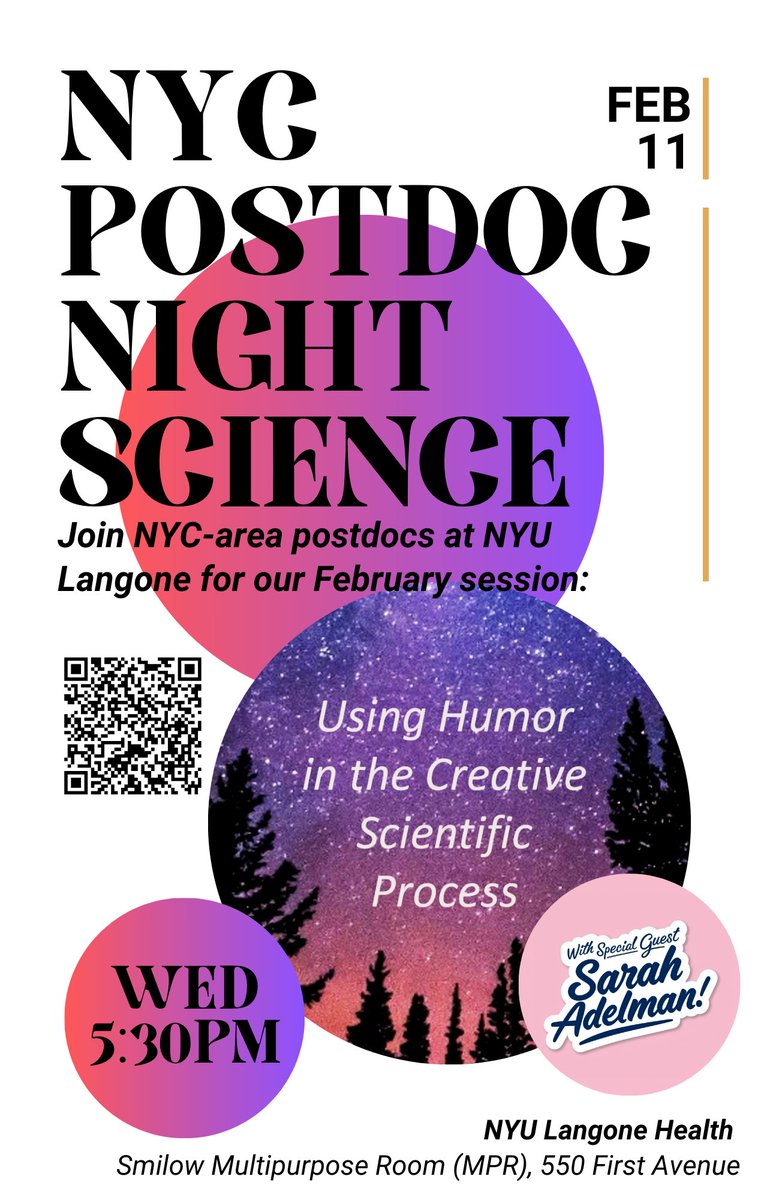
NYC Postdocs! Interesting in using comedy in the creative scientific process? NYC Postdoc Night Science will have its first 2026 meeting on Feb. 11 at @NYULH_postdocs. I'll lead this with the amazing stand-up comedian Sarah Adelman! Free registration: docs.google.com/forms/d/11SztT…
Itai Yanai tweet media
English
1
4
11
3.4K
Tim Stearns
Tim Stearns@StearnsLab·
@Archaeon_Alex Best wishes for a great start at Indiana, Alex! I look forward to hearing about your Great Salt Lake project. The microbialites are so interesting!
English
1
0
1
31
Alex Bisson
Alex Bisson@Archaeon_Alex·
I am beyond excited to announce that the Bisson Lab has a new home!!! Starting January 2026, I will join the Biology Department at Indiana University Bloomington as Associate Professor with tenure. The Bissons are now with the Bisons! Check out our updated website: bissonlab.com We’ll continue to focus on archaeal cell mechanobiology and tool-building to study microbial life, while expanding to new projects at the Great Salt Lake (more details soon). I am deeply grateful to my future colleagues at IU-Biology for their warmth and support. It is a privilege to join a department with a foundational legacy in microbiology, shaped by figures such as Salvador Luria and Giuseppe Bertani. I am actively recruiting scientists across all levels (see the details by the end of the thread) [1/4]
Alex Bisson tweet media
English
4
0
20
689