Stedman

1.4K posts

Stedman banner
Stedman

Stedman

@StedmanBlake

Our duty is to maintain and evolve the human superorganism. "Our lives are not our own." Founder at Neon Health.

San Francisco, CA Katılım Kasım 2013
522 Takip Edilen522 Takipçiler
Stedman retweetledi
😈
😈@turtlekiosk·
when you watch a movie and some catastrophic failure happens in some system and the computer says like "containment breached" and you're like well how bad could it be if the UX has a specific error state for that flow
English
51
1.1K
28.5K
453.5K
Stedman
Stedman@StedmanBlake·
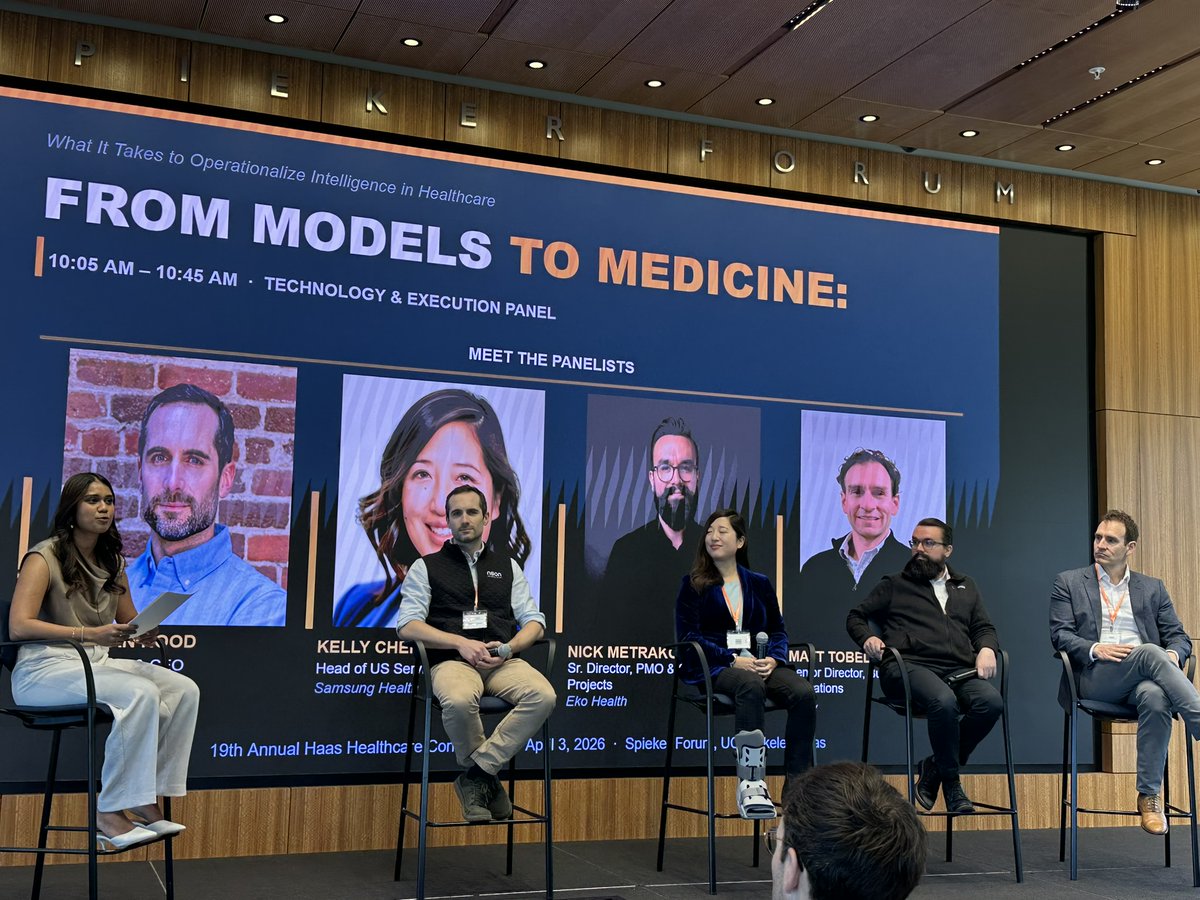
Someone asked me this morning: where are founders missing the mark with AI agents in healthcare?... My answer surprised them. Distribution and change management. There's a study: post-ER discharge, a nurse calls patients with a simple script. 7-day readmissions drop 50%. 𝗧𝗵𝗲𝘆 𝗿𝗮𝗻 𝘁𝗵𝗲 𝘀𝗮𝗺𝗲 𝘀𝗰𝗿𝗶𝗽𝘁 𝘄𝗶𝘁𝗵 𝗻𝗼𝗻-𝗰𝗹𝗶𝗻𝗶𝗰𝗮𝗹 𝘃𝗼𝗹𝘂𝗻𝘁𝗲𝗲𝗿𝘀. 𝗦𝗮𝗺𝗲 𝗲𝗳𝗳𝗲𝗰𝘁. If a non-clinical AI volunteer can do it, then an AI agent can do it too. The technology isn't the bottleneck. Convincing the person at the health system — the one with a million other priorities — that it's going to work? That's the actual challenge. Healthcare AI is mostly a distribution and change management problem dressed as a technology problem. Link to study in comments 👇️ Great discussion on this and more at University of California, Berkeley, Haas School of Business today. Grateful to share the stage with Matthew Tobelmann (Verily), Nick Metrakos (Eko Health), Kelly Cheng ( Samsung Electronics America), and Sana Singru.
Stedman tweet media
English
0
0
1
32
Stedman
Stedman@StedmanBlake·
𝗡𝗮𝘀𝗵𝘃𝗶𝗹𝗹𝗲, 𝗔𝗽𝗿𝗶𝗹 𝟭𝟯 — we're sponsoring AMCP 's AI Pre-Conference ("Keeping the Human in AI"). The formal lineup is legit good: Nathan Frank (CDO, Aetna) keynoting, panels on member engagement, AI governance, formulary ops, and a breakout on speed to therapy that's directly in our wheelhouse. But the part I'm most looking forward to is the hallway track. This is where the people actually making decisions -- formulary directors, patient services leaders, plan design execs -- compare notes on what's working, what's vaporware, and what keeps breaking in production. If you're heading to AMCP, come find me at the booth or on Broadway 🤠 . Happy to talk patient access, what responsible AI implementation actually looks like in practice, or what we're building at Neon | AI-powered patient access .
English
0
0
0
23
Stedman
Stedman@StedmanBlake·
12 Vendors Walk Into a pharma hub… sounds like the start of a bad joke. But Hybrid hub implementation right now is nuts. The vendor sprawl is insane. CRM. Staffing. Benefits verification specialists. Prior auth bolt-ons. Patient engagement tools. Fulfillment partners. Data aggregation. Marketing agencies. And that’s before you add the consultants coordinating all of it! Five years ago, the pitch was simpler. Fewer options, but also fewer “throats to choke” when something goes wrong. Now we've swung all the way back to "I need ‘best in breed’ for every function"... and best in breed means 12 different conversations, 12 different contracts, 12 different integration points. Every swing of the pendulum solves one problem and creates others. (Though honestly, I get why buyers keep swinging. The "one vendor does everything" era had its own problems.) How many vendors are at your table right now? 🙃
English
0
0
0
30
Stedman
Stedman@StedmanBlake·
Mark Cuban is keynoting a pharmacy leadership conference. That's not a coincidence. Mark Cuban Cost Plus Drug Company, PBC was a signal — that patients are getting priced out and left behind, and people outside the system are starting to notice. I'll be at Becker's Healthcare CPO Summit in Chicago April 15-16 with Neon | AI-powered patient access — talking to the execs closest to the real gap: between a drug getting approved and a patient actually starting therapy. 𝟲𝟬% 𝗼𝗳 𝗽𝗮𝘁𝗶𝗲𝗻𝘁𝘀 𝗱𝗿𝗼𝗽 𝗼𝗳𝗳 𝗯𝗲𝗳𝗼𝗿𝗲 𝘁𝗵𝗲𝗶𝗿 𝗳𝗶𝗿𝘀𝘁 𝘁𝗿𝗲𝗮𝘁𝗺𝗲𝗻𝘁. That's not a coverage problem. That's an execution problem. And pharmacy leaders are sitting right in the middle of it. If you'll be there — especially if you're thinking about specialty access, enrollment, or the operational mess no one wants to fix — find me or send me a DM. Wdyt?
Stedman tweet media
English
0
0
0
30
Stedman
Stedman@StedmanBlake·
📉 I'm hearing the same number across patient services right now. 50% cost reduction. Five years. Not a goal. A survival number. The C-suite and the boards are working backward from that number, and the operators are scrambling to figure out how to get there. Here's what that actually means: 𝗧𝗵𝗲 𝗽𝗿𝗶𝗰𝗶𝗻𝗴 𝗺𝗼𝗱𝗲𝗹 𝗵𝗮𝘀 𝘁𝗼 𝗰𝗵𝗮𝗻𝗴𝗲. You can't cut 50% of costs when your revenue is built on per-FTE billing. The math doesn't work. You either change how you price or you change what you sell. 𝗧𝗵𝗲 𝗰𝗼𝗻𝘁𝗿𝗮𝗰𝘁𝘀 𝗵𝗮𝘃𝗲 𝘁𝗼 𝗰𝗵𝗮𝗻𝗴𝗲. Multi-year service agreements written around headcount don't survive an automation transition. Someone has to renegotiate. Fast. 𝗧𝗵𝗲 𝘁𝗲𝗮𝗺𝘀 𝗵𝗮𝘃𝗲 𝘁𝗼 𝗰𝗵𝗮𝗻𝗴𝗲. The people who built these businesses on relationship-driven, high-touch models need to learn a completely different operating rhythm. Five years sounds like a lot of time. It's not.
English
0
0
0
11
Stedman
Stedman@StedmanBlake·
60% of patients don't start specialty therapy after their prescription is written. Is that number actually improving? Are patients reaching therapy faster? Is the infrastructure between prescription and therapy start meaningfully changing? I'm heading to Asembia's AXS26 Summit in Las Vegas (April 26–30) and will be posting up at the 𝗿𝗲𝗱 𝗯𝗼𝗼𝘁𝗵 #𝟭𝟴𝟯𝟴. This is one of the few places where the people who could answer that honestly are all in the same building — hub ops leaders, pharma patient services teams, access program managers, specialty pharmacies, and builders. I'm bringing questions, not a pitch. Come find me if you want to trade answers. Wdyt?
Stedman tweet media
English
0
0
0
8
Stedman retweetledi
David J Phillips
David J Phillips@davj·
"Make no mistakes DO NOT HALLUCINATE. YOU ARE AN EXPERT SOFTWARE ENGINEER"
English
192
2.1K
24.4K
1.3M
Stedman
Stedman@StedmanBlake·
Drug pricing is a balloon. Squeeze one end, it inflates somewhere else. The MFN executive order is pushing US prices down toward what other developed nations pay. That's the pitch. Here's what's actually happening on the other side: 𝗠𝗮𝗻𝘂𝗳𝗮𝗰𝘁𝘂𝗿𝗲𝗿𝘀 𝗮𝗿𝗲 𝗿𝗮𝗶𝘀𝗶𝗻𝗴 𝗽𝗿𝗶𝗰𝗲𝘀 𝗮𝗯𝗿𝗼𝗮𝗱. Instead of lowering US prices to match Europe, some companies are raising European prices to narrow the gap from the other direction (which is not what anyone pitched to voters). 𝗧𝗵𝗲 𝗴𝗹𝗼𝗯𝗮𝗹 𝗽𝗿𝗶𝗰𝗶𝗻𝗴 𝘀𝘆𝘀𝘁𝗲𝗺 𝗶𝘀 𝗿𝗲𝗯𝗮𝗹𝗮𝗻𝗰𝗶𝗻𝗴. And in December, the UK agreed to increase net prices on new drugs by 25% as part of a US-UK trade deal. American patients may pay less. British patients will pay more. The total global cost of drugs doesn't change. It just gets redistributed. And here's where it hits patient access directly: if US list prices drop but manufacturers offset by tightening rebate structures, the people navigating copay assistance programs and prior auth are dealing with a completely different math problem. The price tag changes. The access barriers might not. This is the part of the drug pricing conversation that doesn't fit on a bumper sticker. There's no version of this where everybody wins. Somebody's paying. The question is who and how much.
English
0
0
1
19
Stedman retweetledi
Noah Smith 🐇🇺🇸🇺🇦🇹🇼
People ask me: What will replace traditional higher education? And my answer is: Running from swarms of autonomous killer drones
English
35
126
1.3K
52.8K
Stedman
Stedman@StedmanBlake·
Sperm counts in Western men have dropped 59% since 1973. I first saw something about this in an Instagram ad I ignored. Then I actually read the studies. Turns out polyester underwear generates an electrostatic field across your scrotum (339 volts per square centimeter, per a Cairo University study). Cotton generates zero. Human and animal studies both showed polyester significantly reduced sperm production and sexual function. The kicker: synthetic fabrics became standard in men's underwear over the same decades sperm counts cratered. Correlation isn't causation. I know. My wife and I are about to freeze embryos, and I switched to all-cotton. You can call me paranoid.
English
0
0
1
179
Stedman retweetledi
clem 🤗
clem 🤗@ClementDelangue·
After @Pinterest @Airbnb @NotionHQ @cursor_ai, today it’s @eoghan @intercom publicly sharing that they’re finding it better, cheaper, faster to use and train open models themselves rather than use APIs for many tasks. And hundreds of other companies are doing the same without sharing. Ultimately, I believe the majority of AI workflows will be in-house based on open-source (vs API). It took much more time than we anticipated but it’s happening now!
clem 🤗 tweet media
English
81
185
1.7K
398.7K
Stedman retweetledi
Elon Musk
Elon Musk@elonmusk·
@LeahLibresco Something way cooler than a minivan is coming
English
4.2K
2.1K
40.8K
4.1M
Stedman
Stedman@StedmanBlake·
📈 PBM reform is now law! Signed February 3rd. The Consolidated Appropriations Act of 2026 includes the most significant federal PBM reform ever passed (and it was bipartisan: 71-29 in the Senate). Shoutout to Rep. Buddy Carter, who's been driving this for over a decade. A decade! Starting in 2028: 𝟭𝟬𝟬% 𝗿𝗲𝗯𝗮𝘁𝗲 𝗽𝗮𝘀𝘀-𝘁𝗵𝗿𝗼𝘂𝗴𝗵. PBMs must remit all rebates, fees, and alternative discounts to plan clients. Quarterly. Within 90 days. No more skimming. 𝗖𝗼𝗺𝗽𝗲𝗻𝘀𝗮𝘁𝗶𝗼𝗻 𝗱𝗲𝗹𝗶𝗻𝗸𝗲𝗱 𝗳𝗿𝗼𝗺 𝗱𝗿𝘂𝗴 𝗽𝗿𝗶𝗰𝗲𝘀. PBM fees must be flat-dollar, fair market value "bona fide service fees." PBMs can no longer get richer when drugs get more expensive. The incentive to steer toward higher-cost drugs just lost its economic engine. 𝗧𝗿𝗮𝗻𝘀𝗽𝗮𝗿𝗲𝗻𝗰𝘆 𝗿𝗲𝗽𝗼𝗿𝘁𝗶𝗻𝗴. Semiannual reports to employer plans on net drug spending, rebates, and spread pricing. Employers are about to see exactly how much they've been overpaying. If you're renegotiating PBM contracts right now, are you building in language that anticipates this? LFG.
English
0
0
0
30
Polymarket
Polymarket@Polymarket·
JUST IN: New York City reportedly now spending more per homeless person than the median income of the city.
English
300
974
10.3K
1.8M
Stedman retweetledi
vittorio
vittorio@IterIntellectus·
this is art
vittorio tweet media
English
249
6.3K
43.2K
936K
Stedman
Stedman@StedmanBlake·
Here's the thing about the FTE model in patient services that nobody wants to say out loud. The business model is designed to be inefficient. One hundred people is how you get paid. Not ten people with better tools doing the same work (probably better work, honestly). The financial incentives don't reward efficiency... they punish it. So when a hub exec says "we're exploring AI," what they're really navigating is: how do I adopt technology that makes my revenue model obsolete?” That's not a technology problem, it's an existential business model problem. I was talking to an exec who's been in this space for over two decades. He put it simply: the appetite from pharma to demand more is bigger than he's ever seen. But the hubs' ability to deliver on it (while keeping their pricing intact) is shrinking. Nobody's saying it in the RFPs yet. But everybody's thinking it.
English
0
0
0
26
Stedman
Stedman@StedmanBlake·
Prior auth isn't a bug. For some stakeholders, it's a feature. An industry veteran told me: "Incentives are not aligned to reduce prior authorizations." Think about who actually WANTS PA gone: patients, prescribers, EHRs, self-funded employers. Now think about who benefits from the friction: PBMs managing formulary economics. MCOs protecting budgets. Medicaid programs blocking spend. Prior auth isn't a bug. For some stakeholders, it's a feature. This doesn't mean the fight is hopeless. It means you have to be clear-eyed about which battles you're picking and who's actually on your side. When we work with pharma hubs and specialty pharmacies, we're not naively assuming everyone wants the same outcome. We're helping the people who ARE aligned (the ones fighting to get patients on therapy) win faster. The question isn't "will prior auth go away?" It won't. The question is: who's going to be better equipped to navigate it?
English
0
0
0
22