
Sabitlenmiş Tweet
VALUS
25.9K posts


VALUS
@StephenValus
'My mission is to celebrate higher things, and that is why God gave me speech and a grateful heart.' - Hölderlin 🦅
AMERICA Katılım Nisan 2022
1.8K Takip Edilen642 Takipçiler



Whatever the absolutes or universal laws may be, in my ordinary negotiations with reality, I find nothing that is genuinely static or categorical, except as a matter of superficial convenience, and that everything, so far as my relations with it are concerned, is dynamic and mercurial; subject to unexpected, potentially drastic alterations, as circumstances and priorities change.
I agree with, because I understand, Stirner's assessment of "fixed ideas" and their power to haunt. True, radical recognition of the individual, subordinates all else; the true man looks down on all that he discovers even in his own head, heart, body, soul, etc., in short, everything that formerly was called himself.
Nothing has authority over him, and nothing's claim is presumed to be approved, once and for all time, but, rather, he is unconditionally free to reinterpret every claim upon his will, insofar as he exists as an independently willing being in this moment, calling on whatever resources are present, to decide as best he can, the better course available at hand.
Rules are only rules of thumb. In the mutable actuality of intersecting concerns, one might almost say that, there are only exceptions. And the linguistic conventions, largely governing even our most original articulations, oblige us to speak of unprecedented, particularizations of reality in terms made broad and blurry, worn and dulled by common use.
Whatever gets communicated is already changed through contact with the air. The faintest scent of one's intended meaning passes, without suffering some disfiguring mutation, beyond the membrane of Saturn, and one is free to call one "understood".
None of this is to suggest that each, on his own, should not examine his conscience, and his notions of hypocrisy, consistency, responsibility, and so on. I do not propose that these things are phantoms, altogether, but the temporary, tentative, and provisional articulations or ideas which represent their underlying essences and eternal themes, - only these must be considered suspect.
The end of the matter is that no one else can judge an individual - before himself; no one stands so close to him as he stands in his own skin, and no one knows more accurately what is in his heart and head.
The heroic feat is to overleap the expectations and claims which others cast upon us; not in a contrarian fashion, rejecting them wholesale, but, rather, in a spirit of "take them or leave them". And, not only this, but the greatest of hero is he who has overleapt those claims which even he, "himself", has tried to forge as final and cast upon his neck.
He thinks thusly:
"It is by my word, and only this,
my most present declaration, —
that anything is (called) anything."
Nor is this an objection to the other's right to disagree, or to keep his own perspective and counsel; only to assert one's freedom from coercion; one's standing independence, - without consent, or before private review is made, - from any outside claims upon his will.
"I am the only authority (for myself)
and only I can be wrong (for me)."

English
VALUS retweetledi
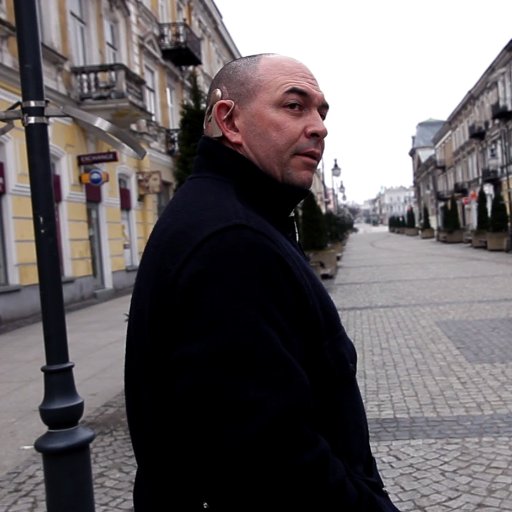
“I attended several events with (Bob Woodson) over the years, and he had a ritual. He would look out at a room that often contained a smattering of whites and then say with that mischievous wink: ‘I absolve every one of you. Not one of you is guilty. I absolve all of you of the racial sins of the past.’ People would laugh. But underneath that joke was a profound and deliberate act.”
My thoughts on @BobWoodson's passing for @FoxNews.
foxnews.com/opinion/bob-wo…

English

A few glimpses of what might have been... a radiant Marilyn trying her best to deal with an uncooperative co-star...Tippy the Dog ... in her last bits of film for the unfinished "Something's Got To Give" (1962)
English
VALUS retweetledi

What if the west isn't the villain they told you it was?
We’ve spent years accepting accusations about racism, intolerance, and slavery without challenging the bigger historical reality:
The societies most condemned today are also the ones that led the world in ending slavery, expanding rights, and building the most tolerant nations on earth.
That’s the conversation nobody wants to have.
English
VALUS retweetledi

What if the state isn’t a necessary evil… but simply unnecessary?
In the early 1970s Murray Rothbard gave the clearest answer yet. He fused Austrian economics (Mises’ praxeology and Hayek’s spontaneous order), Lockean natural rights and the radical American individualist anarchism of Lysander Spooner and Benjamin Tucker into the first fully articulated theory of a stateless society: anarcho-capitalism.
In his landmark books For a New Liberty (1973) and The Ethics of Liberty (1982), Rothbard proved that every legitimate function of government - protection of person and property, dispute resolution, and even national defence - can be supplied more efficiently and ethically by competing private firms in a free market.
All interactions would rest on one simple rule: the non-aggression principle - no one may initiate force against another person or their justly acquired property. Courts, police and defence agencies would operate on voluntary contracts and reputation, just like every other industry.
Rothbard showed the state is not a necessary evil but a monopoly of coercion that necessarily violates rights and distorts the market. A truly free society is not chaos - it is the highest expression of civilisation, where individuals retain full self-ownership and interact solely through consent.
Anarcho-capitalism is the most consistent and uncompromising conclusion of the classical liberal tradition: if individual liberty and private property are truly inviolable, the state has no moral or economic justification for existing.

English
VALUS retweetledi
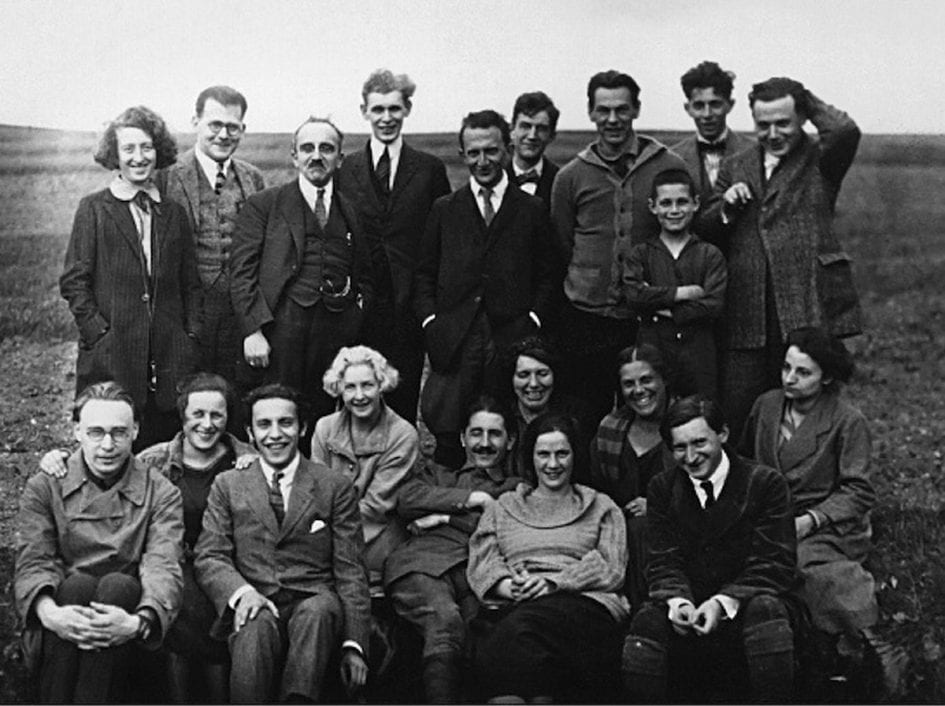
By the 1930s many Western intellectuals reluctantly realised that classical Marxism had failed and the proletariat wasn’t revolting. But then a group of exiled German Marxists led by Max Horkheimer, Theodor Adorno, Erich Fromm and Herbert Marcuse decided to change the battlefield.
Instead of economics, they targeted the “cultural superstructure”: family, religion, tradition, sexual norms and the very idea of objective truth. Their weapon was Critical Theory - a relentless campaign of negative criticism designed to portray every Western institution as inherently oppressive and capitalism as not just economically flawed, but psychologically and morally corrupt.
Marcuse gave the strategy its most powerful tactical manual in his 1965 essay “Repressive Tolerance”: true liberation, he argued, required “liberating tolerance” - tolerance only for progressive ideas and outright intolerance for conservative or “regressive” ones. Free speech, in other words, was only legitimate when it served the revolution.
The intellectual poison of the Frankfurt School was extraordinarily influential and as its graduates and intellectual heirs colonised universities, media, NGOs and corporate HR departments, Critical Theory evolved into today’s identity politics, DEI mandates and cancel culture - a cultural Marxism that attacks the individual in the name of group grievance. What began with a small circle of German émigrés in the 1930s now shapes the moral vocabulary of much of the Western elite. The result has been a softer, more pervasive authoritarianism: the dictatorship of the politically correct.
English
VALUS retweetledi

Because the Arabs castrated them.
They had the scrotums and penises of African slaves amputated to prevent them from reproducing.
Arab-Muslims ran the largest slave trade in history. And they are still kidnapping Africans and selling them as slaves to this day.
WE HAVE NO FRIENDS/BY ANY MEME NECESSARY@CLG98264897
English
VALUS retweetledi

The original Star Wars movies were so loved because:
-Spaceships and laser swords are cool.
-It's WW2 in space mixed with a Western in space. All-American tropes like gunslinger and fighter pilot, but in a space opera.
-It has a religion that is real. Yes its kind of cringey 1970's California Buddhism but it's still in there. Plus the religion assists with laser sword fights.
-The setting has a delightful archaeo-futurist tone. It's after the fall of a cleaner, better civilisation ("an elegant weapon....from a more civilised time...") and it has a mix of hard sci-fi tech and scrappy junkyard tech plus all kinds of aliens that just exist as a kind of backdrop.
-The acting is fine, the pacing is excellent, the dialogue has just enough exposition to let you figure out what's going on but not too much to ruin the mystery.
-Nothing like it had ever been made. It felt genuinely new. And the scale of the story was so large, it felt impossibly epic. For the 70's it really did blow people's minds.

English
VALUS retweetledi

Holy spirits, you walk up there
in the light, on soft earth.
Shining god-like breezes
touch upon you gently,
as a woman's fingers
play music on holy strings.
Like sleeping infants the gods
breathe without any plan;
the spirit flourishes continually
in them, chastely kept,
as in a small bud,
and their holy eyes
look out in still
eternal clearness.
A place to rest
isn't given to us.
Suffering humans
decline and blindly fall
from one hour to the next,
like water thrown
from cliff to cliff,
year after year,
down into the Unknown.
————————————
Not in vain do rivers run in the dry. Yet how?
Namely, they are to be to language. A sign is needed.
————————————
For it behooves us, poets, to stand firm
With heads uncovered 'mid God's storms.
The Father's radiance seize we in our hands,
Passing the heavenly message down
Enwrapped in song,
To the people, our brothers.
For pure-hearted are we,
Like children, innocent our hands,
The Father's radiance will not scorch them;
And, though profoundly moved,
Sharing in God's own pangs,
Our imperishable hearts are undismayed.
————————————
Those only believe in the divine
Who are themselves divine.
————————————
Unendingly delightful, unspeakably sacred, is my friendship with one who has strayed into this impoverished, despiritualized, unorderly century of ours. My sense of beauty can no longer err, for henceforward it will be unfailingly directed towards this Madonna. My reason schools itself by her instruction; and day by day my uncoordinated temperament is soothed and cheered in the peace and contentment she radiates... Could I be, as I now am, happy as an eagle, had not this revelation come to me?... Is not my heart sanctified, more beautiful my life, now that I love?
- FRIEDRICH HÖLDERLIN
English

Poetry at its best doesn’t simulate experience, but becomes an experience unto itself. Poetry at its worst is an afterthought—it lags behind itself, never managing to make its own weather in its own time, and in that sense, yes, is a simulation.
Joseph Tomasic@JosephTomasic
@jmasseypoet Is poetry a simulation?
English
Holy spirits, you walk up there
in the light, on soft earth.
Shining god-like breezes
touch upon you gently,
as a woman's fingers
play music on holy strings.
Like sleeping infants the gods
breathe without any plan;
the spirit flourishes continually
in them, chastely kept,
as in a small bud,
and their holy eyes
look out in still
eternal clearness.
A place to rest
isn't given to us.
Suffering humans
decline and blindly fall
from one hour to the next,
like water thrown
from cliff to cliff,
year after year,
down into the Unknown.
————————————
Not in vain do rivers run in the dry. Yet how?
Namely, they are to be to language. A sign is needed.
————————————
For it behooves us, poets, to stand firm
With heads uncovered 'mid God's storms.
The Father's radiance seize we in our hands,
Passing the heavenly message down
Enwrapped in song,
To the people, our brothers.
For pure-hearted are we,
Like children, innocent our hands,
The Father's radiance will not scorch them;
And, though profoundly moved,
Sharing in God's own pangs,
Our imperishable hearts are undismayed.
————————————
Those only believe in the divine
Who are themselves divine.
————————————
Unendingly delightful, unspeakably sacred, is my friendship with one who has strayed into this impoverished, despiritualized, unorderly century of ours. My sense of beauty can no longer err, for henceforward it will be unfailingly directed towards this Madonna. My reason schools itself by her instruction; and day by day my uncoordinated temperament is soothed and cheered in the peace and contentment she radiates... Could I be, as I now am, happy as an eagle, had not this revelation come to me?... Is not my heart sanctified, more beautiful my life, now that I love?
- FRIEDRICH HÖLDERLIN
VALUS@StephenValus
In my boyhood days Often a god would save me From the shouts and from the rods of men; Safe and good then I played With the orchard flowers And the breezes of heaven Played with me. And as you make glad The hearts of the plants When toward you they stretch Their delicate arms, So you made glad my heart, Father Helios, and like Endymion I was your darling, Holy Luna. O all you loyal, Kindly gods! Would that you knew how My soul loved you then. True, at that time I did not Evoke you by name yet, and you Never named me, as men use names, As though they knew one another. Yet I knew you better Than ever I have known men, I understood the silence of Aether, But human words I've never understood. I was reared by the euphony Of the rustling copse And learned to love Amid the flowers. I grew up in the arms of the gods. ———————————— And from the wood comes the stag now, from clouds comes the daylight,/ Up in a sky that is clear now hangs the hawk and looks round./ But in the valley below where the flowers are nourished by well-springs,/ Look, the small village spreads out among meadows, relaxed./ Quiet, it’s here. From afar comes the noise of the mill-wheels revolving,/ But the day’s decline church bells convey to my ear./ Pleasantly clangs the hammered scythe and the voice of the farmer/ Who, going home with his bull, likes to command and to curb,/ Pleasant the mother’s song as she sits in the grass with her infant;/ Sated with seeing he sleeps; clouds, though, are tinged now with red,/ and by the glistening lake where the orchard extends its full branches/ over the open yard gate, window-panes glitter with gold,/ There I’m received by the house and the garden’s secretive half-light,/ Where together with plants fondly my father reared me;/ Where as free as the winged ones I played in the boughs’ airy greenness/ Or from the orchard’s crest gazed into spaces all blue./ Loyal you were, and loyal remain to the fugitive even,/ Kindly as ever you were, heaven of home, take me back. ———————————— Menon's Lament for Diotima ((The First Four Parts)) 1 Daily I search, now here, now there my wandering takes me Countless times I have probed every highway and path; Coolness I seek on those hilltops, all the shades I revisit, Then the wellsprings again; up my mind roves and down Begging for rest; so a wounded deer will flee to the forests Where he used to lie low, safe in the dark towards noon; Yet his green lair no longer now can refresh him or soothe him, Crying and sleepless he roams, cruelly pricked by the thorn, Neither the warmth of the daylight nor the cool darkness of night helps, In the river's waves too vainly he washes his wounds. And as vainly to him now Earth offers herbs that might heal them, Cheer him, and none of the winds quiets his feverish blood, So, beloved ones, it seems, with me it is too, and can no one Lift this dead weight from my brow, break the all-saddening dream? 2 And indeed, gods of death, when once you have utterly caught him Seized and fettered the man, so that he cringes, subdued, When you evil ones down into horrible night have conveyed him Useless it is to implore, then to be angry with you, Useless even to bear that grim coercion with patience, Smiling to hear you each day chant him the sobering song. If you must, then forget your welfare and drowse away tuneless! Yet in your heart even now, hoping, a sound rises up, Still, my soul, even now you cling to your habit of music Will not give in yet, and dream deep in the lead of dull sleep! Cause I have none to be festive, but long to put on a green garland; Am I not quite alone? Yet something kind now must be Close to me from afar, so that I smile as I wonder How in the midst of my grief I can feel happy and blessed. 3 Golden light of love, for dead men, for shades, do you shine then? Radiant visions recalled, even this night, then, you pierce? Pleasant gardens, and mountains tinged with crimson at sunset, Welcome I call you, and you, murmurless path of the grove, Witness to heavenly joy, and stars more loftily gazing, Who so freely would grant looks that were blessings to me! And you lovers, you too, the May-day's beautiful children, Quiet roses, and you, lilies, I often invoke! Springs, it is true, go by, one year still supplanting the other, Changing and warring, so Time over us mortal men's heads Rushes past up above, but not in the eyes of the blessed ones, Nor of lovers, to whom different life is vouchsafed. For all these, all the days and years of the heavenly planets, Diotima, round us closely, forever conjoined; 4 Meanwhile we — like the mated swans in their summer contentment When by the lake they rest or on the waves, lightly rocked, Down they look, at the water, and silvery clouds through that mirror Drift, and ethereal blue flows where the voyagers pass -- Moved and dwelled on this earth. And though the North Wind was threatening Hostile to lovers, he, gathering sorrows, and down Came dead leaves from the boughs, and rain filled the spluttering storm-gusts Calmly we smiled, aware, sure of the tutelar god Present in talk only ours, one song that our two souls were singing, Wholly at peace with ourselves, childishly, raptly alone. Desolate now is my house, and not only her they have taken, No, but my own two eyes, myself I have lost, losing her. That is why, astray, like wandering phantoms I live now Must live, I fear, and the rest long has seemed senseless to me... ———————————— Bread and Wine ((parts 6 and 7)) Now in earnest he means to honour the gods who have blessed him, Now in truth and in deed all must re-echo their praise. Nothing must see the light but what to those high ones is pleasing, Idle and bungled work never for Aether was fit. So, to be worthy and stand unashamed in the heavenly presence, Nations rise up and soon, gloriously ordered, compete One with the other in building beautiful temples and cities, Noble and firm they tower high above river and sea — Only, where are they? Where thrive those famed ones, the festival’s garlands? Athens is withered, and Thebes; now do no weapons ring out In Olympia, nor now those chariots, all golden, in games there, And no longer are wreaths hung on Corinthian ships? Why are they silent too, the theatres, ancient and hallowed? Why not now does the dance celebrate, consecrate joy? Why no more does a god imprint on the brow of a mortal Struck, as by lightning, the mark, brand him, as once he would do? Else he would come himself, assuming a shape that was human, And, consoling the guests, crowned and concluded the feast. But, my friend, we have come too late. Though the gods are living, Over our heads they live, up in a different world. Endlessly there they act and, such is their kind wish to spare us, Little they seem to care whether we live or do not. For not always a frail, a delicate vessel can hold them, Only at times can our kind bear the full impact of gods. Ever after our life is dream about them. But frenzy, Wandering, helps, like sleep; Night and distress make us strong Till in that cradle of steel heroes enough have been fostered, Hearts in strength can match heavenly strength as before. Thundering then they come. But meanwhile too often I think it’s Better to sleep than to be friendless as we are, alone, Always waiting, and what to do or to say in the meantime I don’t know, and who wants poets at all in lean years? But they are, you say, like those holy ones, priests of the wine-god Who in holy Night roamed from one place to the next. ~ FRIEDRICH HÖLDERLIN
English
In my boyhood days
Often a god would save me
From the shouts and from the rods of men;
Safe and good then I played
With the orchard flowers
And the breezes of heaven
Played with me.
And as you make glad
The hearts of the plants
When toward you they stretch
Their delicate arms,
So you made glad my heart,
Father Helios, and like Endymion
I was your darling,
Holy Luna.
O all you loyal,
Kindly gods!
Would that you knew how
My soul loved you then.
True, at that time I did not
Evoke you by name yet, and you
Never named me, as men use names,
As though they knew one another.
Yet I knew you better
Than ever I have known men,
I understood the silence of Aether,
But human words I've never understood.
I was reared by the euphony
Of the rustling copse
And learned to love
Amid the flowers.
I grew up in the arms of the gods.
————————————
And from the wood comes the stag now, from clouds comes the daylight,/ Up in a sky that is clear now hangs the hawk and looks round./ But in the valley below where the flowers are nourished by well-springs,/ Look, the small village spreads out among meadows, relaxed./ Quiet, it’s here. From afar comes the noise of the mill-wheels revolving,/ But the day’s decline church bells convey to my ear./ Pleasantly clangs the hammered scythe and the voice of the farmer/ Who, going home with his bull, likes to command and to curb,/ Pleasant the mother’s song as she sits in the grass with her infant;/ Sated with seeing he sleeps; clouds, though, are tinged now with red,/ and by the glistening lake where the orchard extends its full branches/ over the open yard gate, window-panes glitter with gold,/ There I’m received by the house and the garden’s secretive half-light,/ Where together with plants fondly my father reared me;/ Where as free as the winged ones I played in the boughs’ airy greenness/ Or from the orchard’s crest gazed into spaces all blue./ Loyal you were, and loyal remain to the fugitive even,/ Kindly as ever you were, heaven of home, take me back.
————————————
Menon's Lament for Diotima
((The First Four Parts))
1
Daily I search, now here, now there my wandering takes me
Countless times I have probed every highway and path;
Coolness I seek on those hilltops, all the shades I revisit,
Then the wellsprings again; up my mind roves and down
Begging for rest; so a wounded deer will flee to the forests
Where he used to lie low, safe in the dark towards noon;
Yet his green lair no longer now can refresh him or soothe him,
Crying and sleepless he roams, cruelly pricked by the thorn,
Neither the warmth of the daylight nor the cool darkness of night
helps,
In the river's waves too vainly he washes his wounds.
And as vainly to him now Earth offers herbs that might heal them,
Cheer him, and none of the winds quiets his feverish blood,
So, beloved ones, it seems, with me it is too, and can no one
Lift this dead weight from my brow, break the all-saddening
dream?
2
And indeed, gods of death, when once you have utterly caught him
Seized and fettered the man, so that he cringes, subdued,
When you evil ones down into horrible night have conveyed him
Useless it is to implore, then to be angry with you,
Useless even to bear that grim coercion with patience,
Smiling to hear you each day chant him the sobering song.
If you must, then forget your welfare and drowse away tuneless!
Yet in your heart even now, hoping, a sound rises up,
Still, my soul, even now you cling to your habit of music
Will not give in yet, and dream deep in the lead of dull sleep!
Cause I have none to be festive, but long to put on a green garland;
Am I not quite alone? Yet something kind now must be
Close to me from afar, so that I smile as I wonder
How in the midst of my grief I can feel happy and blessed.
3
Golden light of love, for dead men, for shades, do you shine then?
Radiant visions recalled, even this night, then, you pierce?
Pleasant gardens, and mountains tinged with crimson at sunset,
Welcome I call you, and you, murmurless path of the grove,
Witness to heavenly joy, and stars more loftily gazing,
Who so freely would grant looks that were blessings to me!
And you lovers, you too, the May-day's beautiful children,
Quiet roses, and you, lilies, I often invoke!
Springs, it is true, go by, one year still supplanting the other,
Changing and warring, so Time over us mortal men's heads
Rushes past up above, but not in the eyes of the blessed ones,
Nor of lovers, to whom different life is vouchsafed.
For all these, all the days and years of the heavenly planets,
Diotima, round us closely, forever conjoined;
4
Meanwhile we — like the mated swans in their summer contentment
When by the lake they rest or on the waves, lightly rocked,
Down they look, at the water, and silvery clouds through that mirror
Drift, and ethereal blue flows where the voyagers pass --
Moved and dwelled on this earth. And though the North Wind was
threatening
Hostile to lovers, he, gathering sorrows, and down
Came dead leaves from the boughs, and rain filled the spluttering
storm-gusts
Calmly we smiled, aware, sure of the tutelar god
Present in talk only ours, one song that our two souls were singing,
Wholly at peace with ourselves, childishly, raptly alone.
Desolate now is my house, and not only her they have taken,
No, but my own two eyes, myself I have lost, losing her.
That is why, astray, like wandering phantoms I live now
Must live, I fear, and the rest long has seemed senseless to me...
————————————
Bread and Wine
((parts 6 and 7))
Now in earnest he means to honour the gods who have blessed him,
Now in truth and in deed all must re-echo their praise.
Nothing must see the light but what to those high ones is pleasing,
Idle and bungled work never for Aether was fit.
So, to be worthy and stand unashamed in the heavenly presence,
Nations rise up and soon, gloriously ordered, compete
One with the other in building beautiful temples and cities,
Noble and firm they tower high above river and sea —
Only, where are they? Where thrive those famed ones, the festival’s garlands?
Athens is withered, and Thebes; now do no weapons ring out
In Olympia, nor now those chariots, all golden, in games there,
And no longer are wreaths hung on Corinthian ships?
Why are they silent too, the theatres, ancient and hallowed?
Why not now does the dance celebrate, consecrate joy?
Why no more does a god imprint on the brow of a mortal
Struck, as by lightning, the mark, brand him, as once he would do?
Else he would come himself, assuming a shape that was human,
And, consoling the guests, crowned and concluded the feast.
But, my friend, we have come too late. Though the gods are living,
Over our heads they live, up in a different world.
Endlessly there they act and, such is their kind wish to spare us,
Little they seem to care whether we live or do not.
For not always a frail, a delicate vessel can hold them,
Only at times can our kind bear the full impact of gods.
Ever after our life is dream about them. But frenzy,
Wandering, helps, like sleep; Night and distress make us strong
Till in that cradle of steel heroes enough have been fostered,
Hearts in strength can match heavenly strength as before.
Thundering then they come. But meanwhile too often I think it’s
Better to sleep than to be friendless as we are, alone,
Always waiting, and what to do or to say in the meantime
I don’t know, and who wants poets at all in lean years?
But they are, you say, like those holy ones, priests of the wine-god
Who in holy Night roamed from one place to the next.
~ FRIEDRICH HÖLDERLIN

English

Animal sacrifice was an intrinsic stimulus to their herding way of life. A way for simple people to protect their greatest secret to their evolution.
In all ages, the nobles ate meat, and wanted the people eating bread, since people are healthiest on a carnivore diet. To sacrifice a lot of animals, you had to herd a lot of animals, and root your culture in the rugged pastoral.
I think Jesus was a brilliant, sensitive, creative, and troubled soul. It's difficult to say if helped more than he harmed, by directing the collective consciousness to masochistic self-denial, and the sentimental romanticization of all that is wretched, withered, wicked, and weak. I don't know if he was understood by his followers, if he has ever been well interpreted since, or what message he really intended to convey.
English
VALUS retweetledi
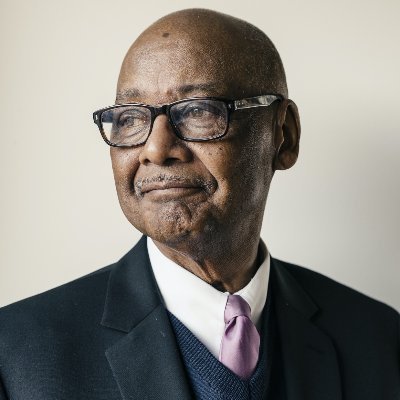
"The thinking of civil-rights hero Robert L. Woodson Sr., who died on May 19 at 89, ran counter to the dominant orthodoxy of the day. Decades of evidence have vindicated him."
READ: wsj.com/opinion/robert… via @WSJopinion

English
@55SweetThing The entire search for wisdom is an excavation of the psyche; a process of expression.
English

“The meaning of life is to find your gift. The purpose of life is to give it away.”
~Pablo Picasso
English