Steven A. Cook

41.4K posts

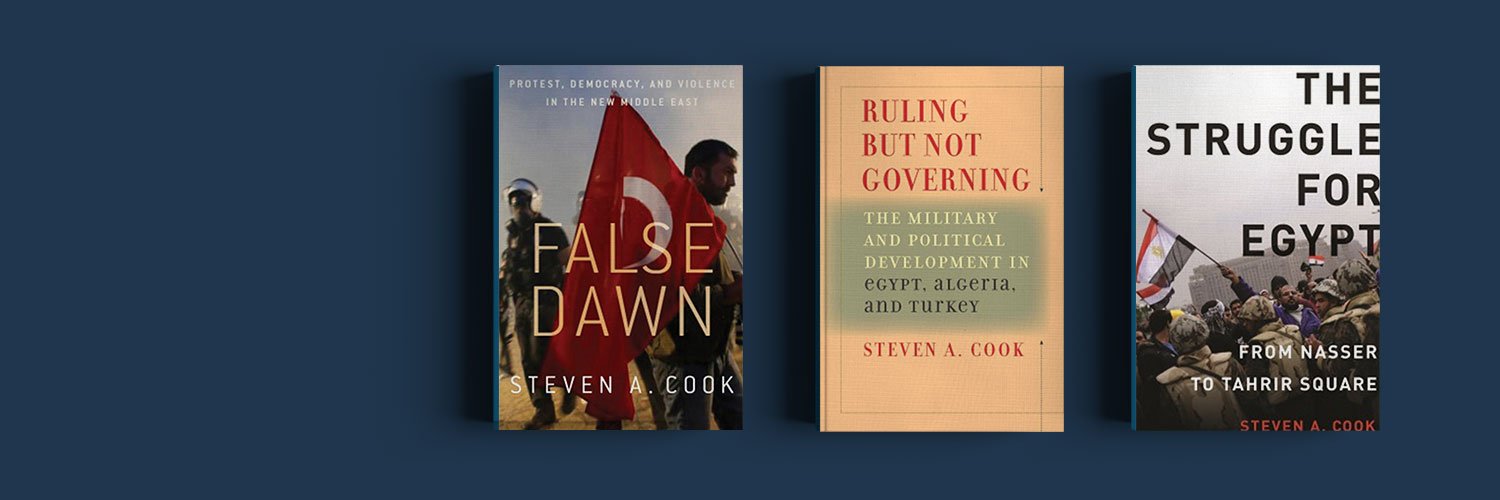
Steven A. Cook banner
Steven A. Cook

Steven A. Cook

@stevenacook

Eni Enrico Mattei senior fellow for MENA @CFR_org. Big NY sports & pizza guy. Goofy dad. I'd rather be skiing. My own opinions. RTs ≠endorsement.

Washington, DC Katılım Kasım 2010
766 Takip Edilen51.2K Takipçiler
Steven A. Cook retweetledi
Council on Foreign Relations
Leaders in the Gulf weren’t necessarily interested in a war with the Islamic Republic, but they now need President Trump to oust the Iranian regime to ensure Iran can no longer pose a threat. Stopping short of that would be existential to the Gulf states’ development model, argues expert @stevenacook. cfr.org/articles/the-g…
English
7
1
12
5.4K
Steven A. Cook retweetledi
Al Arabiya English
Al Arabiya English@AlArabiya_Eng·
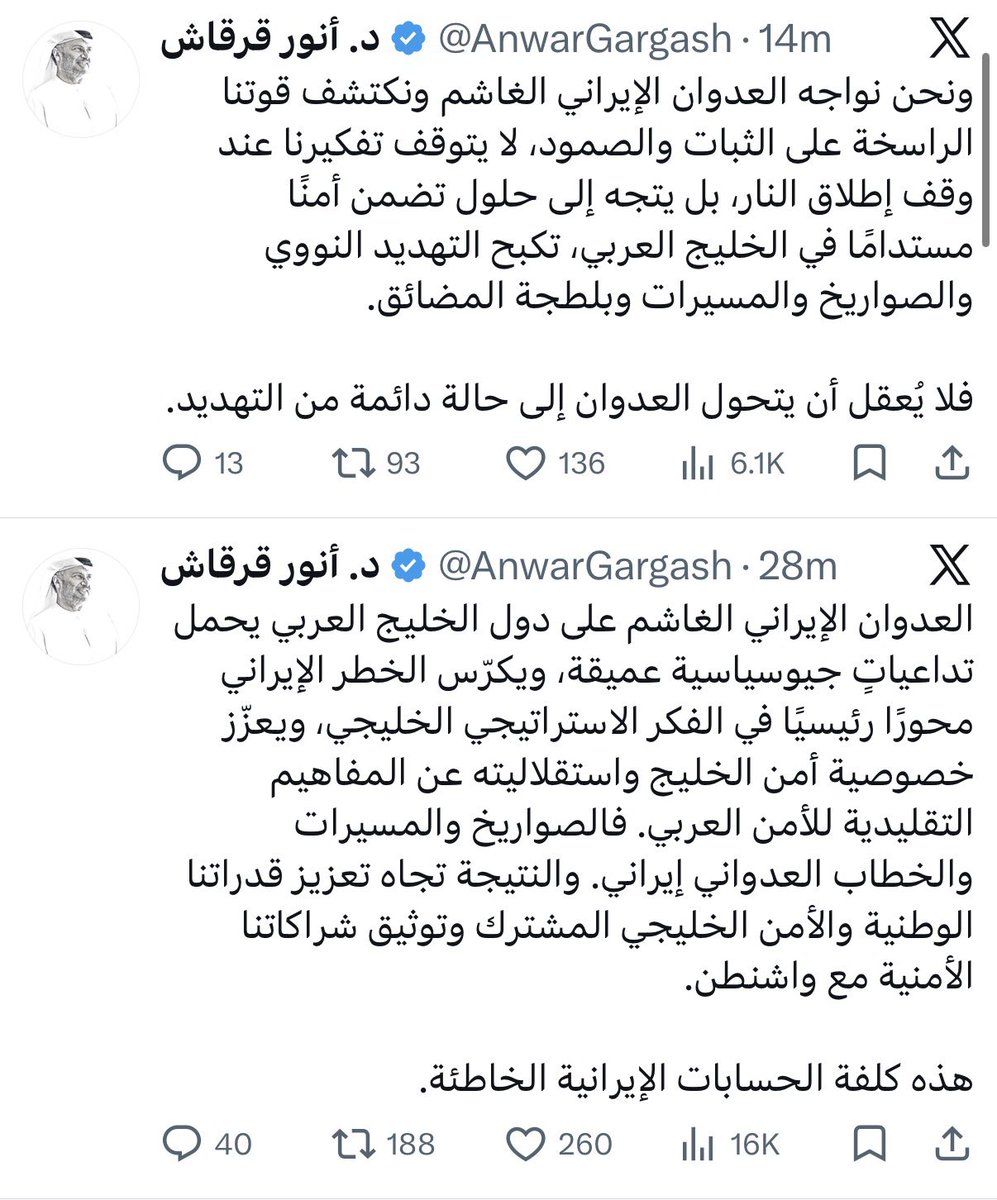
UAE presidential advisor Anwar Gargash says Iran’s attacks on Gulf countries “cement the Iranian threat as a central pillar of Gulf strategic thinking” and will lead to the “strengthening of our security partnerships with Washington,” calling it the “price of Iran’s miscalculations.”
Al Arabiya English tweet media
English
193
417
1.3K
599.7K
Steven A. Cook retweetledi
Joumanna Nasr Bercetche
2 posts from UAE’s @AnwarGargash (Presidential advisor) in the last 20 mins 🔷 Iran’s aggression is reshaping Gulf security thinking. This is no longer about a ceasefire. It’s about LONG TERM SECURITY in the Gulf 🔷 The priority is to counter Iran’s nuclear program, missiles, drones and threats to key shipping lanes 🔷 The fallout may be the opposite of what Tehran intended: a more unified Gulf, stronger militaries and deeper security ties with Washington “Deeper security ties with the US” A scenario where Iran poses a “permanent state of threat” is inconceivable
Joumanna Nasr Bercetche tweet media
English
28
136
340
280.5K
Steven A. Cook retweetledi
Barak Ravid
Barak Ravid@BarakRavid·
This is a key reason why the U.S. doesn't want Omani mediation going forward
Gregg Carlstrom@glcarlstrom

In this interview with @margbrennan the head of the UN's nuclear watchdog pours some cold water on the Omani foreign minister's claim that a nuclear deal was imminent on the eve of the war Somewhat academic at this point, but a useful corrective. Oman (understandably) had an interest in making it seem as if negotiations were bearing fruit. In reality there was still an enormous gulf between the American and Iranian positions cbsnews.com/news/rafael-gr…
English
61
109
623
390.6K
Steven A. Cook
Steven A. Cook@stevenacook·
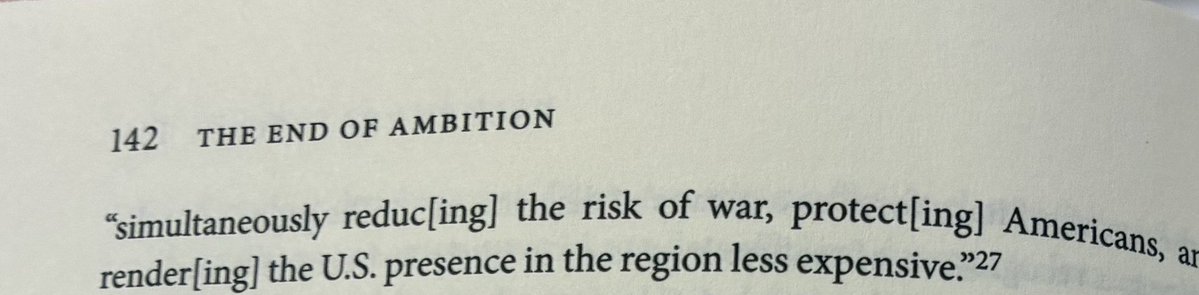
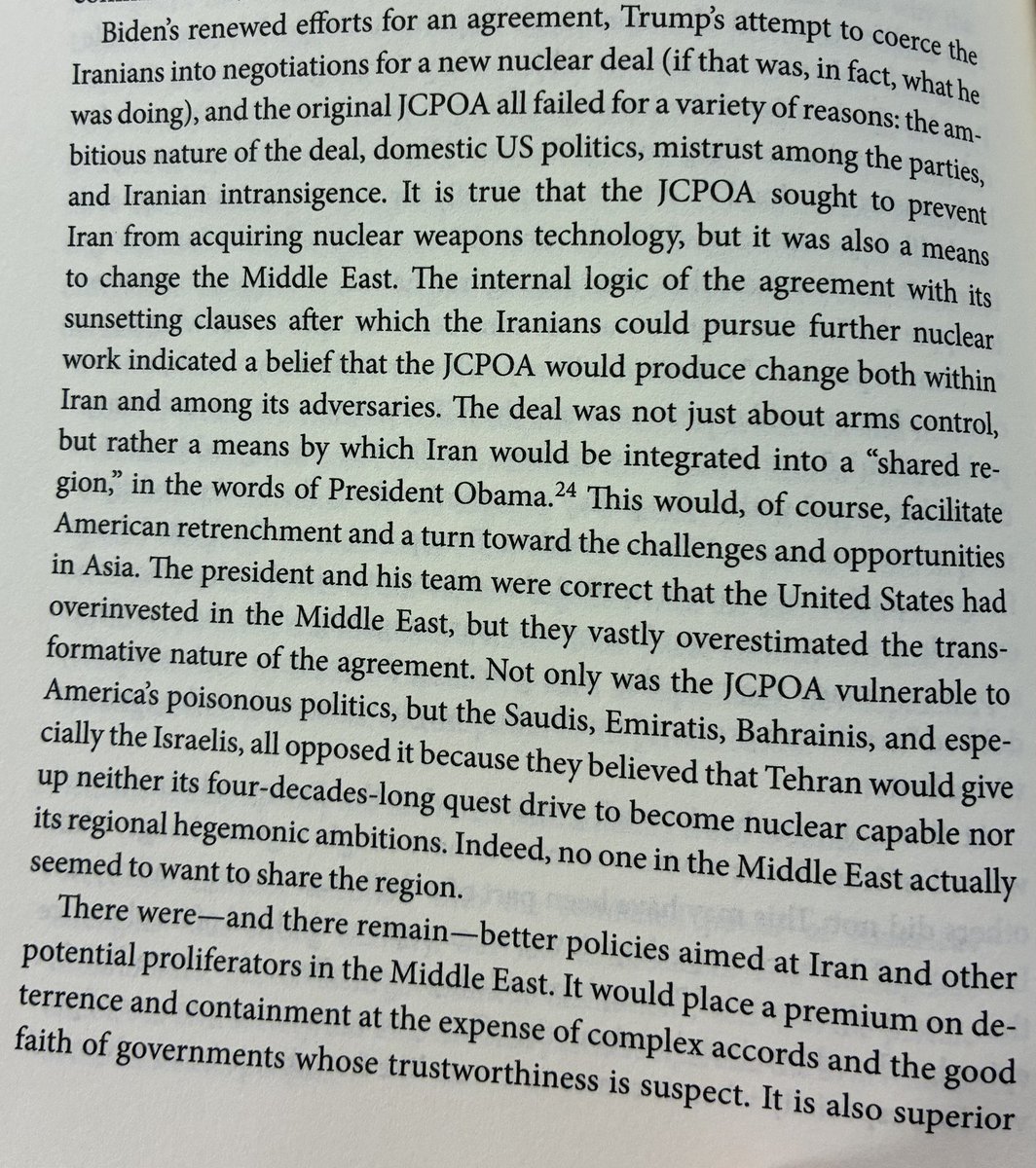
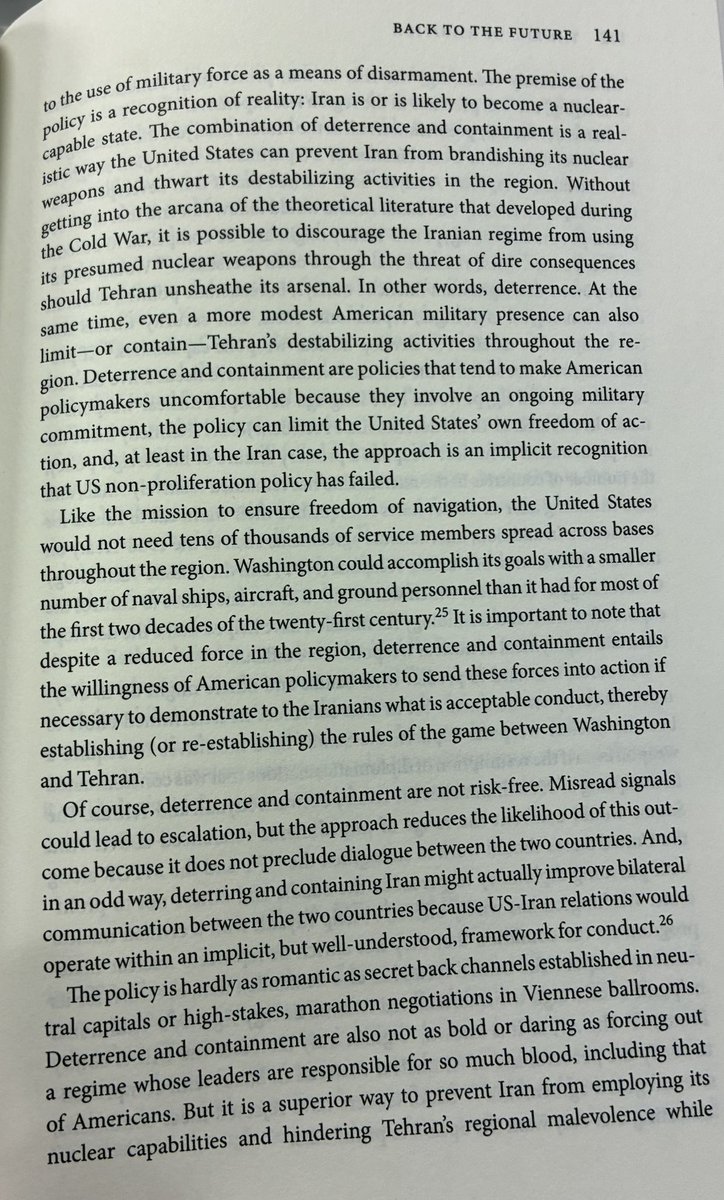
The other day, someone on this platform asked me what I thought about the war in the Middle East. This being X, it was intended to be a gotcha question. The person hadn't read my book, pages 140-142 attached here:
Steven A. Cook tweet mediaSteven A. Cook tweet mediaSteven A. Cook tweet media
English
0
1
7
1.4K
Steven A. Cook retweetledi
Gregg Carlstrom
Gregg Carlstrom@glcarlstrom·
Because it's often getting lost in the discussion here, this is a partial list of Iran's attacks on energy *before* the Israeli strike on South Pars: - Ras Laffan LNG complex in Qatar - Ras Tanura oil refinery in Saudi - hundreds of drone attacks on Saudi oil fields - Ruwais refinery in Abu Dhabi - Shah gas field in Abu Dhabi - port of Fujairah - Bapco oil refinery in Bahrain The list goes on. Point is that, yes, South Pars was an escalation in American/Israeli targeting, but it comes after weeks of Iranian attacks on GCC energy infrastructure.
English
124
591
1.7K
239.9K
Steven A. Cook retweetledi
Neri Zilber
Neri Zilber@NeriZilber·
You have US officers sitting in IDF combat cells (and vice versa). Air campaign is tightly coordinated bw the 2 militaries. US military was - before yday - responsible for Iran's southern flank & waters. And as others have pointed out: no chance Bibi does this without Trump greenlight But we're supposed to believe US didn't know about South Pars strike ahead of time.
English
12
150
497
94.5K
Steven A. Cook retweetledi
(((Michael Koplow)))
(((Michael Koplow)))@mkoplow·
If you oppose the Iran war, there are strong arguments against it, and clearly Israel played a role in the US calculus. Acknowledging that doesn't require elevating far-right conspiracy theorists, or adopting the conspiracy theories they spout israelpolicyforum.org/2026/03/18/how…
English
10
15
52
9.5K
Steven A. Cook retweetledi
Nadim Koteich
Nadim Koteich@NadimKoteich·
📌🇦🇪🇮🇷🇺🇸 There has been a notable and strategic escalation in the #UAE’s diplomatic and political posture toward #Iran, in the past 24 hrs: 🔴The Foreign Ministry, @mofauae is officially referring to Iran’s missiles and drones strikes as terrorist attacks, after the president @MohamedBinZayed calling Iran an enemy. 🔴 Anwar Gargash, @AnwarGargash diplomatic adviser to the UAE President, signaled that the UAE may participate in a U.S.-led international force to secure the Strait of Hormuz. 🔴#Sultan_al_Jaber, CEO of @ADNOCGroup, and the U.A.E. Minister of Industry and Advanced Technology, has laid out, to @WSJ @yarotrof, explicit prerequisites for any future regional framework. He signals that a post-war settlement must now address the 'full spectrum' of Iran’s military influence. ➡️ Here’s what Al-Jaber had to say: • This is not a military exchange. This is an attack on a peaceful nation that has been working diligently and very hard for diplomacy. • Any long-term political settlement must address the full spectrum of threats, including Iran’s nuclear program, ballistic missile capabilities, and their network of regional proxies.
Yaroslav Trofimov@yarotrof

UAE and other Gulf states want the Iranian regime neutered before the war ends — so that they can never be battered with missiles and drones again. My analysis. wsj.com/world/middle-e…

English
11
66
237
89K
Steven A. Cook
Steven A. Cook@stevenacook·
Worth a few minutes of your time.
Raz Zimmt@RZimmt

A few remarks regarding the Israeli perspective that may explain the continuation of the policy of decapitating senior Iranian officials. One can agree with it or oppose it, but it is worth at least understanding it, because it will also influence the continuation of the campaign. From Israel’s perspective, there is currently no one among the decision-makers in Iran—neither in the political leadership nor in the military establishment—who can be relied upon to bring about a meaningful change in Iranian strategy after the war. In the view of Israeli decision-makers, the distinction between pragmatic conservatives such as Larijani and hardliners such as Ahmad Vahidi may be relevant to academic Iran watchers, but it has little practical significance. Even the supposedly more pragmatic figures were not prepared before the war—and certainly not after it—to implement a “paradigmatic change,” as some of the more moderate voices outside Iran’s decision-making circles had proposed. In addition, since Israel would oppose any future attempt at any arrangement with the Islamic Republic, the question of whether one Iranian official or another might be more or less willing to agree to such a possible arrangement is irrelevant from Israel’s perspective. Given this assessment, the military campaign proceeds from the assumption that the Iranian leadership will likely continue the same policies pursued by the Islamic Republic under Khamenei—perhaps even in a more extreme form—unless Israel’s preferred (and less likely at this stage) scenario materializes: regime change or regime collapse. Therefore, Israel’s assessment focuses on three components: 1. The intentions of the Iranian leadership: Here, as noted, Israel sees no meaningful difference between the different Iranian officials regarding the issues that concern Israel most—nuclear capabilities, missiles, and regional policy. 2. The skills and abilities of the Iranian officials: From this perspective, Larijani may be considered no less dangerous than someone like Saeed Jalili, because he is perceived as having greater influence, experience, and abilities. 3. The military capabilities that will be available to the Iranian leadership after the war: In this context, one can understand the effort to degrade not only Iran’s strategic military capabilities but also its ability to rebuild them after the war. In sum, since Israel cannot ensure that Iran’s leadership after the war will meet the minimum necessary requirements to its national security, any kind of undermining and weakening of the regime—alongside the degradation of its military capabilities—is considered a valid objective.

English
0
3
8
6.7K
Steven A. Cook
Steven A. Cook@stevenacook·
Are we going to have the imminent threat/pre-emptive war vs. preventive war debate again? 2002 called. It wants its stupidity back.
English
0
4
16
2.9K
Steven A. Cook retweetledi
FDD
FDD@FDD·
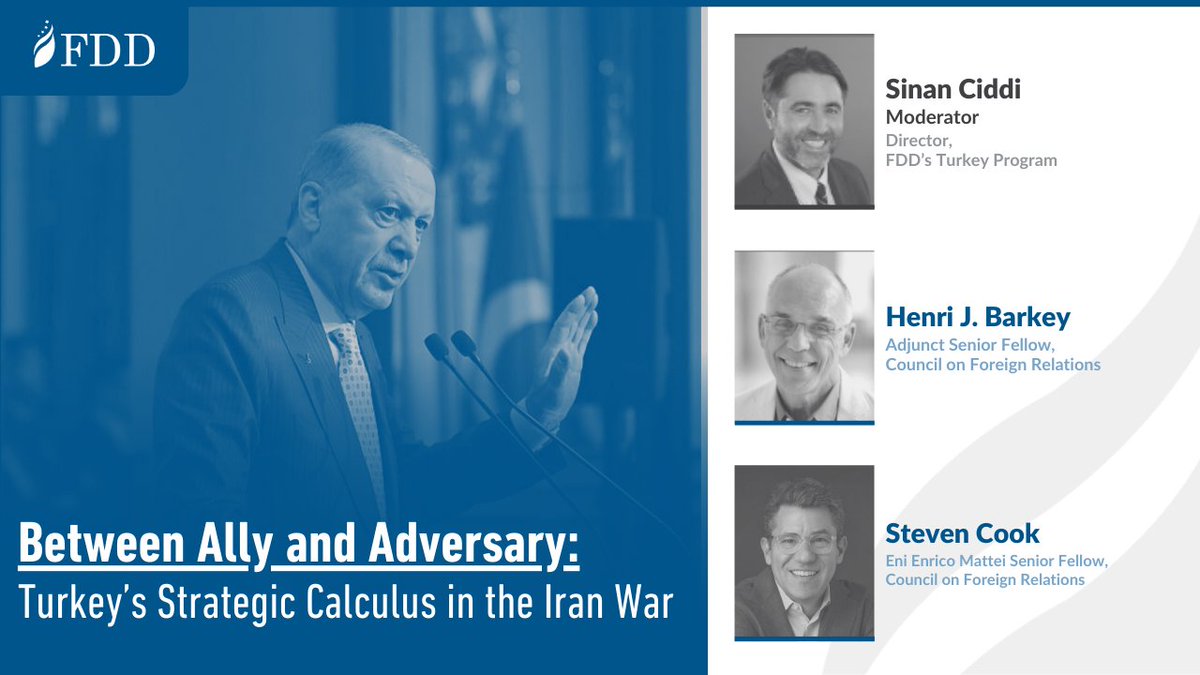
🚨 Live tomorrow | As the war involving Iran reshapes the strategic landscape of the Middle East, Turkey finds itself navigating one of the most complex geopolitical dilemmas in its modern history. What does Ankara want from this conflict? More details👇 bit.ly/4bdJQNa
FDD tweet media
English
1
9
19
9.8K
Steven A. Cook retweetledi
Karim Sadjadpour
Karim Sadjadpour@ksadjadpour·
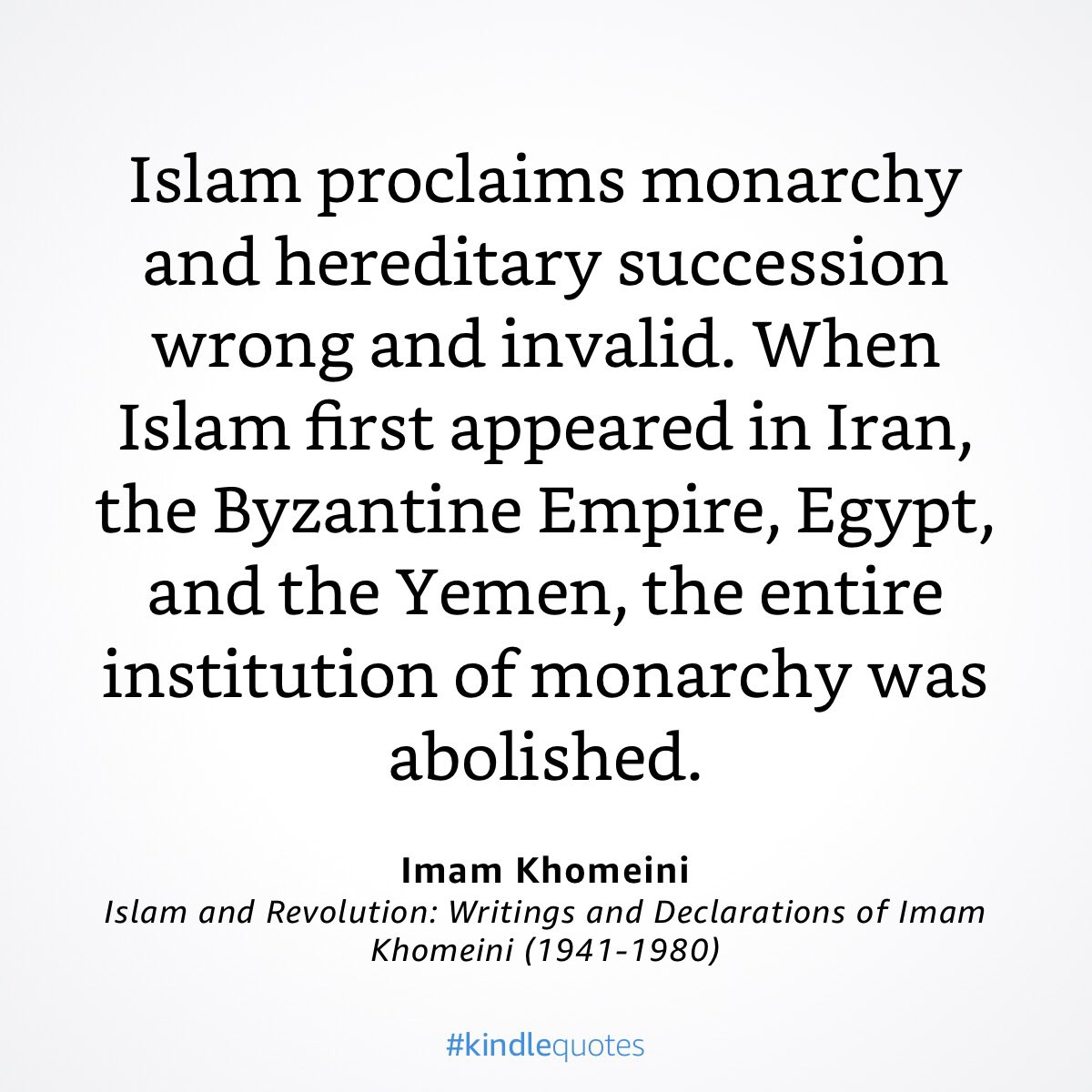
As expected, Mojtaba Khamenei has been named the Islamic Republc of Iran’s new Supreme Leader, succeeding his father. This is what the father of the 1979 revolution, Ayatollah Khomeini, had to say about hereditary succession.
Karim Sadjadpour tweet mediaKarim Sadjadpour tweet media
Karim Sadjadpour@ksadjadpour

Mojtaba Khamenei, the hardline 56-year-old son of Iran’s late dictator and a close ally of the Revolutionary Guards, has reportedly been named Supreme Leader. He was recently injured and will likely continue to be a target of Israeli assassination attempts iranintl.com/en/202603030390

English
120
360
996
300.3K