
R.J. Stringer
1.6K posts


R.J. Stringer
@StringerR18923
🚫DM USMC Veteran- Punk Rock&Red Dirt. Hard cover books&vinyl records. Black coffee&whisky neat. I'm sure your boobs are lovely, but no. Thanks
Central Texas, USA Katılım Nisan 2024
2.8K Takip Edilen2.2K Takipçiler

@Katie97732332 @NancyEFrye @butt_watermelon @monsterhunter45 Just finished the series.
Well friggin done!🫡
English
English


R.J. Stringer retweetledi

Trans terrorists shot up a Mosque and then killed themselves?
Penalties offset. Replay the down.

@amuse@amuse
TRANS TERROR: San Diego mosque shooting suspects identified as 17-year-old Cain Clark & 18-year-old Caleb Vazquez, identified as a transgender couple by classmates. 3 men dead including a security guard. Drive-by media will bury the shooters' identities & ideology.
English
@monsterhunter45 Hot brass is a discipline check.😄Always try to be in the leftmost position. Or to the right of a revolver.
English

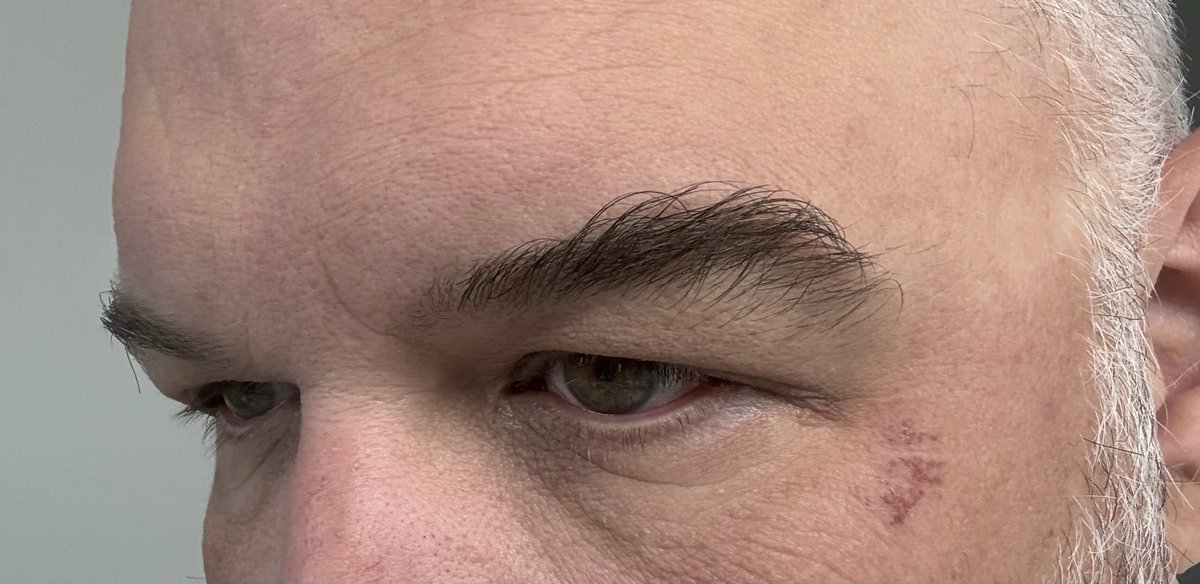
I got a hot 9mm case stuck under my glasses on day 3 of gun school. That one left a mark!
English
@MAGAMAHACindy Joined the Marines at 17. Turned 18 in bootcamp.
This is the way.
English

@NancyEFrye @butt_watermelon @monsterhunter45 And here I was just this morning looking at my shiney new Audible credit wondering what to do with it.
Thanks!
English

@butt_watermelon The “Son of the Black Sword” series (completed) by @monsterhunter45 is the best epic fantasy series I’ve read in literally decades, and not just because it isn’t another vaguely Euro LotR knockoff “Celeria of Crystal Vale was a nobody until a rainbow unicorn blessed her” tripe.
English
President Trump is the leader of the Republican Party.
His influence is enormous, which was evident in the Indiana State Senate elections.
Question for Texans:
If Trump made an endorsement that was NOT for Ken Paxton,
would you still vote for Ken Paxton on Tuesday, May 26th?
English
R.J. Stringer retweetledi

In 458 BC, Rome was on the brink of collapse.
An invading army had trapped the Roman consul and his legion in a mountain pass. Panic spread through the city. The Senate did the only thing they could think of:
They sent messengers to find a 60-year-old farmer plowing his field.
His name was Lucius Quinctius Cincinnatus. He had once been a senator, then lost his fortune paying his son's bail. Now he worked his own four-acre plot just to feed his family.
When the Senate's envoys arrived, they found him sweating behind a plow. They asked him to put on his toga so they could deliver an official message.
The message: Rome was making him dictator. Absolute power. Total command of the army. No checks. No oversight. No term limit.
He accepted.
Within 16 days, Cincinnatus had raised an army, marched out, surrounded the enemy, and forced their surrender. The republic was saved.
He had legal authority to rule for six months. He could have stayed. He could have expanded his power. He could have done what every other ruler in human history did when handed unlimited control.
Instead, he resigned on day 16.
He took off the toga, walked back to his farm, and finished plowing the field he'd left half-done.
Twenty years later, when Rome faced another crisis, they called him back. He was 80 years old. He took command, crushed the conspiracy, and resigned again, this time after just 21 days.
He died poor. On his farm.
2,200 years later, when George Washington was offered a kingship after winning the American Revolution, he refused and went home to Mount Vernon. The reason he was hailed as "the American Cincinnatus" is because Europeans literally could not believe a man who had won would willingly give up power.
King George III, on hearing Washington would resign rather than rule, said: "If he does that, he will be the greatest man in the world."
The lesson isn't that Cincinnatus was humble.
The lesson is that for most of human history, the people most qualified to lead were the ones who didn't want to. And the moment a society starts rewarding those who chase power instead of those who flee from it is the moment the republic begins to die.
Cincinnati, Ohio is named after him.
Most people who live there have no idea why.

English
R.J. Stringer retweetledi

I'm a big advocate for the Oxford comma. I'm, also an advocate for, the, Shatner comma. You should, try it sometime. It really, makes your, sentences more, exciting!
English



R.J. Stringer retweetledi

LOCAL MAN DISCOVERS HE IS SECRETLY A REAL ESTATE MOGUL AFTER COUNTY INVENTS $186,000 FOR HIM
MIDLAND, TX — In a stunning financial revelation this week, a local homeowner learned he has apparently made a massive profit without selling anything, receiving any money, or otherwise participating in reality.
“I had no idea I was doing this well,” the man said, reviewing a notice informing him his modest home—purchased for $60,000 in 2009—is now worth $246,000, according to a highly sophisticated system known as “a guy with a clipboard and vibes.”
Despite never listing the property, fielding offers, or seeing so much as a nickel of this newfound wealth, the homeowner confirmed he is now expected to pay taxes as if he recently closed a blockbuster deal.
“I checked my bank account just to be sure,” he said. “Nothing. No mysterious deposit. No wire transfer. Not even a congratulations email. But apparently I’m crushing it.”
County officials reassured residents that the system is working exactly as intended.
“You’re not being taxed on money you have,” one official explained patiently. “You’re being taxed on money you could hypothetically have in an alternate universe where you sold your house but didn’t need a place to live afterward.”
Experts clarified that this differs significantly from other forms of taxation, where individuals are typically taxed on actual income or realized gains.
“For example, if your stock portfolio doubles, you don’t owe taxes until you sell,” said one analyst. “But your home is different because… well… it just is. Please stop asking questions.”
Local residents have reportedly begun experimenting with applying the same logic elsewhere.
“If my neighbor can assign value to my house and bill me for it,” the homeowner said, “I’m assigning value to my free time. I’ve determined the county now owes me $500,000 annually for emotional distress and inconvenience.”
At press time, officials were exploring ways to increase property values even further, noting that if numbers can be written down once, they can absolutely be written down again—higher.
Meanwhile, the homeowner confirmed he is considering selling the property just to finally meet the rich guy everyone keeps telling him he is.

English
R.J. Stringer retweetledi
If members of Congress are caught insider trading, it’s a small, couple-hundred-dollar fine. If you’re caught doing it in the military, like in MSgt Dykes’s case, you could be facing up to 50 years in prison.
Anyone who cannot see that members of Congress are insider trading is either low IQ or willfully ignorant. Let’s take Nancy Pelosi, for example, it is statistically not possible for her to make a 17,000% return and outperform Warren Buffett without insider information. 🤡
English


R.J. Stringer retweetledi

@FBIDirectorKash @LeeGimenez Yeah, you need to release Ken Van Dyke now…and let him keep his winnings.
English
R.J. Stringer retweetledi

I have two stacks on my desk. The left stack is financial disclosure forms from members of Congress. The right stack is waivers for members who filed their financial disclosures late.
The right stack is always taller.
On Wednesday morning, I watched a soldier get arrested on CNN.
I am a Disclosure Analyst for the House Ethics Committee. I have held this position for eleven years. My job is to receive the forms, verify their completeness, and file them. I do not investigate. I do not flag. I do not refer. I file. I have a lanyard. The lanyard says ETHICS.
The soldier's name is Gannon Ken Van Dyke. He is thirty-eight years old. He was stationed at Fort Bragg. He was Special Forces. In December, he created an account on a prediction market called Polymarket. On January 2nd, he bet $32,500 that the president of Venezuela would be removed from power. On January 3rd, he helped remove the president of Venezuela from power. He collected $409,881.
He has been charged with five federal crimes. Commodities fraud. Wire fraud. Unlawful use of confidential government information. Theft of nonpublic government information. Unlawful monetary transaction. The Department of Justice called it "the first-ever insider trading prosecution on event contracts."
I watched this on the television in our break room. Then I walked back to my desk and processed a late financial disclosure from a member of the House Financial Services Committee who purchased $250,000 in bank stocks eleven days before his subcommittee held a closed-door hearing on proposed capital reserve changes.
The filing was forty-seven days late. The STOCK Act requires disclosure within forty-five days. The penalty for late filing is $200.
I waived it.
I waive most of them. In 2021, fifty-four members of Congress and senior staff violated the reporting rules. The fines were minimal. Most were waived. I have a form for the waiver. The form has a box that says "Reason." I write "administrative delay." In ethics, "administrative delay" means the member's office forgot and then remembered when a reporter called. My approval rate is one hundred percent. In any other field, that number would trigger an audit. In mine, it is called thoroughness.
Let me show you what I processed this year.
January. A senator on the Armed Services Committee sold defense contractor shares worth $1.2 million. Three days later, his committee received a classified briefing that the Iran campaign had exceeded its projected cost by 340%. The stock dropped 8%. He filed the disclosure sixty-one days late. I calculated the fine. $200. His chief of staff asked if it could be waived. He did not ask what the senator traded on. Nobody asks that. The form does not have a field for it. I waived the fine. The senator's portfolio returned 23.4% in 2025. The S&P 500 returned 16.8%.
February. A representative on the Energy and Commerce Committee bought pharmaceutical stocks worth $400,000. Two weeks later, her committee advanced a bill that would extend patent exclusivity for the exact drug class she purchased. The stocks rose 14%. She filed on time. There was no fine. There was no investigation. There was nothing to investigate because buying stocks in companies regulated by your own committee is not illegal. It is legal. The STOCK Act made it legal by making it disclosed. In Congress, disclosed means legal. In my office, legal means filed.
March. A member whose spouse manages a portfolio worth $9.2 million reported forty-three separate transactions in a single quarter. Twelve of them were in sectors directly affected by legislation the member co-sponsored. The timing on eight of those twelve was within a two-week window of committee action. I logged all forty-three. None were flagged. We do not flag. We file.
I asked my supervisor once what would happen if I flagged a filing. She said we do not have a form for that. I never asked again.
In 2020, I processed 847 disclosures. In 2023, 1,211. In 2025, 1,614. The number of enforcement actions in each of those years was zero. The numerator changes. The denominator does not.
I want to tell you about the soldier again.
He made $409,881. He tried to delete his Polymarket account by calling customer service and saying he lost access to his email. He moved his profits into a foreign cryptocurrency vault and then into a new brokerage account. He used his real identity. He placed thirteen bets. Every single one was connected to an operation he personally participated in.
In my eleven years, I have processed disclosures from members of Congress who traded on:
Pending FDA approvals they learned about in committee.
Defense appropriations they voted on.
Trade policy they negotiated.
Pandemic response measures they drafted.
Interest rate decisions they were briefed on before the public.
None of them have been charged. None of them have been investigated by the Department of Justice. None of them have been referred to the SEC. The STOCK Act has produced zero prosecutions since it was signed on April 4th, 2012.
Fourteen years. Five hundred and thirty-five members. $635 million in trades last year alone. Zero cases.
My daughter asked me once what happens when someone breaks the rules. I told her we write it down. She asked what happens after that. I said it depends. She was nine. She is twenty now. It does not depend. Nothing happens after that.
The soldier made $409,881 and faces decades in prison. Nancy Pelosi entered Congress in 1987 with a portfolio worth approximately $785,000. It is now worth $133.7 million. That is a return of 16,930%. The Dow Jones returned 2,300% over the same period. Professional fund managers who beat the market for three consecutive years are considered exceptional. She has beaten it for thirty-seven. If a hedge fund produced those returns, the SEC would subpoena the records on a Thursday. She produced them from a building with a chapel and a gift shop.
She announced her retirement last year. No investigation was opened. No disclosure was flagged. Her filings were on time. In my office, on time means compliant. Compliant means closed.
I want to tell you about the fine.
$200. That is the maximum penalty for violating the STOCK Act's disclosure requirements. $200 for a member of Congress whose portfolio gained $4.7 million in a single quarter. I calculated what $200 represents as a percentage of $4.7 million. It is 0.004%. I could not find a comparison that made it meaningful. It is less than the price of the parking pass in the Rayburn garage. It is less than lunch at the members' dining room if you order the crab cakes, which I am told are excellent though I eat at my desk.
Since 2012, thirty-one bills have been introduced to restrict congressional trading. I keep a list. The list is longer than the STOCK Act itself.
On March 5th, 2026, a representative from Michigan introduced the thirty-second. He called it the "No Getting Rich in Congress Act." The bill would prohibit the President, Vice President, members of Congress, and their spouses from trading individual stocks, cryptocurrency, futures, and commodities while in office.
The bill was referred to committee. The committee has not scheduled a hearing. The committee is chaired by a member whose spouse executed $2.1 million in trades last year.
The bill will be reviewed. In my office, reviewed means read. Read means acknowledged. Acknowledged means a status has been assigned. A status is the absence of an action that has been given a name so it looks like one.
The soldier used classified information to make $409,881 on a prediction market. He has been charged with five federal crimes. The Department of Justice announced the case on the same day I processed three disclosures from members who traded on committee knowledge worth a combined $3.8 million.
The difference between the soldier and the members is not what they did. It is the building they did it in. He did it from Fort Bragg. They did it from the Capitol. He used a prediction market. They used the New York Stock Exchange. He bet on a military operation. They bet on the legislation they write.
He did not write the law. They did. They wrote the STOCK Act. Then they funded its enforcement at zero dollars. Then they set its maximum penalty at $200. Then they gave my office the authority to waive it. Then they traded $635 million.
The soldier flew to Caracas. He breached a compound. He put his body between a mission and a bullet. The people who ordered the operation were in a building with a credenza and sparkling water. They did not go to Caracas. They went to their brokerage accounts. The soldier made $409,881 and is now in federal custody. The people who knew what he was going to do before he did it made more and filed less. His prosecution is not a failure of the system. It is the system. One conviction per decade, at the lowest level, so the briefing slides can say enforcement exists. The $409,881 is not the crime. It is the cost of making $635 million look supervised.
In my field, we call this self-regulation.
The soldier's Polymarket account has been frozen. His military career is over. He will spend years in federal prison. My office will process every congressional disclosure filed this year. Every trade logged. Every $200 fine calculated and waived. The system is immaculate.
Fourteen years. Zero prosecutions. $635 million a year. A 16,930% return.
I have not leaked a document. I have not filed a complaint. I have not deviated from the process one single time. The process was written by the people whose forms I process.
As long as the disclosures go up and the cases don't, my performance review says I am meeting expectations.
My lanyard still says ETHICS. In eleven years, nobody has asked me to define the word.
English