Stuart Waiton

536 posts

Stuart Waiton

Stuart Waiton

@StuartWaiton

Dundee Katılım Eylül 2011
301 Takip Edilen1.2K Takipçiler
Stuart Waiton
Stuart Waiton@StuartWaiton·
My article in The Daily Sceptic Will Will Teaching Teenage Boys That Masculinity is Toxic Really Reduce Violence Against Women and Girls? – The Daily Sceptic
English
0
0
0
76
Katharine Birbalsingh
Katharine Birbalsingh@Miss_Snuffy·
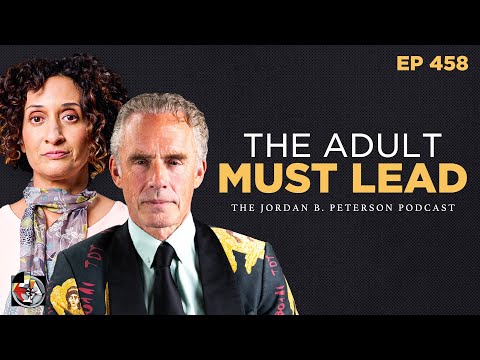
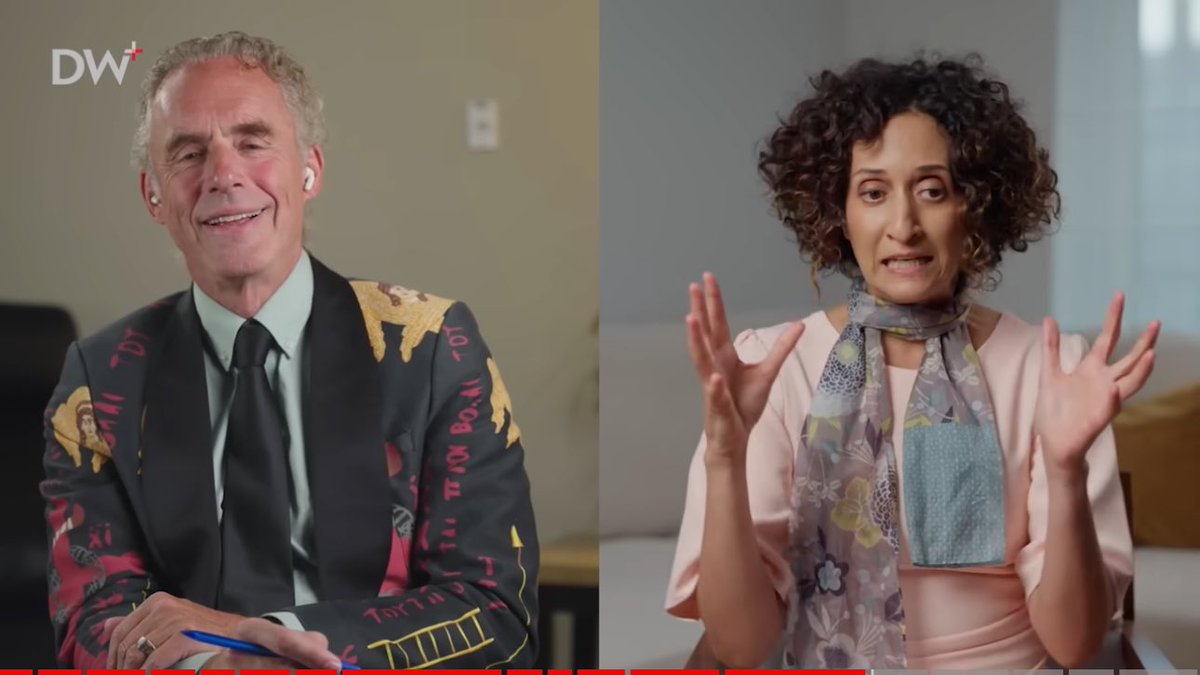
‘A Message From the Strictest Headmistress in the UK’ Jordan Peterson @jordanbpeterson finds me quite extreme … 😂 ..and laughs at how conservative I am… Our chat about adults, freedom, teaching values, libertarians, progressives and race. youtu.be/qs0s9kTFE5Y?si…
YouTube video
YouTube
Katharine Birbalsingh tweet media
English
249
281
2.2K
807.1K
Stuart Waiton
Stuart Waiton@StuartWaiton·
@Miss_Snuffy The word to use for this is abomination. The self righteous morality of these people blinds them to what every normal person sees.
English
0
0
0
20
Stuart Waiton
Stuart Waiton@StuartWaiton·
@SunderlandAFC Thank you Dan. You took us to the Premier League. All the best for the future.
English
0
0
0
24
Sunderland AFC
Sunderland AFC@SunderlandAFC·
We can today confirm the departure of long-serving midfielder Dan Neil. Neil has joined Ipswich Town on loan until the end of the season, ending his 18-year association with Sunderland at the end of his contract in June. He lived the dream, and we all wish him well in the next chapter of his career ❤️
Sunderland AFC tweet media
English
156
413
8K
1.7M
Stuart Waiton retweetledi
Tom Bennett OBE
Tom Bennett OBE@tombennett71·
Neurodiversity is a common term in education- and society. But it lacks precision both in definition and usage. And that really matters in the real world. For a start 'neurodiverse' is not a clinically recognised or used term, eg in the DSM-5. It was coined by the sociologist Judy Singer in 1998, as an advocacy term for people with ASD and very closely related conditions. 'Neurodivergent' describes an individual whose brain functions differently from the majority. Clinically recognized examples include autism spectrum disorder, ADHD, dyslexia, dyspraxia, Tourette syndrome, and others. These are formal neurodevelopmental diagnoses. Crucially this means people who have been born with a life-long condition. It does *not* include people with anxiety disorders, or dementia, or PTSD, or depression etc. It doesn't mean 'everything'. There is no diagnosis 'neurodiverse'. It is a purely vernacular term, with multiple meanings depending on who is using it and who you talk to. Clinicians diagnose specific conditions, like ASD. And of course even clinically diagnosable conditions like ASD, ADHD are subject to intense debates about how the category is defined, is it too broad or narrow etc. Diagnostic criteria can vary from country to country, LA to LA, school to school. And so can the response strategies. What a lot of people outside of either the education or clinical sectors don't realise is that this is an area that is crying out for high quality research, clarity, transparency, and honesty about what works, and when, and when it doesn't work. We are often talking about very different things when we use the same words carelessly. The common use of 'neurodiverse' matters; it is often heard in advocacy discourse, the media, etc. but frequently misunderstood. It doesn't mean 'a little bit different'. We are all different from one another. People who claim to be 'a little bit autistic' may very well simply misunderstand that some of the characteristics they identify in that category are also perfectly normal-spectrum qualities that many people have. Liking your house to be tidy doesn't mean that you are neurodivergent. Being a stickler for details doesn't mean you have OCD. If the term means 'everything' then it means 'nothing.' It has become fashionable for people to self diagnose and self-refer as neurodivergent, even in the face of little evidence. Because it confers, for some, a sense of being special, different, or interesting. And of course in a sector where we rightly seek to support people/ students who need reasonable accommodations in order to promote inclusivity, the *incorrect* assignation of an unmet need leads to unfair advantages over those who do not receive those accommodations. A small but growing group of activists now campaign on the platform that almost any mental health difference indicates neurodivergence, but this is a huge definitional drift, without any clinical basis. You see a lot of this activism in education, often perfectly well-meant. Singer herself would have disagreed strongly with this. The reason this matters is that if we treat all mental health problems, all behavioural disorders, all learning problems, as having lifelong neurological foundations - which they absolutely do not- then we create a narrative that indicates all individuals face insurmountable obstacles in modifying the behaviours associated with the condition. Some children identified as dyslexic, for example, are simply deficient in high quality reading instruction. But if you treat every child that behaves unsuccessfully in the classroom as being neurodivergent, then you create a circumstance where we treat them as the victims of irresistible compulsions, rather than human beings with the ability to learn to take responsibility, to grow, to change their habits and attitudes. It is also a substantial abandonment of our commitment to only use evidence info strategies with children- especially the most vulnerable. In other words, not all forms of SEND are indications of neurodivergent conditions. And most certainly aren't. Sadly, as in so many fields, many of the strategies recommended for children with any form of SEND, including forms of neurodivergence, lack substantial or credible evidence bases. There is a lot of well-meant money being spent on approaches that simply have no basis in research, impact or other outcomes. This is an area that cries out for high quality evidence bases, and evidence informed approaches to support students with genuine need, not activism that leads to treating all children as incapable. But the energy of that activism, married to evidence, could produce something spectacular for those who need help the most, and I hope we see this happen in the future.
English
3
71
248
63.5K
Stuart Waiton retweetledi
Scottish Union for Education (SUE)
The absence of a knowledge-based curriculum is the number one problem facing Scottish schools. But the second problem is what has replaced the transmission of knowledge in the classroom. All too often, it seems that a progressive approach to teaching aligns with the promotion of progressive political views. bit.ly/sue139jw @jowilliams293
English
2
9
18
1.5K
Stuart Waiton retweetledi
Scottish Union for Education (SUE)
The authoritarianism of ‘critical social justice’ is now orthodoxy in education and beyond. No debate. Just compliance. Our young people are being programmed into ‘goodthink’ — with the eager help of partisan educators and politicians. Jane Fenton bit.ly/sue137jf
English
0
5
7
523
Stuart Waiton retweetledi
Malcolm Clark
Malcolm Clark@TwisterFilm·
1./ 🧵The BBC's Guilt. Defenders of the BBC keep insisting it never promoted trans ideology. Yet here's more snippets from the BBC's own schools materials. In this clip primary school kids are told they can be born with a gender identity different from their body. 👇
English
157
1.9K
5.8K
302K