Sando King

36.8K posts

Sando King banner
Sando King

Sando King

@SubtleBeats

He/Him

Katılım Ekim 2014
789 Takip Edilen221 Takipçiler
Sando King
Sando King@SubtleBeats·
@harrym_vids It's unfair that the main transport networks in much of the country are dangerous for people not in cars. The idea is not to block people who have to drive long trips. It's to enable *people who want to* to make shorter cycles and walks without risking being hit by a car.
English
1
0
1
573
Harry Metcalfe
Harry Metcalfe@harrym_vids·
What will these city dwelling councillors dream up next? If you live in a rural village, schools & shops are often several miles away. Are mums with 3 kids going to do a 10-14 mile round trip twice a day on bikes? Continued.. bbc.co.uk/news/articles/…
English
32
8
151
18.8K
Sando King
Sando King@SubtleBeats·
@VincentJCurtis1 @DilkesLyal69069 @ChrisGloninger If they pay back just on a house, they'll pay back even better for large installations where they get better economies of scale. You don't care that they're a cheap and easy way to reduce costs and emissions - because your objections are purely political.
English
1
0
0
16
Chris Gloninger, CCM, CBM
Chris Gloninger, CCM, CBM@ChrisGloninger·
The '81% fossil primary energy' figure is the tell. Roughly 60% of fossil fuel energy is lost as waste heat before doing useful work...electrification with renewables eliminates that loss, so replacement isn't 1:1. Modern wind: 25–30yr lifespan. Solar: 30–35yr+ (≤0.5%/yr degradation). EROI of both now exceeds coal for electricity, and rising.
Peter Clack@PeterDClack

Conventional thinking treats wind and solar as permanent infrastructure. They aren't. These are a form of short life-cycle, industrial gadgetry with roughly 15-to-25-year lifespans. They are all in various stages of permanent decay and replacement - hydrocarbon and nuclear plants last generations. We see this in the mounting graveyards of unsalvageable wreckage. Yes, much of it can be recycled in theory. But in reality, the economic and energy costs usually outweigh the benefits. They are now decomposing faster than we can replace them and this is the Treadmill Effect. If a nation installs 5 GW of wind power every year, by Year 20, they aren't expanding the grid anymore. They are being forced to build 5 GW just to replace the rusted, fatigued and degraded turbines built in Year 1. Growth flatlines, swallowed up in pure maintenance. Look at the scale of this dilemma: despite millions of massive turbines and solar arrays deployed over 40 years, hydrocarbon fuels still dominate at roughly 81% of global primary energy. Solar and wind deliver only a tiny fraction of total primary energy. We've reached the limit. Almost every turbine and panel built over the last two decades is now in the late stages of decomposition. We're struggling just to keep up; and soon we will fall behind. The mines will become hollowed-out and these 'green' rust collectors will fall apart where they stand. To feed this replacement treadmill will need an astronomical volume of minerals: like copper, nickel, cobalt and rare earths. But we have already devoured the high-grade ores. A century ago, copper ore was 5% metal. Today, major mines are crushing ore that is less than 0.5% copper. To get the same tonne of metal, you must blast, haul and crush ten times more rock. This requires more massive, diesel-guzzling mining fleets and heavy industrial smelting. We are cannibalising dense, reliable fossil energy just to chase low-density, short-lived weather collectors. Here is the Einsteinian paradox. In physics, the closer an object gets to the speed of light, the more massive it becomes, requiring exponentially more energy to move it a fraction further. The energy transition is its own relativistic wall. The closer a grid gets to 100% renewable penetration, the greater its structural costs will become. You don't just need more panels; you need a parallel universe of over-building, synchronous condensers, and continent-spanning transmission lines just to handle the asynchronous volatility. We are hitting that Inversion Point. The fossil fuel energy required to mine the rare earths, manufacture the turbines and endlessly replace the dying infrastructure will eventually outpace the net energy the system delivers. You cannot reach the limit of light. Albert Einstein - the ultimate observer of universal limits - would smile at the irony. Net Zero is being driven by an ideological bureaucracy that reads financial blueprints but ignores the periodic table and the laws of thermodynamics. Entropy is universal. Nothing can bypass it. Imagery of rust, mechanical exhaustion and the accumulation of unmanaged composite materials.

English
19
29
202
7.1K
Sando King
Sando King@SubtleBeats·
@DilkesLyal69069 @VincentJCurtis1 @ChrisGloninger In Australia, a 1km2 ground-mounted solar installation would produce like 150GWh of electricity. Australia has 7.5 million km2. 70% of Australia covered in solar would produce 787,500,000 GWh, more than 25x current global electricity demand.
English
0
0
0
20
Sando King
Sando King@SubtleBeats·
@VincentJCurtis1 @DilkesLyal69069 @ChrisGloninger There are solar panels on my roof right now that are paying for themselves. Add a battery and they pay back even faster. They are a very useful and cheap solution for 20-25% of the UK's energy needs. In much of Australia and the US, it could be far more.
English
1
0
0
19
Vincent J. Curtis
Vincent J. Curtis@VincentJCurtis1·
@SubtleBeats @DilkesLyal69069 @ChrisGloninger When you live in a desert in the tropics, sure, solar panels are at their most efficient; but when you live north of 51 degrees N latitude in farm country, no, solar panels are not a sensible source of electric power.
English
1
0
0
13
Sando King
Sando King@SubtleBeats·
@EnnJason @muhammadshehad2 Israel imposed a military blockade on them for 20 years preventing them from having a functioning economy. Israel wants to steal their land and keep them locked in their ever-shrinking concentration camp. The idea that Israel will supply them with public services is almost funny.
English
0
0
1
9
Enn Diamond
Enn Diamond@EnnJason·
@muhammadshehad2 Makes perfect sense. Gazans don’t need tunnels and weapons. They need amenities, good social services, health and education. None of which has been offered/supplied by Hamas.
English
1
0
2
103
Muhammad Shehada
Muhammad Shehada@muhammadshehad2·
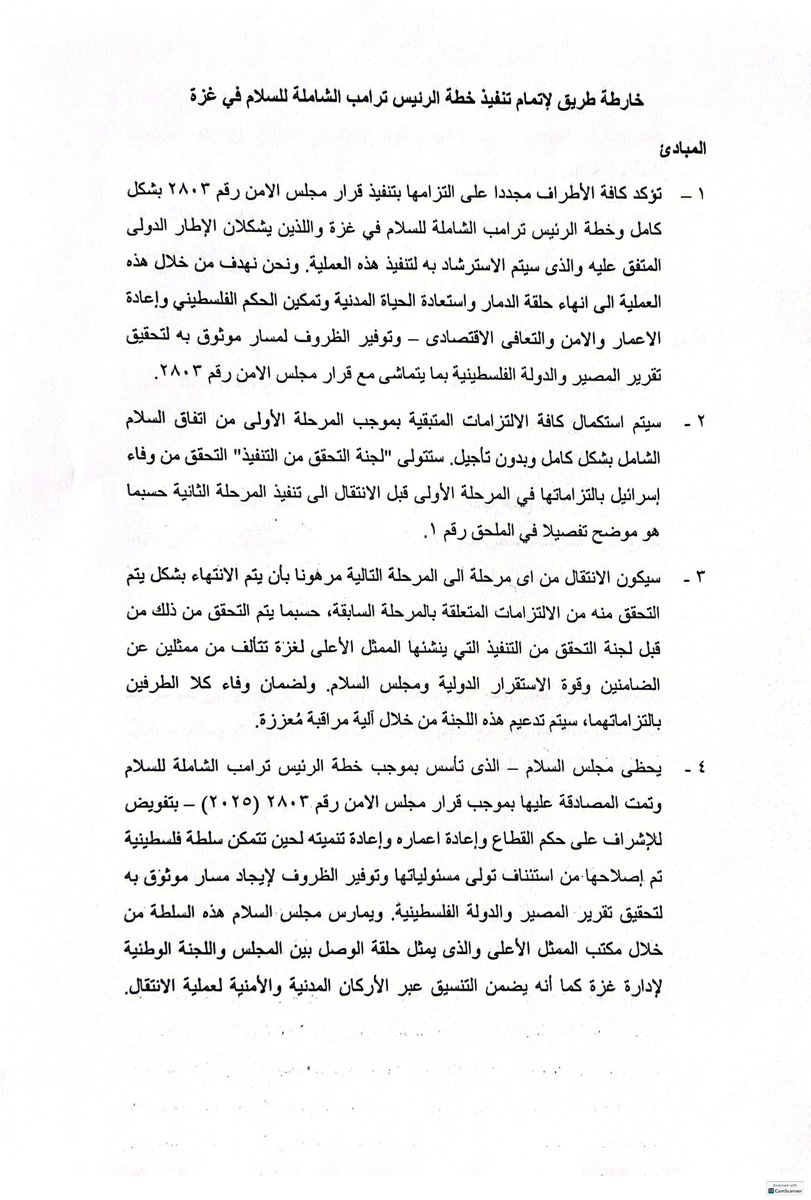
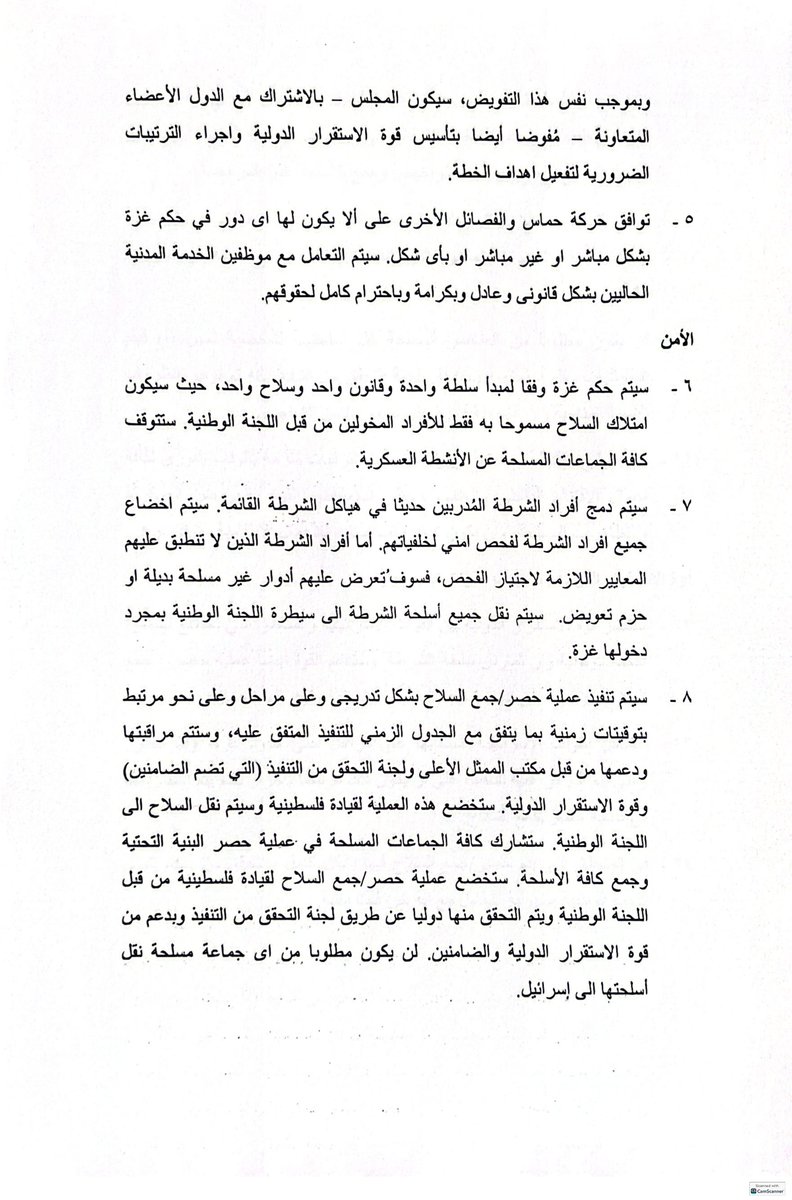
🚨Exclusive: I'm revealing the full text of Mladenov's Gaza plan Palestinians are asked to hand over all "heavy weapons" including rifles & Ak-47s, destroy all tunnels & militant infrastructure within 90 days BEFORE any Israeli withdrawal or reconstruction, & trust that Israel would fulfil its side of the bargain AFTER Gaza becomes fully defenceless Israel never fulfilled any of its obligations under phase 1 of that deal, so why would anyone trust they'd live up to phase 2, especially once the weapons (Gaza's only leverage) are gone?!? From day 91-250, an international verification commission would go door to door to ensure Gaza is fully weaponless, Israel would only withdraw from & allow reconstruction in areas that have been fully verified to be 100% weaponless. During that period, Palestinian factions & individuals would hand over all remaining weapons, including personal ones, except for personal firearms that would be "licensed" by NCAG (which Mladenov is in charge of). Israel gets to keep 18% of Gaza (the enclave's most fertile agricultural lands) indefinitely, even after all weapons & militias in Gaza are gone
Muhammad Shehada tweet mediaMuhammad Shehada tweet mediaMuhammad Shehada tweet mediaMuhammad Shehada tweet media
Nickolay E. MLADENOV@nmladenov

Following today’s #UN Security Council briefing, I am publishing the core elements of the proposed 15-point “Roadmap to Complete the Implementation of President Trump’s Gaza Comprehensive Peace Plan” in plain language. • Points 1–5: Principles • Points 6–11: Security • Points 12–14: International Stabilization Force and IDF Withdrawal • Point 15: Reconstruction A thread (1/16) 🧵

English
49
763
1.2K
96.9K
Lyall Dilkes
Lyall Dilkes@DilkesLyal69069·
@SubtleBeats @VincentJCurtis1 @ChrisGloninger Try 70% of our agriculture land as planned for by victoria. x.com/QBCCIntegrity/…
Aus Integrity@QBCCIntegrity

@MickamiousG @AlboMP Did you see the scope docs!?! 70% of all agricultural land will be required for Victoria! @AlboMP’s stealth plan to kill agriculture in plain site, now taken down so @Bowenchris and his criminal state energy ministers can deploy before everyone realises we don’t eat local food

English
2
0
1
36
Sando King retweetledi
Tally Sticks
Tally Sticks@widespreadhaze·
First, “the markets” do not care whether the budget is “in balance” in the abstract. Bond pricing is not a moral referendum on fiscal tidiness. It reflects expected Bank Rate, expected inflation, term premia, liquidity conditions, regulatory demand, pension-fund behaviour, global portfolio preferences, collateral demand, and the expected path of nominal income. A government can run deficits for decades and still have low yields; it can also run a balanced budget and suffer a currency or banking crisis. The relevant question is not “is spending in balance?” but “what is the macroeconomic and institutional setting?” Second, you import a household-creditor model into a monetary-sovereign state. The UK government does not “borrow money” in the same sense that a firm or household does. It issues sterling liabilities: bank notes, reserves, NS&I savings bonds, Treasury bills, gilts within a sterling monetary system whose unit of account it defines. Gilt issuance is not the state rummaging around for money it lacks; it is a liability-management operation: exchanging one form of state liability for another. The risk on sterling gilts is therefore not ordinary insolvency risk, but interest-rate risk, inflation risk, duration risk, and political/institutional risk. Third, “creditors will assess whether they will get it back” is misleading in the UK case. Holders of gilts are not concerned that the UK will be technically unable to credit sterling to their accounts at maturity. They are worried about the real value of what they receive, future interest-rate paths, inflation, and whether they can sell the gilt at a reasonable price before maturity. A different argument. Fourth, the “markets punish imbalance” claim is selective history. The Liz Truss episode was not simply “the deficit was too large”; it was Bank Rate expectations, sterling weakness, and a forced-selling crisis in leveraged LDI pension strategies. It was not an eternal bond-market law saying “Left spending bad” or “Right tax cuts bad”; it was a specific market-structure and credibility shock. Fifth, the debt interest is also an income flow to the private sector: pension funds, insurers, banks, overseas holders, and households indirectly. It is not money fired into the sun. The distributional question matters: who receives it, and what else could have been done with the fiscal space? But describing it merely as the cost of “past debt” hides the fact that it is also current income for gilt holders and that the gilts etc will be inherited by future generations as a financial asset. Sixth, your comparison with education and defence needs care. It is a significant fiscal transfer, but your framing is designed to make the state appear like a maxed-out household credit card. A fallacy. In sum, the bond market is not a Victorian bank manager checking whether the household books are balanced. In a sterling system, gilts etc are state liabilities issued as part of monetary and reserve management. The real constraint is inflation and productive capacity, not whether the spreadsheet performs moral virtue.
English
12
66
144
13.6K
Sando King
Sando King@SubtleBeats·
@baylissbaghdad @PMarlowe1939 What a shitty article. Overly simplistic explanations even of its own supported points, let alone the gross misrepresentations of what academics and progressive economists say about how government spending actually works.
English
0
0
7
284
Chris Bayliss
Chris Bayliss@baylissbaghdad·
This is a highly original, brilliantly written and disturbingly persuasive piece by @PMarlowe1939 about bond markets, and how nations 'in hock' to them have to navigate fiscal policy differently. Highly recommended reading. thecritic.co.uk/im-worried-abo…
English
33
58
492
265.6K
Sando King
Sando King@SubtleBeats·
@VincentJCurtis1 @ChrisGloninger Even in the worst possible case scenario, it couldn't cover more than 1% of our land. Most likely much less will be needed, between 0.1% and 0.3%. The relevant metric is cost per unit of electricity (plus firming requirements), not % of sun energy captured.
English
1
0
2
33
Sando King
Sando King@SubtleBeats·
@VincentJCurtis1 @ChrisGloninger Pretty much irrelevant; they're plenty efficient to use only a tiny % of our land to supply plenty of energy, in combination with wind nuclear and grid scale + distributed storage.
English
1
0
3
48
Vincent J. Curtis
Vincent J. Curtis@VincentJCurtis1·
@ChrisGloninger Yes, using renewables instead of coal or nat gas does indeed eliminate waste heat from combusting fossil fuels, but renewables have their 2nd law problems too. One of wc is the v. low efficiency of solar panels: the reason solar farms take up so much space.
English
2
0
0
296
Sando King
Sando King@SubtleBeats·
@C_Harwick Just taking them away is a good step. The ultra-wealthy borrow against these future claims to use as present-day consumption, so govt. could theoretically liquidate a similar portion (or more, if they spend in less inflationary ways).
English
0
0
0
9
Cameron Harwick 👾🏛
Cameron Harwick 👾🏛@C_Harwick·
Wealth is not a pile of stuff that rich people sit on. Wealth is a claim to *future* consumption, largely based on productive projects. A govt that tries to liquidate it into present spending will find the ability to do so is quite limited.
Morten N. Støstad@MortenStostad

Strange response. Wealth taxes are a sensible policy for a tax base with extreme wealth + low taxable incomes. How would you tax them otherwise, Jessica? Also, Norway's wealth tax is collecting more and more revenue every year. How is that an unworkable gimmick?

English
9
17
202
7.6K
Sando King
Sando King@SubtleBeats·
@C_Harwick Oligarch-owned press, and a public that believes our political systems are owned by the elite/ultra-wealthy (which is in some ways true). These massively, massively affect public opinion on basically everything. No way you get Trump without them.
English
0
0
0
12
Sando King
Sando King@SubtleBeats·
@C_Harwick I don't believe that what polling says about public desires currently is very representative of what the public would want in a more representative and democratic system less influenced by wealth and lobbying.
English
1
0
0
15
Cameron Harwick 👾🏛
@SubtleBeats "The public getting the policies it wants" is not the standard of efficiency. The public should absolutely not get all the policies it wants, and I guarantee that you agree on a lot of margins.
English
1
0
0
12
Sando King
Sando King@SubtleBeats·
@C_Harwick And government massively influenced by extreme wealth is inefficient because it reduces the likelihood of policies actually matching what the public wants, as well as distorting the fundamental democracies and freedoms that the public should have a right to.
English
1
0
0
15
Sando King
Sando King@SubtleBeats·
@C_Harwick You aren't liquidating future consumption into the present day. You're taking claims on future consumption away from the ultra-wealthy. Superyachts, megamansions etc. are catastrophically inefficient ways to convert resources into welfare.
English
2
0
0
19
Sando King
Sando King@SubtleBeats·
@carto_graph @Rekt57v Korea isn't particularly liberal in any sense, except the one where it's integrated into the US's sphere of influence and is generally supportive of Western foreign policy.
English
0
0
0
64
Benedict
Benedict@carto_graph·
@Rekt57v I find China comparisons facile. Chinese HSR is actually quite expensive. Plus it’s (obviously) a very different political system. Westerners who admire the Chinese developmental state are ignorant of the superior alternatives (eg Korea) which are compatible with liberalism)
English
5
0
40
3.3K
Benedict
Benedict@carto_graph·
Ben isn’t exaggerating about the order of magnitude difference. In constant $: 🇬🇧 HS2: $626 mn/km 🇫🇷 LGV to Bordeaux: $43 mn/km 🇮🇹 Brescia–Verona: $63 mn/km 🇰🇷 Suseo line: $89 mn/km. Pricey. But that’s because it’s 87% in tunnel.
Ben Southwood@bswud

HS2 was a brilliant idea for £10bn, and is a terrible one for £100bn. That’s why getting costs down is the most important thing for Britain to do if it wants infrastructure abundance.

English
50
299
2.7K
337.9K
Sando King
Sando King@SubtleBeats·
@arnesa_kustura Most good unis you can change in or at the end of the first year. A-levels don't fix your subject, but they do mostly set your direction - you'd struggle to get into e.g. physics or engineering without a maths background, which makes sense to me.
English
2
0
9
1.9K
Jack Prandelli
Jack Prandelli@jackprandelli·
Norway and the UK drilled the same North Sea. 🇳🇴Norway got $2 trillion. 🇬🇧The UK got tax cuts. Same basin,Same era.... Completely different outcomes. Norway captured $30 per barrel in government revenue. The UK captured $11. That gap, compounded over 50 years of production, is the entire difference. Norway's model was simple: tax heavily (78% marginal rate), take direct equity stakes in fields via the SDFI, own part of Equinor, and put everything surplus into a fund invested abroad. The Government Pension Fund Global now holds over $2 trillion in assets. That's $390,000 per Norwegian citizen about 1.5% of all listed equities on earth. The fiscal rule: only spend the 3% annual real return. Never touch the principal. The UK started producing earlier, at lower prices, with a lower tax rate (40%) and no saving mechanism. North Sea revenues flowed straight into the general budget. Economists estimate the UK missed out on roughly £400 billion compared to a Norwegian style regime. The windfall largely financed tax cuts in the 1980s rather than a fund. Where things stand in 2026? Norway's petroleum sector will generate $63 bn in net cash flow this year alone feeding a fund already large enough to cover 10-15% of the national budget from returns alone. The UK is a net energy importer. Since 2021 it has paid countries like Norway more than £100 billion for gas. One country treated oil as a finite resource to convert into permanent financial wealth. The other treated it as income. image source:eia
Jack Prandelli tweet media
English
423
3.4K
10.6K
1M
Sando King
Sando King@SubtleBeats·
@taste_of_tbone Matching Singaporean govt. salaries plus massive restrictions on post-legislature life, plus perhaps more stringent/publishable dementia and physical health testing.
English
0
0
60
1.5K
timothy faust 🇵🇸
timothy faust 🇵🇸@taste_of_tbone·
ok, so what's an alternative. pay congresspeople $4 million a year? we already have a problem with people refusing to retire, you think that's gonna help?
English
14
4
583
11.2K
Sando King retweetledi
Y
Y@tinscognito__·
Polanski is a joke. Living in a million pound home 😡 *farmer walks by* of course a million is not a lot, hardly worth taxing *moslem walks by* though the welfare bill in this country is much too high *pensioners walk by on their way to P&O* but I suppose exceptions can be made.
English
1
235
3K
81.9K