
Sabitlenmiş Tweet

Experimented with a mobile app promo concept for @Polymarket .
UI motion, screen recordings, and clean fintech-style editing.
Always learning, always improving. 🎬
English
Svitinskiy
2.2K posts

@Sweetinskiy
AI Creator 🎨 | Motion Designer 👨🏻💻



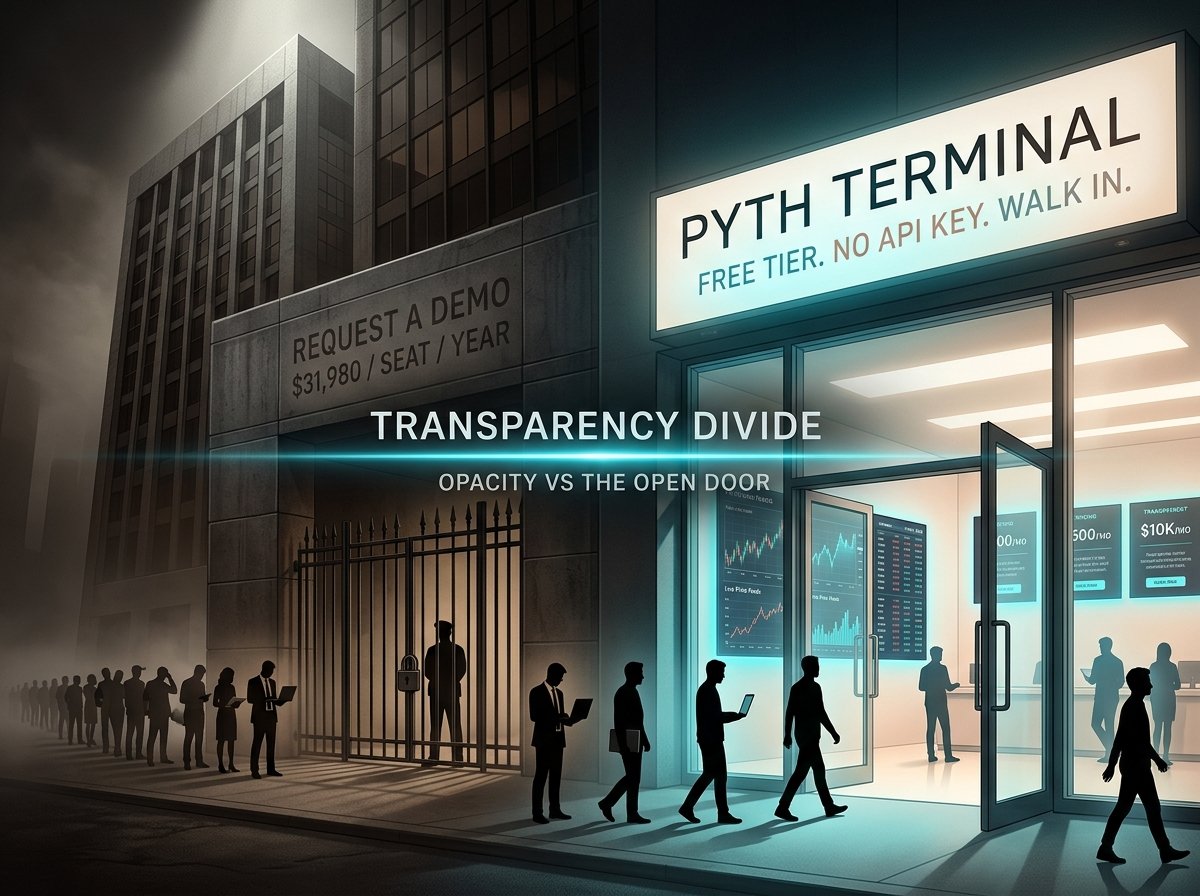
Cocoa hit an all-time high of $12,931 per ton in December 2024, then crashed 61.9% to $4,924 by November 2025. As of last week it sits around $3,800. That's a single soft commodity going through a complete bubble and crash cycle in 11 months, with weekly moves of 8-10% in either direction triggered by Ivory Coast weather reports. And until this week, you couldn't trade that volatility on-chain with a reliable price feed. Pyth just added Cocoa, Coffee, Raw Sugar, and Live Cattle futures to Pyth Pro. ICE softs and CME livestock. That sounds boring on first read. It is genuinely not boring once you look at what's been happening in these markets. Coffee is rallying on dry weather in Brazil and Vietnam. Sugar correlates with crude oil because Brazilian sugarcane is dual-use as ethanol feedstock, so every Iran headline moves sugar futures. Live cattle is one of the most tariff-sensitive contracts in the entire CME complex, with every trade war headline rippling through US beef pricing within minutes. These aren't sleepy agricultural markets anymore. They're some of the most actively traded contracts in the entire macro environment right now. Hedge funds run dedicated soft commodity desks. Macro funds use livestock as a tariff proxy. Climate funds short cocoa as an El Niño hedge. And every single one of those trading desks operates from Bloomberg terminals with data licenses that cost five to six figures a year per seat. Now think about what onchain access to these prices unlocks for builders. Prediction markets on the next cocoa harvest. Perpetual futures on coffee for crypto-native traders who don't have ICE accounts. Structured products that bundle commodity exposure with crypto. Insurance contracts that pay out based on agricultural price thresholds. Yield products that hedge stablecoin yields against soft commodity inflation. None of these existed before institutional commodity feeds came onchain. Now the data is there. The market discovers the products. Pyth Pro now sits at 3,000+ price feeds across crypto, equities, FX, commodities, and metals. One subscription. One API at pythdata.app. From BTC to beef cattle. The legacy data vendor model is a toll booth where every category of asset requires a separate license, a separate contract, a separate dataset, a separate seven-figure relationship with Refinitiv or Bloomberg. Pyth is collapsing that entire architecture into a single endpoint. The price of everything is coming onchain. One feed at a time. You don't notice infrastructure shifts like this in real time. You notice them three years later when an entire category of products exists that didn't exist before. When Pyth adds @sleepagotchi data. I need a sleep quality chart from sleepagotchi.


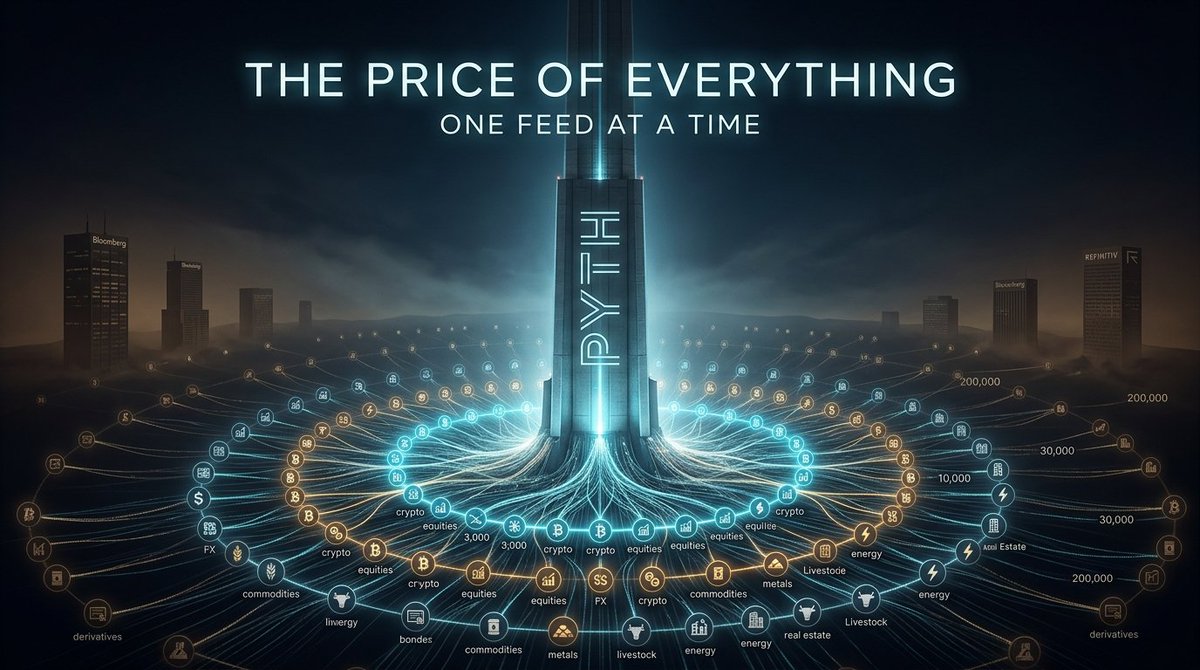
the largest token unlock in Pyth's history just happened on May 19. 2.13 billion PYTH. roughly $94 million in fresh supply. 36.96% of the entire circulating supply hitting the market in a single cliff release. if the protocol had nothing under it, this is the kind of unlock that ends projects. i've watched dozens of L1s, L2s, and DeFi protocols get unwound by exactly this scenario. team unlock hits, market wasn't pricing it in cleanly, sell pressure overwhelms organic demand, chart goes vertical down, narrative dies with the price, community moves on. you can map the exact moment when most failed projects in 2024 and 2025 got terminal damage and it's usually a major unlock during a weak market. and yet, in the same month Pyth absorbed this unlock, the following happened: on May 22, three days after the unlock, the protocol had a five-hour outage that paused half of DeFi on multiple chains. the post-incident reaction wasn't migration away from Pyth. it was a wave of teams publicly committing to keep using it because nothing else gives them institutional-grade first-party data at sub-second latency. last month, Polymarket integrated Pyth Pro as the resolution source for traditional asset prediction markets. Apple, NVIDIA, gold, silver, stock indices — all now resolve through Pyth feeds. that's a multi-year structural revenue contract from one of the largest prediction markets in the world. in April, Pyth launched its Data Marketplace with major financial institutions. the same trading firms that publish prices are now structurally positioned to monetize that data through the marketplace, with revenue flowing back to the protocol. OIS emissions ended on April 22. weekly emissions of roughly 1.93M PYTH that had been hitting the market for the entire history of the token went to zero, removing structural sell pressure on top of the buyback flow from the DAO Reserve. 500 price feeds. 100+ blockchains. 120+ data publishers including Jane Street, Cboe, Jump Trading, Two Sigma, and Virtu Financial. Cardano shipped with Pyth pre-integrated in December. and the chart is still trading near range lows. think about that for a second. this is a protocol that has absorbed the largest unlock in its history, survived its biggest outage, ended its emissions program, signed its largest integration deal, launched a new revenue product, and the price barely moves either direction. that's not weakness. that's a market that has stopped caring about news and is waiting for something else. the unlock was the loudest bearish event of the year. it's still not enough to bend the structural thesis. that tells you something important about what's actually compressing under the chart. most tokens get unwound by their unlocks. some absorb them. a smaller number absorb them and then quietly start a new leg up six to nine months later because the structural buyer (in this case the protocol itself, via revenue-funded buybacks) keeps showing up every single month with cash flow from real customers. watch which bucket Pyth ends up in. the only signal that matters now is whether revenue keeps growing month over month. if it does, the unlock becomes a footnote. if it doesn't, the bears were right. i've made my pick. integration count goes up. publisher count goes up. revenue lines keep expanding. that's the trade. the rest is noise.


i've been watching Pyth integrations for about a year now and there's a pattern i want to point out because i don't think enough people have seen it framed this way. the projects that integrate Pyth never go back. when a team picks an oracle, that decision is usually a multi-year commitment because rebuilding the integration is expensive in engineering hours, expensive in audit costs, and risky in terms of breaking production. switching oracles isn't like switching a frontend library. it's like switching the foundation of a building. so integration data is sticky in a way that almost no other crypto metric is. count what's actually happening. count the perp DEXes on Solana that use Pyth as their primary feed. now go look at their TVL and ask yourself which of them are going to suddenly rip out Pyth and rebuild around a different oracle. answer: none of them. count the lending protocols on Base. count the prediction markets on Polygon. count the perpetuals platforms on Arbitrum. count the new chains launching that ship with Pyth integration on day one. Cardano did exactly this in December 2025. the chain went live with Pyth pre-integrated as the recommended oracle. now compare that to almost any other crypto metric. token holders rotate. TVL flows in and out within weeks. DAU spikes and crashes with narrative cycles. liquidity migrates chasing yield. memecoin attention lasts 72 hours. none of this is sticky. oracle integrations are. once a protocol depends on Pyth for liquidations or settlement, that dependency is structural. it doesn't get reversed by a bad week of price action. it doesn't get reversed by a bad month. it gets reversed only by something catastrophic happening to Pyth, and even then most teams will dual-integrate rather than fully migrate. this is balance sheet infrastructure. and balance sheet infrastructure compounds linearly while the rest of crypto rotates. most of the noise in this space is rotational. you can win for a quarter by riding a narrative and lose it back the next quarter when the meta moves. you cannot do that with infrastructure adoption. you build it once, slowly, painfully, with each integration earned individually. and once you have it, you keep it. count the integrations. count the chains. count the publishers. and ask yourself which of those numbers can plausibly decrease in the next twelve months. then ask the same question about your other crypto bets. most people watch the price. infrastructure investors watch the integration count.

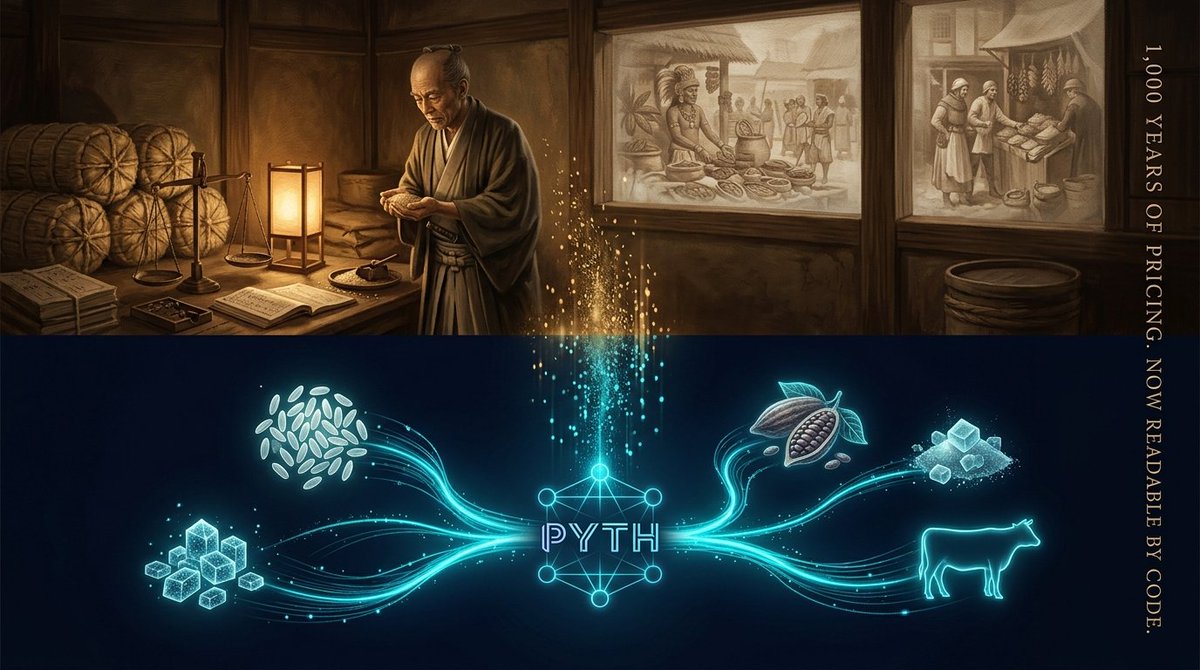
Think about what an oracle actually is for a second. It's the place where the chain meets reality. where smart contracts that exist as pure logic finally have to admit that the price of BTC isn't whatever they want it to be. it's whatever the actual market said it was at this exact second. Every other layer of the stack can lie a little. A chain can advertise TPS it never actually delivers under load. a protocol can inflate TVL by counting wrapped versions of itself. a token can have a roadmap full of features that never ship. a frontend can show you a chart of price action that doesn't reflect actual execution depth. an exchange can publish volume that's mostly wash trades. Oracles can't. an oracle that lies about price gets caught instantly because money moves through it. somebody opens a position. somebody else takes the other side. one of them is wrong, by an amount equal to whatever the oracle lied about. that error compounds into liquidations, into bad debt, into protocol insolvency. an oracle that lies has a half-life measured in days because real capital flows through it and surfaces every distortion. This is why oracles are the only honest layer in DeFi. Pyth pulls that honesty straight from the people making the markets. no middleman. no delay. 120+ firms whose entire business is knowing the price, all pushing it to the same place at the same time, with confidence intervals attached. The rest of crypto can have its narratives. its memes. its rotations. its season after season of attention chasing the next L1 or DePIN or AI agent thesis. Oracles only get to have one thing. the number, as it was, at the exact moment it was. And you can sell narratives for a cycle. you can sell hype for a quarter. but the number, every second, on every chain, forever — that's the part of the stack that compounds. that's the part that doesn't go out of style when the meta rotates. Most of crypto wants to be exciting. Infrastructure wants to be invisible. it wants you to not think about it. it wants you to forget it exists. and the day you do forget it exists is the day it's actually winning. The boring layer is where the real money is being made. it always has been.


Your favorite oracle: Retail trader queries chain → smart contract pulls from oracle → oracle reads from 3rd party node operator → node operator sources from public API → public API aggregates from data vendor → data vendor sources from exchange feed → exchange feed sources from market maker → market maker has the actual price Pyth: Market maker → Pyth → chain It's literally the difference between asking your friend who asked his friend who asked his cousin if their dealer has anything left, versus calling the dealer directly. One of these is going to give you fresher data. one of these is going to give you the actual number. one of these is going to be operational at 2am when you actually need it. You already know which one. And yet half of DeFi is still routing through 4 layers of abstraction to get prices that originated from the same firms that publish directly to Pyth anyway. It's like ordering uber eats from a restaurant that's literally across the street. the food gets there. it's just cold and you paid 40% more than walking. Most of crypto infrastructure is exactly this. legacy decisions made when there was no better option, kept in place because nobody wants to do the migration work, justified after the fact with "well it still works". It still works until it doesn't. and when it doesn't, you find out you've been paying the abstraction tax for years for no reason. Call the dealer.



Polymarket. Indigo. Now Kraken. When real money is on the line, prediction markets, synthetics, leveraged perps - they all end up at the same place🔮 $PYTH is becoming the default.

🇭🇰 ASIA EXPANSION: Hong Kong equities are now live on Pyth Tencent, BYD, CSI300, and FTSE China A50 are live on Pyth Pro today. 70+ more HK-listed names rolling out soon. Pyth goes to Hong Kong 🧵


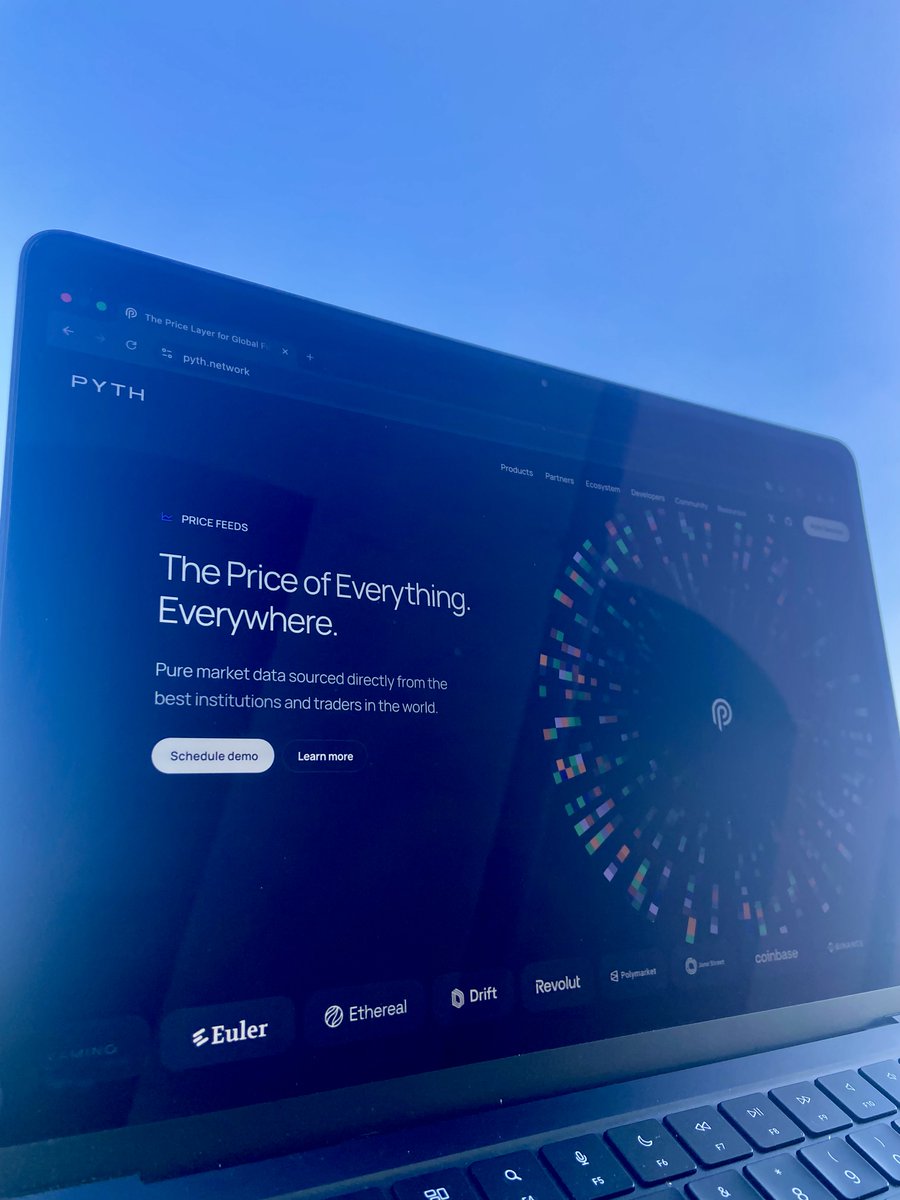


More markets are live on Pyth Pro: - New US equities feeds - Commodity futures - More extended hours coverage Always-on markets need always-on pricing 🔮


July 31st. Pyth Core gets a major infrastructure upgrade. Every dev who's been freeloading on the free API since forever - your time is up 🔮 API access moves to Starter or Pro subscription. 14-day trial before you commit. The flywheel just got fuel. And it was a DAO decision. This is what protocol maturity looks like.


