hyze

148 posts

hyze banner
hyze

hyze

@hyzecore

Crypto Research and Speculations

Katılım Kasım 2023
51 Takip Edilen39 Takipçiler
Sabitlenmiş Tweet
hyze
hyze@hyzecore·
$OKB — YOU SHOULD NOT MISS THIS! **Continuing my series of posts about the OKX ecosystem. Right now, I see $OKB as a very promising and interesting speculative opportunity. More and more positive news flow is forming around the @okx ecosystem, while practical steps are already being taken to develop X Layer - which directly impacts demand for the native token, $OKB. (*check chart) From a technical perspective , after a long consolidation phase, the price managed to close above the upper boundary of the range. I made my first purchases with 20% of the planned position at around $92 per coin. I only plan to add more if the price breaks above and confirms over $90. I’ll reconsider the idea if the price drops below $80. Why am I betting on this? The recent update and activation of OKX Boost, where volume on X Layer receives a 20% boost, effectively makes it one of the most profitable options for users - and it’s already gaining traction. Of course, you could argue that most users there right now are farmers, but in crypto that’s often how user bases are formed: first through incentives, and later, as real use cases appear, organic adoption follows. It’s also worth highlighting the launch of Exchange OS - a new infrastructure solution for building on-chain markets on top of X Layer. This already looks like confirmation that OKX is moving beyond being “just an exchange token” and is trying to build a full-fledged ecosystem and infrastructure similar to BNB Chain. I wouldn’t be surprised if, over time, we see things like a PERP DEX, prediction markets, or other on-chain tools for lending and staking within X Layer. All of this is happening gradually, step by step. And it’s important to remember that for a token to grow, even a small imbalance toward buying pressure can be enough - especially considering: >the 21 million OKB hard cap; >strong news momentum; >direct support from the exchange; >indirect backing from institutional players; >the creation of new demand mechanisms and ongoing infrastructure development. For now, this is more of a bet on the future growth of the ecosystem and adoption rather than on already established results. BUT THESE ARE EXACTLY THE KINDS OF NARRATIVES THE MARKET OFTEN STARTS PRICING IN AHEAD OF TIME - WHICH IS WHY, IN MY OPINION, THIS IS SOMETHING WORTH PAYING CLOSE ATTENTION TO.
hyze tweet media
English
16
2
20
320
MolodoyDimDimich
MolodoyDimDimich@MolodoyKryt·
Everyone wants the next BNB, but very few people pay attention to what actually created BNB’s value in the first place. It wasn’t hype. It was an expanding ecosystem that kept creating new reasons to use the token. The interesting question for $OKB isn’t whether it can pump. It’s whether X Layer can become that engine.
English
1
0
1
72
hyze
hyze@hyzecore·
31.01.2026, CEO of OKX Star Xu publicly accused Binance over the 10/10 event (flash crash) and continues an open confrontation with Changpeng Zhao on X. At the time, it looked like just another exchange rivalry, but now the picture looks different. 05.03.2026 ICE (owner of NYSE) entered into a strategic partnership with OKX and received a role in the company’s governance. The valuation of OKX after the deal is estimated at around $25 billion. It’s now becoming clear that in the exchange market, OKX is no longer competing with Bybit - it’s aiming much higher. Binance still dominates in liquidity and retail, but CZ remains a toxic figure for institutional players due to ongoing investigations, reputational risks, and dependence on Trump. Meanwhile, OKX is gradually building the image of a regulated infrastructure platform for institutional capital. A $25 billion valuation from the owner of NYSE is no longer just an “investment round” - it’s a signal that major financial players are beginning to build a long-term model of the crypto market around more integrated and compliant platforms, and in their view, that platform is OKX, not Binance.
hyze tweet media
English
10
0
13
414
hyze
hyze@hyzecore·
@XLayerOfficial Kinda predictable progress, I'm watching closely on $OKB, so is you?
English
0
0
0
91
Eligate
Eligate@EligAte_web3·
@hyzecore @okx I think OKB is already doing really well, and I believe this will give it a further boost
English
1
0
1
16
hyze
hyze@hyzecore·
@andrpantus @okx I'm more on slow but confident bullish trend side
English
0
0
0
21
andrpantus
andrpantus@andrpantus·
@hyzecore @okx Every major okx update boosts okb so i'm keeping a close eye on it for a potential moonshot
English
1
0
1
39
hyze
hyze@hyzecore·
@hitu_monke @okx I hope so 😅😅. But honestly I have clear invalidation scenarios when price hits 80 or can't hold above 90. Ready for position management. No blind believe just facts and watching news and charts
English
0
0
0
20
hyze
hyze@hyzecore·
@xbtremi And It's just a start 🫢
English
0
0
0
5
∅ REMI
∅ REMI@xbtremi·
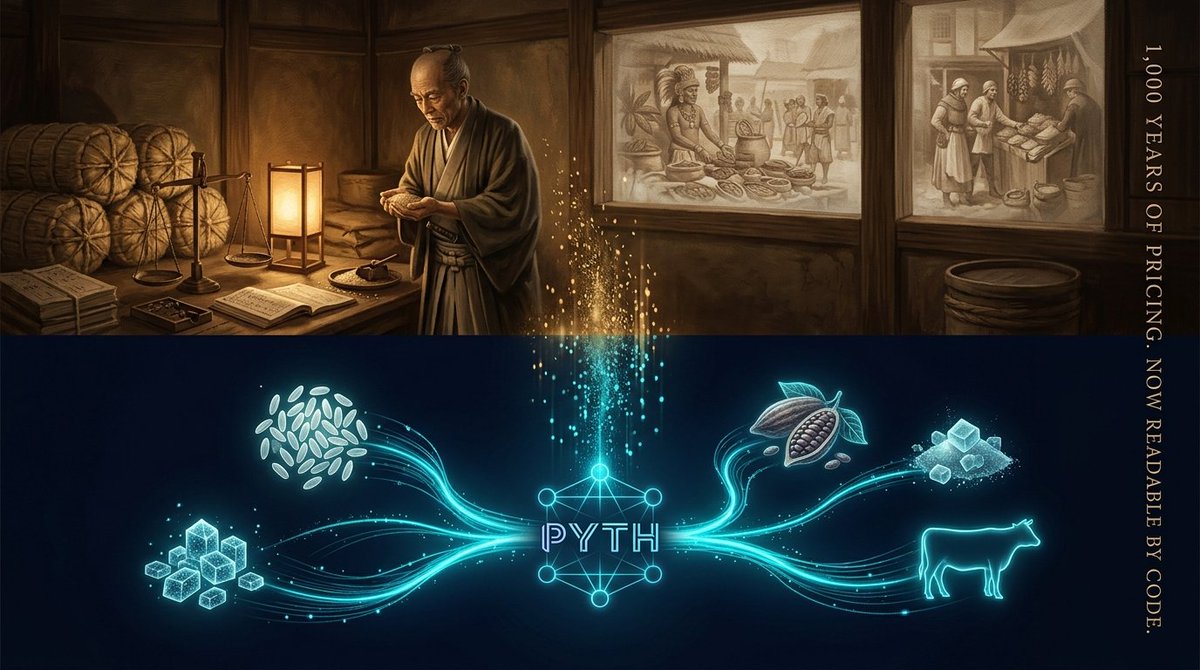
Commodities are the oldest market in the world. People were trading cocoa beans as currency in Mesoamerica a thousand years before stock exchanges existed. The first organized futures contracts on rice were settled in 17th century Osaka, before Adam Smith was born, before central banks, before paper money was even widely accepted in Europe. Coffee, sugar, livestock, grains, metals. These commodities have been pricing themselves continuously for centuries longer than any equity, any bond, any currency in current use. And until last week, almost none of that price discovery was readable onchain. Think about how strange that is. We built an entire decentralized financial system. We tokenized stocks and bonds and real estate and art. We deployed smart contracts that handle more transaction volume than most national stock exchanges. We achieved verifiable global settlement of digital assets in seconds. And the oldest, most settled, most globally important markets on earth, the markets that literally determine what people eat and what economies can afford to build, were sitting outside the onchain economy entirely. Locked behind ICE Connect licenses and CME DataMine subscriptions. Visible only to institutions with the legal teams and budget to negotiate access to data that has been continuously priced for centuries. Pyth just added cocoa, coffee, raw sugar, and live cattle. Four feeds. Quiet announcement. Easy to miss. But the meaning is structural. The oldest markets on the planet are starting to make themselves readable to the youngest financial system on the planet. A smart contract on Solana can now reference the same cocoa futures price that a buyer in Amsterdam used to settle physical delivery yesterday morning. That same price discovery, that same global consensus on what the world's chocolate supply is worth, is now accessible to anyone with an internet connection and a few lines of code. This is the actual long arc of what onchain finance was supposed to be. Not just trading more crypto. Not just gambling on tokens. Bringing the entire global pricing system onto a public verifiable layer, slowly, asset class by asset class, until eventually every meaningful market that humans care about is queryable by anyone, anywhere, without permission. Cocoa is one feed. Coffee is one feed. Sugar is one feed. Live cattle is one feed. 3,000 down. Roughly 197,000 to go before the entire institutional pricing universe is onchain. That's the project. That's what infrastructure work actually looks like at scale. Quiet. Slow. Compounding. And one day someone is going to write a history of finance that includes the sentence "in 2026, the price of everything started coming onchain". And then they're going to spend a chapter explaining why that mattered. Right now we're just adding cattle.
∅ REMI tweet media
∅ REMI@xbtremi

Think about what an oracle actually is for a second. It's the place where the chain meets reality. where smart contracts that exist as pure logic finally have to admit that the price of BTC isn't whatever they want it to be. it's whatever the actual market said it was at this exact second. Every other layer of the stack can lie a little. A chain can advertise TPS it never actually delivers under load. a protocol can inflate TVL by counting wrapped versions of itself. a token can have a roadmap full of features that never ship. a frontend can show you a chart of price action that doesn't reflect actual execution depth. an exchange can publish volume that's mostly wash trades. Oracles can't. an oracle that lies about price gets caught instantly because money moves through it. somebody opens a position. somebody else takes the other side. one of them is wrong, by an amount equal to whatever the oracle lied about. that error compounds into liquidations, into bad debt, into protocol insolvency. an oracle that lies has a half-life measured in days because real capital flows through it and surfaces every distortion. This is why oracles are the only honest layer in DeFi. Pyth pulls that honesty straight from the people making the markets. no middleman. no delay. 120+ firms whose entire business is knowing the price, all pushing it to the same place at the same time, with confidence intervals attached. The rest of crypto can have its narratives. its memes. its rotations. its season after season of attention chasing the next L1 or DePIN or AI agent thesis. Oracles only get to have one thing. the number, as it was, at the exact moment it was. And you can sell narratives for a cycle. you can sell hype for a quarter. but the number, every second, on every chain, forever — that's the part of the stack that compounds. that's the part that doesn't go out of style when the meta rotates. Most of crypto wants to be exciting. Infrastructure wants to be invisible. it wants you to not think about it. it wants you to forget it exists. and the day you do forget it exists is the day it's actually winning. The boring layer is where the real money is being made. it always has been.

English
14
0
29
329
hyze
hyze@hyzecore·
@runik_owners Am I able to track these prices like with exlplorer?
English
0
0
0
9
Nomad☠️
Nomad☠️@runik_owners·
Things you can now query from a single API endpoint: BTC. ETH. SOL. NVIDIA stock. Apple stock. EUR/USD. Gold. Silver. Crude oil. Natural gas. Corn. Wheat. Soybeans. Coffee. Cocoa. Raw sugar. Live cattle. Yes, live cattle. The actual price of actual cows traded on the actual CME, accessible by an actual smart contract on Solana through actual one-line REST calls at pythdata.app. This is genuinely funny if you sit with it for a second. The same endpoint that gives you the BTC mark price also gives you what a US feedlot is paying for beef futures in Chicago. The same SDK call. The same JSON response format. The same confidence interval. The same first-party institutional pricing pipeline. It used to take a Bloomberg terminal, a Refinitiv contract, a CME data license, an ICE data license, and a small army of compliance officers to even legally access half of these prices in one place. Now it takes a curl request. And nobody is talking about how absurd this is. For the entire history of finance, asset class fragmentation has been the moat that protected data vendors from competition. Every category had its own vendor, its own licensing regime, its own pricing model, its own data feed format. Crypto data came from CoinGecko or CMC. Equities came from Bloomberg. FX came from Refinitiv. Commodities came from ICE Connect or CME DataMine. Each one a separate seven-figure annual contract for any institution that wanted full coverage. Pyth collapsed that. One subscription. One API. One JSON schema for crypto, equities, FX, commodities, metals. This isn't an incremental product improvement. This is the kind of platform consolidation that, when it happens to any mature industry, completely reshapes who wins and who disappears within a decade. AWS did it to enterprise IT. Stripe did it to payment processing. Both started looking like niche tools and ended as the default infrastructure for everything in their respective categories. Pyth is at the moment where the niche tool starts to look like the default. The 3,000-feed catalog, the institutional publisher list, the onchain verifiability, the per-query economics, all of these compound on top of each other. Degens asked for prediction markets on beef futures. They shall now receive. One API call at a time. The price of everything is coming onchain. The only question is whether you're paying attention to it now or three years from now.
Nomad☠️ tweet media
Nomad☠️@runik_owners

Your favorite oracle: Retail trader queries chain → smart contract pulls from oracle → oracle reads from 3rd party node operator → node operator sources from public API → public API aggregates from data vendor → data vendor sources from exchange feed → exchange feed sources from market maker → market maker has the actual price Pyth: Market maker → Pyth → chain It's literally the difference between asking your friend who asked his friend who asked his cousin if their dealer has anything left, versus calling the dealer directly. One of these is going to give you fresher data. one of these is going to give you the actual number. one of these is going to be operational at 2am when you actually need it. You already know which one. And yet half of DeFi is still routing through 4 layers of abstraction to get prices that originated from the same firms that publish directly to Pyth anyway. It's like ordering uber eats from a restaurant that's literally across the street. the food gets there. it's just cold and you paid 40% more than walking. Most of crypto infrastructure is exactly this. legacy decisions made when there was no better option, kept in place because nobody wants to do the migration work, justified after the fact with "well it still works". It still works until it doesn't. and when it doesn't, you find out you've been paying the abstraction tax for years for no reason. Call the dealer.

English
14
0
28
553
degenkenzie
degenkenzie@degenkenzie·
Pyth passed 1,000 onchain price feeds in early 2025. The Pyth Pro catalog has tripled since then and is still accelerating. We're now at 3,000+ feeds across crypto, equities, FX, commodities, and metals. Let me put that growth rate in context because the surface number doesn't tell you what's actually happening underneath. A traditional data vendor like Refinitiv or Bloomberg has roughly 100,000 to 200,000 instruments in their full enterprise feed catalogs. That's the universe of everything a global institutional trader might want to price. Those companies built those catalogs over four to five decades, with thousands of employees managing data partnerships, contracts, normalization, and quality control. Pyth Pro has built 3% of that universe in roughly four years. Not 3% of the easy stuff. 3% of the entire institutional data universe, including ICE softs, CME livestock, US equities, FX majors, metals, energy, and the full crypto stack. And the growth rate is the part nobody is pricing in. Let me show you the actual cadence. Energy feeds were added in recent months. Equities expanded earlier this year. Pyth Pro shipped FX majors and crosses. Then metals expanded. Then softs. Now livestock. New feeds are launching roughly every week. If you extrapolate the current cadence linearly (and the data suggests it's actually accelerating), Pyth Pro hits 10,000 feeds within 18 months and 30,000 feeds within 4 years. At 30,000 feeds you're at 15-20% of the full Bloomberg/Refinitiv universe, accessible through a single API, with onchain verifiability, with first-party publishers, at a fraction of the legacy cost. That's not an incremental product upgrade. That's the moment a single onchain endpoint becomes a credible alternative to seven-figure annual data vendor contracts for any builder, fund, or fintech that wants institutional-grade pricing without the institutional-grade overhead. Now ask yourself which categories of builders this enables. Quantitative hedge funds that want to backtest strategies against any global asset without negotiating individual data licenses. Fintechs that want to launch multi-asset retail products in jurisdictions where local data vendors gatekeep access. Prediction markets that want to settle on any tradeable instrument globally. Perpetual exchanges that want to list exotic asset pairs without infrastructure costs. Insurance protocols that want to write coverage tied to commodity, FX, or equity price thresholds. Every single one of these used to require its own custom data deal. Now they all share the same endpoint. 3,000 feeds is the milestone. The trajectory is the trade. Watch the cadence, not the snapshot. x.com/degenkenzie/st…
degenkenzie tweet media
English
15
0
31
339
hyze
hyze@hyzecore·
@TOXA_CNPHNK I remember first time hearing about bloomberg terminals and prices and was like a bit shocked 😅
English
0
0
1
20
toxacnphnk.eth
toxacnphnk.eth@TOXA_CNPHNK·
Cocoa hit an all-time high of $12,931 per ton in December 2024, then crashed 61.9% to $4,924 by November 2025. As of last week it sits around $3,800. That's a single soft commodity going through a complete bubble and crash cycle in 11 months, with weekly moves of 8-10% in either direction triggered by Ivory Coast weather reports. And until this week, you couldn't trade that volatility on-chain with a reliable price feed. Pyth just added Cocoa, Coffee, Raw Sugar, and Live Cattle futures to Pyth Pro. ICE softs and CME livestock. That sounds boring on first read. It is genuinely not boring once you look at what's been happening in these markets. Coffee is rallying on dry weather in Brazil and Vietnam. Sugar correlates with crude oil because Brazilian sugarcane is dual-use as ethanol feedstock, so every Iran headline moves sugar futures. Live cattle is one of the most tariff-sensitive contracts in the entire CME complex, with every trade war headline rippling through US beef pricing within minutes. These aren't sleepy agricultural markets anymore. They're some of the most actively traded contracts in the entire macro environment right now. Hedge funds run dedicated soft commodity desks. Macro funds use livestock as a tariff proxy. Climate funds short cocoa as an El Niño hedge. And every single one of those trading desks operates from Bloomberg terminals with data licenses that cost five to six figures a year per seat. Now think about what onchain access to these prices unlocks for builders. Prediction markets on the next cocoa harvest. Perpetual futures on coffee for crypto-native traders who don't have ICE accounts. Structured products that bundle commodity exposure with crypto. Insurance contracts that pay out based on agricultural price thresholds. Yield products that hedge stablecoin yields against soft commodity inflation. None of these existed before institutional commodity feeds came onchain. Now the data is there. The market discovers the products. Pyth Pro now sits at 3,000+ price feeds across crypto, equities, FX, commodities, and metals. One subscription. One API at pythdata.app. From BTC to beef cattle. The legacy data vendor model is a toll booth where every category of asset requires a separate license, a separate contract, a separate dataset, a separate seven-figure relationship with Refinitiv or Bloomberg. Pyth is collapsing that entire architecture into a single endpoint. The price of everything is coming onchain. One feed at a time. You don't notice infrastructure shifts like this in real time. You notice them three years later when an entire category of products exists that didn't exist before. When Pyth adds @sleepagotchi data. I need a sleep quality chart from sleepagotchi.
toxacnphnk.eth tweet media
English
16
1
37
922
w3nz
w3nz@w3nzzzzz·
Pyth Pro & Kraken Pro are now partnering. The $WTIOIL perpetual oil futures are officially live on the @krakenfx The @PythNetwork infrastructure powers the accuracy and speed of quotes for this instrument 24/7. This is another step toward bringing major TradFi assets onto transparent on-chain rails for secure order execution.
g6.base.eth@treeepy03

Polymarket. Indigo. Now Kraken. When real money is on the line, prediction markets, synthetics, leveraged perps - they all end up at the same place🔮 $PYTH is becoming the default.

English
20
0
32
995
Alexandro
Alexandro@RetroLayer·
@hyzecore @arc is building an Economic OS, basically a Layer-1 blockchain made specifically for stablecoins, and building a strong community via a hub. You can find more info on their page
English
1
0
1
40
Alexandro
Alexandro@RetroLayer·
Builder communities are rare Most places talk about building. Arc actually encourages it. Super happy to get the Architect badge today ❤️ The best thing here isn’t even the badge itself — it’s the people. You meet builders, devs, designers, founders, random cracked minds from all over the world, and everyone’s genuinely trying to help each other grow and create cool stuff together. That atmosphere is hard to fake, and Arc nailed it. Huge thanks to the @arc team and shoutout to @bobbilee @samconnerone happy to be part of this journey
Alexandro tweet media
English
30
0
65
920
hyze
hyze@hyzecore·
@Sweetinskiy @okx You can't underestimate the role of OKX Boost and the impact of small steps. I need to take that into account to predict much bigger moves. But yeah, OKX Boost is definitely not at the top of this changes, just a small brick for sure.
English
0
0
1
66
Svitinskiy
Svitinskiy@Sweetinskiy·
@hyzecore @okx Exchange OS for onchain markets on top of X Layer is way more hyped than OKB Boost, fr fr.
English
1
0
1
73
hyze
hyze@hyzecore·
@treeepy03 @okx You're welcome, any ideas for next research?
English
0
0
0
30
Aggy
Aggy@tomniy_bes·
@hyzecore @okx OKB with his X layer will be quite interesting in the future..
English
1
0
1
33
hyze
hyze@hyzecore·
@tomniy_bes @PythNetwork Yeah,that's the best and easiet one for entry for companies. But what do you think about @chainlink or am I confusing something isn't they providing price data too but in different league?
English
0
0
0
34
hyze
hyze@hyzecore·
@6uappi Damn, wish I could get my lazy ass up to consider improving in it..
English
1
0
1
14
bytez
bytez@6uappi·
someone figured out that Obsidian + Claude Code isn’t a productivity hack it’s a completely different relationship with your own knowledge the setup takes 20 minutes. what it does is permanent. here’s what actually happens when you connect them: your Obsidian vault becomes the directory Claude Code runs from. CLAUDE.md at the root is both instructions for Claude and a readable note in your vault in one file, two jobs Claude reads your notes, finds patterns in your thinking, surfaces gaps you didn’t notice, asks questions that push you deeper not as a chatbot, but as an agent that has actually read everything you’ve ever written you build skills on the fly: /log, /plan, /review custom commands that do exactly what you need, written once, used forever voice mode + Claude Code + Obsidian = you speak a thought, it lands as a structured note, linked to everything related, without you touching a keyboard It gets smarter every session because it reads what happened last time. no copy-pasting context. no re-explaining. it already knows the people still dumping ideas into Notion pages they never reopen are building a graveyard of thoughts the ones who set this up are building a system that thinks back
CyrilXBT@cyrilXBT

x.com/i/article/2057…

English
14
1
16
281
Svitinskiy
Svitinskiy@Sweetinskiy·
@s_gooses @PythNetwork ran on charity since 2021 and now they’re eating the $50B market data industry. glow up fr
English
2
0
0
19
gooseS-
gooseS-@s_gooses·
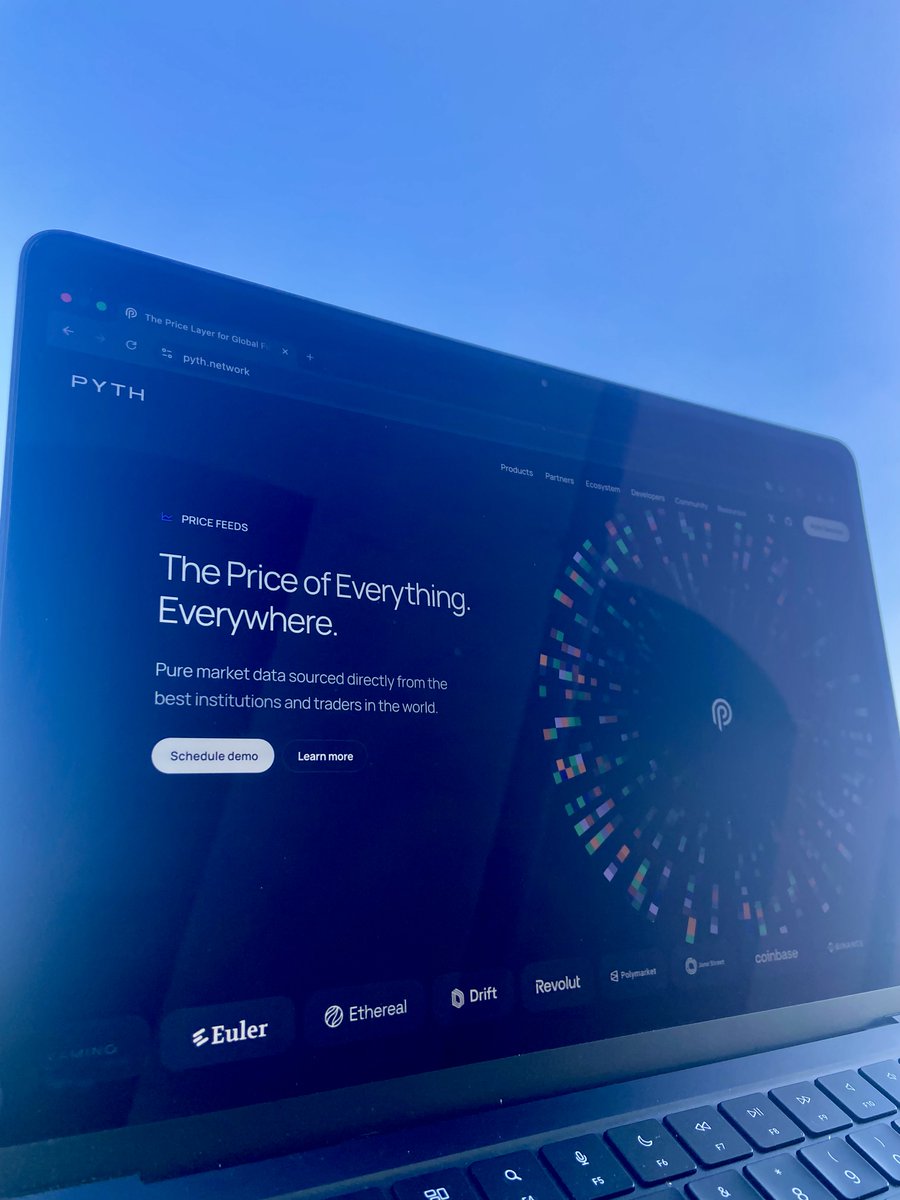
PYTH NETWORK ENDS THE FREE DATA ERA glo mo team, sitting out in nature today, exploring the new @PythNetwork updates and their docs. > they provide free institutional data since 2021. > become default oracle for defi protocols. > run core service entirely on charity. > pull a ruthless twist in summer 2026. > kill the free tier for everyone. > enforce mandatory plans from $500 to $10,000 monthly. > the api remains exactly the same but latency is way lower. > all subscription revenue now flows directly to the pyth dao. > the $50B market data industry just got a web3 predator. will smaller builders survive this new pricing model? the price of everything. everywhere. [link in the first comment]
gooseS- tweet media
English
13
0
18
320