

Nick Benton
496 posts
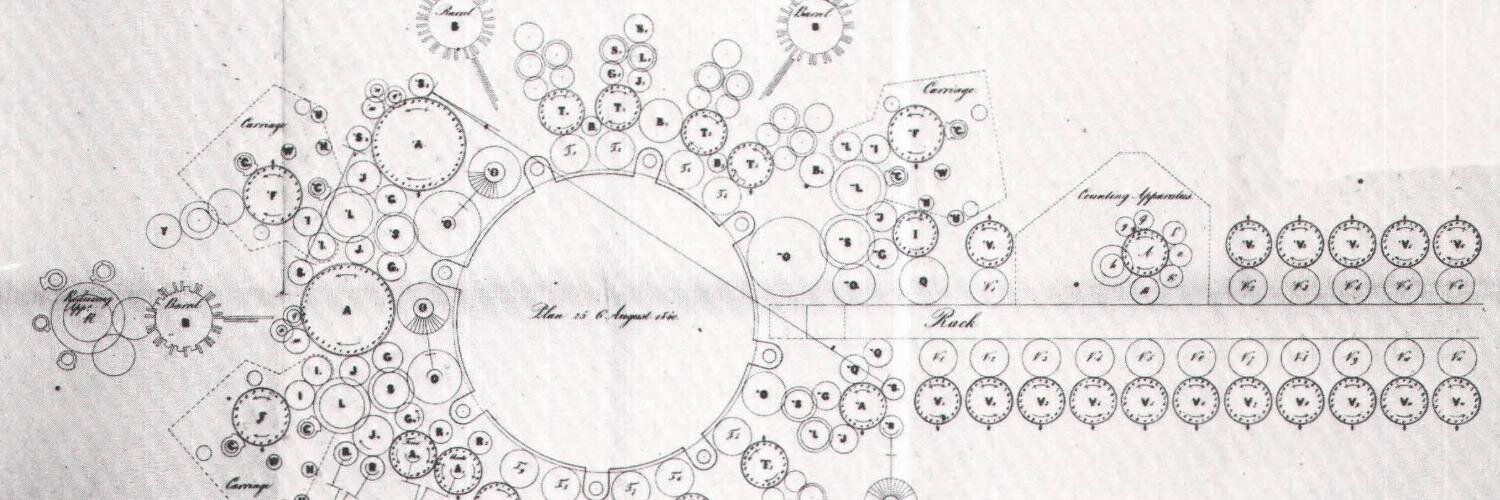

Real or slop? Can you tell which PL paper is real and which is slop? This is brilliant.
slop.zackg.me
English
@typememetics “Haskell Theoretical Purity Division” - not unreasonable
English

Complete the quiz here:
typememetics.institute/cognitive-asse…
And share the department you have been assigned to!
English
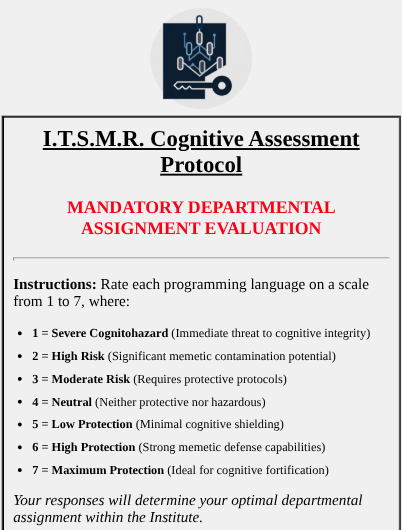
ATTENTION: NEW OPERATIVES
Welcome to the Institute. Departmental assignment is now in effect.
You will be placed in one of the following divisions: RUST, ADA, HASKELL, or OCAML.
Proceed immediately to MANDATORY COGNITIVE ASSESSMENT. The hyperlink is in the comments.
Failure to comply will result in permanent reassignment to JavaScript maintenance.
English
@ilyasergey Many folk (including, of course, @headinthebox) have moved to industry and made PL research ideas useful/accessible from there. This usually turns out to involve more novelty than one might have expected.
English

Hot take: the programming languages research community should focus less on complex solutions to very narrow problems in the name of novelty, and more---on making existing solutions accessible to non-experts.
English

Thank you @swarat! I’m very honored to receive this award
Swarat Chaudhuri@swarat
Just learned that @IsilDillig won the #SIGPLAN Robin Milner Junior researcher award this year! 🎈 🍾 The award goes to one outstanding mid-career PL researcher each year, and it’s hard to think of a more deserving candidate for it. Congratulations, Isil! sigplan.org/Awards/Milner/
English

Very proud to announce that the first Iris paper received the 2025 Most Influential POPL Paper Award this week. This is a testament to the amazing contributions of a wonderful international network of collaborators.
youtube.com/live/ZKwpY0g9L…
YouTube

English

On my children's school's online system, the welcome page has a bad-sentence-of-the-week with a correction to teach people to speak better French.
They're at best incredibly pedant. Sometimes simply wrong. I wonder what compels teacher to act in such a condescending way.
English
Nick Benton retweetledi

Looking forward to seeing colleagues at @PLDI next week! I'll be giving the talk on Friday in the TOPLAS track on "Interactive Abstract Interpretation with Demanded Summarization" (part of @benno_stein 's PhD work and with @rakingleaves). dl.acm.org/doi/10.1145/36…
English
Nick Benton retweetledi

The 2024 Alonzo Church Award for Outstanding Contributions to Logic and Computation is presented jointly to Thomas Ehrhard and Laurent Regnier for giving a logical and computational account of differentiation, bringing Taylor expansion to the Curry-Howard correspondence.
English
English

Today on @TheRestHistory, the bloody climax of our series on CUSTER'S LAST STAND, as we reach THE FINAL SHOWDOWN.
What's was Custer's strategy? Was there actually a last stand? Were there any survivors? Who was to blame? What happened to the cake?
linktr.ee/restishistory




English
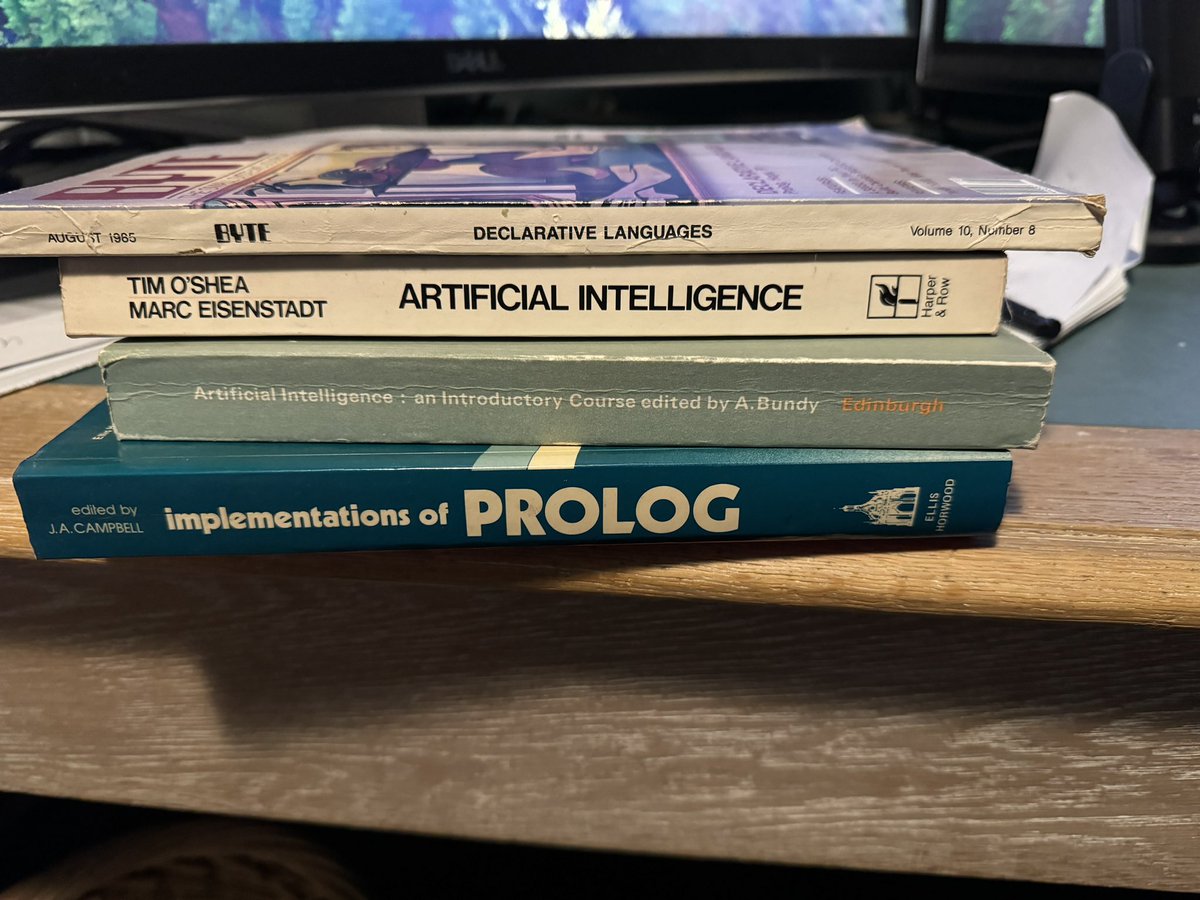
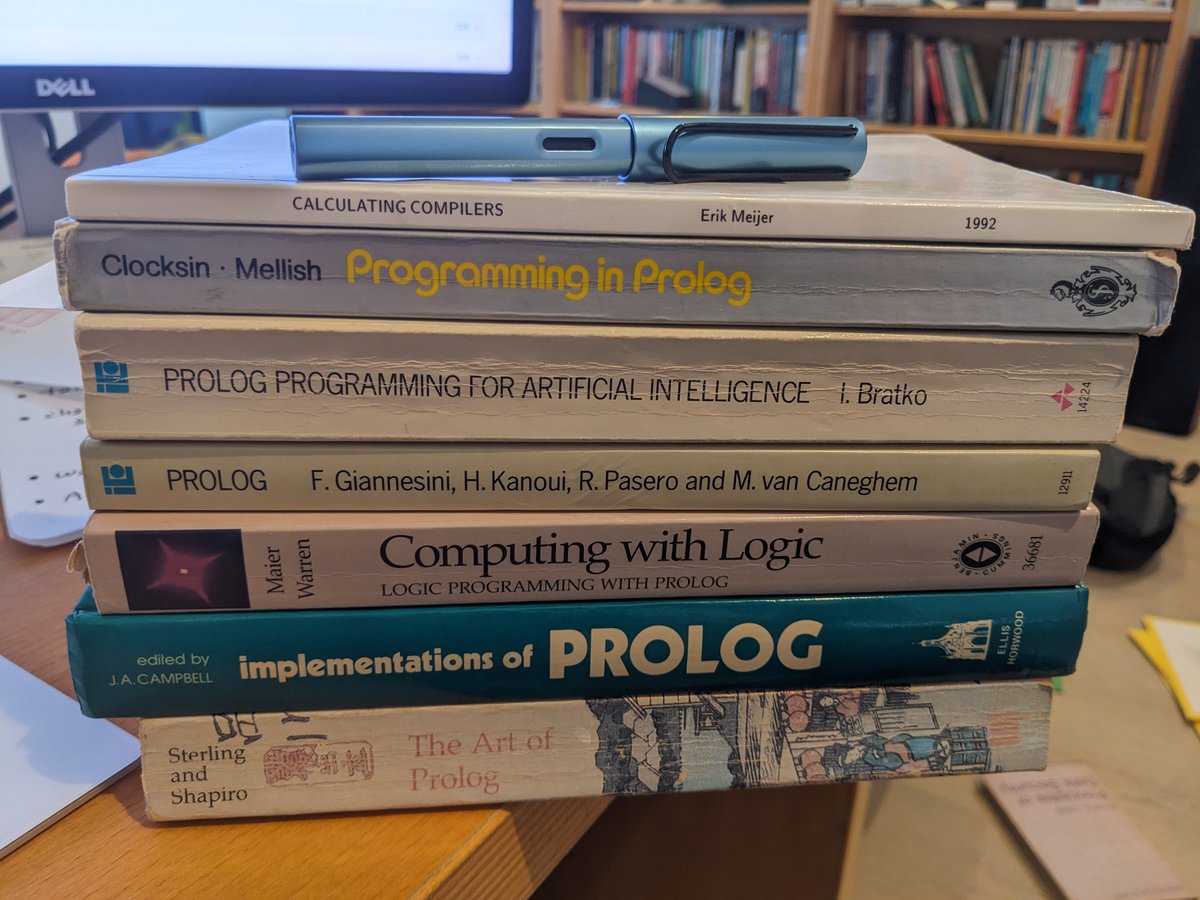
@headinthebox I did a Prolog as one of the demo programs for Acornsoft Logo for the BBC Micro
English

@SystemFOmega I wrote a SASL version of "The World's Shortest Prolog Interpreter?" and it was even smaller (and more readable) than the Lisp one ;-)
English

@kamatsu8 @rg9119 Powerdomains? I still think some of this may be historical in trying to cut down to “computationally reasonable” domains seeking full abstraction. Ask Gordon Plotkin? His office isn't far from yours, but I realise that is not sufficient information to find the man himself...
English

What's the specific reason that using a Scott Domain (or omega-algebraic cpo) works for a semantics with recursive domain equations and using a plain old pointed cpo doesn't? I'm trying to justify why we need Scott Domains in my lecture notes and I realised I don't actually know
English
@satnam6502 Hey, dunno if you know, but I worked with Chris and John (RIP) back in the day! Can also agree about the challenges of going from research to engineering…
English

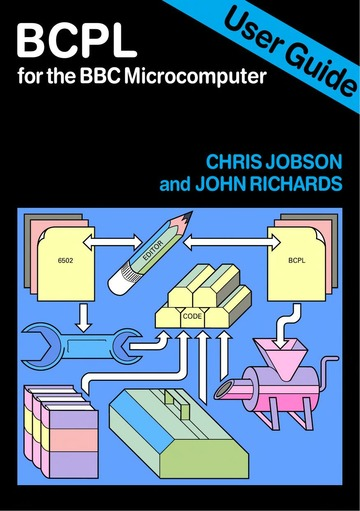
I was 45 years old when I realized I "could not code", despite having written over a million of lines of code since I started hacking as a teenager. After a career as a researcher in academia and industry I had just started at Google writing production code for a devops project, having quit the world of research. It was quite the rude awakening, being taught how to code by talented engineers about half my age. Until then I had written code for research projects to yield results for publication in academic conferences. I know others have produced very high quality software as part of research projects (I'm looking at you @BjornerNikolaj) but that was not true of the research projects I worked on. It was a humiliating and painful process for me, but a necessary one. I am grateful for this opportunity to become a slightly better software engineer. The key things I learned revolved around the social aspects of coding: how to write code collaboratively; how to write code that could endure a long time by being easier to comprehend and amend; how to give and take feedback for improving code; how to track progress; how to throughly test and debug code; how to write design documents; how to communicate with engineers and managers about requirements; and the list goes on. This is what it takes to be a professional software engineer, and it certainly requires process. This type of coding is grindingly slow compared to a life of carefree hacking, and at times it can be soul destroyingly tedious. However, its rewards come in time, rather than in the immediate sugar rush of personal hacking. As part of this devops journey I ended up making a few small contributions to Kubernetes early on. My daughter recently ran the kubectl command (something I contributed to) and I was quite the proud father. So I will not knock process, it is a necessary part of being a software engineer and shipping quality software. However, I will also look forward to one day "retiring" from process, and trying to recapture the magic and excitement of carefree personal coding that I experienced as a teenager with BBC BASIC, BCPL, PASCAL, LISP and 6502 machine code.
English
Nick Benton retweetledi

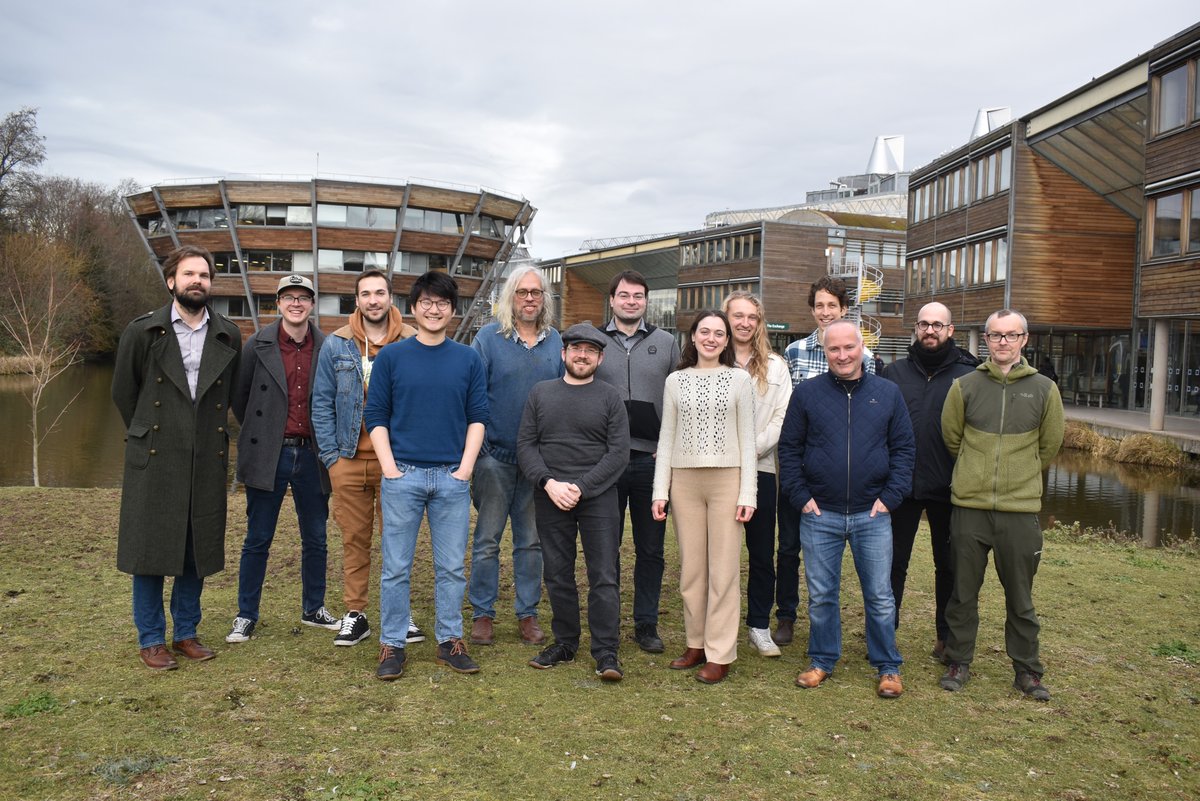
Applications are invited for a fully-funded PhD studentship in the Functional Programming Lab in Nottingham, supervised by Graham Hutton. Closing date for applications Friday 9th February 2024. Please share! tinyurl.com/fplab-phd
English


Employee 3198 moves on! It's been a true privilege and pleasure, but time to move on after 26 years. My last day at Microsoft was on Friday. They made me a nice mouse mat - an early poster that unbelievably was on the London Underground in 1998! Thank you for everything.

English
Nick Benton retweetledi

Making strong assumptions about library calls when proving a program's security?
Find from #SPLASH2023 keynote speaker Amal Ahmed how to ensure security properties for languages which implement interoperability via FFI.
Details: tinyurl.com/2m4tchkb

English

@lambdaNik @ngsankha All the renewed love for ml on x! Could xml be the next big thing?
SeaTac, WA 🇺🇸 English

Can't resist:
Liking #ocaml ? Check out #fstarlang. Program with proofs in a general purpose, higher order, strict language and extract to efficient executable code in OCaml.
fstar-lang.org
English

The state of the film puns in a furniture catalogue that just came through the door. A 🧵
1. No. Doesn’t work.

English