TFC Health

145 posts

TFC Health banner
TFC Health

TFC Health

@tfchealth

Health. Nutrition. Optimisation. Ancient wisdom backed by modern science. New content daily. https://t.co/CZ8uOCXXqB

Katılım Mart 2026
30 Takip Edilen10 Takipçiler
Sabitlenmiş Tweet
TFC Health
TFC Health@tfchealth·
Your great-grandparents didn't count macros. They ate nose-to-tail. Fermented everything. Got sunlight before screens existed. Cooked with butter and lard. Slept when it got dark. Then we replaced all of it with seed oils, synthetic vitamins, fluorescent lighting, and ultra-processed food. And started wondering why everyone's tired, anxious, inflamed, and riddled with disease. The industrialisation of food stole our health. But the science is finally coming to light. This is TFC. Ancestral health. Modern science. What they don't tell you. Follow to take it back.
TFC Health tweet media
English
0
2
3
247
TFC Health
TFC Health@tfchealth·
Beef liver every day for 30 days. Day 7, the afternoon crash softens. Day 14, HRV climbs. Day 30, recovery is different. Twice a week is plenty.
English
0
0
1
11
Dr. Eric Berg DC
Dr. Eric Berg DC@dr_ericberg·
Drinking lemon water with salt for 30 days may provide several benefits. These include lowering the risk of kidney stones and gout, supporting liver detoxification, stimulating digestive enzymes, and increasing microbiome diversity. Dr. Eric Berg, DC, not MD; information only
English
21
103
969
36.5K
TFC Health
TFC Health@tfchealth·
@AlpacaAurelius Industry convinced an entire generation to throw out real butter and eat spreadable plastic instead. It blows my mind how poor modern instincts are.
English
1
0
6
184
Carnivore Aurelius ©🥩 ☀️🦙
real butter vs store bought butter real butter is yellow from all the fat soluble vitamins and phytonutrients a true superfood
Carnivore Aurelius ©🥩 ☀️🦙 tweet media
English
28
16
344
12.7K
TFC Health retweetledi
Paul Saladino, MD
Paul Saladino, MD@paulsaladinomd·
The dark history of canola oil…
English
19
150
744
40.3K
TFC Health
TFC Health@tfchealth·
@Rainmaker1973 At least you get a nice fresh scent while you are being poisoned 🤣. I've been using natural detergents/soaps for years now. When you come into contact with clothes/bedding that has been washed with supermarket detergents and softeners it becomes so apparent that it is poison.
English
0
0
3
1.3K
Massimo
Massimo@Rainmaker1973·
Whenever you smell that “fresh laundry scent” you’re inhaling toxic chemicals. That cozy “fresh laundry” scent from fabric softeners and dryer sheets is actually one of the top sources of indoor air pollution, doctors warn. According to gastroenterologist and professor Dr. Partha Nandi, the pleasant fragrance is created by volatile organic compounds (VOCs) such as acetaldehyde and benzene—known irritants linked to breathing problems, skin rashes, headaches, dizziness, and even elevated cancer risk with long-term exposure. These chemicals waft into your home and are vented outdoors, contributing to both indoor and outdoor air pollution. Many everyday symptoms people ignore—coughing, watery eyes, or feeling lightheaded after doing laundry—may actually be caused by these products. The good news: safe, inexpensive alternatives exist. Adding a half-cup of white vinegar or baking soda to the rinse cycle, using wool dryer balls, or making your own dryer sheets can soften clothes just as effectively without the toxic chemicals. These swaps also cut plastic waste and water contamination. Dr. Nandi urges families—especially those with kids, pets, asthma, or chemical sensitivities—to ditch scented fabric softeners, open windows when doing laundry, and choose fragrance-free, natural options. Making this one simple change can noticeably improve the air you breathe every day. [Nandi, P. (2025). The Hidden Dangers of Fabric Softeners]
Massimo tweet media
English
90
870
3.7K
333.4K
TFC Health
TFC Health@tfchealth·
1 in 4 adults wake up with NO morning cortisol surge. Their stress hormone stays flat from breakfast to bedtime. The chain reaction across sleep, glucose and reproductive hormones is the part nobody warns you about. Cortisol cocktails won't fix this. Your environment will.
English
0
1
3
41
TFC Health
TFC Health@tfchealth·
@Rainmaker1973 The problem is that just being aware of this makes me worry about it. 😂😂🤣🤣
English
0
0
2
160
Massimo
Massimo@Rainmaker1973·
Nothing kills you faster than chronic worry. When you stay trapped in constant anxiety over things you can’t change, you’re not just losing your peace of mind—you’re quietly injuring your physical health. Persistent worry keeps your stress-response system permanently switched on, flooding your body with cortisol and adrenaline. Over time, this chronic activation grinds down essential systems: it suppresses immune function, leaving you more prone to infections and possibly even cancer; it drives up blood pressure and hardens arteries, sharply raising the odds of heart attack and stroke. The fallout continues. Excess cortisol throws digestion into chaos, sparks frequent headaches, and locks muscles in painful tension. On top of that, many people cope by overeating, smoking, or drinking—habits that pile on even more damage. Letting go of what’s beyond your control isn’t just good emotional advice; it’s one of the most powerful things you can do to protect your long-term health. [American Psychological Association. (2023). Stress effects on the body]
Massimo tweet media
English
34
272
1K
62.5K
Dr. Eric Berg DC
Dr. Eric Berg DC@dr_ericberg·
When your energy drops midday, what usually helps you recover fastest? Dr. Eric Berg, DC, not MD; information only
English
38
2
55
18.7K
TFC Health
TFC Health@tfchealth·
@BarbaraOneillAU It's amazing to think that if we just put back into our bodies what we would have naturally been getting, we'd largely rid ourselves of the ailments that plague us. Modern life has robbed us of these foundational things. Get them back in, and the body sorts itself out.
English
0
0
0
25
Barbara Oneill
Barbara Oneill@BarbaraOneillAU·
Magnesium is one of the most important minerals for the brain, yet many people are unknowingly deficient in it. 🌿 The brain depends on magnesium for healthy nerve communication, balanced calcium activity, energy production, and protection against inflammation. When magnesium levels fall too low, the nervous system becomes more vulnerable to stress and degeneration, which may contribute to memory problems and cognitive decline over time. Researchers are now looking closely at the connection between low magnesium levels and conditions such as Alzheimer’s disease and dementia. Studies have found that people with lower magnesium levels often have a greater risk of developing cognitive disorders. One reason may be that magnesium helps protect the brain from oxidative stress and supports healthy blood flow to brain tissue. It also plays a role in maintaining synaptic plasticity — the brain’s ability to learn, adapt, and form memories. Without enough magnesium, the brain may struggle to regulate inflammation and protect itself from the buildup of harmful proteins associated with neurodegenerative disease. Over time, this imbalance may contribute to forgetfulness, reduced concentration, and progressive memory decline. Magnesium deficiency is especially common in older adults, people under chronic stress, individuals with diabetes or cardiovascular conditions, and those eating heavily processed diets. Foods naturally rich in magnesium include leafy greens, pumpkin seeds, almonds, avocados, legumes, and cacao. Supporting the body with magnesium-rich foods and improving overall nutrition may be one of the simplest ways to help nourish and protect the brain naturally. 🌱
Barbara Oneill tweet media
English
25
634
2.2K
62.5K
TFC Health
TFC Health@tfchealth·
@Rainmaker1973 This is interesting. It does make sense if you think about it. Sleeping more than eight hours a day is probably not the best survival tactic. From an evolutionary standpoint, it seems logical that biological optimisation would strike a balance between health and efficiency.
English
0
0
0
246
Massimo
Massimo@Rainmaker1973·
A major new study suggests that the ideal nightly sleep duration for minimizing biological aging across multiple organs falls between approximately 6.4 and 7.8 hours. Contrary to the common recommendation of eight or more hours, sleeping longer is not always associated with better health outcomes. Researchers analyzing data from nearly 500,000 participants in the UK Biobank found a clear U-shaped relationship: both too little and too much sleep correlate with accelerated aging in organs throughout the body. The team developed 23 biological aging clocks based on proteomics, metabolomics, and MRI imaging data covering 17 major organ systems, including the brain, heart, lungs, liver, and immune system. These clocks estimate how physiologically old an organ appears relative to a person’s chronological age. Using advanced statistical modeling, they identified the sleep durations linked to the smallest biological age gaps (where organs appear youngest). Individuals sleeping outside the 6.4–7.8-hour window showed larger age gaps, meaning their organs appeared older than expected. Those within this range exhibited the slowest aging and generally lower risks of disease and mortality. Short sleep (under 6 hours) was associated with increased risks of depression, anxiety, obesity, type 2 diabetes, hypertension, heart disease, and arrhythmias. Interestingly, long sleep (over 8 hours) was also linked to accelerated aging, particularly in brain and systemic measures, and higher disease risks. The authors caution that these associations do not necessarily prove causation. Longer sleep durations may sometimes reflect underlying health issues rather than directly causing them. Nonetheless, the findings highlight a potential biological “sweet spot” for sleep that supports efficient organ function and slower aging. This large-scale, multi-omics analysis strengthens the evidence that sleep duration is a modifiable factor closely tied to long-term health. While individual needs can vary by age, sex, and genetics, aiming for roughly 6.5 to 7.8 hours of quality sleep appears optimal for most adults based on these population-level data. [O’Toole, C. K., et al. (MULTI Consortium). (2026). Sleep chart of biological ageing clocks in middle and late life. Nature. DOI: 10.1038/s41586-026-10524-5]
Massimo tweet media
English
30
155
602
46.1K
TFC Health
TFC Health@tfchealth·
Turmeric without black pepper is basically a placebo. The piperine in pepper increases curcumin absorption by 2,000%. People have taken them together for 4,000 years. Science just caught up.
English
0
1
2
27
TFC Health
TFC Health@tfchealth·
Exhausted by 11am but can't sleep at night? That's not laziness. That's a nervous system stuck in fight-or-flight. 5 signs it's happening to you — and the 60-second reset Stanford actually tested.
English
0
1
1
40
TFC Health
TFC Health@tfchealth·
Most people optimise their sleep, diet and training. Then go and drink dead tap water every day without questioning it. Natural water is mineral-rich, microbe-alive and microplastic-free. Worth searching for.
English
0
1
2
26
TFC Health
TFC Health@tfchealth·
Stanford analysed dozens of supplements for healthy aging. Most are a waste of money. These 7 survived the evidence bar — muscle, bone, sleep, cognition, joints, inflammation, immunity. Full stack at tfchealth.io/products Guide at tfchealth.io/guide
English
0
1
2
31
TFC Health
TFC Health@tfchealth·
The FDA tested 400 lipsticks. They found lead in every single one. Daily wearers can ingest up to 4 pounds of it over a lifetime. Parabens, phthalates, FD&C coal-tar dyes — all restricted in the EU, largely not in the US. That's a signal.
English
0
1
1
12
TFC Health
TFC Health@tfchealth·
Your biology class taught you 2 photoreceptors. Rods. Cones. There's a third. Found in 2002. About 3,000 per eye. It doesn't form images — it tells your brain what time it is, tuned to 480nm blue. That's why morning sun resets your sleep and midnight screens wreck it.
English
0
1
4
44
TFC Health
TFC Health@tfchealth·
They were wrong about saturated fat for 40 years. Chowdhury 2014 (n=600,000) found no link to heart disease. The problem was what replaced it. Here's the breakdown.
English
0
1
2
18
TFC Health
TFC Health@tfchealth·
Testosterone decline affects most men before 40 — and three common daily habits are accelerating it. Morning screens, seed oils, and alcohol are silently suppressing your hormones. Studies suggest morning phone use spikes cortisol, which shuts testosterone production down. Seed oils like sunflower and canola oxidise in heat. Research shows even moderate drinking suppresses testosterone for up to 24 hours. Follow @TFCHealth for daily health intel. Send this to someone who needs to hear it. #TestosteroneHealth #MensHealth #HormoneHealth
English
0
1
2
44
TFC Health
TFC Health@tfchealth·
@sciencegirl Choline is one of the most overlooked nutrients, in my opinion.
English
0
0
0
117
Science girl
Science girl@sciencegirl·
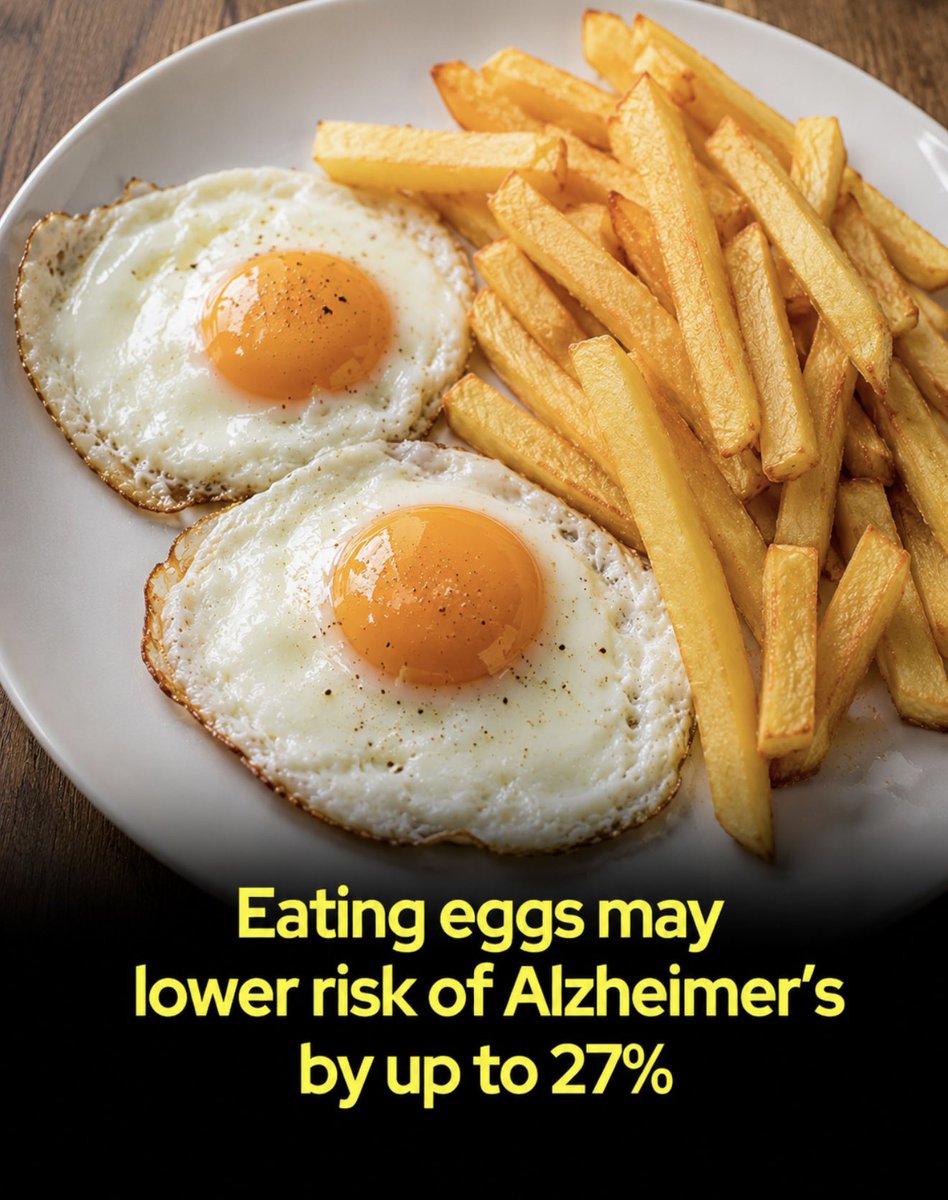
A long-term study suggests that regularly eating eggs may be linked to a lower risk of developing Alzheimer’s disease. Researchers tracked nearly 40,000 adults aged 65 and older over a period of more than 15 years. Those who consumed eggs most frequently were significantly less likely to develop Alzheimer’s compared to those who rarely ate them. The greatest reduction was seen in people who ate around one egg a day at least five times per week, showing about a 27% lower risk. Even moderate intake appeared beneficial, with smaller but noticeable reductions among people eating eggs only a few times per month or several times weekly. Scientists from Loma Linda University reviewed dietary and health data from 39,498 older adults, during which 2,858 participants developed Alzheimer’s disease. After accounting for factors such as exercise, smoking, diabetes, blood pressure, age, and overall diet quality, the association between egg consumption and lower Alzheimer’s risk still remained. Researchers believe nutrients found in egg yolks may play an important role. Eggs are especially rich in choline, which the brain uses to produce acetylcholine - a chemical involved in memory and communication between brain cells. Alzheimer’s patients are known to have reduced acetylcholine levels. Egg yolks also contain lutein and zeaxanthin, antioxidants that can build up in brain tissue and have previously been associated with improved memory and cognitive performance in older adults. In addition, omega-3 fatty acids found in eggs may help maintain healthy brain cell function. However, researchers emphasize that the study only shows a correlation and does not prove eggs directly prevent Alzheimer’s disease. The study participants were also Seventh-day Adventists, a group generally known for healthier lifestyles than the average population.
Science girl tweet media
English
109
284
1.2K
106.8K
TFC Health retweetledi
Science girl
Science girl@sciencegirl·
A naturally occurring sugar could play a surprising role in future hair loss treatments, according to recent research. Scientists at the University of Sheffield have been studying 2-deoxy-D-ribose (2dDR), a simple sugar linked to DNA structure, and found that it may encourage hair regrowth at levels comparable to the commonly used treatment minoxidil. In laboratory animal studies, a gel containing 2dDR helped restore up to around 90% of hair growth within about three weeks. The effect appears to work by promoting angiogenesis, the formation of new blood vessels, which improves the supply of oxygen and nutrients to inactive hair follicles, potentially reactivating growth. In a related development, researchers have also highlighted the potential of stevioside, a natural compound derived from the Stevia plant. When incorporated into dissolvable microneedle patches, it was shown to significantly enhance the delivery of minoxidil through the skin, improving absorption by increasing its solubility many times over. Although these findings are still at an early stage and have so far only been demonstrated in animal models, they suggest a possible future where more natural and potentially affordable approaches could support hair loss treatment. Human clinical trials will be needed to confirm safety and effectiveness. Credit: Based on research by Anjum, M. A., Zulfiqar, S., Chaudhary, A. A., Rehman, I. U., Bullock, A. J., Yar, M., & MacNeil, S. (2026), published in Frontiers in Pharmacology, University of Sheffield study on 2-deoxy-D-ribose and hair regrowth.
Science girl tweet media
English
12
16
108
32.4K