Thomas Fabula

18.7K posts

Thomas Fabula banner
Thomas Fabula

Thomas Fabula

@TFConsult

#DeepTech #innovation #transformation with #sportive passion 4 #HighPerformanceTeams

Cologne, Germany Katılım Aralık 2009
3.5K Takip Edilen1.6K Takipçiler
Thomas Fabula retweetledi
Mathematica
Mathematica@mathemetica·
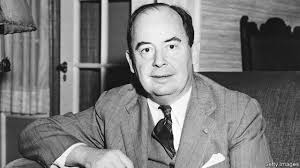
“If people do not believe that mathematics is simple, it is only because they do not realize how complicated life is.” — John von Neumann
Mathematica tweet media
English
13
66
397
13.2K
Thomas Fabula retweetledi
Luce
Luce@lucyshow11·
Who remembers the Harlem Globetrotters? 🏀😁
English
369
1.2K
8.7K
399.4K
Thomas Fabula retweetledi
Snezana Lawrence
Snezana Lawrence@snezanalawrence·
My favourite anecdote from the history of mathematics: tells you not only about mathematicians but about mathematics too
English
6
47
279
20.4K
Thomas Fabula retweetledi
Melodies & Masterpieces
Melodies & Masterpieces@SVG__Collection·
Wes Montgomery’s iconic sound came from necessity: practicing late at night after factory shifts, he used his thumb to keep the volume down so he wouldn’t wake up his family.
English
29
411
2.3K
61.1K
Thomas Fabula retweetledi
Kyros
Kyros@IamKyros69·
Turing Award winner: The best way to learn programming
English
13
318
2.6K
76.8K
Thomas Fabula retweetledi
Aakash Gupta
Aakash Gupta@aakashgupta·
This is an absolute masterclass from MIT on how to speak
English
89
3.2K
16K
2.7M
Thomas Fabula retweetledi
Igor Os
Igor Os@igor_os777·
BSD Sockets: The API That Time Forgot to Replace The BSD socket API arrived in 4.2BSD in 1983, giving C programmers a uniform interface for network communication. Its designers could not have anticipated that their creation would still be the foundation of essentially all network programming forty-plus years later — on Linux, macOS, Windows, embedded RTOS firmware, and everything in between. The API’s quirks are legendary: the byzantine dance of socket(), bind(), listen(), accept(), and the remarkable fact that send() might not actually send everything you asked it to. Every networking tutorial written since 1990 contains the same footnote about checking return values and handling partial sends. Every junior developer ignores it. Every senior developer has the scar tissue to prove it.
Igor Os tweet media
English
14
29
177
7.1K
Thomas Fabula retweetledi
Akhilesh Mishra
Akhilesh Mishra@livingdevops·
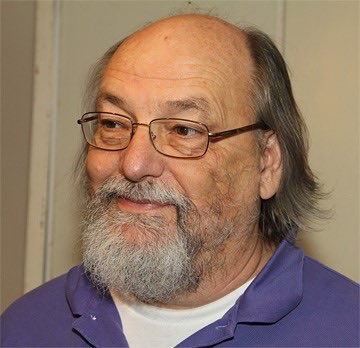
No disrespect to Linus Torvalds, But Ken Thompson might be the biggest geek who ever lived. 🫡 And almost nobody knows his name. At 28, he created Unix. > The OS that inspired every modern operating system on the planet. At 66, the age when most engineers retire, he co-created Go. > A language millions of developers love, and used to build most of modern Devops tools like Kubernetes, Terraform, Prometheus, Grafana, etc. But that is still not the full story. - Dennis Ritchie built on Thompson’s B to create C. - Linus built Linux inspired by Thompson’s Unix. - He co-invented UTF-8, the encoding behind every website you visit. - He built grep, a tool developers still use daily in 2024. The internet you are scrolling right now exists because of him. And he did everything without Claude, cursor, ChatGPT. Ken Thompson. Remember the name.
Akhilesh Mishra tweet media
English
65
256
1.7K
50.2K
Thomas Fabula retweetledi
Bull Theory
Bull Theory@BullTheoryio·
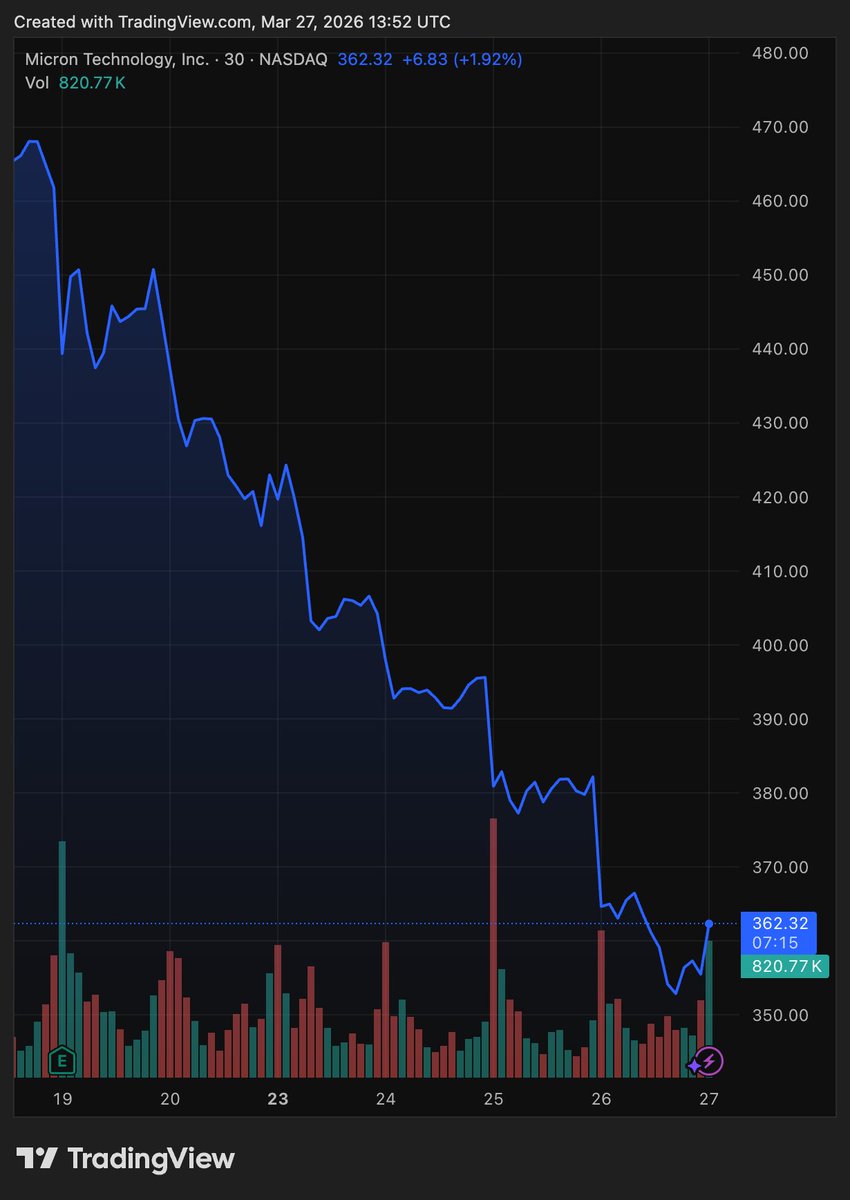
BREAKING: Anthropic accidentally leaked its next AI model and it just wiped out $14.5 billion from cybersecurity stocks in a single day. Claude Mythos was accidentally stored in a publicly accessible data cache and discovered before Anthropic could announce it. The model showed dramatically higher scores on cybersecurity tests, meaning AI can now detect and respond to threats at a level that traditionally required entire teams of security professionals and expensive enterprise software. Investors immediately started pricing in the question nobody in the industry wants to answer: if an AI model can do this, why does anyone need CrowdStrike? And the market answered immediately: - CrowdStrike is down 5.85%, wiping out $5.5 billion. - Palo Alto Networks is down 6.43%, wiping out $7.5 billion. - Zscaler is down 5.89%, wiping out $1.35 billion. - Tenable is down 9.70%, wiping out $185 million
Bull Theory tweet media
English
345
994
5.6K
1.4M
Thomas Fabula retweetledi
SciTech Era
SciTech Era@SciTechera·
We are closer and faster than you thought.. Quantum computers could break encryption by 2029, warns Google Google has moved up its deadline for the arrival of "Q Day" to 2029. The term refers to the day when current quantum computers will be able to break public-key cryptography algorithms. These algorithms protect decades of secrets belonging to militaries, banks, governments, and individuals globally. Heather Adkins, Google's VP of security engineering, and Sophie Schmieg, a senior cryptography engineer at the tech giant wrote about this in a blog post on Wednesday.
SciTech Era tweet media
English
6
24
56
2.5K
Thomas Fabula retweetledi
Philosophy Of Physics
Philosophy Of Physics@PhilosophyOfPhy·
Feynman Lectures on Physics; Three-Volume Set. ✍️Richard Feynman, Robert Leighton, and Matthew Sands.
Philosophy Of Physics tweet media
English
8
186
1.4K
35.9K
Thomas Fabula retweetledi
Ejaaz
Ejaaz@cryptopunk7213·
lmfao fucking genius move by Apple. Siri now becomes the #1 AI model without ever running its own model or spending a dollar on training 😂 let me explain: - Claude, chatgpt, gemini can now plug into Siri’s 2.5 billion users - so Siri becomes the default interface for AI chatbots = gets ALL the credit - Apple will likely tax 30% of all chatgpt, claude subs via appstore = more $$$$$ - Apple becomes the distribution layer for everyone else’s AI. taxes the app layer - oh and apple STILL HAS ACCESS to gemini’s model weights to build their own fucking foundation model 😂 silver lining for anthropic: they’ve been behind in consumer users - now apple gives them access to 2.5B of them 👍🏽👍🏽 the AI economy will run on ios and apple and they barely lifted a finger to do it genius
Ejaaz tweet media
Mark Gurman@markgurman

BREAKING: Apple is planning to open up Siri to run any AI service via their App Store apps as part of iOS 27, dropping ChatGPT as the exclusive outside partner in Apple Intelligence and Siri. bloomberg.com/news/articles/…


English
442
413
6.1K
1.5M
Thomas Fabula retweetledi
International Cyber Digest
International Cyber Digest@IntCyberDigest·
‼️ Google just tanked RAM and NAND stocks solving the memory shortage crisis by introducing an algorithm that requires 6x less DRAM and runs 8x faster, with zero accuracy loss. They call it TurboQuant. Hardware prices are expected to drop even further now.
International Cyber Digest tweet mediaInternational Cyber Digest tweet media
English
155
654
9.3K
528K
Thomas Fabula retweetledi
Cybernews
Cybernews@Cybernews·
Busch told the Financial Times that building more of its own AI infrastructure would make Europe “more resilient” over time. Read more: cnews.link/siemens-sovere… #AI
Cybernews tweet media
English
0
2
3
587
Thomas Fabula retweetledi
Math Files
Math Files@Math_files·
Erdős once said he wanted to die while doing mathematics—finishing a proof, smiling, and leaving the rest to the next generation. Remembering Paul Erdős on His Birthday. Paul Erdős (1913–1996) was not just a mathematician—he was a phenomenon. Born in Hungary, he lived a life unlike anyone else, turning mathematics into a shared, global adventure. Erdős believed math was not meant to be done alone. He worked with more than 500 collaborators, traveling constantly from one country to another, never settling in one place. His “home” was wherever there were ideas to explore and people to think with. What made him even more special was his generosity. He gave away most of his money to students and used the rest to create small cash prizes for solving interesting problems. These rewards were often modest, but the ideas behind them inspired hundreds of mathematicians around the world. He was incredibly productive—writing over 1,500 research papers, more than almost anyone in history. But Erdős was not the kind of mathematician who focused on just one big theory. Instead, he loved solving problems—jumping from one topic to another, finding clever ways to make difficult questions just solvable. He had a rare talent: if a problem was too hard, he could reshape it into something meaningful and achievable. And he often knew exactly who could help solve it. Many important mathematical results carry his name, across fields like number theory, graph theory, and probability. Yet, what truly defines him is not just his theorems—but his spirit of curiosity, collaboration, and simplicity. In 1996, while attending a math conference in Warsaw, he passed away after spending his final moments talking about the subject he loved most. He often used playful phrases for life and death, calling himself things like “Poor Great Old Man” and referring to death simply as “leaving.” Today, we remember Paul Erdős not just for his brilliance, but for his unique way of living—a life fully devoted to ideas, people, and the joy of discovery.
Math Files tweet media
English
7
35
205
7.2K
Thomas Fabula
Thomas Fabula@TFConsult·
Only the #Paranoid Survive: business management book by former #Intel #CEO #AndrewGrove, born Gróf András István, #Budapest 🇭🇺
Big Brain Business@BigBrainBizness

Steve Jobs called him his most important mentor: Andrew Grove. Most people have never heard of him. Yet he is the single executive behind the rise of Google, Apple, Facebook, Intel, and Airbnb. Here's the one philosophy that literally built Silicon Valley: At 20 years old, Andy Grove fled Budapest with barely any English and no money. He rebuilt himself from scratch, and when Gordon Moore and Robert Noyce founded Intel in 1968, Grove was their very first hire. He didn't just bring engineering to Intel. He brought a bone-deep belief that execution matters infinitely more than ideas. That conviction became the central thesis of his book ↓ "A manager's job is not to do work. It is to multiply the output of everyone around them." He captured this as a formula: A manager's output = The output of his organization + The output of neighboring organizations under his influence. From there, Grove asked: "What activities produce the highest organizational output?" His answer was teaching and motivating. Train someone well, and they train ten others. Inspire a team of 50, and the ripple effect dwarfs anything you could accomplish alone. To make it operational, he distilled everything into two questions: 1) Where do I want to go? 2) How will I pace myself to see if I'm getting there? He called the answers Objectives and Key Results — OKRs. Grove rolled them out at Intel, moving performance reviews from annual to quarterly and making every goal visible across every level of the company. A junior engineer could now see exactly how their daily work connected to Intel's bigger mission. Under this system, Intel's revenues grew from $1.9 billion to $26 billion. The system didn't stay at Intel for long ↓ In 1999, a former Intel engineer named John Doerr walked into a Menlo Park garage with a 90-minute slide deck and introduced OKRs to Google Founders Larry Page and Sergey Brin. What followed was one of the greatest expansions of a single management idea in business history: • Google adopted OKRs in 1999 and grew from a garage startup to a $2 trillion company • Steve Jobs studied the book obsessively, calling Grove's execution framework foundational to his thinking • Mark Zuckerberg publicly credited it as having shaped his entire management style while scaling Facebook to billions of users • Brian Chesky called it his primary reference book on management while building Airbnb into one of the world's most recognizable hospitality brands One book. One system. $1.2 trillion in combined value across four companies. The man behind it all never chased fame, yet his philosophy quietly built more wealth than almost any idea in business history. — Thanks for reading! Enjoyed this post? Follow @BigBrainBizness for more content like this.

Magyar
0
0
1
39
Thomas Fabula retweetledi
thestreamingdev()
thestreamingdev()@thestreamingdev·
I ran a 35-billion parameter AI agent on a $600 Mac mini. Specs: M4 Mac-Mini 16GB RAM The model doesn't fit in RAM. It pages from the SSD at 30 tokens/second. On NVIDIA, the same paging gives you 1.6 tok/s. Apple Silicon gives you 30. That's 18.6x faster. No cloud. No API keys. $0/month. Here's what it can do 🧵
English
169
219
3.2K
700.2K
Thomas Fabula retweetledi
Ilir Aliu
Ilir Aliu@IlirAliu_·
The US has Stanford, MIT, CMU… and they all know each other. Europe? Not so much. Until now: Students move between labs, compete in the same challenges, start companies together. There’s a shared culture. Europe’s biggest problem in robotics isn’t talent. It’s that nobody connects the dots. ETH has a phenomenal robotics scene. So does TU Munich. EPFL. TU Delft. But a student in Lausanne has zero visibility into what’s being built in Eindhoven. There’s no equivalent of the American pipeline where university robotics feeds directly into a startup ecosystem. Until now, apparently. ESRA a network of 11 student robotics clubs across 8 European countries. ETH, EPFL, TUM, TU Delft, TU Wien, KTH, Polimi, the list goes on. They’re organizing joint hackathons, sharing access to compute and hardware, and basically building the connective tissue that European student robotics has been missing. The part I like most: this wasn’t some EU initiative or university admin project. The clubs built it themselves because they got tired of waiting. 2,500+ students, zero bureaucracy. That’s how good things start. studentrobotics.eu Thank you, Florian Schroeders for let being part of this! Saying Hi to Declan Shine 👋 #Robotics #Europe #DeepTech #ESRA
English
33
131
945
64.7K