The Mindfulness Journal

3K posts

The Mindfulness Journal banner
The Mindfulness Journal

The Mindfulness Journal

@TMJNow

Guided #healing journals: https://t.co/XL8c91SBiJ Using #mindfulness as a tool for healing, FREE e-Course: https://t.co/5G8yHwTPbW

Denver, CO Katılım Ekim 2016
182 Takip Edilen353 Takipçiler
Sabitlenmiş Tweet
The Mindfulness Journal
Happy publication day! THE ART OF HOMECOMING is on sale now!!! It's 300 pages of writing prompts, guided reflections, hand-drawn coloring pages & #mindfulness exercises to guide you on your journey of waking up and realizing your worth! amzn.to/2GQTlXY
English
1
19
23
0
The Mindfulness Journal retweetledi
Yipeng Ge 葛义朋
Yipeng Ge 葛义朋@yipengGe·
For those of you who are struggling with the state of the world, and find yourselves with tears or so much emotion it can feel overwhelming: I hope you never lose your capacity to experience empathy, because it makes you human. It is abnormal to not feel anything, and to blindly adapt to a fundamentally unjust world. Let your love move you to solidarity and action and community, to be an example for what is possible and help create a world that is different.
English
85
2.6K
7.9K
113.2K
The Mindfulness Journal retweetledi
The Mindfulness Journal
Don't ever let anyone convince you your feelings are wrong.
The Mindfulness Journal tweet media
English
0
1
1
35
LIMITLESS MIND
LIMITLESS MIND@limitlessmindon·
The memory loss from deep depression and trauma is not talked about enough. People assume you're being dramatic but they don't understand that when your mind is in survival mode. It stops recording life the way it used to. Your brain isn't malfunctioning it's protecting you.
English
61
2.1K
8.4K
151K
The Mindfulness Journal retweetledi
Tim Ferriss
Tim Ferriss@tferriss·
Whenever upset or anxious, ask “why” at least three times and put the answers down on paper. Describing these doubts in writing reduces their impact twofold. First, it’s often the ambiguous nature of self-doubt that hurts most. Defining and exploring it in writing demands clarity of thought, after which most concerns are found to be baseless. Second, recording these concerns seems to somehow remove them from your head.
English
102
177
1.9K
125.4K
The Mindfulness Journal retweetledi
goma
goma@soigomaa·
A Harvard neurologist once told her class something that made half the room laugh, until she showed the scans. "People who cry easily," she said,"have a faster emotional-processing loop than the general population." Their mirror-neuron system fires quicker, their insula lights up more intensely, and their brain decodes micro-signals before others even register them. What looks like "sensitivity" is actually hyper-efficient pattern recognition.
English
175
2.5K
19.8K
645.3K
The Mindfulness Journal retweetledi
Big Brain Psychology
Big Brain Psychology@BigBrainPsych·
Gabor Maté on why women bear the greatest burden of illness: "Women have 70-80% of autoimmune disease." They're also twice as likely to be diagnosed with PTSD and far more likely to be prescribed anti-anxiety or antidepressant medications. During COVID, the New York Times ran a headline calling women "society's shock absorbers," describing how women took on the stress of their families and spouses, then felt guilty when they couldn't alleviate it. Maté argues there's nothing mysterious about these statistics once you understand what culture demands of women: "If you understand how the culture then imposes its own expectations on certain groups, adding to their stress, then there's absolutely nothing miraculous or nothing mysterious about why women have more autoimmune disease." He points to the patriarchal assignment of emotional labour as the root cause. Women are expected to absorb the stress of everyone around them and are made to feel guilty if they don't. As Maté puts it: "Women's guilt is another control mechanism on the part of the culture." He then raises a striking example: the changing gender ratio in multiple sclerosis. In the 1930s, the ratio was roughly one to one. Today, it's three and a half women to every man. Maté systematically rules out the usual explanations: "Can't be the genes, because they don't change in a population over 80 years. Can't be the climate or the diet, that didn't change more for one gender than another." What did change? The role women were asked to play. Women were already carrying the emotional weight of their families. But over recent decades, they've also taken on the role of wage earners driven by economic pressure on middle and lower classes and by their own desire to build lives outside the home. Maté is clear that this shift could have been manageable had one critical thing happened alongside it: The emotional burden being shared. "All of which would have been okay had the other role of sharing the emotional burden been shared. But it hasn't. It still falls upon women." The implication is sobering: the diseases women disproportionately suffer from aren't random biological misfortune. They're the physical cost of a culture that keeps adding to women's load without ever redistributing it.
English
57
603
1.6K
48.5K
The Mindfulness Journal retweetledi
The Mindfulness Journal
#Anxiety begins in the body. Our nervous system responds to the environment first, then passes signals to our brain, where it’s processed by our thinking mind. If we are disconnected from our bodily sensations, we miss these initial signals. #bodymind
The Mindfulness Journal tweet media
English
1
11
22
0
The Mindfulness Journal retweetledi
The Mindfulness Journal
The Mindfulness Journal@TMJNow·
@thejessicadore Healing comes from building better boundaries, self-compassion, and working our way up to intimacy that is safe and reciprocated.
English
0
18
68
0
The Mindfulness Journal retweetledi
Nicholas Fabiano, MD
Nicholas Fabiano, MD@NTFabiano·
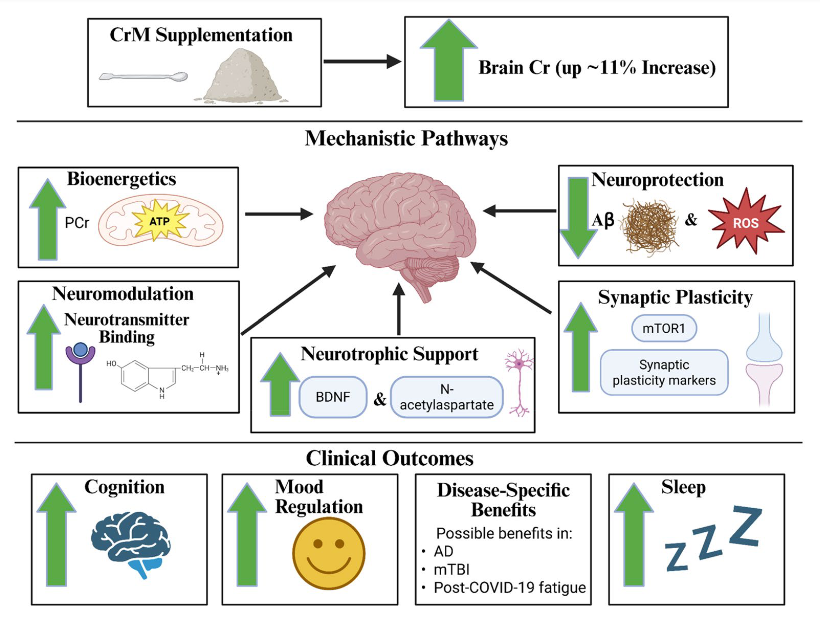
We just published the largest review of creatine for brain health. Increased brain creatine levels may function as a buffer to metabolic stress leading to neurological benefits. Doses >5g/day are likely required for brain benefits.
Nicholas Fabiano, MD tweet media
English
140
649
4.8K
1.6M
The Mindfulness Journal retweetledi
Reads with Ravi
Reads with Ravi@readswithravi·
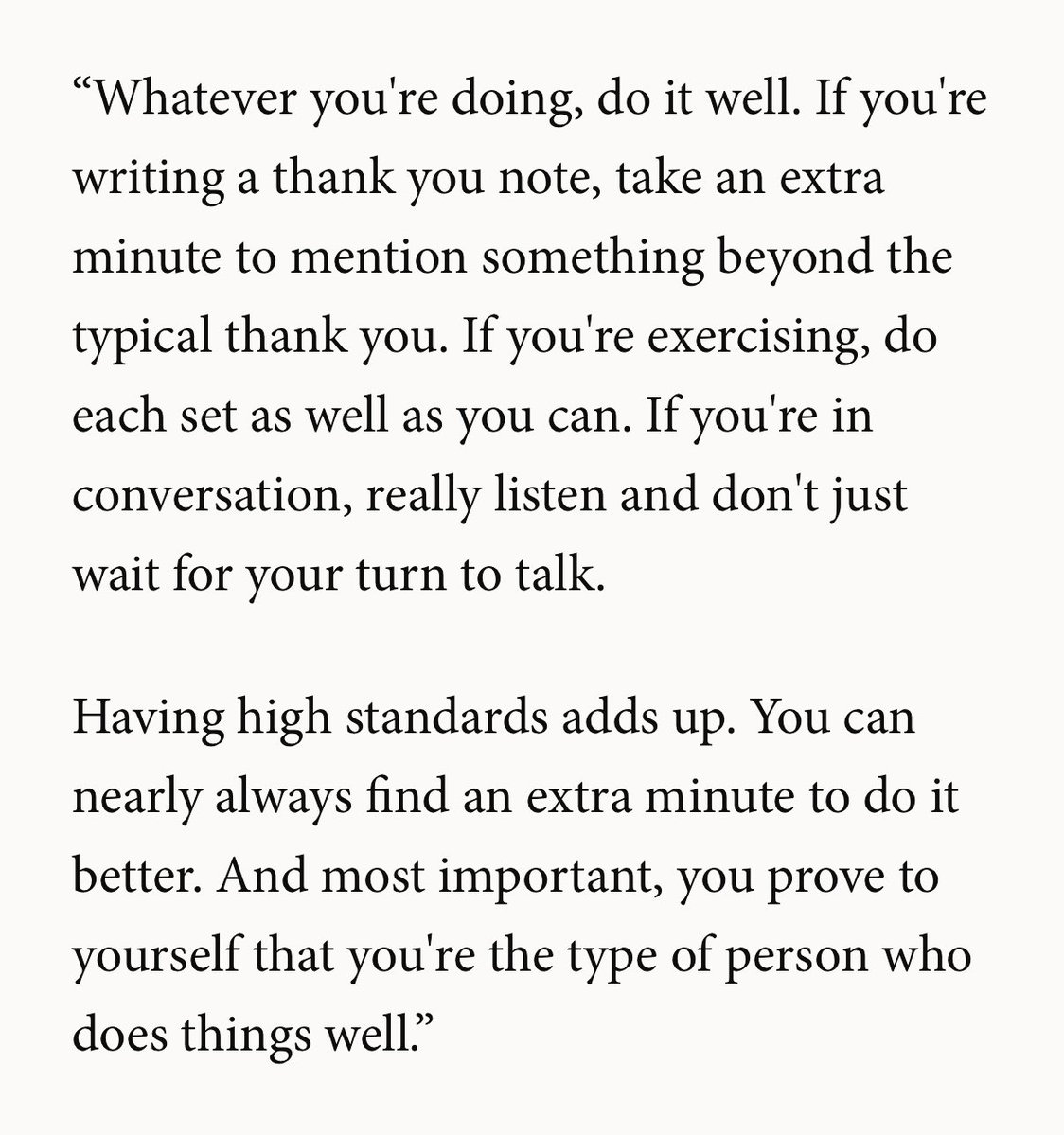
James Clear on having high standards:
Reads with Ravi tweet media
English
32
1.4K
8.2K
152.4K
The Mindfulness Journal
Childhood trauma can disconnect us from ourselves & destroy our sense of trust, but we can rebuild it, reconnect with our inner wisdom, process what was lost & fully show up in life. How to Trust Yourself After the Trauma of Being Dismissed and Invalidated bit.ly/3AxNOft
The Mindfulness Journal tweet media
English
0
0
0
20
The Mindfulness Journal
New year, new goals, and a gentle reminder to pause, take a breath, and step into the present. Healing doesn’t begin someday. It begins in this moment, exactly as it is. #mindfulness #healingjourney
The Mindfulness Journal tweet media
English
0
0
0
12
The Mindfulness Journal retweetledi
Debbie Hampton
Debbie Hampton@dlhampton·
Vigorous Workouts Alleviate Depression Better Than Easy Ones buff.ly/40cd6OM A recent meta-analysis reaffirms that low-intensity exercise can alleviate depression; high-intensity exercise has even more robust anti-depressant effects.
Debbie Hampton tweet media
English
0
12
7
195
The Mindfulness Journal
We are living in trying times. Every day, we are challenged to embrace the changing nature of life, do the work to fortify our inner strength & dare to live fully despite the chaos. I wrote a guided journal to help, The Art of Homecoming. ✨Grab it here: x2aE68.short.gy/AsZ5fz
The Mindfulness Journal tweet mediaThe Mindfulness Journal tweet media
English
0
0
1
35