Effective July 1, a new law in the state of Virginia distinguishes between Hitler’s Hakenkreuz and the Sacred Swastika- a win for accuracy, religious freedom and equitable treatment for Dharmic communities that revere the sacred Swastika.
Now we ask other institutions including media, police and educational institutions to also start to follow this critical distinction.
The nuance in this law was the result of a united grassroots campaign from community leaders and Viriginia residents, alarmed at the terms of the original bill which had threatened prison terms for displaying a symbol that is almost ubiquitous in our temples and houses. This is the power of advocacy.
We thank @GovernorVA, @Kannanforva and many others for listening.🙏🏿
Read and share how it happened!
cohna.org/cohna-welcomes…#Swastika#hakenkreuz
I have done this myself! It was literally a jaw dropping moment for the person standing next to me when she saw me getting into the driver’s seat when I summoned my Tesla in the parking lot of the mall during a heavy rain!
The 2025 AP Calculus BC Exam scores:
5: 44%; 4: 22%; 3: 13%; 2: 15%; 1: 6%
Multiple-Choice Questions
As is typical, Calculus BC students scored extremely well across the units that are shared with Calculus AB, especially Unit 1, where 55% of students answered every question right, and Units 2-3, where 41% did so.
The most challenging Calculus BC questions were from Units 9 and 10, which don’t overlap with Calculus AB. As usual, students found questions about infinite sequences and series most difficult: 4% answered all of these questions right.
Free-Response Questions
spr.ly/60124eEkg
Setting aside the three FRQs shared with Calculus AB, which Calc BC students typically find easier than the BC-specific FRQs, students scored highest on Q5, the differential equation question that requires understanding of the second-degree Taylor polynomial, the Lagrange error bound, and Euler’s method.
By far the most difficult question on this year’s BC exam was Q2, polar area, which served to differentiate among BC students, who are qualifying for AP 4s and 5s. Polar area is a good instructional focus for next year.
All subjects’ AP score distributions for 2025 will be posted here when available: spr.ly/60134eEk9
🌞This summer, school staff from across CT can take advantage of dozens of different discounts from museums to breweries to sporting events and more!
To view a complete list of participating businesses and how to access discounts & opportunities, go to portal.ct.gov/digitalbackpack🌞
The passing of Dr. Jayant Narlikar is a monumental loss to the scientific community. He was a luminary, especially in the field of astrophysics. His pioneering works, especially key theoretical frameworks will be valued by generations of researchers. He made a mark as an institution builder, grooming centres of learning and innovation for young minds. His writings have also gone a long way in making science accessible to common citizens. Condolences to his family and friends in this hour of grief. Om Shanti.
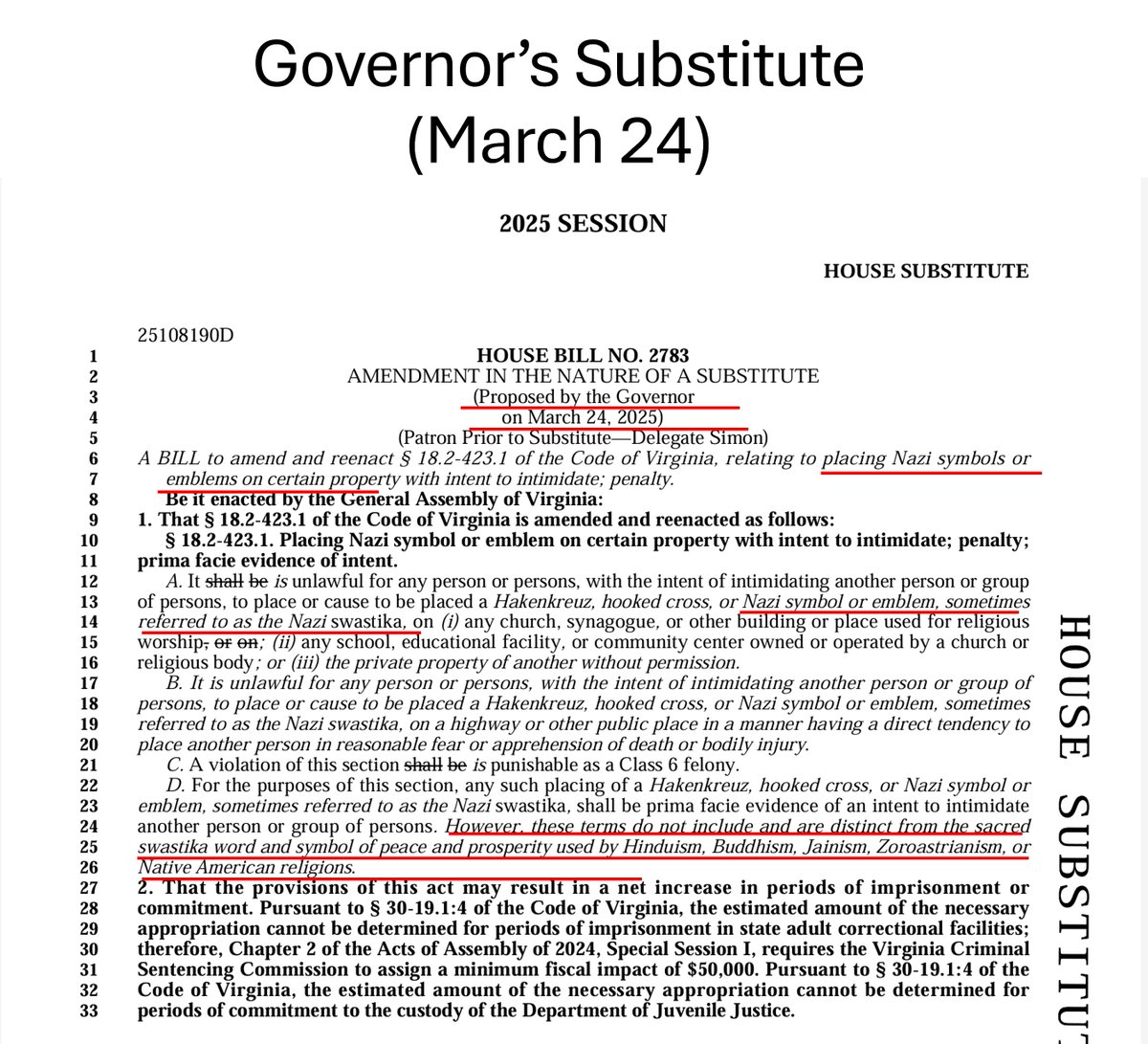
IMPORTANT UPDATE: New developments in Virginia's bill HB2783 on Nazi symbols. We break down the details and journey (from Jan 17 to today) for you below and discuss why these developments are significant.👇🏾
Yesterday, Governor Youngkin sent the bill back to include important changes proposed by the Hindu, Buddhist, and Jain communities while ensuring that the Swastika symbol AND the word are distinguished from Hitler's symbol of hate.
For us this is a critical issue—one that CoHNA has been advocating for since the beginning of February and indeed in all its years of Swastika advocacy. While he agrees (like we do) with the intent of the bill, the Governor also wants to ensure that important amendments are made to protect ALL communities from hate. We remain hopeful that this change is accepted.
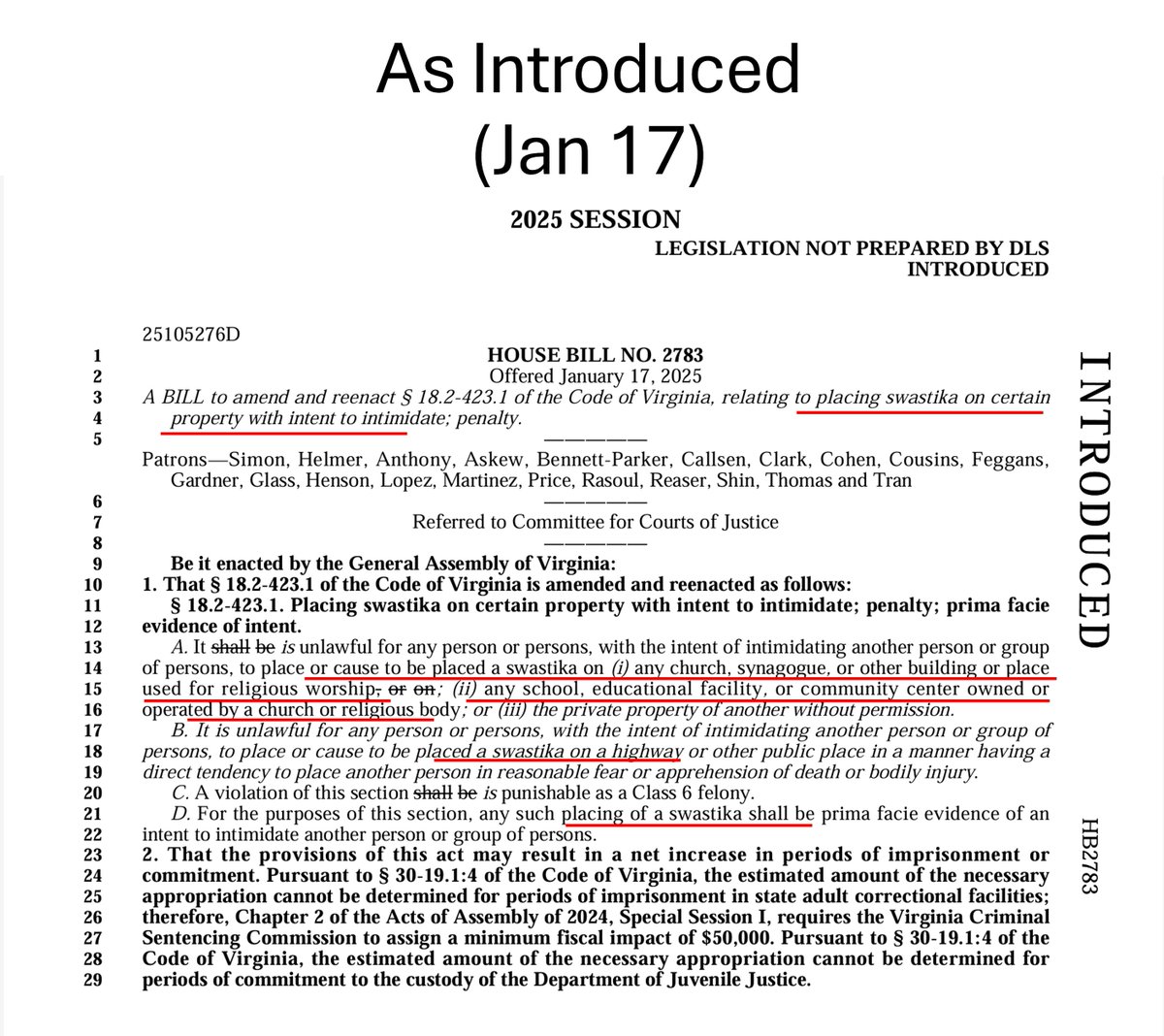
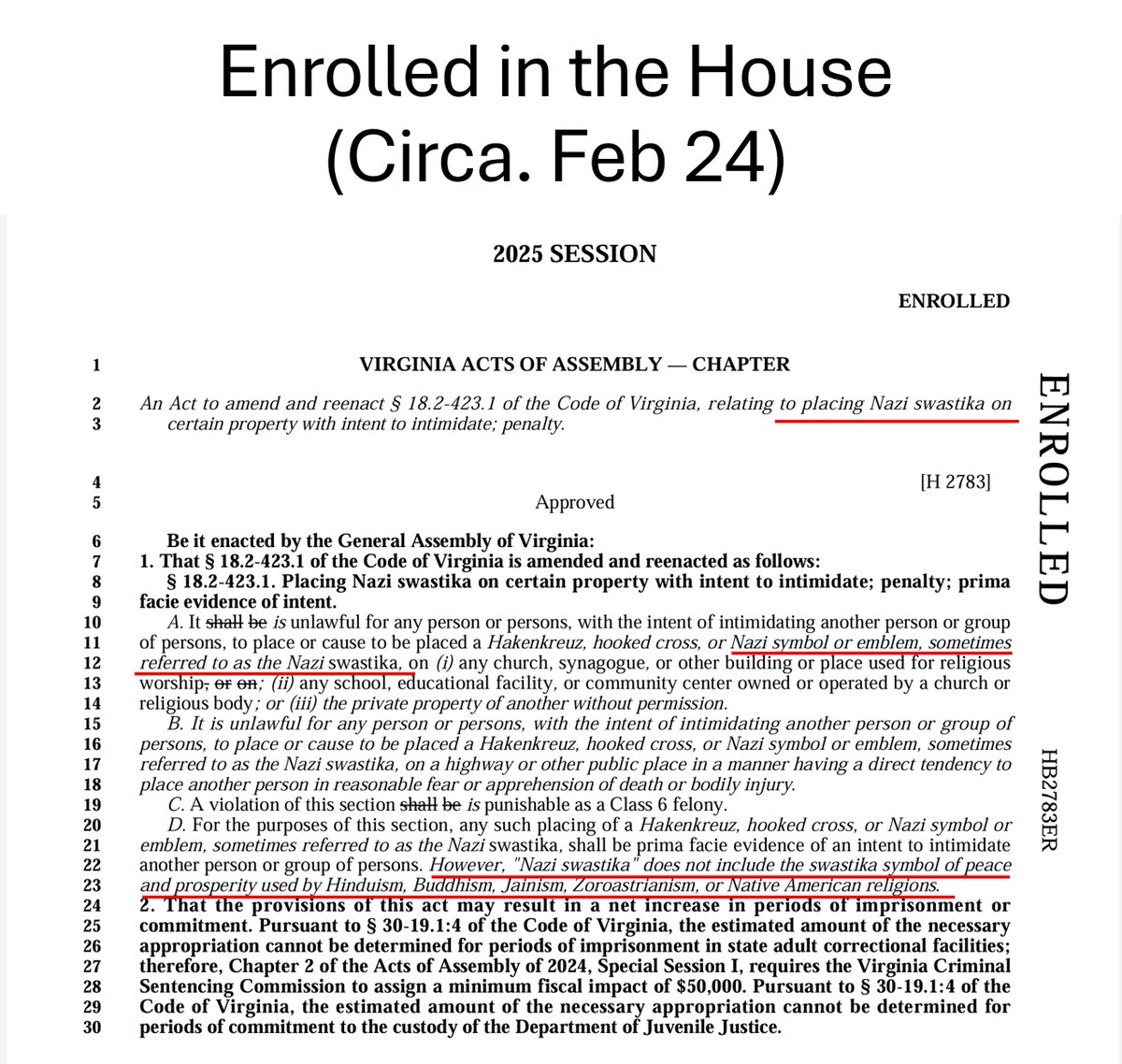
While the new bill language still includes “Nazi swastika,” it is substantially different than previous versions (see attached images):
1. Previous versions did not distinguish between a hate symbol and a sacred symbol. The bill amended in the Senate even (incorrectly) explained Hitler’s hate symbol as “commonly known as swastika.” It did not include references to Hakenkreuz (hooked cross), which is what Hitler always called his hate symbol.
2. The current (new) version proposed by our communities includes Hakenkreuz as the first reference, and then adds “sometimes referred to as the Nazi swastika.” It also includes an important paragraph clarifying that the hate symbol is different than that used by Hindus, Buddhists, Jains, Zoroastrians and some Native American religions while reducing references to "Nazi swastika" in multiple places.
This is indeed historic, because we, along with key community leaders and other organizations, were persistent in our demands.
Since inception, CoHNA has always stood against “Nazi Swastika” —an inaccurate term that does damage by implying a good and a bad Swastika. Using such terms only helps strengthen linkages of our sacred Swastika symbol AND word with hate. However, the new bill language is a significant step towards important and long term changes while combating hate.
We also want to take moment to thank some of our Jewish allies, who understood our issue and threw their support behind us. And a special thanks to State Senator Kannan Srinivasan (@Kannanforva ) for advocating for the community and work with his colleagues to make changes to the bill.